Iran’s IRGC Announces New Naval Basij Unit

Revolutionary Guard speedboats are seen during maneuvers in the Strait of Hormuz. (Tasnim)
TT

Iran’s IRGC Announces New Naval Basij Unit

Revolutionary Guard speedboats are seen during maneuvers in the Strait of Hormuz. (Tasnim)

Commander of the Iranian Revolution Guards Corps’ (IRGC) Navy, Rear Admiral Alireza Tangsiri announced on Tuesday the formation of new naval Basij unit.

The IRGC-affiliated Tasnim and Fars news agencies quoted Tangsiri as saying that his forces were also working to establish a “shadow sub-unit,” without providing details.

He said the new Basij unit for ocean missions involves large and light vessels that can sail the high seas as far as Tanzania.

This is the first time a Guards commander speaks openly about the possibility of using light (wooden) vessels in military missions.

British and US forces had announced in the past two years the seizure of wooden ships carrying weapons on their way to the Houthis. Several of these vessels have also been seized with drug shipments.

Meanwhile, US Defense Secretary Lloyd Austin announced the launch of a multinational force to protect trade in the Red Sea as attacks by Iran-backed Yemeni militias forced major shipping companies to reroute.

“Iran's support for Houthi attacks on commercial vessels must stop,” Austin said.

Iranian defense minister Mohammad-Reza Ashtiani had warned that any multinational taskforce would face “extraordinary” problems trying to protect shipping in the Red Sea.

“If the US makes such an irrational move, they will be faced with extraordinary problems. Nobody can make a move in a region where we have predominance,” he said.


Russian Drone Hits 2 Trains Stopped at a Station in Central Ukraine, Killing 13

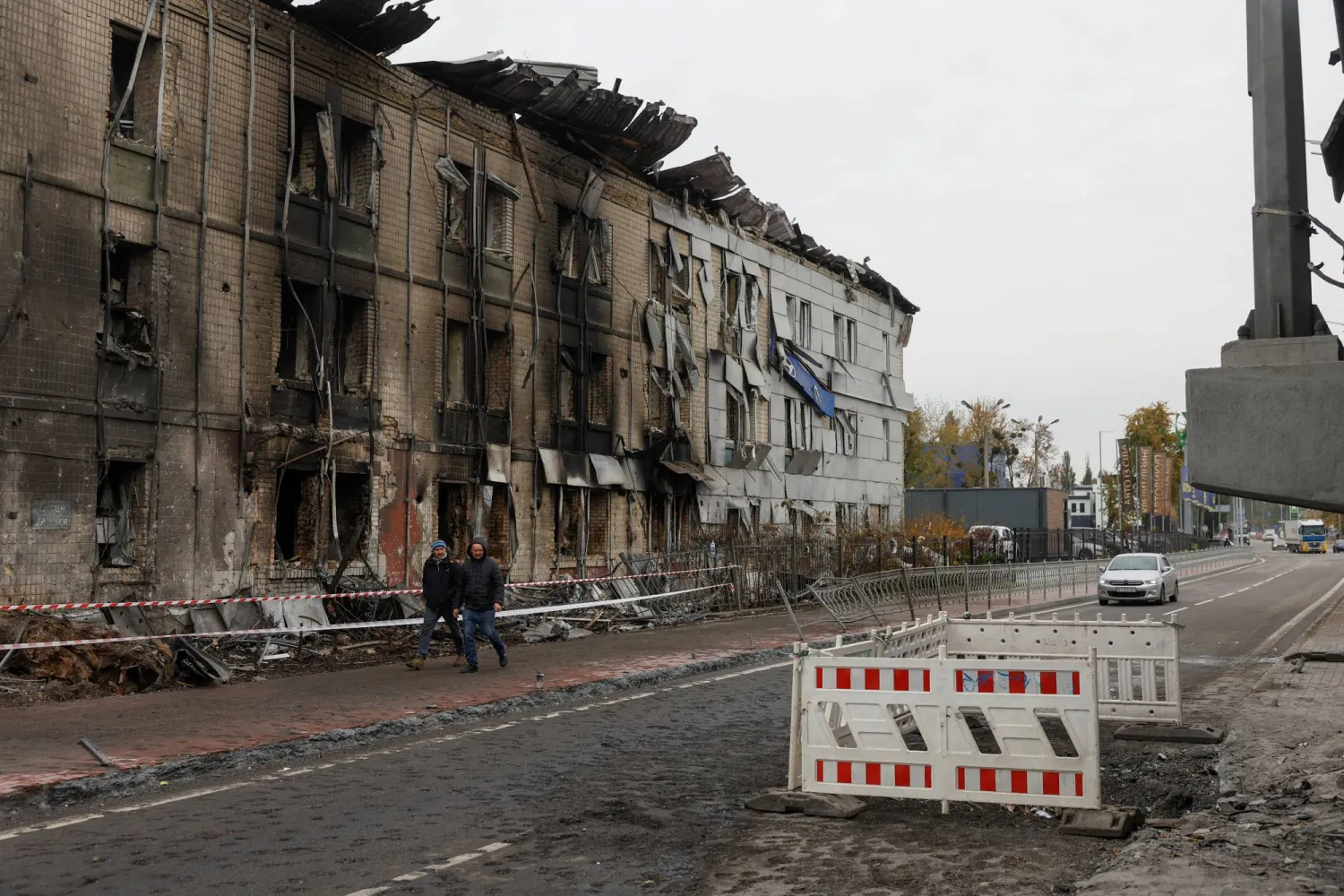
Residents walk past a dealership building damaged by an overnight Russian missile strike, amid Russia's attack on Ukraine, in Kyiv, Ukraine October 27, 2026. REUTERS/Valentyn Ogirenko
TT

Russian Drone Hits 2 Trains Stopped at a Station in Central Ukraine, Killing 13

Residents walk past a dealership building damaged by an overnight Russian missile strike, amid Russia's attack on Ukraine, in Kyiv, Ukraine October 27, 2026. REUTERS/Valentyn Ogirenko

A jet-powered Russian drone hit two trains stopped at a station in central Ukraine on Thursday, killing at least 13 people and injuring 10 others, officials said. 

Ukrainian President Volodymyr Zelenskyy described it in a post on X as a “horrific attack” that struck passenger trains in Dnipro. 

Earlier a Ukrainian official said that humanitarian aid is poised to roll into the stricken city of Oleshky, as a localized ceasefire between Russia and Ukraine stretched into a third day and military units cleared away landmines. 

Moscow and Kyiv have observed the truce in and around the devastated southern Ukrainian city since Tuesday, despite remaining locked in war since Russia’s all-out invasion of its neighbor more than 4 ½ years ago. Previous efforts to secure ceasefires either never worked out or the truces quickly fell apart. 

The planned six-day ceasefire around Russian-occupied Oleshky has also brought a rare and welcome stillness for civilians in the nearby city of Kherson, which is held by Ukraine and has also been wracked by the war. 

Elsewhere, Russia’s Defense Ministry said air defenses downed 1,214 Ukrainian drones overnight in one of the largest drone attacks launched by Kyiv. Around half of the drones were heading to the Russian capital, Moscow Mayor Sergei Sobyanin said. 

Ukraine said Russia fired 112 drones at seven locations across the country. 

The Oleshky ceasefire has held for 54 hours, officials say  

Both sides thanked US first lady Melania Trump for what the White House said was her role in helping broker the temporary ceasefire so that food and medical supplies can reach some desperate 2,000 people trapped in Oleshky. Pope Leo XIV also pressed for a truce. 

“The ceasefire has been in place for 54 hours now,” Ukrainian ombudsman Dmytro Lubinets said Thursday, adding that aid deliveries were due to begin the following day. “The parties are fully adhering to the agreements, and no violations of the ceasefire have been reported.” 

His Russian counterpart, Yana Lantratova, confirmed the truce was holding and that Russian engineers are working on de-mining Oleshky roads. 

“Both sides are fully honoring their commitments, and no violations have been recorded,” she said. “This allows military personnel to continue clearing roads of mines and to prepare a safe passage for the humanitarian convoy.” 

Local people will also be able to evacuate, either into Russia or Ukraine, officials say. The mechanics of how that might work were unclear. 


Israelis Await Final Election Results as Difficult Choices Lie Ahead

An Arab woman walks with a child next to a torn Likud party campaign ad featuring Israeli Prime Minister Benjamin Netanyahu and US President Donald Trump, with a Hebrew message reading "We have one opportunity to win," in Jerusalem on Wednesday, Oct. 28, 2026, a day after the elections in Israel. (AP Photo/Ohad Zwigenberg)
TT

Israelis Await Final Election Results as Difficult Choices Lie Ahead

An Arab woman walks with a child next to a torn Likud party campaign ad featuring Israeli Prime Minister Benjamin Netanyahu and US President Donald Trump, with a Hebrew message reading "We have one opportunity to win," in Jerusalem on Wednesday, Oct. 28, 2026, a day after the elections in Israel. (AP Photo/Ohad Zwigenberg)

Israelis on Thursday waited for final election results to confirm what they see taking shape: No majority of parliament seats for Prime Minister Benjamin Netanyahu and his allies, or for the array of parties seeking to unseat him.

Difficult decisions lie in the weeks ahead, including whether some Jewish and Arab parties would team up in a historic alliance, or whether some parties that campaigned on ousting Netanyahu would toss that aside and join forces with the deeply divisive prime minister. While this plays out, Netanyahu remains in charge.

Final results could come as early as Thursday evening after about a half-million absentee ballots are counted from military personnel, diplomats, people in prisons and hospitals, and others. They are not expected to sway the results dramatically.

Local media projected 53 parliament seats for Netanyahu's bloc, 48 seats for opposition parties and 19 for Arab-led ones, which also want Netanyahu out.

Potential complications emerged. The head of the Central Elections Committee asked the Shin Bet intelligence service to investigate alleged foreign interference in the vote. The letter dated Wednesday mentions alleged funding by “foreign entities against the Israeli interest,” without specifics, and could not speak to the validity of the claims. It requests findings within the week. Israeli law requires election results to be certified by Nov. 4.

Netanyahu's Likud party swiftly seized on the request to the Shin Bet, while the opposition has warned against “scare tactics.”

Netanyahu's Likud targets Arab-led parties

Likud, despite receiving the most votes, earlier accused Arab-led parties of stealing the election and asked the election committee to investigate. It did not provide specific evidence to support its claims. The election committee has said the number of reported irregularities in the relatively calm election was low.

Even without a role in a coalition, Arab-led parties could support other Netanyahu opponents in the next parliament, set to convene on Nov. 10. That could include electing a new speaker, giving them control of the agenda and potentially allowing them to advance and pass legislation before a new government is formed.

Netanyahu's chief rival, former military chief Gadi Eisenkot, in his first public statement since an address to supporters early Wednesday spoke of a government in service to all and reflecting the will of the people.

Eisenkot did not mention the prospect of joining forces with the Arab-led parties that had a strong showing, as some Arab citizens broke longstanding vows never to vote in a country where they have long faced discrimination. But he has said he is open to working with them to reach the 61-seat majority needed to control the 120-seat Knesset.

Ahmad Tibi, head of the Arab-led Joint List, told Army Radio he’s heard from the opposition bloc to discuss replacing the Knesset speaker, and he told them the party would support the bloc’s candidate. He also urged Eisenkot to have political courage.

The Joint List has noted the “unprecedented show of strength" by Arab voters and the Jewish voters “willing to swim against the tide of racism.”

There were small rallies overnight in Tel Aviv, and in far more conservative Jerusalem, in support of a coalition that includes Arab-led parties. Until 2021, no Arab party had joined a coalition government, and that was brief.

Israel’s president next week will task someone with forming the next government. It has traditionally been the leader of the party with the most votes, but that’s not required.

If a new government cannot be formed after multiple attempts, Israel would face a new election early next year. On Wednesday, President Isaac Herzog signaled he wanted to avoid that step – something Eisenkot has said as well.

New elections bring new questions, including whether Arab citizens would again go to the polls in large numbers and whether the tens of thousands of Israelis who flew home to vote would do it again. Many had said they took that step to save the country from Netanyahu.

A deeply divided Israel might see Netanyahu stay on Israel, already divided along multiple fault lines – Jews and Arabs, secular and religious – entered the election with huge and painful issues at stake.

Those include whether the fast-growing ultra-Orthodox population should remain exempted from compulsory military service in a country where many families have seen their sons and daughters killed in three years of inconclusive wars.

Netanyahu, Israel’s longest-serving prime minister, has been especially polarizing, with corruption allegations hanging over him along with accusations that he delayed making deals over the war in Gaza, including to free hostages, for political gain.

While many Israelis voted with security issues first in mind, the country’s international standing is also at stake after widespread criticism over the treatment of Palestinians in Gaza and growing violence by Jewish settlers in the occupied West Bank.

For Arab citizens, who make up 20% of Israel’s population, there is cautious hope of change. “God willing, we will have something for us in the government, something that will bring us our rights,” said Brosli Elias, a resident of Nazareth, one of Israel’s largest Arab cities.

Meanwhile, the threat of further strikes against Iran adds to the election uncertainty, as the Trump administration has spoken of new attacks after the midterm elections on Nov. 3. Experts have said Netanyahu could seize on a renewed all-out war to press for a unity government with him in charge.

That could delay what Netanyahu has long resisted: a public inquiry into the security failures that led to the deadliest extremist attack on Israel in the country’s history, the Hamas-led assault on Oct. 7, 2023, that sparked the war in Gaza.


US Fires Top Army General in Latest Ouster

A top US general has been removed from his role, according to a US magazine. Anna Moneymaker / GETTY IMAGES NORTH AMERICA/AFP/File
TT

US Fires Top Army General in Latest Ouster

A top US general has been removed from his role, according to a US magazine. Anna Moneymaker / GETTY IMAGES NORTH AMERICA/AFP/File

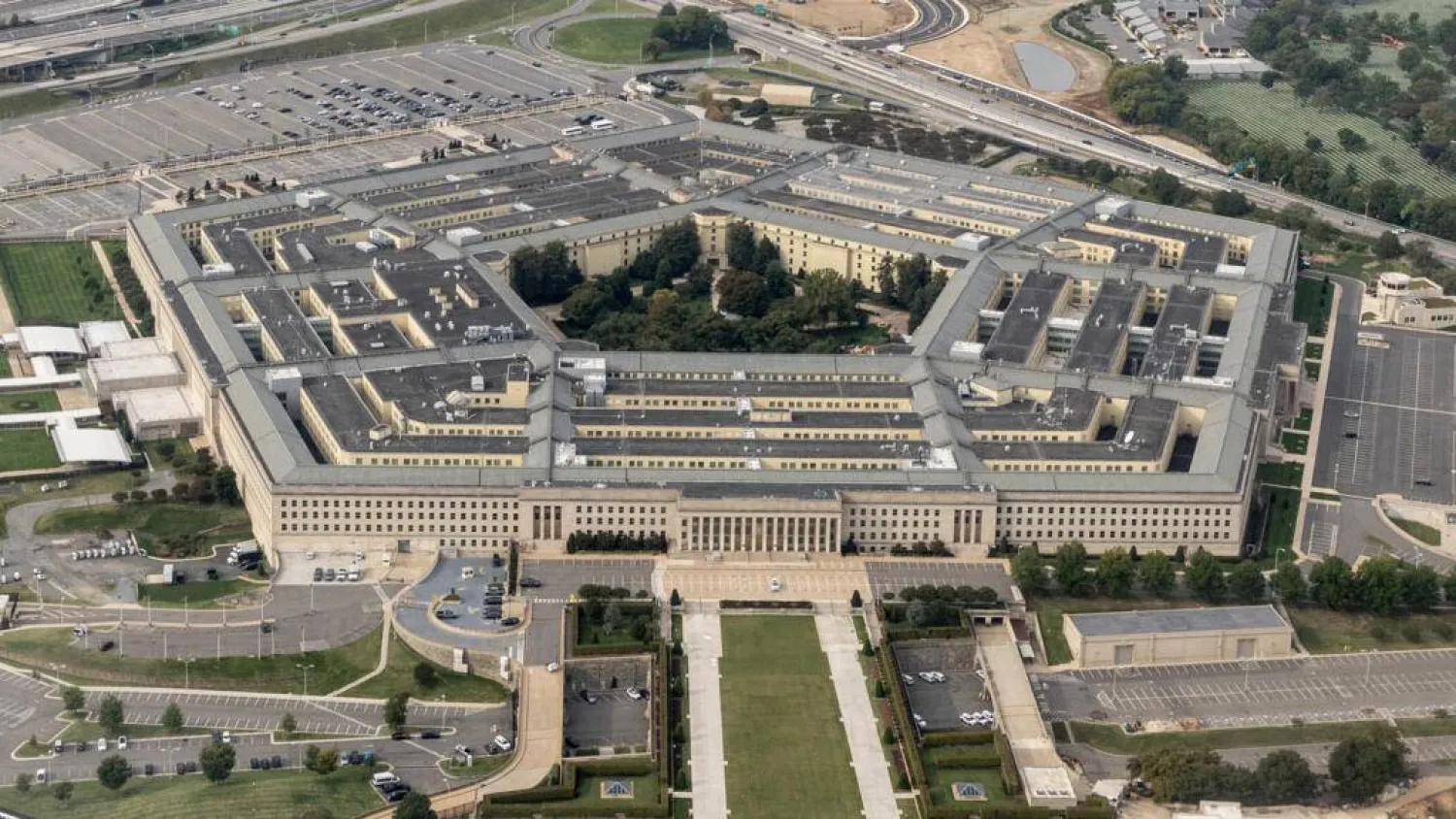
The United States has fired its top military planner, The Atlantic reported Wednesday, in a surprise shake-up as President Donald Trump appears to be preparing to resume large-scale strikes against Iran.

Army Lieutenant General Brett Sylvia was removed this week from his role as head of strategy, plans and policy on the Joint Chiefs of Staff, the magazine reported, citing unidentified defense department officials.

Sylvia's ouster would be the latest in a series of high-profile departures from the military since Trump returned to power a year ago.

Secretary of Defense Pete Hegseth said last month that the United States has slashed the number of its generals and admirals by 20 percent, in a move he said is aimed at "accountability."

He suggested the cuts targeted officers who failed to get on board with his efforts to ensure the military is focused on war-fighting rather than the "woke" policies of previous administrations, describing the reductions as an "accomplishment."

No reason was given for Sylvia's departure and no replacement has been named, The Atlantic said.

AFP has contacted the Pentagon for comment.

The reported sacking comes as Trump is widely considered to be weighing fresh strikes against Iran after the US midterm elections on November 3.

"We may do another little Epic Fury," Trump said last week, referring to US-Israeli attacks on Tehran in February that triggered the war.

He did not give any indication on timing.

Neither the United States nor Iran has engaged in major attacks on land-based targets since early September, settling instead into a pattern of strikes on commercial ships.

Sylvia's previous roles included leading the 101st Airborne Division -- the US army's air assault division -- and heading a unit in Iraq.