US, Venezuela Swap Prisoners: Maduro Ally for 10 Americans, Plus Fugitive Contractor 'Fat Leonard'

Venezuela's President Nicolas Maduro (L) greets Colombian businessman Alex Saab (C) upon his arrival at the Miraflores Presidential Palace in Caracas on December 20, 2023. (Photo by Federico Parra / AFP)
TT

US, Venezuela Swap Prisoners: Maduro Ally for 10 Americans, Plus Fugitive Contractor 'Fat Leonard'

Venezuela's President Nicolas Maduro (L) greets Colombian businessman Alex Saab (C) upon his arrival at the Miraflores Presidential Palace in Caracas on December 20, 2023. (Photo by Federico Parra / AFP)

The United States freed a close ally of Venezuelan President Nicolás Maduro in exchange for the release of 10 Americans imprisoned in the South American country and the return of a fugitive defense contractor known as “Fat Leonard” who is at the center of a massive Pentagon bribery scandal, the Biden administration announced Wednesday.
The American detainees were back on US soil late Wednesday, White House national security adviser Jake Sullivan said. Six of them arrived at Kelly Airfield Annex in San Antonio, The Associated Press said on Thursday.
Savoi Wright, a Californian who had been arrested in Venezuela in October, said, “Free at last, free at last, thank God almighty, free at last” after disembarking the plane.
The deal represents the Biden administration's boldest move yet to improve relations with the major oil-producing nation and extract concessions from the self-proclaimed socialist leader. The largest release of American prisoners in Venezuela's history comes weeks after the White House agreed to suspend some sanctions, following a commitment by Maduro to work toward free and fair conditions for the 2024 presidential election.
Maduro celebrated the return of Alex Saab as a “triumph for truth” over what he called a US-led campaign of lies, threats and torture against someone he considers a Venezuelan diplomat illegally arrested on a US warrant.
“President Biden, we won’t be anyone’s colony,” a defiant Maduro said with Saab at his side for a hero's welcome at the presidential palace.
The release of Saab, long regarded by Washington as a bagman for Maduro, is a significant concession to the Venezuelan leader. Former President Donald Trump's administration held out Saab as a trophy, spending millions of dollars pursuing the Colombian-born businessman, at one point even deploying a Navy warship to the coast of West Africa following his arrest in Cape Verde to ward off a possible escape.
US officials said Biden's decision to grant him clemency was difficult but essential in order to bring home jailed Americans, a core administrative objective that in recent years has resulted in the release of criminals once seen as untradeable.
“These individuals have lost far too much precious time with their loved ones, and their families have suffered every day in their absence. I am grateful that their ordeal is finally over,” President Joe Biden said in a statement.
The agreement also resulted in the return to US custody of Leonard Glenn Francis, the Malaysian owner of a ship-servicing company who is the central character in one of the largest bribery scandals in Pentagon history.
But the exchange angered many in the Venezuelan opposition who have criticized the White House for standing by as Maduro has repeatedly outmaneuvered Washington after the Trump administration’s campaign to topple him failed.
Eyvin Hernandez, a Los Angeles County public defender arrested almost two years ago along the Colombia-Venezuela border, was one of the US detainees. After arriving in Texas Wednesday night, he thanked Biden "because I know he made a difficult decision that will have a lot of pressure on him on Capitol Hill. But he got us home and we’re with our families. And so we’re incredibly grateful, all of us.”
Hernandez added, “Honestly, all you think about when you’re in prison is how you didn’t appreciate being free while you were free.”
Wright told reporters: “I didn’t know if I would ever make it out. And it’s really scary to be in a place where you’re used to having freedoms and you’re locked into a cell. ... It’s a very challenging situation.”
In October, the White House eased sanctions on Venezuela’s oil industry following promises by Maduro that he would level the playing field for the 2024 election, when he's looking to add six years to his decade-long, crisis-ridden rule. A Nov. 30 deadline has passed and so far Maduro has failed to reverse a ban blocking his chief opponent, María Corina Machado, from running for office.
Biden told reporters earlier in the day that, so far, Maduro appeared to be “keeping his commitment on a free election.” Republicans, echoing the sentiment of many in the US-backed opposition, said Saab's release would only embolden Maduro to continue down an authoritarian path.
“Disgraceful decision,” Republican Sen. Marco Rubio of Florida, vice chair of the Senate Intelligence Committee, posted on X, the social media platform formerly known as Twitter.
The White House went to lengths to assure it won't hesitate to snap back sanctions if Venezuela's government fails to fulfill electoral commitments hammered out during negotiations with the opposition. A $15 million reward seeking Maduro's arrest to face drug trafficking charges in New York also remains in effect, it said.
The agreement also requires Maduro's government to release 21 Venezuelans, including a close ally of Machado, who has yet to comment on the release.
Among the Americans released are two former Green Berets, Luke Denman and Airan Berry, who were involved in an attempt to oust Maduro in 2019.
The US has conducted several swaps with Venezuela over the past few years, including one in October 2022 for seven Americans, including five oil executives at Houston-based Citgo, in exchange for the release of two nephews of Maduro’s wife jailed in the US on narcotics charges. Like that earlier exchange, Wednesday's swap took place on an airstrip in the Caribbean island nation of St. Vincent and the Grenadines.
Saab, who turns 52 on Thursday, hugged his wife and two young children as he descended the staircase of a private jet at the Simon Bolivar International Airport.
It was a stark reversal from the scene on another tarmac, in Cape Verde, where he was arrested in 2020 during a fuel stop en route to Iran to negotiate oil deals on behalf of Maduro’s government. The US charges were conspiracy to commit money laundering tied to a bribery scheme that allegedly siphoned off $350 million through state contracts to build affordable housing. Saab was also sanctioned for allegedly running a scheme that stole hundreds of millions in dollars from food-import contracts at a time of widespread hunger mainly due to shortages in the South American country.
After his arrest, Maduro's government said Saab was a special envoy on a humanitarian mission and was entitled to diplomatic immunity from criminal prosecution under international law.
“Life is a miracle,” Saab said, standing alongside Maduro at the neoclassical presidential palace in Caracas. “I'm proud to serve the Venezuelan people and this government, a loyal government, which, like me, never gives up. We will always triumph."
Absent from Maduro's chest-thumping was any mention of Saab's secret meetings with the US Drug Enforcement Administration. In a closed-door court hearing last year, Saab's lawyers said that he was for years helping that agency untangle corruption in Maduro’s inner circle and had agreed to forfeit millions of dollars in illegal proceeds from corrupt state contracts.
But the value of the information he shared with the Americans is unknown; some have suggested it may have all been a Maduro-authorized ruse to collect intelligence on the US law enforcement activities in Venezuela. Whatever the case, Saab skipped out on a May 2019 surrender date and shortly afterward was charged by federal prosecutors in Miami.
The deal is the latest concession by the Biden administration in the name of bringing home Americans jailed overseas, including a high-profile prisoner exchange last December when the US government — over the objections of some Republicans in Congress and criticism from some law enforcement officials — traded Russian arms dealer Viktor Bout for WNBA star Brittney Griner.
The swaps have raised concerns that the US is incentivizing hostage-taking abroad and producing a false equivalence between Americans who are wrongfully detained abroad and foreigners who have been properly prosecuted and convicted in U.S courts.
“What happened to the separation of powers?” said Juan Cruz, who oversaw the White House’s relations with Latin America while working at the National Security Council from 2017-19. “Normally you would have to wait a defendant to be found guilty in order to be able to pardon him for a swap. This is an especially bad precedent with a Trump 2.0 potentially around the corner. It invites winking and nodding from the executive.”
But Biden administration officials say securing the freedom of wrongfully detained Americans and hostages abroad requires difficult dealmaking.
Making this deal more palatable to the White House was Venezuela's willingness to return Francis.
Nicknamed “Fat Leonard” for his bulging 6-foot-3 frame, Francis was arrested in a San Diego hotel nearly a decade ago as part of a federal sting operation. Investigators say he bilked the US military out of more than $35 million by buying off dozens of top-ranking Navy officers with booze, sex, lavish parties and other gifts.
Three weeks before he faced sentencing in September 2022, Francis made an escape as stunning and brazen as the case itself as he snipped off his ankle monitor and disappeared. He was arrested by Venezuelan police attempting to board a flight from Caracas and has been in custody since.



Thousands of Pro-Palestinian Demonstrators Rally in London

People cross Westminster Bridge as they take part in a National March in support of Palestine, organised by Palestine Solidarity Campaign, in central London on October 10, 2026. (Photo by JUSTIN TALLIS / AFP)
TT

Thousands of Pro-Palestinian Demonstrators Rally in London

People cross Westminster Bridge as they take part in a National March in support of Palestine, organised by Palestine Solidarity Campaign, in central London on October 10, 2026. (Photo by JUSTIN TALLIS / AFP)

Several thousand pro-Palestinian protesters marched through central London on Saturday, calling for an end to Israeli strikes on Gaza, three years after Hamas's October 7 attack.

Marchers carried placards reading "End the genocide" and "Free Palestine" as they made their way along the route near the British parliament.

"We are here today to mark three years of the ongoing genocide in Gaza," Aimee Shalan, director of the Palestine Solidarity Campaign, told AFP.

She said UK-led Western sanctions over settler violence did not go far enough, calling for "full sanctions on Israel".

A ceasefire began a year ago and although Israel has reduced its level of attacks it has kept striking Gaza on a near-daily basis.

Strikes have killed some 1,450 Palestinians since the ceasefire, according to Gaza's health ministry.

Police said they had made "several arrests" including a man and a woman with placards of support for the banned organization Palestine Action.

Recent graduate Hibo Hassan, 23, said she was there to show her solidarity.

"Although it is happening in the Middle East, it affects us here now," she said.

"It's extremely dystopian and that is something we should be all scared about," she added.

Another protester, a 32-year-old Kosovar immigrant who gave his name as Kobe, said his own experience of war made him want to "stand up today and not let history repeat" itself.

The "National March for Palestine" organized by the Palestine Coalition, according to police, came three days after the third anniversary of the October 7, 2023 attack.


Putin Told Trump about Iran's Position on Peace Deal

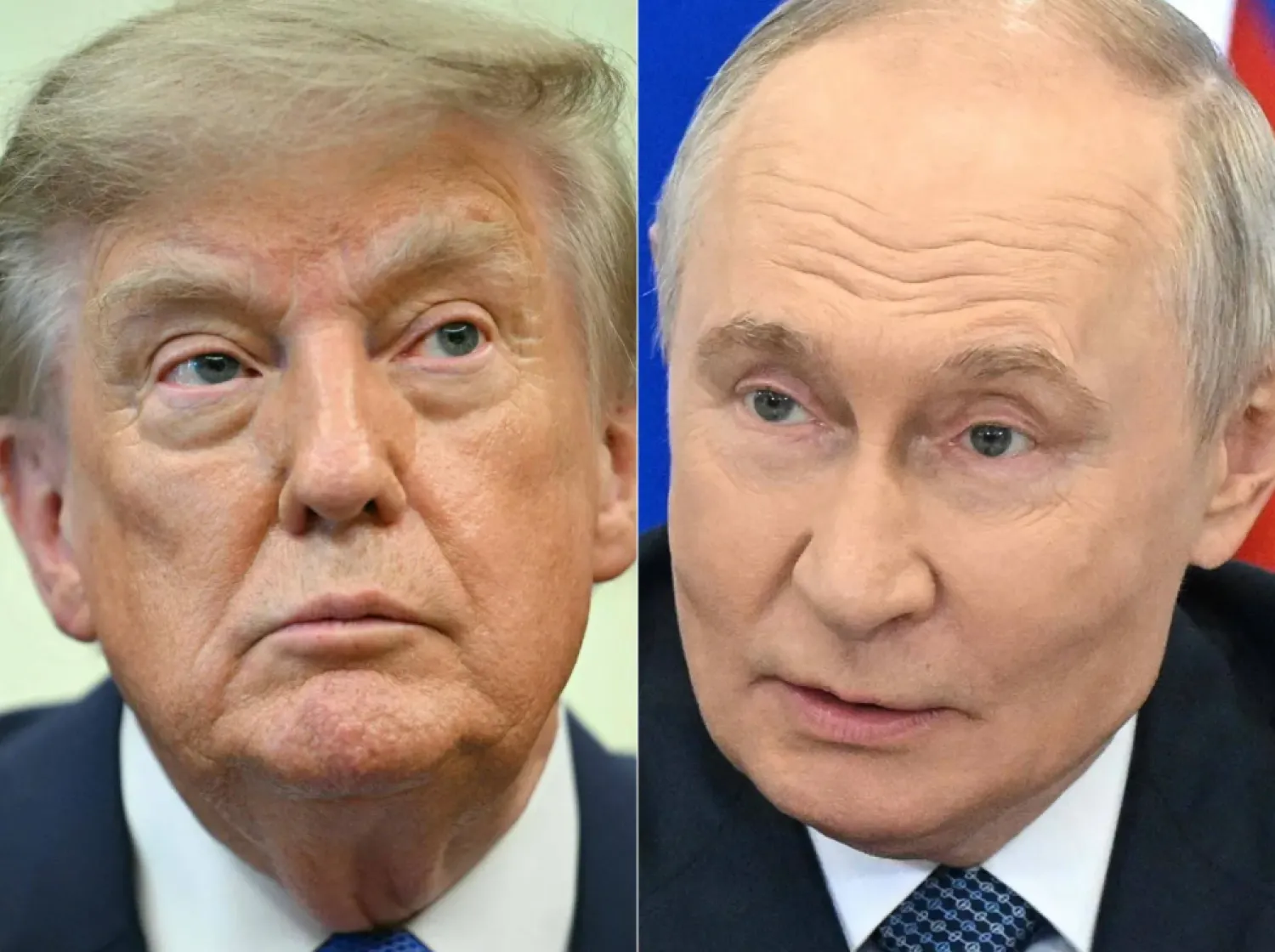
 This combination of pictures shows (L/R) US President Donald Trump in the Oval Office of the White House in Washington, DC, on August 10, 2026 and in this pool photograph distributed by the Russian state agency Sputnik, Russia's President Vladimir Putin in the Novosibirsk region on August 11, 2026. (AFP)
This combination of pictures shows (L/R) US President Donald Trump in the Oval Office of the White House in Washington, DC, on August 10, 2026 and in this pool photograph distributed by the Russian state agency Sputnik, Russia's President Vladimir Putin in the Novosibirsk region on August 11, 2026. (AFP)
TT

Putin Told Trump about Iran's Position on Peace Deal

 This combination of pictures shows (L/R) US President Donald Trump in the Oval Office of the White House in Washington, DC, on August 10, 2026 and in this pool photograph distributed by the Russian state agency Sputnik, Russia's President Vladimir Putin in the Novosibirsk region on August 11, 2026. (AFP)
This combination of pictures shows (L/R) US President Donald Trump in the Oval Office of the White House in Washington, DC, on August 10, 2026 and in this pool photograph distributed by the Russian state agency Sputnik, Russia's President Vladimir Putin in the Novosibirsk region on August 11, 2026. (AFP)

Russian President Vladimir Putin has told Donald Trump about Iran's position on a possible Mideast peace deal, the Kremlin said Saturday.

The Kremlin said Tehran's stance was relayed in a phone call held between the two leaders on Friday. It did not say how Trump responded, nor elaborate on Iran's position.

Diplomatic efforts to end the more-than-seven-month-long Iran conflict, which began with US-Israeli strikes on Iran in February, have been at an impasse since the summer, according to AFP.

Putin met Iranian President Masoud Pezeshkian on the sidelines of a summit in Turkmenistan earlier this week, where the Russian leader expressed an interest in helping broker peace.

"In coordination with the Iranian president, Putin conveyed the Iranian side's views on a possible resolution to the conflict to Trump," Kremlin spokesman Dmitry Peskov said Saturday, according to Russia's state RIA news agency.

The United States and Iran agreed a memorandum of understanding in June that spelled out a framework for ending their conflict, but Iranian attacks on ships in the Strait of Hormuz prompted a resumption of US military operations.

Recent indirect talks between Washington and Tehran on the sidelines of the UN General Assembly failed to produce a breakthrough.


First Execution to Be Livestreamed in the US: Nidal Hasan’s Journey from Psychiatric Clinic to Death Row

(FILES) This April 9, 2010 file photo released by the Bell County Sheriffs Department, shows US Major Nidal Hasan after being moved from Brooke Army Medical Center in San Antonio to Bell County Jail in Belton, Texas. . (Photo by Handout / BELL COUNTY SHERIFFS DEPARTMENT / AFP)
TT

First Execution to Be Livestreamed in the US: Nidal Hasan’s Journey from Psychiatric Clinic to Death Row

(FILES) This April 9, 2010 file photo released by the Bell County Sheriffs Department, shows US Major Nidal Hasan after being moved from Brooke Army Medical Center in San Antonio to Bell County Jail in Belton, Texas. . (Photo by Handout / BELL COUNTY SHERIFFS DEPARTMENT / AFP)

In an unprecedented move that has shaken Washington’s political and legal establishment, American society stands on the threshold of a deeply sensitive historical and moral turning point. The Pentagon is preparing to carry out what would be the first public execution broadcast live over the internet in modern US history, sentencing former Army Major and psychiatrist Nidal Malik Hasan to death on December 3.

The case is particularly significant because it would mark the first execution by firing squad under military law since 1945, the end of World War II. It would place a US Army major before the ultimate punishment, in a highly publicized execution watched by millions on their screens, after decades in which such military sentences had remained uncarried out.

Origins and Background: Between Achievement and Extremism

Nidal Malik Hasan was born in September 1970 in Arlington County, Virginia, to a family of Palestinian origin. He attended American schools before deciding to join the military in 1988, immediately after graduating from high school.

The US government fully funded his university education until he earned his medical degree in psychiatry. He steadily advanced through the military ranks, eventually becoming a major and Army psychiatrist, a position that placed him on a promising career path.

Behind this distinguished military career, however, a profound identity crisis and bitter ideological struggle were taking shape out of sight. Subsequent investigations revealed that Hasan had engaged in extensive ideological correspondence with extremist figures abroad, most notably Anwar al-Awlaki, a leader in Al-Qaeda, according to US media reports.

Hasan increasingly voiced strong opposition to US foreign policy, viewing the wars in Iraq and Afghanistan as direct attacks on his beliefs. The crisis reached its peak when he received official military orders assigning him to active duty in Afghanistan.

Fort Hood and the Mass Shooting

On November 5, 2009, just weeks before he was scheduled to deploy to Afghanistan, Major Nidal Hasan made the decision to completely repudiate his military oath and stormed the Soldier Readiness Processing Center at the well-known Fort Hood military base in Texas.

Hasan drew his firearm and opened fire indiscriminately and repeatedly on his fellow service members, who were unarmed and waiting to undergo medical examinations and routine vaccinations before deployment.

The surprise attack killed 13 people, including 12 military personnel and one civilian, and wounded another 32, with injuries of varying severity. It was described as the deadliest attack on a US military base in modern history.

The shooting ended when civilian security personnel at the base opened fire on Hasan, leaving him partially paralyzed and confined to a wheelchair from that day onward.

The Courtroom and the Shocking Admission

During his landmark military trial in 2013, Nidal Hasan stunned those present by refusing to use lawyers and choosing to represent himself before the military jury.

Hasan made no effort to defend himself or offer excuses. Instead, he openly accepted full responsibility for the incident before the court, stating that he had changed his allegiance and switched sides to protect those he believed were fighting against US forces.

The 13-member military panel convicted him on 45 counts, including premeditated murder and attempted premeditated murder. He was sentenced to death and subsequently transferred to the strict military confinement facilities at Fort Leavenworth, Kansas.

Hasan was not formally convicted of terrorism, as US military criminal law does not contain a separate offense bearing that designation. Instead, the case was prosecuted as a major mass-murder crime.

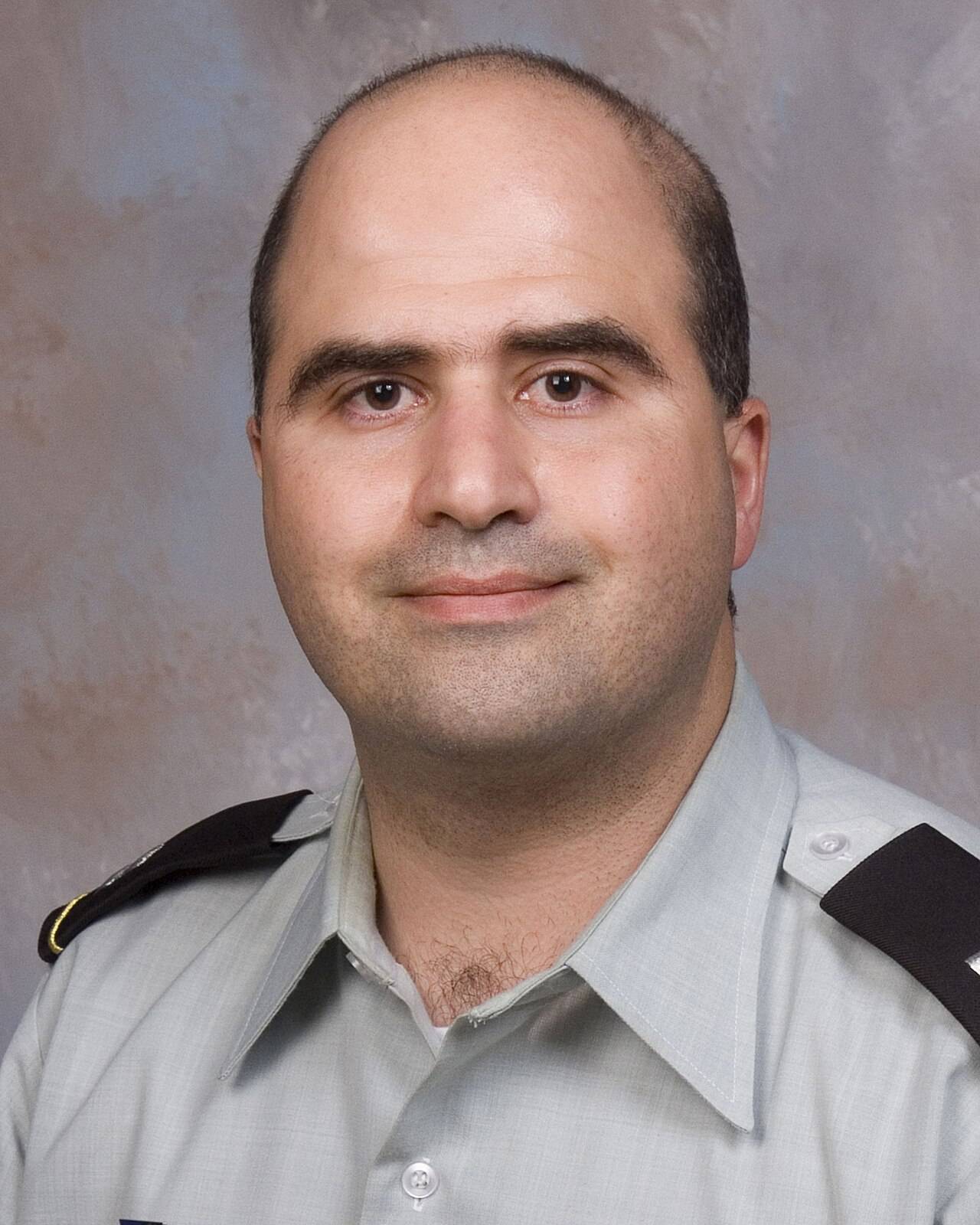
Nidal Hasan in a 2007 photograph at the Uniformed Services University of the Health Sciences. Hasan held the rank of captain in the US Army when the photograph was taken. (Wikipedia)

Trump’s Approval and the End of Six Decades

Under the strict and complex provisions of US military law, the death sentence of a serving military member cannot be carried out without formal approval and the final signature of the US president in his capacity as commander-in-chief of the armed forces.

After all available levels of appeal and legal challenges had been exhausted, and the Supreme Court had rejected his petitions, President Donald Trump signed the execution order following an explicit recommendation from his defense secretary, Pete Hegseth.

The presidential decision paves the way for the end of decades without military executions. The planned execution would be the first of its kind in the US military overall since 1961, when soldier John Bennett was hanged. Its particular historical significance lies in the fact that it would be the first military execution by firing squad since soldier Eddie Slovik was executed for desertion in 1945 during World War II.

Screens of Death and Divisions in the White House

The US Department of Defense sparked a major controversy when it announced that the execution by firing squad would be public and available to watch live on internet platforms. The Pentagon justified the unprecedented measure as an effort to establish a decisive deterrent and demonstrate the grave consequences of military betrayal.

Officials selected 1:30 p.m. as the execution time, precisely matching the time Hasan carried out his deadly attack at Fort Hood years earlier.

The announcement of the livestream triggered a storm of controversy and sharp divisions within American political circles. US Vice President JD Vance expressed serious reservations and deep skepticism about broadcasting the execution publicly, stating that he would not watch the spectacle under any circumstances.

Democrats strongly criticized the move, calling it a regressive act unbecoming of a country governed by institutions. Some prominent Republicans also expressed disgust at turning judicial justice into a media spectacle resembling practices associated with extremist totalitarian regimes.

Nidal Hasan in his 1986 high school yearbook. (Wikipedia)

The Legal Clash and the Constitutionality of a Public Broadcast

The decision to livestream the execution opens a dark and contentious legal and constitutional chapter in the American justice system. No official execution has been broadcast on public screens in the country’s modern history since the last authorized public execution took place in the 1930s.

This political ambition faces a complex legislative framework governing the public disclosure of executions, with substantial differences between state and federal law. In most US states, local laws prohibit filming and broadcasting executions, allowing only a limited number of witnesses and journalists to attend for transparency purposes.

Meanwhile, Federal Military Regulation 190-55 restricts attendance to a small group that includes victims’ relatives and accredited journalists, while imposing an absolute ban on anyone below the legal age.

Despite efforts by the defense to submit emergency petitions to civil courts seeking to halt the execution on the basis of these legal loopholes, the Pentagon appears determined to overcome the obstacles and proceed with both the execution and its broadcast on the scheduled date.