UN Experts: Terrorist Threat is High in Africa Conflict Zones and Afghanistan, and Rose in Europe

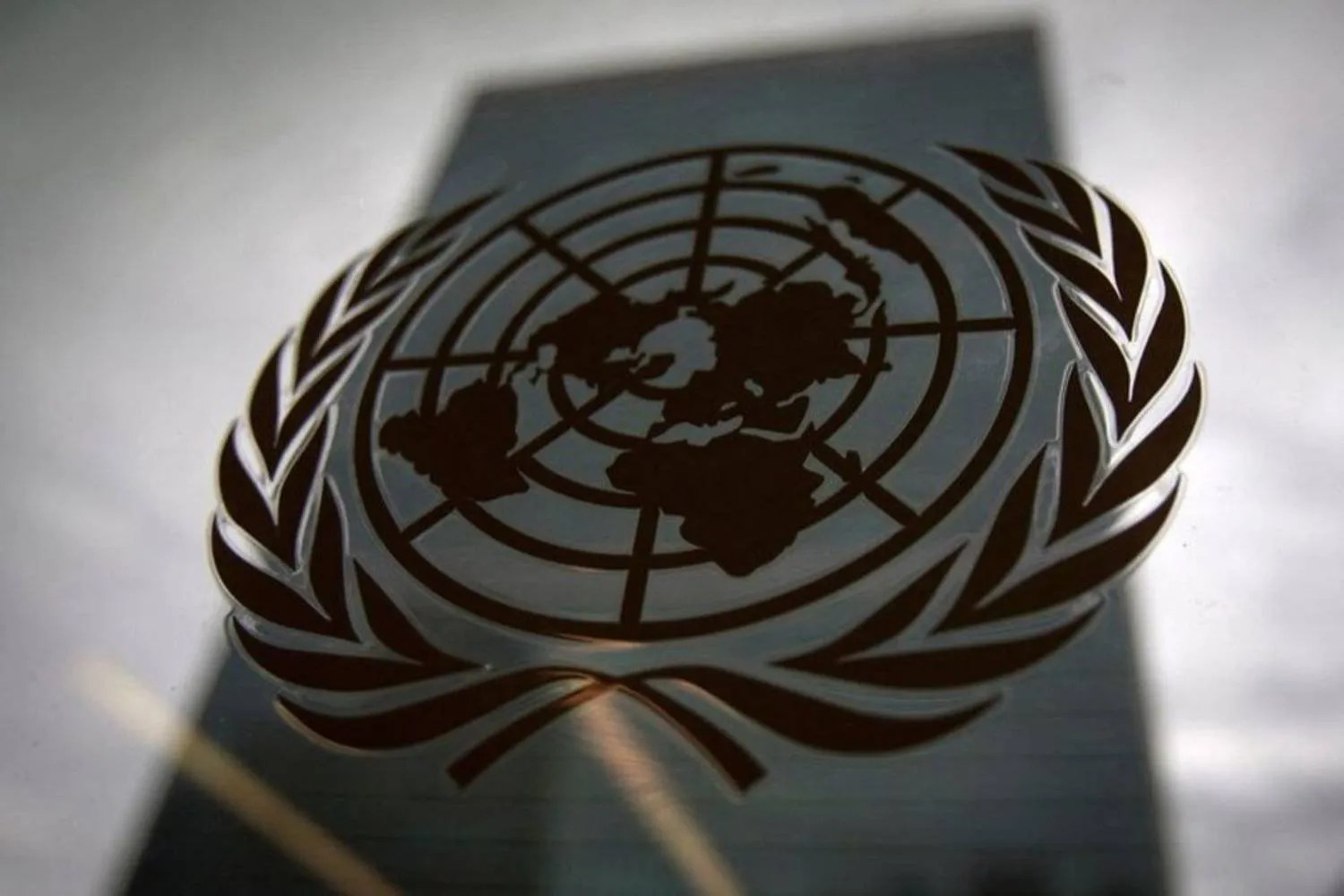
The United Nations headquarters building is pictured though a window with the UN logo in the foreground in the Manhattan borough of New York August 15, 2014. (Reuters)
TT

UN Experts: Terrorist Threat is High in Africa Conflict Zones and Afghanistan, and Rose in Europe

The United Nations headquarters building is pictured though a window with the UN logo in the foreground in the Manhattan borough of New York August 15, 2014. (Reuters)

The terrorist threat from al-Qaida, the ISIS group and their affiliates remains high in conflict zones in Africa and in Afghanistan – and threat levels have risen in some regions including Europe, UN experts said in a new report.
The panel of experts said in the 23-page report that the relationship between Afghanistan’s Taliban rulers and al-Qaida remains close, and unnamed member states report that “the high concentration of terrorist groups” in the country are undermining the security situation in the region, The Associated Press reported.
The greatest threat within Afghanistan still comes from the ISIS “with its ability to project into the region and beyond,” the experts said in the report to the UN Security Council covering the period until Dec. 16, 2023 which was circulated Wednesday. Regionally, they pointed to a succession of attacks in neighboring Iran and Pakistan and threats in Central Asian nations.
The panel said, however, that while none of the al-Qaida affiliated groups have recovered the capability to launch long-range operations, “they harbor global ambitions.” And it said “covert and calibrated efforts to rebuild capability” have been reported.
The ISIS group broke away from al-Qaida over a decade ago and attracted supporters from around the world. Despite its defeat in Iraq in 2017 and in Syria two years later. The panel said the combined ISIS strength in the two countries is still between 3,000 and 5,000 fighters. In Iraq, they are carrying out “a low-intensity insurgency with covert terrorist cells” while in Syria attacks have intensified since November, the experts said.
The panel said the three-month delay in naming the current ISIS leader, Abu Hafs al-Hashemi al-Qurayshi, following the death in fighting of his little-known predecessor “is judged indicative of internal difficulties and security challenges”
Some unnamed UN member nations have assessed that serious pressure from counter-terrorism operations in Syria and Iraq raise the possibility that the ISIS could move its leadership and “center of gravity” to Africa or Afghanistan, with Africa more likely, the experts said.
In West Africa and the Sahel, the panel said, “violence and threat have escalated again” in conflict zones, raising concerns among UN member nations. The experts point to “a deficit in counterterrorism capabilities,” which ISIS and al-Qaida affiliated groups are continuing to exploit.
“The situation is becoming ever more complex with the conflation of ethnic and regional disputes with the agenda and operations of these groups,” they said.
In east Africa, the experts said, the Somali government is continuing its military offensive against al-Shabab, an al-Qaida affiliate, but they said UN member nations assess that despite significant losses from air strikes and military operations, “al-Shabab remains resilient. It has an estimated 7,000 to 12,000 fighters, and an estimated $100 million annual income, mostly from illegal taxation in the capital Mogadishu and southern Somalia, they said.
The panel said al-Qaida has improved its media productions which appeared aimed at restoring the extremist group’s credibility, attracting recruits, and filling the void over its inability to announce a new leader.
But that messaging changed after Hamas’ Oct. 7 attacks in southern Israel, the experts said.
The attack killed 1,200 people, mostly civilians, and Hamas and other groups took about 250 people hostage, according to Israeli authorities. In Israel’s ongoing offensive in response in Gaza aimed at destroying Hamas, more than 27,000 people have been killed, according to the territory’s health ministry which doesn’t distinguish between civilian and combatant deaths.
The experts said Al-Qaida has focused on “the sanctity” of the Al-Aqsa mosque, the third holiest site in Islam which is in a compound in Jerusalem sacred to Jews and Muslims, with some communications stressing “an obligation for individuals to take action to the limits of their own ability.”
“Member States are concerned that it (al-Qaida) could exploit the situation to recover relevance and tap into popular dissent about the extent of civilian casualties, providing direction to those keen to act,” the panel said, and they “are concerned that the renewed narrative could inspire self-initiated attacks globally.”
Across Europe, the experts said, “formal terrorist threat levels have risen ... following fatal attacks in late 2023 in France and Belgium, in addition to numerous non-lethal terrorist incidents and arrests in several European countries.”



Turkish Police Detain Deutsche Welle Journalist over Social Media Posts

19 February 2026, Canada: Deutsche Welle (DW) logo is seen displayed on a smartphone screen. Photo: Thomas Fuller/SOPA Images via ZUMA Press Wire/dpa
TT

Turkish Police Detain Deutsche Welle Journalist over Social Media Posts

19 February 2026, Canada: Deutsche Welle (DW) logo is seen displayed on a smartphone screen. Photo: Thomas Fuller/SOPA Images via ZUMA Press Wire/dpa

Turkish police have detained investigative journalist Alican Uludag on suspicion of insulting President Recep Tayyip Erdogan and spreading misinformation, sparking outrage among journalism groups.
Uludag, who works for German broadcaster Deutsche Welle’s Turkish service, was taken from his home in Ankara late Thursday as part of an investigation into social media posts. The Istanbul Chief Prosecutor’s Office said he is suspected of “insulting the president” and “disseminating misleading information.”
The journalist, whose reporting focuses mainly on the judiciary and on corruption cases, was later transferred to Istanbul for questioning.
His detention drew sharp condemnation from press freedom advocates, who described it as an attack on media independence and democratic norms, The Associated Press said.
Deutsche Welle’s director‑general, Barbara Massing, demanded his release, calling the arrest “a deliberate act of intimidation.”
On Friday, journalists gathered outside Istanbul’s Çaglayan Courthouse to protest Uludag’s detention and to call for his immediate release.
The advocacy group, Reporters Without Borders considers Türkiye to be one of the most repressive countries for journalists, nothing that most media organizations are under government control and journalists face frequent legal pressure or intimidation.
At least 14 journalists or media sector workers are currently in prison, according to the Turkish Journalists Syndicate.


South Korea’s Ex-President Yoon Apologizes After Life Sentence Over Martial Law 

South Korean President Yoon Suk Yeol  delivers a speech to declare martial law in Seoul, South Korea, December 3, 2024. (The Presidential Office/Handout via Reuters/File Photo)
South Korean President Yoon Suk Yeol delivers a speech to declare martial law in Seoul, South Korea, December 3, 2024. (The Presidential Office/Handout via Reuters/File Photo)
TT

South Korea’s Ex-President Yoon Apologizes After Life Sentence Over Martial Law 

South Korean President Yoon Suk Yeol  delivers a speech to declare martial law in Seoul, South Korea, December 3, 2024. (The Presidential Office/Handout via Reuters/File Photo)
South Korean President Yoon Suk Yeol delivers a speech to declare martial law in Seoul, South Korea, December 3, 2024. (The Presidential Office/Handout via Reuters/File Photo)

Former ‌South Korean President Yoon Suk Yeol apologized on Friday for his short-lived declaration of martial law in December 2024, a day after a Seoul court sentenced him to life in prison for masterminding an insurrection.

In a statement released by his lawyers, Yoon said that while he was sorry for the "frustration and hardship" brought upon the people by his martial law decree, he stood behind the "sincerity and purpose" behind his actions.

The Seoul Central District Court's decision ‌to hand him ‌a life sentence on Thursday was "predetermined," he ‌said, ⁠adding that the verdict ⁠against him was political retaliation.

"Forces that seek to smear a decision made to save the nation as an 'insurrection' and to use it beyond political attacks as an opportunity to purge and eliminate their opponents will only grow more rampant going forward," he said.

Yoon also questioned ⁠whether an appeal would have meaning ‌in what he described as an ‌environment where judicial independence could not be guaranteed, while telling ‌supporters to "unite and rise."

His lawyers separately said the statement ‌did not amount to an intention to forgo an appeal.

Yoon's martial law declaration lasted around six hours before being voted down by parliament, but it sent shockwaves through the country and ‌sparked street protests.

The court found Yoon guilty of subverting constitutional order by deploying troops ⁠to storm ⁠parliament and move to detain opponents, capping a dramatic fall that saw him stripped of office and end up behind bars.

Yoon, a former career prosecutor, denied the charges, arguing he had presidential authority to declare martial law and his action was aimed at sounding the alarm over opposition parties' obstruction of government.

A special prosecutor had sought the death penalty for Yoon, though South Korea has not carried out an execution since 1997.

A prosecutor said on Thursday the team had some "regret" over the sentencing, but declined to say whether they planned to appeal.


Russia Hits Ukraine's Oil, Gas Infrastructure in Poltava Region, Naftogaz Says

FILE PHOTO: A Ukrainian service member of the 14th Unmanned Aerial Systems Regiment prepares a deep strike unmanned aerial vehicle before its launch toward Russian territory, amid Russia's attack on Ukraine, in an undisclosed location in Ukraine, undisclosed date, 2025. REUTERS/Valentyn Ogirenko/File Photo
TT

Russia Hits Ukraine's Oil, Gas Infrastructure in Poltava Region, Naftogaz Says

FILE PHOTO: A Ukrainian service member of the 14th Unmanned Aerial Systems Regiment prepares a deep strike unmanned aerial vehicle before its launch toward Russian territory, amid Russia's attack on Ukraine, in an undisclosed location in Ukraine, undisclosed date, 2025. REUTERS/Valentyn Ogirenko/File Photo

Russian drones hit Ukraine's oil and gas infrastructure in the central Poltava region, causing ‌damage ‌and a ‌fire, ⁠the state energy company ⁠Naftogaz said on Friday.

"This is yet another targeted ⁠attack on ‌our ‌oil and ‌gas infrastructure. ‌Since the beginning of the year, the ‌enemy has attacked Naftogaz Group facilities ⁠more ⁠than 20 times," Sergii Koretskyi, Naftogaz CEO said in a post on Facebook.