
About 100 family members of Israeli detainees arrived in The Hague on Wednesday to file a legal complaint at the International Criminal Court (ICC) to prosecute Hamas's leaders for genocide, war crimes, and crimes against humanity.
Sources close to the families revealed that the lawsuit was prepared based on studies conducted by an Israeli team of senior international law experts under the supervision of the Israeli Foreign Ministry.
It is clear that the studies primarily relied on the lawsuit filed by Ukrainian families against Russian President Vladimir Putin, who succeeded last March in obtaining an arrest warrant against him, along with senior military and defense leaders.
The Israeli families aim to prosecute Hamas leaders in the Gaza Strip and abroad and announce that they are wanted on charges of committing "war crimes against humanity."
They believe the complaint is in response to the lawsuits at the ICC against Israeli officials, demanding their conviction of war crimes against humanity after the Israeli aggression on Gaza on Oct. 7.
At a press conference organized by the Hostage and Missing Families Forum (HMFF), Ofri Bibas, sister of detainee Yarden, said: "We are making history by coming to The Hague, to the ICC, a crucial step in our fight as citizens of the state and of the world."
Ofri claimed that the lawsuit would help warn the world that Hamas' crimes could spread to Europe, North America, and other places.
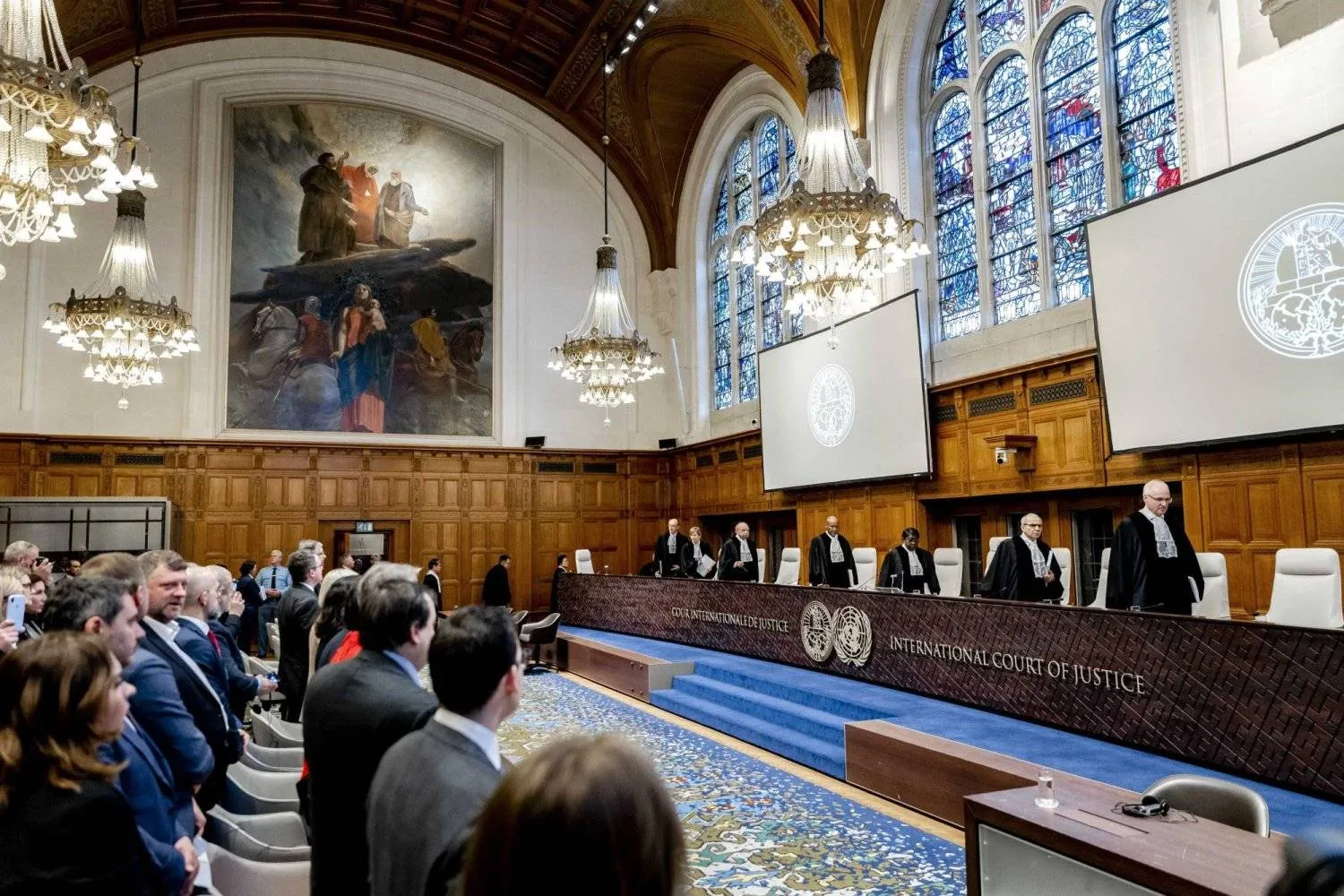
Israeli sources confirmed Wednesday that Benjamin Netanyahu's government decided to cooperate with the International Court of Justice (ICJ) in The Hague, which is deliberating the lawsuit filed by South Africa.
They indicated that Israel is confident that it is waging a defensive war after it was subjected to a Hamas attack.
Israel is not an ICC member and does not have the right to file a lawsuit. However, it decided to appear before the Court in a lawsuit on behalf of the prisoners' families individually.
Representatives of 100 families agreed to adopt the lawsuit, funded by the government, while the rest of the families considered it part of the government's policy to cover up its failure to release Israeli detainees and its insistence on trying to free them by force instead of negotiations.
Israel has the right to appear before the International Court of Justice because it specializes in resolving state disputes.
The Israeli government decided to comply with the requests of the Court's judges and submit a report to prove it took the required measures to refrain from committing a crime.
The ICJ issued a ruling on Jan. 26, demanding Israel to take all possible measures to prevent the crime of genocide against the Palestinian people in the Gaza Strip and must submit a report to the Court on all the measures taken to give effect of this order.
The deadline will end on Feb. 25, and although Israel attacked the Court for accepting consideration of the lawsuit that South Africa filed, it began preparing a report that includes a response to the allegations.
It also decided to respond to South Africa's additional request to consider whether Israel's plan to extend its offensive into Rafah requires other emergency measures to protect Palestinian rights.
Three weeks ago, the ICJ discussed South Africa's claim against Israel and decided that it would not order a cessation of the war as the claim demands.
However, two interim orders were issued against Israel, requiring that the state take adequate measures to prevent genocide and provide humanitarian assistance to the residents of the Gaza Strip.
The Court also required Israel to provide detailed information on compliance with all measures within a month.
Officials in Israel were advised to implement the orders and submit a report to it, thus avoiding violating the decision.