


In Fiery Speech to Congress, Netanyahu Denounces US Protesters as 'Idiots'

 Israeli Prime Minister Benjamin Netanyahu - The AP
 Israeli Prime Minister Benjamin Netanyahu - The AP
TT

In Fiery Speech to Congress, Netanyahu Denounces US Protesters as 'Idiots'

 Israeli Prime Minister Benjamin Netanyahu - The AP
 Israeli Prime Minister Benjamin Netanyahu - The AP

Israeli Prime Minister Benjamin Netanyahu pledged in a scathing speech to Congress on Wednesday to achieve “total victory” against Hamas and denounced US opponents of the war in Gaza as “idiots,” taking a combative stance in a visit the Biden administration has hoped will yield progress in negotiations to end the fighting.

He said protesters opposed to the devastating war in Gaza are "Iran's useful idiots, claiming that Tehran is funding the demonstrations.

Netanyahu used the high-profile address to a joint meeting of Congress to emphasize longstanding and close ties between the United States and Israel. But the speech put in sharp relief the divisions in American society stirred by the war, with dozens of Democratic lawmakers boycotting the address and thousands of protesters outside the Capitol condemning the war and the humanitarian crisis created by it.

Some of the protests near the Capitol turned chaotic. That included one within a few hundred yards of the tightly guarded Capitol grounds, at Union Station, where protesters spray-painted marble statuary and replaced American flags with Palestinian ones. Officers on streets surrounding the Capitol brawled with demonstrators, swinging batons and spraying tear gas.

Speaking for nearly an hour to frequent applause from US lawmakers, as well as stony silence from many leading Democrats, Netanyahu said the US has a shared interest in his country’s fight against Hamas and other Iran-backed armed groups.

“America and Israel must stand together. When we stand together something really simple happens: We win, they lose,” said Netanyahu, who wore a yellow pin expressing solidarity with the Israeli hostages held by Hamas, The AP reported.

But the Israeli leader soon pivoted to a darker tone as he derided those protesting the war on college campuses and elsewhere in the US, gesturing to demonstrations happening on the streets outside the Capitol.

Netanyahu — making his first trip abroad since the war started — made no direct mention of months of US-led mediation for a cease-fire and hostage-release. His remarks did not appear to close the door on a deal but showed no sign he was eager for one.

“Israel will fight until we destroy Hamas’s military capabilities and its rule in Gaza and bring all our hostages home,” he said. “That’s what total victory means. And we will settle for nothing less.”

Hostages freed from Gaza and families of those still in captivity listened in the House chamber. At least five of them rose to display T-shirts with slogans demanding an end to the war and the freeing of remaining hostages. Security officers removed the five.

Rep. Rashida Tlaib, the only Palestinian American serving Congress, went a step further, holding a sign that said “WAR CRIMINAL” on one side and “GUILTY OF GENOCIDE” on the other. Tlaib is one of Netanyahu’s most strident critics in Congress and was censured for her comments last year against the Israel-Hamas war, which has killed more than 39,000 in Gaza.

She has relatives in the West Bank and represents a Michigan district with many Palestinian Americans.

Netanyahu steered away from discussing efforts by the United States and Arab allies to negotiate an end to the fighting and a release of surviving hostages seized by Hamas-led militants.

Netanyahu — who is frequently accused of wading into US politics in favor of conservative and Republican causes — started his remarks with praise of President Joe Biden. But he turned to lavishing praise on former president and current presidential contender Donald Trump “for all he’s done for Israel.”

Netanyahu is scheduled to meet with Biden and Vice President Kamala Harris on Thursday, and with Trump at Mar-a-Lago on Friday.

Kentucky Republican Rep. Andy Barr praised the prime minister’s speech as an exhortation to see Israeli and American interests as intertwined.

“Why should members of Congress, why should the American people defend Israel in their moment of need? Because it is in the national security interest of the United States to defeat Hamas and other Iranian proxies,” Barr said.

Rep. Jamie Raskin, a Democrat from Maryland, said Netanyahu’s speech was made for Trump’s GOP.

“We didn’t hear anything about meaningful progress towards a bilateral ceasefire in return for hostages. We didn’t hear anything about peace,” he said.

The families of American hostages being held in Gaza said they were “profoundly disappointed” by Netanyahu's speech. In a joint statement, the families said he “failed to commit to the hostage deal that is now on the table even though Israel’s senior defense and intelligence officials have called on him to do so.”

Eight Americans are believed to be held by Hamas, including three who were killed.

Former Speaker Nancy Pelosi, who boycotted the speech, called Netanyahu’s speech “the worst presentation of any foreign dignitary invited and honored with the privilege of addressing the Congress.”

Delivering the speech during Israel’s evening prime time, Netanyahu also had an eye on the audience back home. Netanyahu, whose popularity has plummeted from its pre-war levels, aimed to portray himself as a statesman respected by Israel’s most important ally and welcomed in the corridors of Washington. That task is complicated by Americans’ increasingly divided views on Israel and the war.

The appearance made Netanyahu the first foreign leader to address a joint meeting of Congress four times, surpassing Winston Churchill.

House Speaker Mike Johnson gave Netanyahu a warm welcome. More than 60 Democrats and political independent Bernie Sanders boycotted Netanyahu’s speech. The most notable absence was right behind him: Harris, who serves as president of the Senate, said a long-scheduled trip kept her from attending.

The next Democrat in line, Sen. Patty Murray of Washington, declined to attend, so Sen. Ben Cardin, the chair of the Senate Foreign Relations Committee, served as “senator pro tempore” in place of her.

Trump’s running mate, Sen. JD Vance, was also a no-show for Netanyahu’s speech, citing the need to campaign.

er, who in a floor speech in March called for new elections in Israel. Schumer, of New York, said then that Netanyahu has “lost his way” and is an obstacle to peace in the region.



Poland Bars Chinese-Made Cars from Military Sites Over Data Security Fears 

A soldier from the 18th Mechanized Division stands guard on a Light Strike Vehicle "Zmija" during a media tour organized by the country's military to demonstrate the security measures on the Polish Belarusian border, near Bialowieza, Poland, January 10, 2025. (Reuters)
TT

Poland Bars Chinese-Made Cars from Military Sites Over Data Security Fears 

A soldier from the 18th Mechanized Division stands guard on a Light Strike Vehicle "Zmija" during a media tour organized by the country's military to demonstrate the security measures on the Polish Belarusian border, near Bialowieza, Poland, January 10, 2025. (Reuters)

Poland has barred Chinese-made vehicles from entering military facilities due to concerns their onboard sensors could be used to collect sensitive data, the Polish Army said on Tuesday evening.

The army said in ‌a statement ‌that such vehicles ‌may ⁠still be allowed onto ⁠secured sites if specified functions are disabled and other safeguards required under each facility's security rules are in place.

To ⁠limit the risk ‌of ‌exposing confidential information, the military has ‌also banned connecting company ‌phones to infotainment systems in vehicles manufactured in China.

The restrictions do not apply ‌to publicly accessible military locations such as hospitals, ⁠clinics, ⁠libraries, prosecutors' offices or garrison clubs, the army said.

It added that the measures are precautionary and align with practices used by NATO members and other allies to ensure high standards of protection for defense infrastructure.


Starmer, Trump discussed Russia-Ukraine, Iran after Geneva Talks, Downing Street Says 

US President Donald Trump and British Prime Minister Keir Starmer announce an agreement between the two countries as they hold a press conference at Chequers at the conclusion of a state visit on September 18, 2025 in Aylesbury, Britain. (Reuters)
TT

Starmer, Trump discussed Russia-Ukraine, Iran after Geneva Talks, Downing Street Says 

US President Donald Trump and British Prime Minister Keir Starmer announce an agreement between the two countries as they hold a press conference at Chequers at the conclusion of a state visit on September 18, 2025 in Aylesbury, Britain. (Reuters)

British ‌Prime Minister Keir Starmer spoke to US President Donald Trump on Tuesday night about US-mediated Russia-Ukraine peace talks in Geneva, as well as talks between the US and Iran on ‌their nuclear ‌dispute, a Downing Street ‌spokesperson ⁠said.

Starmer also discussed ⁠Gaza with Trump and stressed on the importance of securing further access for humanitarian aid, the spokesperson said.

Negotiators ⁠from Ukraine and ‌Russia ‌concluded the first of two days ‌of the US-mediated ‌peace talks in Geneva on Tuesday, with Trump pressing Kyiv to act fast ‌to reach a deal.

Separately, Iranian Foreign Minister ⁠Abbas ⁠Araqchi said Tehran and Washington reached an understanding on Tuesday on "guiding principles" aimed at resolving their longstanding nuclear dispute, but that did not mean a deal is imminent.


Japan PM Takaichi Reappointed Following Election

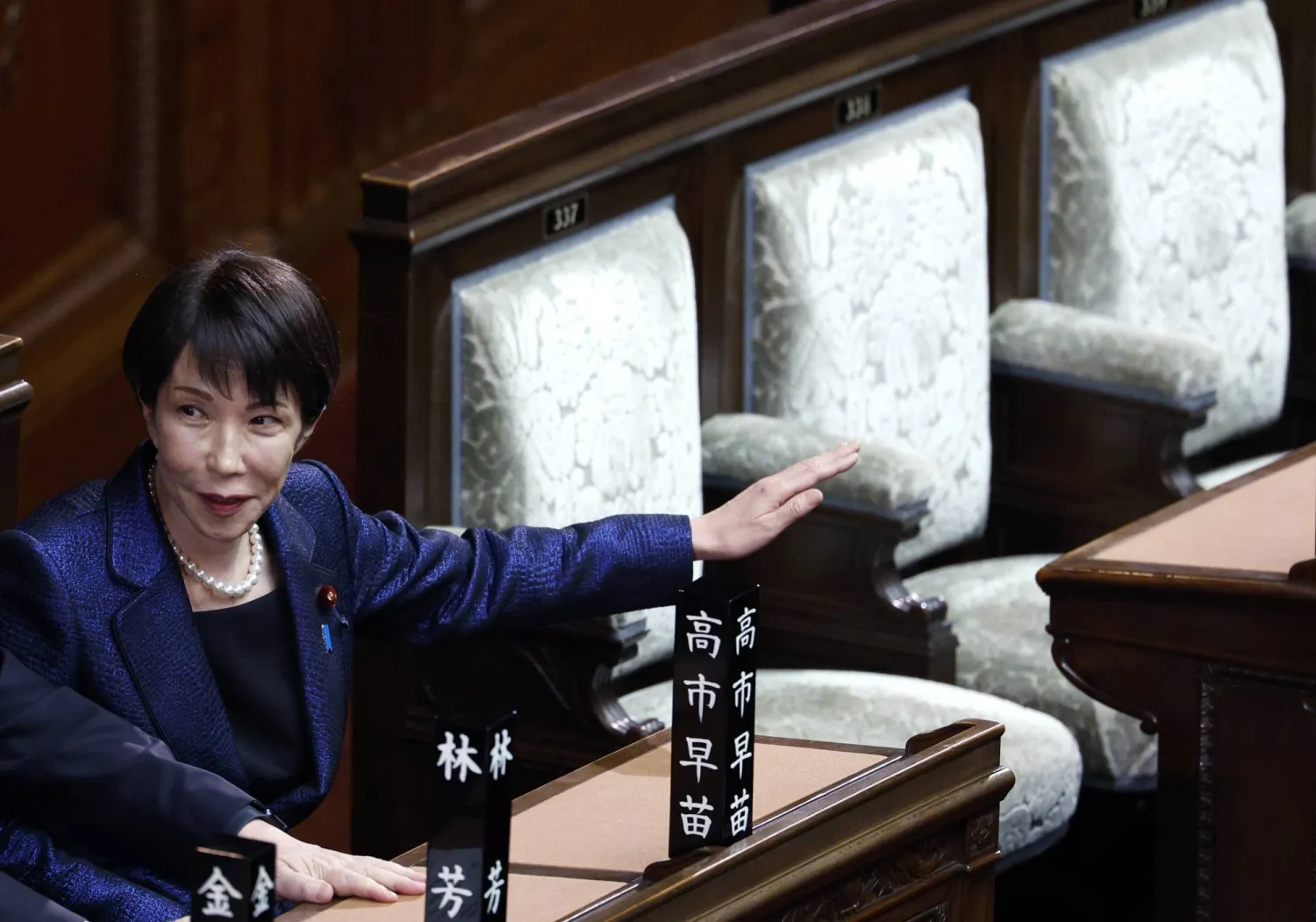
Sanae Takaichi gestures at the Lower House of the Parliament in Tokyo, Japan, 18 February 2026. EPA/FRANCK ROBICHON
TT

Japan PM Takaichi Reappointed Following Election

Sanae Takaichi gestures at the Lower House of the Parliament in Tokyo, Japan, 18 February 2026. EPA/FRANCK ROBICHON

Japan's lower house formally reappointed Sanae Takaichi as prime minister on Wednesday, 10 days after her historic landslide election victory.

Takaichi, 64, became Japan's first woman premier in October and won a two-thirds majority for her party in the snap lower house elections on February 8.

She has pledged to bolster Japan's defenses to protect its territory and waters, likely further straining relations with Beijing, and to boost the flagging economy.

Takaichi suggested in November that Japan could intervene militarily if Beijing sought to take Taiwan by force.

China, which regards the democratic island as part of its territory and has not ruled out force to annex it, was furious.

Beijing's top diplomat Wang Yi told the Munich Security Conference on Saturday that forces in Japan were seeking to "revive militarism".

In a policy speech expected for Friday, Takaichi will pledge to update Japan's "Free and Open Indo-Pacific" strategic framework, local media reported.

"Compared with when FOIP was first proposed, the international situation and security environment surrounding Japan have become significantly more severe," chief government spokesman Minoru Kihara said Monday.

In practice this will likely mean strengthening supply chains and promoting free trade through the Trans-Pacific Partnership (CPTPP) that Britain joined in 2024.

Takaichi's government also plans to pass legislation to establish a National Intelligence Agency and to begin concrete discussions towards an anti-espionage law, the reports said.

Takaichi has promised too to tighten rules surrounding immigration, even though Asia's number two economy is struggling with labor shortages and a falling population.

On Friday Takaichi will repeat her campaign pledge to suspend consumption tax on food for two years in order to ease inflationary pressures on households, local media said, according to AFP.

This promise has exacerbated market worries about Japan's colossal debt, with yields on long-dated government bonds hitting record highs last month.

Rahul Anand, the International Monetary Fund chief of mission in Japan, said Wednesday that debt interest payments would double between 2025 and 2031.

"Removing the consumption tax (on food) would weaken the tax revenue base, since the consumption tax is an important way to raise revenues without creating distortions in the economy," Anand said.

To ease such concerns, Takaichi will on Friday repeat her mantra of having a "responsible, proactive" fiscal policy and set a target on reducing government debt, the reports said.

She will also announce the creation of a cross-party "national council" to discuss taxation and how to fund ageing Japan's ballooning social security bill.

But Takaichi's first order of business will be obtaining approval for Japan's budget for the fiscal year beginning on April 1 after the process was delayed by the election.

The ruling coalition also wants to pass legislation that will outlaw destroying the Japanese flag, according to the media reports.

It wants too to accelerate debate on changing the constitution and on revising the imperial family's rules to ease a looming succession crisis.

Takaichi and many within her Liberal Democratic Party (LDP) oppose making it possible for a woman to become emperor, but rules could be changed to "adopt" new male members.