Pakistani Man with Iran Ties is Charged in Plot to Carry Out Assassinations in US

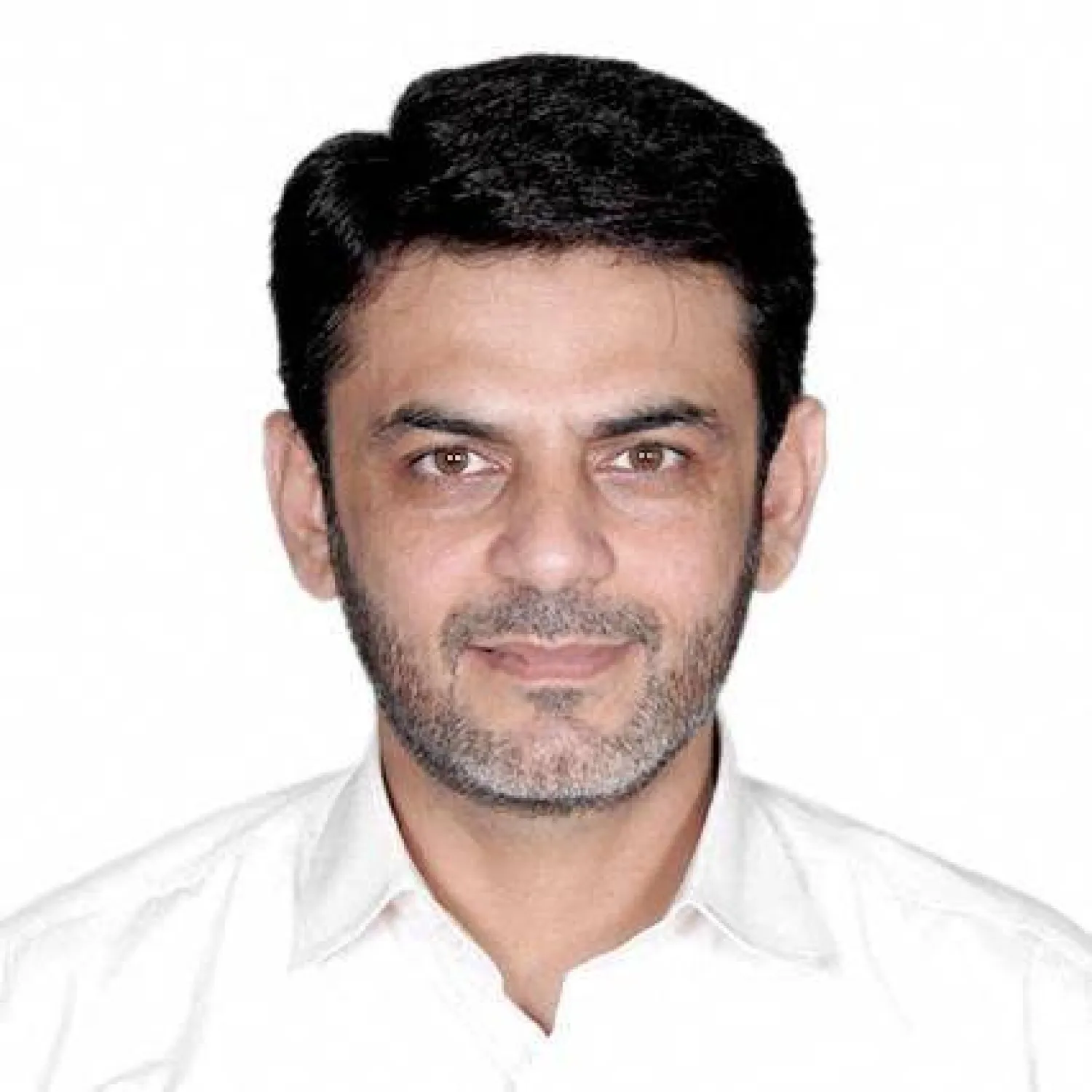
Asif Merchant is shown in this photo released in a criminal complaint by the Department of Justice August 6, 2024. Department of Justice/Handout via REUTERS
TT

Pakistani Man with Iran Ties is Charged in Plot to Carry Out Assassinations in US

Asif Merchant is shown in this photo released in a criminal complaint by the Department of Justice August 6, 2024. Department of Justice/Handout via REUTERS

A Pakistani man alleged to have ties to Iran has been charged in a plot to carry out political assassinations on US soil, including potentially of former President Donald Trump.

The case disclosed by the Justice Department on Tuesday comes two years after officials disrupted a separate scheme that they said was aimed at former Trump administration national security adviser John Bolton.

Asif Merchant traveled to New York in June for the purpose of meeting with men he thought he was recruiting to carry out the killings, even paying a $5,000 advance to two would-be assassins who were actually undercover law enforcement officers, federal officials said, according to The Associated Press. He was arrested in July as he prepared to leave the United States, after having told the men that he would provide further instructions, including the names of the intended targets, in August or September after he returned to Pakistan.

Court documents do not identify any of the potential targets. But US officials acknowledged in July that a threat on Donald Trump’s life from Iran prompted additional security in the days before a Pennsylvania rally in which Trump was injured by a shooter's bullet. That July 13 shooting, carried out by a 20-year-old Pennsylvania man, was unrelated to the Iran threat and Merchant's arrest has no connection to the Trump assassination attempt, a law enforcement official said.

But an FBI agent's affidavit suggests Merchant had current or former high-level officials like Trump in mind. He told an associate who was secretly cooperating with law enforcement that he wanted a “political person" to be killed, the complaint said, mapping out on a napkin the different scenarios in which the target could be assassinated and warning that there would be security “all around."

US officials have warned for years about Iran’s desire to avenge the 2020 killing of Qassem Soleimani, who led the Iranian Revolutionary Guard Corps’ Quds Force. That strike was ordered by Trump when he was president. The US government has since paid for security for multiple Trump administration officials, and in 2022, the Justice Department charged an Iranian operative in a foiled plot to kill Bolton.

FBI Director Christopher Wray said at a July House hearing that the Iranian government had been “extremely aggressive and brazen” in recent years, and Attorney General Merrick Garland said Tuesday that "we expect that these threats will continue and that these cases will not be the last.

“The Justice Department will spare no resource to disrupt and hold accountable those who would carry out Iran’s lethal plotting against Americans,” he said.

White House press secretary Karine Jean-Pierre told reporters Tuesday during an afternoon press briefing that the US had been "tracking Iranian threats against former politicians.”

“We consider this a national and homeland security matter of the highest priority. We have repeatedly met at the highest levels of our government to develop and implement a comprehensive response," she said.

Federal officials identified Merchant, 46, as a Pakistani citizen who has said he has a wife and children in Iran and who traveled frequently to Iran, Syria and Iraq. A lawyer for Merchant declined to comment Tuesday when reached by The Associated Press.

After Merchant's arrest, Justice Department prosecutors urged a judge to keep him locked up, writing in a detention memo that before flying from Pakistan to the US, he spent approximately two weeks in Iran. "Given the seriousness of the murder for hire charges, the defendant has every incentive to flee to either Pakistan or Iran, significantly reducing the likelihood of his appearance in this case should he flee.”
He was ordered detained following a court appearance.

In Pakistan, Foreign Ministry spokesperson Mumtaz Zahra Baloch said she saw media reports about the arrest.

“We are in touch with the US authorities and await further details," her statement read. "We have also noted the statements by US officials that this is an ongoing investigation. Before giving our formal reaction, we also need to be sure of the antecedents of the individual in question.”

Court documents trace the foiled plot to April, when Merchant flew to the US to recruit participants in the scheme. He contacted a person he thought would help him but who instead alerted law enforcement. That person became a confidential source for investigators, including by introducing Merchant to the purported hitmen, officials said.

After meeting the two undercover officers posing as hitmen, the affidavit says, Merchant told them the work would be long-term. He instructed them that in addition to the killings, he would expect them to arrange protests at political rallies, steal documents and launder money for him. He told them he would return to Pakistan before giving them additional instructions.
Officials say Merchant paid a $5,000 advance for the planned killings.
“Now we know we’re going forward. We’re doing this,” one of the purported hitmen said, according to the affidavit.
“Yes, absolutely," Merchant replied.
Merchant was arrested July 12, the same day he planned to leave the US. Prosecutors say a search of his wallet found a handwritten note that included code words he had used to communicate with the individuals he thought were hitmen.


Netanyahu Vows to Eliminate Iran Threat ‘Once and for All’

10 November 2026, Israel, Jerusalem: Caretaker Israeli Prime Minister Benjamin Netanyahu delivers a speech on the sidelines of the opening session of the new Knesset. (dpa)
TT

Netanyahu Vows to Eliminate Iran Threat ‘Once and for All’

10 November 2026, Israel, Jerusalem: Caretaker Israeli Prime Minister Benjamin Netanyahu delivers a speech on the sidelines of the opening session of the new Knesset. (dpa)

Israel's caretaker prime minister Benjamin Netanyahu on Saturday reiterated his calls for a national unity government with his opponent Gadi Eisenkot, as well as his vow to eliminate the threat from Iran.

A meeting with Eisenkot on Thursday "only strengthened the conviction that it is essential to form a national unity government" to guarantee Israel's security, Netanyahu said in a video statement, adding that such a government could "eliminate the Iranian threat once and for all".


Ukraine’s Zelenskiy Escalates Criticism of SpaceX Over Speed Caps

Ukraine's President Volodymyr Zelenskiy holds a press briefing in Copenhagen November 10, 2026. (AFP)
TT

Ukraine’s Zelenskiy Escalates Criticism of SpaceX Over Speed Caps

Ukraine's President Volodymyr Zelenskiy holds a press briefing in Copenhagen November 10, 2026. (AFP)

Ukraine's President Volodymyr Zelenskiy ‌escalated his criticism of SpaceX on Saturday, saying speed restrictions on its military-grade Starshield satellite terminals had dangerous political implications and undermined critical air defenses.

Zelenskiy said Starshield terminals operating in temporarily Russian-occupied territories of Ukraine had been limited to a maximum speed of 161 kph for the past five days, hampering Ukraine's military capabilities.

The Ukrainian Defense Ministry has raised the issue with SpaceX at the ‌institutional level, ‌Zelenskiy said.

"The restrictions have now ‌been ⁠in place for ⁠five days. They say it is some kind of technical issue. We do not believe that is the case," Zelenskiy told reporters in remarks released by his office on Saturday.

"If you impose restrictions there, you are already partially recognizing the temporarily ⁠occupied territories as not ours. And ‌that is why I ‌believe we have the right to raise this ‌issue and restore the speed – so that there ‌are no restrictions at all."

Zelenskiy said the speed restrictions made it more difficult for Ukrainian air defense units to intercept Russian jet-powered drones and made Ukrainian cities ‌more vulnerable. He said he had ordered his top military and foreign ministry ⁠officials ⁠to address the issue and seek clarification.

SpaceX has pushed back against the allegations, denying that it introduced new restrictions or made any changes to its satellite operations.

It is the second such outage in recent weeks. In mid-October, Ukrainian officials said that SpaceX limited the speed of Starlink and its Starshield communication systems to about 160 kph (100 mph) amid tensions with US President Donald Trump's administration over Ukrainian attacks on Russian oil refineries. Service was then restored on October 24.


UN Official Urges Iran, US to Let Fertilizers Through Hormuz Strait

Jorge Moreira da Silva, Executive Director of UNOPS (United Nations Office for Project Services), and coordinator of the UN Strait of Hormuz Task Force established by the UN Secretary-General, speaks during an interview with AFP on the sidelines of the 31st United Climate Change Conference (COP31), at the media center located on the Antalya Expo Center in Antalya on November 14, 2026. (AFP)
TT

UN Official Urges Iran, US to Let Fertilizers Through Hormuz Strait

Jorge Moreira da Silva, Executive Director of UNOPS (United Nations Office for Project Services), and coordinator of the UN Strait of Hormuz Task Force established by the UN Secretary-General, speaks during an interview with AFP on the sidelines of the 31st United Climate Change Conference (COP31), at the media center located on the Antalya Expo Center in Antalya on November 14, 2026. (AFP)

Iran and the United States should "immediately" allow fertilizer shipments through the Strait of Hormuz to ease the crisis in some of the most vulnerable countries, a senior UN official said Saturday.

Jorge Moreira da Silva, head of the UN Office for Project Services, told the COP31 climate talks in the Turkish resort city of Antalya that the lack of fertilizers could push millions into poverty.

The Iranian blockade of the vital waterway, which started after the joint US-Israeli attack against Iran in late February, has choked shipping in the region and beyond. The US blockade of Iranian ports has further complicated matters.

While Iran and the United States are still trying to negotiate an end to the conflict, Moreira da Silva said he had the same message for both countries.

"They should continue their negotiations about the comprehensive deal -- but that deal should not avoid an immediate, exceptional, limited, and time-bound solution for the fertilizers," he said.

"Basically, what we need is five vessels a day with fertilizers," he added.

- Millions at risk -

Moreira da Silva heads up the UN task force dedicated to facilitating the safe passage of fertilizers during the crisis.

Before the conflict, a third of the world's fertilizers passed through the Strait of Hormuz, and since the blockades, their prices had risen by 30 percent, he said.

"But what I think is not sufficiently recognized is the disproportionate impact on the most vulnerable countries," he added.

Sudan's finance minister recently told him that the price of food there had doubled in six months, he added. In Nepal, they had told him that farmers could no longer afford to buy fertilizers.

"So, it's very important that we are aware that countries such as Mozambique, Kenya, Sudan, Somalia, Nepal, Bangladesh, Sri Lanka are facing very significant impact."

The effects of this shortage could be catastrophic, he warned.

"If we continue missing the planting seasons in different parts of the world we may have 45 million people facing severe and acute food insecurity," he said.

"We may have 30 million people being forced into poverty."

The UN had a system ready to get fertilizer shipments moving within seven to 10 days, he said.