Why Russia Has Struggled to Halt Ukraine's Incursion in the Kursk Region

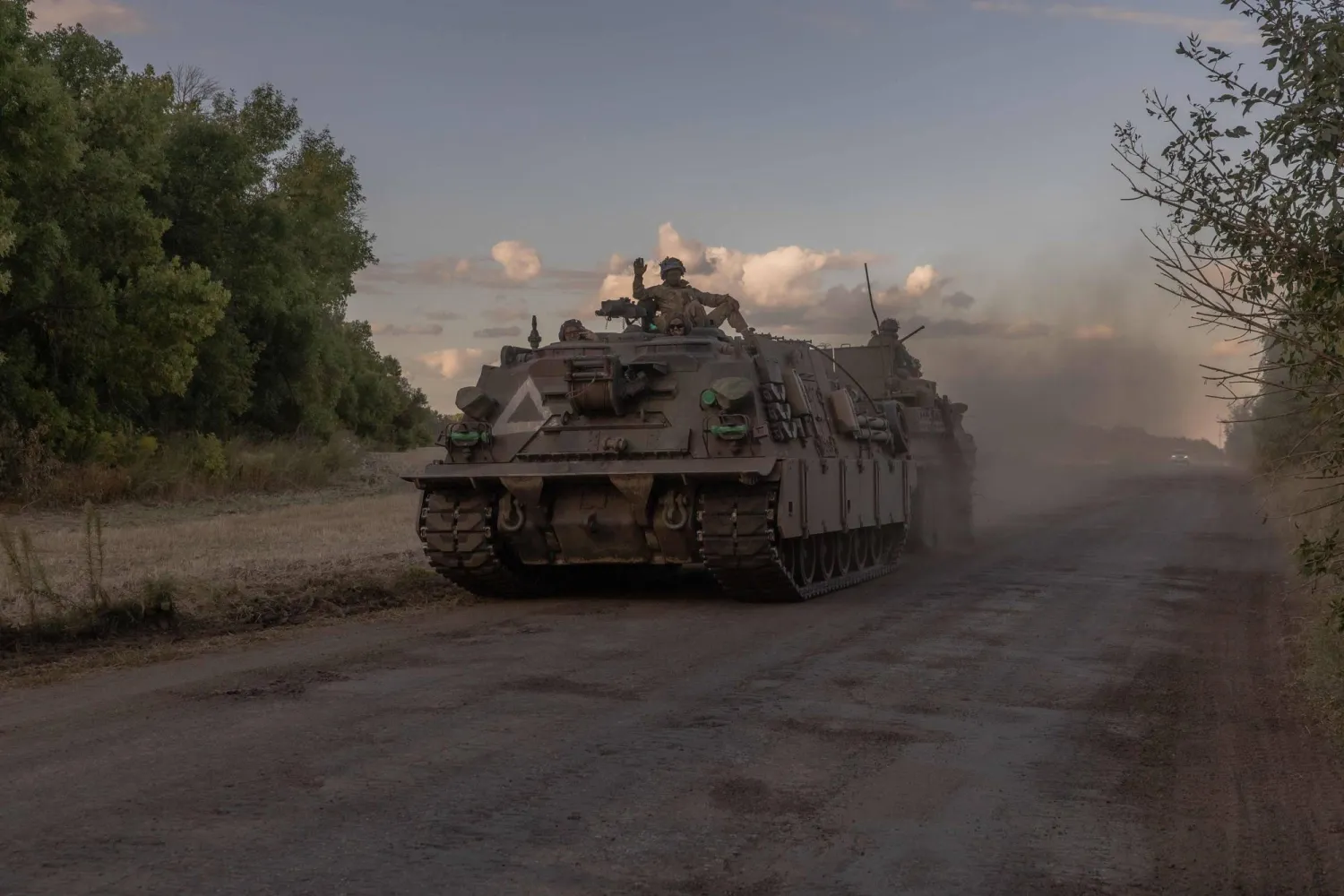
Ukrainian servicemen operate an armored military vehicle in the Sumy region, near the border with Russia, on August 12, 2024, amid the Russian invasion of Ukraine. (Photo by Roman PILIPEY / AFP)
TT

Why Russia Has Struggled to Halt Ukraine's Incursion in the Kursk Region

Ukrainian servicemen operate an armored military vehicle in the Sumy region, near the border with Russia, on August 12, 2024, amid the Russian invasion of Ukraine. (Photo by Roman PILIPEY / AFP)

After three weeks of fighting, Russia is still struggling to dislodge Ukrainian forces from the Kursk region, a surprisingly slow and low-key response to the first occupation of its territory since World War II.
It all comes down to Russian manpower and Russian priorities.
With the bulk of its military pressing offensives inside Ukraine, the Kremlin appears to lack enough reserves for now to drive out Kyiv's forces, Reuters said.
President Vladimir Putin doesn’t seem to view the attack — or at least, give the impression that he views it — as a grave enough threat to warrant pulling troops from eastern Ukraine's Donbas region, his priority target.
“Putin’s focus is on the collapse of the Ukrainian state, which he believes will automatically render any territorial control irrelevant,” wrote Tatiana Stanovaya, senior fellow at the Carnegie Russia Eurasia Center.
Putin's priorities Months after launching the full-scale invasion in 2022, Putin illegally annexed the Ukrainian regions of Donetsk, Luhansk, Zaporizhzhia and Kherson as part of Russian territory, and their full capture has been a top priority. He declared in June that Kyiv must withdraw its forces from parts of those regions it controls as a condition for peace talks, a demand that Ukraine rejects.
“In marshaling forces to meet Ukraine’s incursion, Russia is doing all it can to avoid drawing units from its own offensive in the Donbas,” said Nigel Gould-Davies of the International Institute of Strategic Studies. “Russia currently judges that it can contain the threat on its own soil without compromising its most important goal in Ukraine."
Even as Ukrainian forces pushed into Kursk on Aug. 6, Russian troops continued their slow advance around the strategic city of Pokrovsk and other parts of the Donetsk area.
“Russia is very keen on continuing the attacks toward Pokrovsk and not taking resources away from Pokrovsk to Kursk,” said Nico Lange, senior fellow at the Washington-based Center for European Policy Analysis.
Unlike Pokrovsk, where Ukrainian forces have built extensive fortifications, other parts of Donetsk still under Ukrainian control are less protected and could be significantly more vulnerable to the Russian onslaught if Pokrovsk falls.
Speaking about Kursk in televised meetings with officials, Putin described the incursion as an attempt by Kyiv to slow the Russian campaign in Donetsk. He said the Russian advance there only has accelerated despite events in Kursk.
In pressuring Ukraine to meet his demands, Russia also has launched a steady barrage of long-range strikes on the power grid. An attack Monday on energy facilities was one of the largest and most devastating of the war, involving over 200 missiles and drones and causing widespread blackouts. It highlighted loopholes in Ukraine’s air defenses that are stretched between protecting front-line troops as well as infrastructure.
Playing down the incursion Focused on capturing Ukraine's four regions, Putin has sought to attach little importance to Kyiv's foray into Kursk.
“Rather than rallying the population against a threat to the motherland, the Kremlin is anxious to downplay the incursion,” said Gould-Davies of the London-based IISS.
Faced with the reality of the occupation of Russia’s territory, the state propaganda machine has sought to distract attention from the obvious military failure by focusing on government efforts to help over 130,000 residents displaced from their homes.
State-controlled media cast the attack on Kursk as evidence of Kyiv’s aggressive intentions and more proof that Russia was justified in invading Ukraine on Feb. 24, 2022.
Stanovaya noted that while many Kursk residents could be angry at the Kremlin, the overall nationwide sentiment could actually favor the authorities.
“While it’s certainly a blow to the Kremlin’s reputation, it is unlikely to spark a significant rise in social or political discontent among the population,” she said. “The Ukrainian attack might actually lead to a rallying around the flag and a rise in anti-Ukrainian and anti-Western sentiments.”
A limited Kremlin response Ukraine’s chief military officer, Gen. Oleksandr Syrskyi, said his forces control nearly 1,300 square kilometers (about 500 square miles) and about 100 settlements in the Kursk region, a claim that couldn’t be independently verified.
With the combat situation in Kursk in flux, unlike the static front lines in Donetsk, Ukrainian units could roam the region without establishing a lasting presence in many of the settlements they claim.
Observers say Russia does not have enough well-coordinated resources to chase the Ukrainian forces in Kursk.
“Moscow’s efforts to counter the new Ukrainian offensive appear limited to sending units from all over Russia, including a proportion of militia and irregular forces,” said Ben Barry, senior fellow for land warfare at the IISS, in a commentary.
Until the Kursk incursion, Putin has refrained from using conscripts in the war to avoid a public backlash. Young conscripts drafted for a compulsory one-year tour of duty have served away from the front, and those deployed to protect the border in the Kursk region became easy prey for Ukraine’s battle-hardened mechanized infantry units. Hundreds were captured, and 115 were exchanged for Ukrainian troops over the weekend.
Commentators observed that Putin also is reluctant to call up more reservists, fearing domestic destabilization like what happened when he ordered a highly unpopular mobilization of 300,000 in response to a Ukrainian counteroffensive in 2022. Hundreds of thousands fled Russia to avoid being sent to combat.
Since then, the Kremlin has bolstered its forces in Ukraine with volunteers attracted by relatively high wages, but that flow has ebbed in recent months.
It would take tens of thousands of troops to fully dislodge the Ukrainian force, estimated at 10,000, that used the region’s dense forests as cover.
Clearly lacking resources for such a massive operation, Russia for now has focused on stemming deeper Ukrainian advances by sealing roads and targeting Kyiv’s reserves — tactics that have been partially successful.
Ukraine, meanwhile, has confounded the Russian military by destroying bridges across the Seym River, disrupting logistics for some Russian units in the region and creating conditions for establishing a pocket of control.
Lange predicted Ukrainian troops could use the river to carve out a buffer zone.
“I would expect the Ukrainians to find some few more choke points for Russian logistics and infrastructure, not necessarily only bridges, and take them under control,” he said.
The risks for Ukraine By capturing a chunk of Russian territory, Ukraine has embarrassed the Kremlin and reshaped the battlefield. But diverting some of the country's most capable forces from the east is a gamble for Kyiv.
“This all carries considerable risk, particularly if an effort to over-stretch Russian forces results in overstretching the smaller Ukrainian forces,” according to Barry of the IISS.
An attempt to create a foothold in Kursk would further extend the more than 1,000-kilometer (over 600-mile) front line, adding to the challenges faced by the undermanned and outgunned Ukrainian forces. Defending positions inside Russia would raise serious logistical problems, with the extended supply lines becoming easy targets.
“The Russian system is very hierarchical and stiff, so it always takes them a significant amount of time to adapt to a new situation," Lange said, "but we will have to see how Ukraine can sustain there, once Russia has adapted and comes with full force.”



Russia's Lavrov Warns against Any New US Strike on Iran

FILE PHOTO: Russia's Foreign Minister Sergei Lavrov speaks during an annual press conference in Moscow, Russia, January 14, 2025. REUTERS/Evgenia Novozhenina/File Photo
TT

Russia's Lavrov Warns against Any New US Strike on Iran

FILE PHOTO: Russia's Foreign Minister Sergei Lavrov speaks during an annual press conference in Moscow, Russia, January 14, 2025. REUTERS/Evgenia Novozhenina/File Photo

Russian Foreign Minister Sergei Lavrov, in ‌an interview made public on Wednesday, said that any new US strike on Iran would have serious consequences and called for restraint to find a solution to enable Iran to pursue a peaceful nuclear program.

Lavrov's interview with Saudi Arabia's Al-Arabiya television was aired a day after US and Iranian negotiators held indirect talks in Geneva to head off a new mounting crisis between Washington and Tehran, Reuters said.

"The consequences are not good. There have already been strikes on Iran on ‌nuclear sites ‌under the control of the International Atomic ‌Energy ⁠Agency. From what ⁠we can judge there were real risks of a nuclear incident," Lavrov said in the interview, which was posted on his ministry's website.

"I am carefully watching reactions in the region from Arab countries, Gulf monarchies. No one wants an increase in tension. Everyone understands this is playing with fire."

Boosting ⁠tensions, he said, could undo the ‌positive steps of recent years, including ‌improved relations between Iran and nearby countries, notably Saudi Arabia.

A senior ‌US official told Reuters on Wednesday that Iran was ‌expected to submit a written proposal on how to resolve its standoff with the United States after the talks in Geneva.

US national security advisers met in the White House on Wednesday and ‌were told all US military forces deployed to the region should be in place ⁠by mid-March, ⁠the official said.

The United States wants Iran to give up its nuclear program, and Iran has adamantly refused and denied it is trying to develop an atomic weapon.

Lavrov said Arab countries were sending signals to Washington "clearly calling for restraint and a search for an agreement that will not infringe on Iran's lawful rights and ... guarantee that Iran has a purely peaceful nuclear enrichment program".

Russia, he said, remained in close, regular contact with Iran's leaders "and we have no reason to doubt that Iran sincerely wants to resolve this problem on the basis of observing the Nuclear Non-Proliferation Treaty".


AI Cannot Be Left to 'Whims of a Few Billionaires', UN Chief Says

India's Prime Minister Narendra Modi speaks with United Nations Secretary-General Antonio Guterres during a welcoming ceremony at AI Impact Summit, in New Delhi, India, February 18, 2026. India's Press Information Bureau/Handout via REUTERS
TT

AI Cannot Be Left to 'Whims of a Few Billionaires', UN Chief Says

India's Prime Minister Narendra Modi speaks with United Nations Secretary-General Antonio Guterres during a welcoming ceremony at AI Impact Summit, in New Delhi, India, February 18, 2026. India's Press Information Bureau/Handout via REUTERS

UN chief Antonio Guterres warned technology leaders Thursday of the risks of artificial intelligence, saying its future cannot be left to "the whims of a few billionaires".

Speaking at a global AI summit in India, the UN chief called on tech tycoons to support a $3 billion global fund to ensure open access to the fast-advancing technology for all.

"AI must belong to everyone," he said.

"The future of AI cannot be decided by a handful of countries -- or left to the whims of a few billionaires," he added, warning the world risked deepening inequality unless urgent steps were taken.

"Done right, AI can... accelerate breakthroughs in medicine, expand learning opportunities, strengthen food security, bolster climate action and disaster preparedness and improve access to vital public services," he said.

"But it can also deepen inequality, amplify bias and fuel harm."

The UN has set up an AI scientific advisory body to help countries make decisions about the revolutionary technology.

Guterres warned that people must be protected from exploitation, and that "no child should be a test subject for unregulated AI".

He pressed for global guardrails to ensure oversight and accountability, and the creation of "Global Fund on AI" to build basic capacity.

"Our target is $3 billion," he told the conference, which includes national leaders as well as tech CEOs, including Sam Altman of OpenAI and Google's Sundar Pichai.

"That's less than one percent of the annual revenue of a single tech company. A small price for AI diffusion that benefits all, including the businesses building AI."

Without investment, "many countries will be logged out of the AI age", exacerbating global divides, he said.

He also cautioned that as AI's energy and water demands soar, data centers must switch to clean power, rather than "shift costs to vulnerable communities".


US Military Tells Trump It's ‘Ready’ to Strike Iran as Soon as Saturday

A shot showing personnel preparations aboard the US aircraft carrier "Gerald Ford" (US Navy)
TT

US Military Tells Trump It's ‘Ready’ to Strike Iran as Soon as Saturday

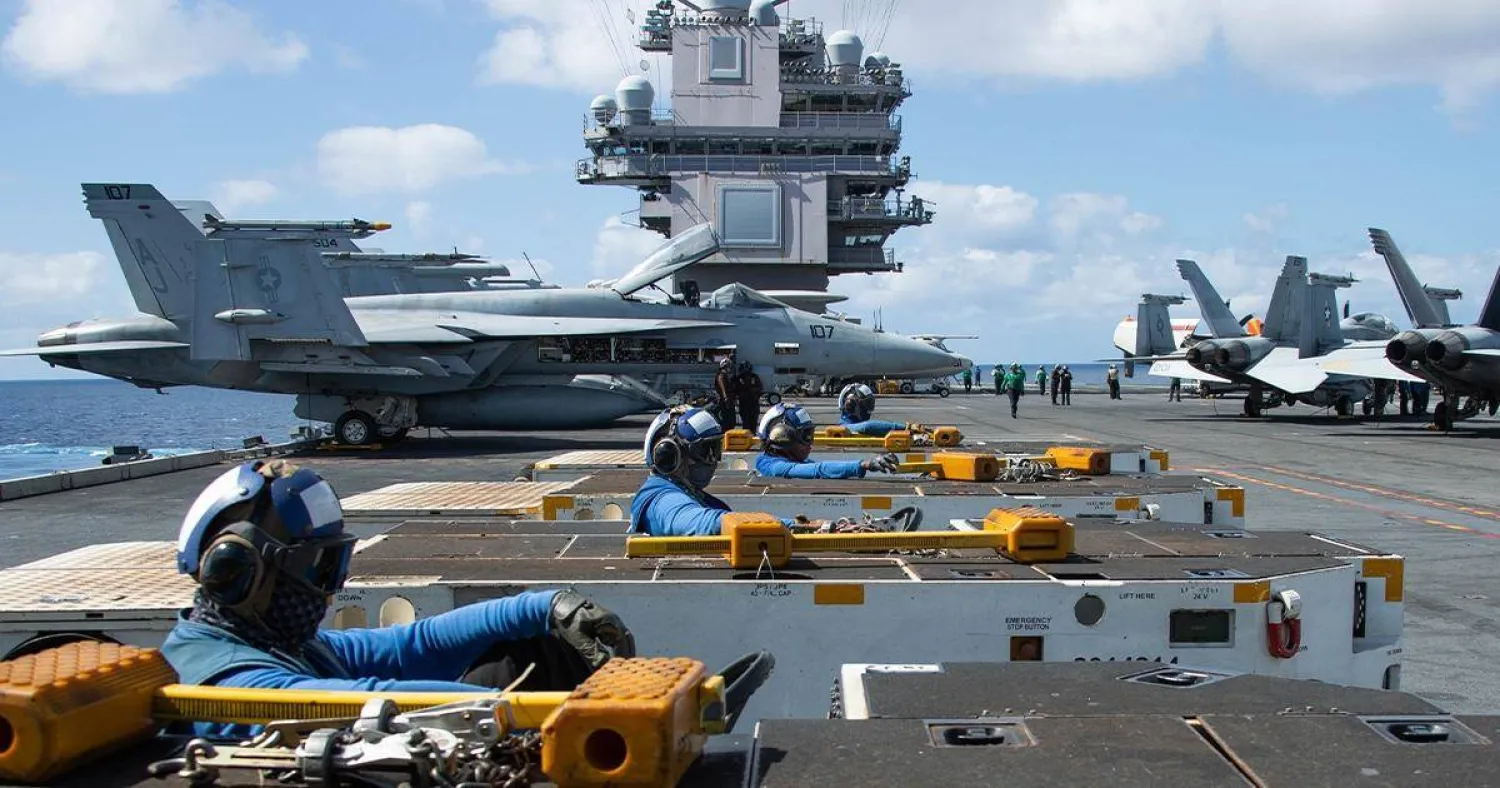
A shot showing personnel preparations aboard the US aircraft carrier "Gerald Ford" (US Navy)

Top national security officials have told US President Donald Trump the military is ready for potential strikes on Iran as soon as Saturday, but the timeline for any action is likely to extend beyond this weekend, sources familiar with the discussions told CBS News.

Trump has not yet made a final decision about whether to strike, said the officials, who spoke under condition of anonymity to discuss sensitive national matters.

The conversations have been described as fluid and ongoing, as the White House weighs the risks of escalation and the political and military consequences of restraint, added CBS.

Over the next three days, the Pentagon is moving some personnel temporarily out of the Middle East region — primarily to Europe or back to the United States — ahead of potential action or counterattacks by Iran if the US were to move ahead with its operation, according to multiple officials.

It's standard practice for the Pentagon to shift assets and personnel ahead of a potential US military activity and doesn't necessarily signal an attack on Iran is imminent, one of the sources told CBS.

Contacted by CBS News on Wednesday afternoon, a Pentagon spokesperson said they had no information to provide.

Iran was discussed in the White House Situation Room on Wednesday, a US official and a senior military official told CBS News. All military forces deployed to the region are expected to be in place by mid-March.

Axios had also said that a war between the United States and Iran is looming — and there are several factors suggesting President Trump might push the button soon.

On Wednesday, Iran's top diplomat Abbas Araghchi said that Tehran was "drafting" a framework for future talks with the United States, as the US energy secretary said Washington would stop Iran's nuclear ambitions "one way or another".