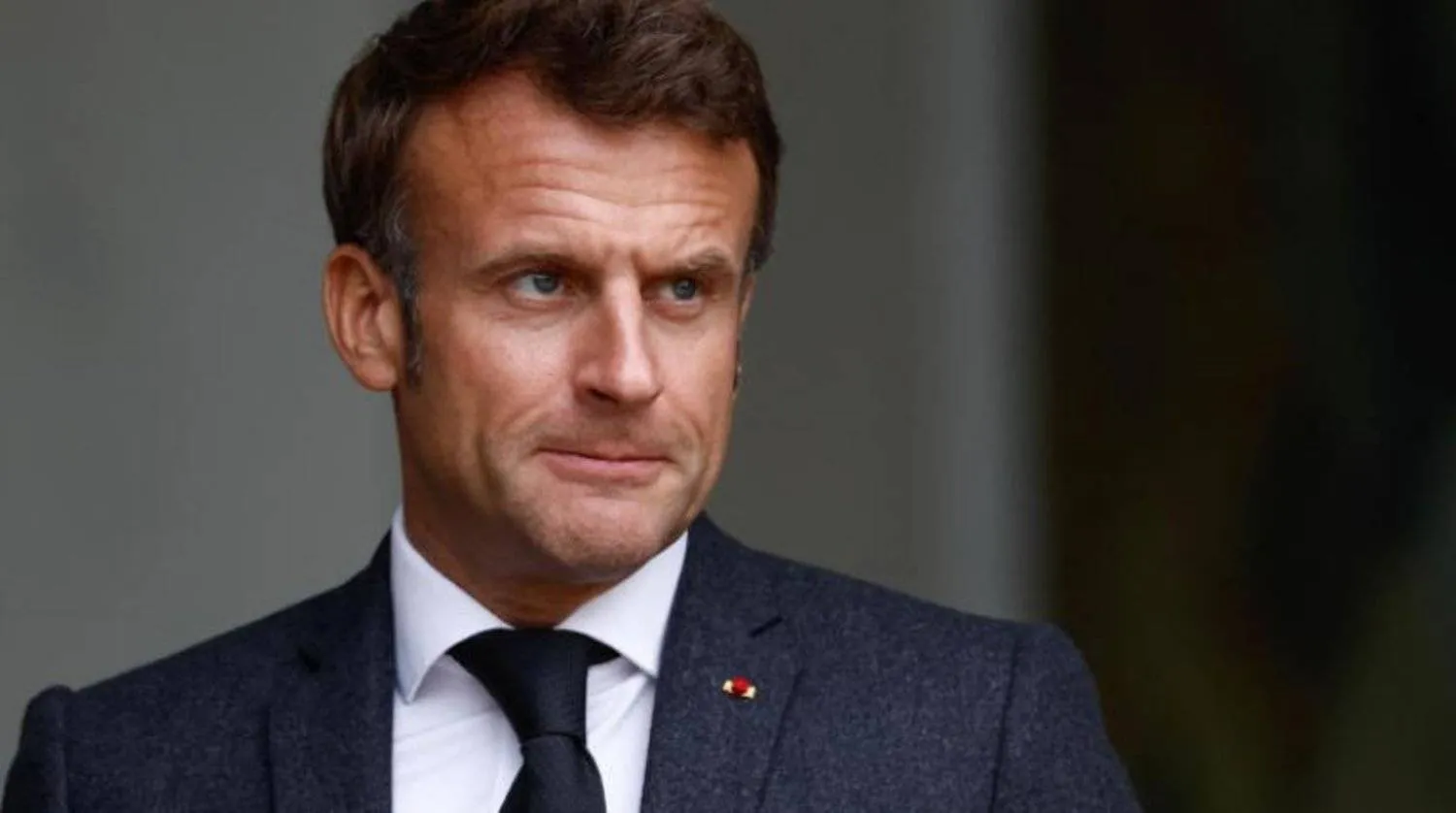
France's Macron to Visit Serbia With a Possible Deal to Sell French Warplanes

French President Emmanuel Macron (Reuters)
TT

France's Macron to Visit Serbia With a Possible Deal to Sell French Warplanes

French President Emmanuel Macron (Reuters)

French President Emmanuel Macron starts a two-day state visit to Serbia on Thursday with the focus on the possible sale of 12 Rafale multi-purpose fighter jets to the country, which has maintained close ties to Russia despite its invasion of Ukraine.
Macron is to meet populist President Aleksandar Vucic in Belgrade on Thursday evening, when the deal reportedly worth 3 billion euros ($3.3 billion) is expected to be announced, The Associated Press said.
An official in Macron’s office, who was not authorized to be identified according to French presidential policy, said the warplane talks are part of a larger strategy of ″bringing Serbia closer to the EU.″
Serbia needs to upgrade its fleet and the Rafale is a ″strategic choice″ for Belgrade, which could choose to rely only on Russian equipment instead, the official said.
Serbia is formally seeking European Union membership, but under Vucic’s increasingly autocratic rule it has made little progress in the fields of rule of law and democratic reforms, which are the main preconditions for membership in the 27-nation bloc.
In a letter to the Serbian public published in the local media on Thursday, Macron sought to encourage the Balkan nation to pursue its EU future but noted that “the perspective of joining the European Union does not seem to be as attractive as it should.” He cited “concerns and fatigue over the rhythm of accession talks but also sometimes a sort of resentment, even mistrust” of the EU.
“I come here to Serbia again today with a simple message: The European Union and its nations need to have a strong and democratic Serbia in their ranks, and Serbia needs a strong and sovereign European Union to defend and promote its interests with respect of its identity,” Macron said in the letter, published in the liberal Danas newspaper.
Macron also warned that after Russia attacked Ukraine, Serbia’s “balancing game” between the world powers is an “illusion.” He said Serbia will only be able to protect its interests and preserve its identity as part of the EU.
Serbia has been considering the purchase of the new Rafale jets for more than two years, since neighboring Balkan rival Croatia purchased 12 used fighter jets of the same type for about 1 billion euros ($1.1 billion).
The potential acquisition of Rafale jets would allow Serbia to modernize its air force, which consists mainly of Soviet-made MiG-29 fighters and aging Yugoslav combat aircraft.
Russia has been a traditional supplier of military aircraft, including combat helicopters, to Serbia, which has refused to join international sanctions against Moscow for its invasion of Ukraine.
The rapid arming by the Serbian military has worried some of its neighbors following the bloody breakup of the former Yugoslavia in the 1990s. Serbia is almost completely surrounded by NATO member countries.
Selling Rafales to Russian ally Serbia, which has occasionally expressed an aggressive stance toward its Balkan neighbors, has raised some concerns, one of which is how France plans to prevent sophisticated Rafale technology from being shared with Russia.
Asked if there would be a clause restricting the use of the Rafales, the French official said ″in any contract there are clauses that set a framework for the use of such material."
Macron's talks with Vucic will include simmering tensions in the Balkans, especially in the former Serbian province of Kosovo which declared independence in 2008.
Macron’s itinerary also includes a visit to a museum and an economic forum on artificial intelligence in the northern town of Novi Sad on Friday. Also on the agenda is a possible agreement with French energy provider EDF on cooperation in the field of nuclear power plant technology.



Netanyahu Vows to Eliminate Iran Threat ‘Once and for All’

10 November 2026, Israel, Jerusalem: Caretaker Israeli Prime Minister Benjamin Netanyahu delivers a speech on the sidelines of the opening session of the new Knesset. (dpa)
TT

Netanyahu Vows to Eliminate Iran Threat ‘Once and for All’

10 November 2026, Israel, Jerusalem: Caretaker Israeli Prime Minister Benjamin Netanyahu delivers a speech on the sidelines of the opening session of the new Knesset. (dpa)

Israel's caretaker prime minister Benjamin Netanyahu on Saturday reiterated his calls for a national unity government with his opponent Gadi Eisenkot, as well as his vow to eliminate the threat from Iran.

A meeting with Eisenkot on Thursday "only strengthened the conviction that it is essential to form a national unity government" to guarantee Israel's security, Netanyahu said in a video statement, adding that such a government could "eliminate the Iranian threat once and for all".


Ukraine’s Zelenskiy Escalates Criticism of SpaceX Over Speed Caps

Ukraine's President Volodymyr Zelenskiy holds a press briefing in Copenhagen November 10, 2026. (AFP)
TT

Ukraine’s Zelenskiy Escalates Criticism of SpaceX Over Speed Caps

Ukraine's President Volodymyr Zelenskiy holds a press briefing in Copenhagen November 10, 2026. (AFP)

Ukraine's President Volodymyr Zelenskiy ‌escalated his criticism of SpaceX on Saturday, saying speed restrictions on its military-grade Starshield satellite terminals had dangerous political implications and undermined critical air defenses.

Zelenskiy said Starshield terminals operating in temporarily Russian-occupied territories of Ukraine had been limited to a maximum speed of 161 kph for the past five days, hampering Ukraine's military capabilities.

The Ukrainian Defense Ministry has raised the issue with SpaceX at the ‌institutional level, ‌Zelenskiy said.

"The restrictions have now ‌been ⁠in place for ⁠five days. They say it is some kind of technical issue. We do not believe that is the case," Zelenskiy told reporters in remarks released by his office on Saturday.

"If you impose restrictions there, you are already partially recognizing the temporarily ⁠occupied territories as not ours. And ‌that is why I ‌believe we have the right to raise this ‌issue and restore the speed – so that there ‌are no restrictions at all."

Zelenskiy said the speed restrictions made it more difficult for Ukrainian air defense units to intercept Russian jet-powered drones and made Ukrainian cities ‌more vulnerable. He said he had ordered his top military and foreign ministry ⁠officials ⁠to address the issue and seek clarification.

SpaceX has pushed back against the allegations, denying that it introduced new restrictions or made any changes to its satellite operations.

It is the second such outage in recent weeks. In mid-October, Ukrainian officials said that SpaceX limited the speed of Starlink and its Starshield communication systems to about 160 kph (100 mph) amid tensions with US President Donald Trump's administration over Ukrainian attacks on Russian oil refineries. Service was then restored on October 24.


UN Official Urges Iran, US to Let Fertilizers Through Hormuz Strait

Jorge Moreira da Silva, Executive Director of UNOPS (United Nations Office for Project Services), and coordinator of the UN Strait of Hormuz Task Force established by the UN Secretary-General, speaks during an interview with AFP on the sidelines of the 31st United Climate Change Conference (COP31), at the media center located on the Antalya Expo Center in Antalya on November 14, 2026. (AFP)
TT

UN Official Urges Iran, US to Let Fertilizers Through Hormuz Strait

Jorge Moreira da Silva, Executive Director of UNOPS (United Nations Office for Project Services), and coordinator of the UN Strait of Hormuz Task Force established by the UN Secretary-General, speaks during an interview with AFP on the sidelines of the 31st United Climate Change Conference (COP31), at the media center located on the Antalya Expo Center in Antalya on November 14, 2026. (AFP)

Iran and the United States should "immediately" allow fertilizer shipments through the Strait of Hormuz to ease the crisis in some of the most vulnerable countries, a senior UN official said Saturday.

Jorge Moreira da Silva, head of the UN Office for Project Services, told the COP31 climate talks in the Turkish resort city of Antalya that the lack of fertilizers could push millions into poverty.

The Iranian blockade of the vital waterway, which started after the joint US-Israeli attack against Iran in late February, has choked shipping in the region and beyond. The US blockade of Iranian ports has further complicated matters.

While Iran and the United States are still trying to negotiate an end to the conflict, Moreira da Silva said he had the same message for both countries.

"They should continue their negotiations about the comprehensive deal -- but that deal should not avoid an immediate, exceptional, limited, and time-bound solution for the fertilizers," he said.

"Basically, what we need is five vessels a day with fertilizers," he added.

- Millions at risk -

Moreira da Silva heads up the UN task force dedicated to facilitating the safe passage of fertilizers during the crisis.

Before the conflict, a third of the world's fertilizers passed through the Strait of Hormuz, and since the blockades, their prices had risen by 30 percent, he said.

"But what I think is not sufficiently recognized is the disproportionate impact on the most vulnerable countries," he added.

Sudan's finance minister recently told him that the price of food there had doubled in six months, he added. In Nepal, they had told him that farmers could no longer afford to buy fertilizers.

"So, it's very important that we are aware that countries such as Mozambique, Kenya, Sudan, Somalia, Nepal, Bangladesh, Sri Lanka are facing very significant impact."

The effects of this shortage could be catastrophic, he warned.

"If we continue missing the planting seasons in different parts of the world we may have 45 million people facing severe and acute food insecurity," he said.

"We may have 30 million people being forced into poverty."

The UN had a system ready to get fertilizer shipments moving within seven to 10 days, he said.