


North Korea’s Kim Pushes for Regional Development with Construction Projects, KCNA Reports 

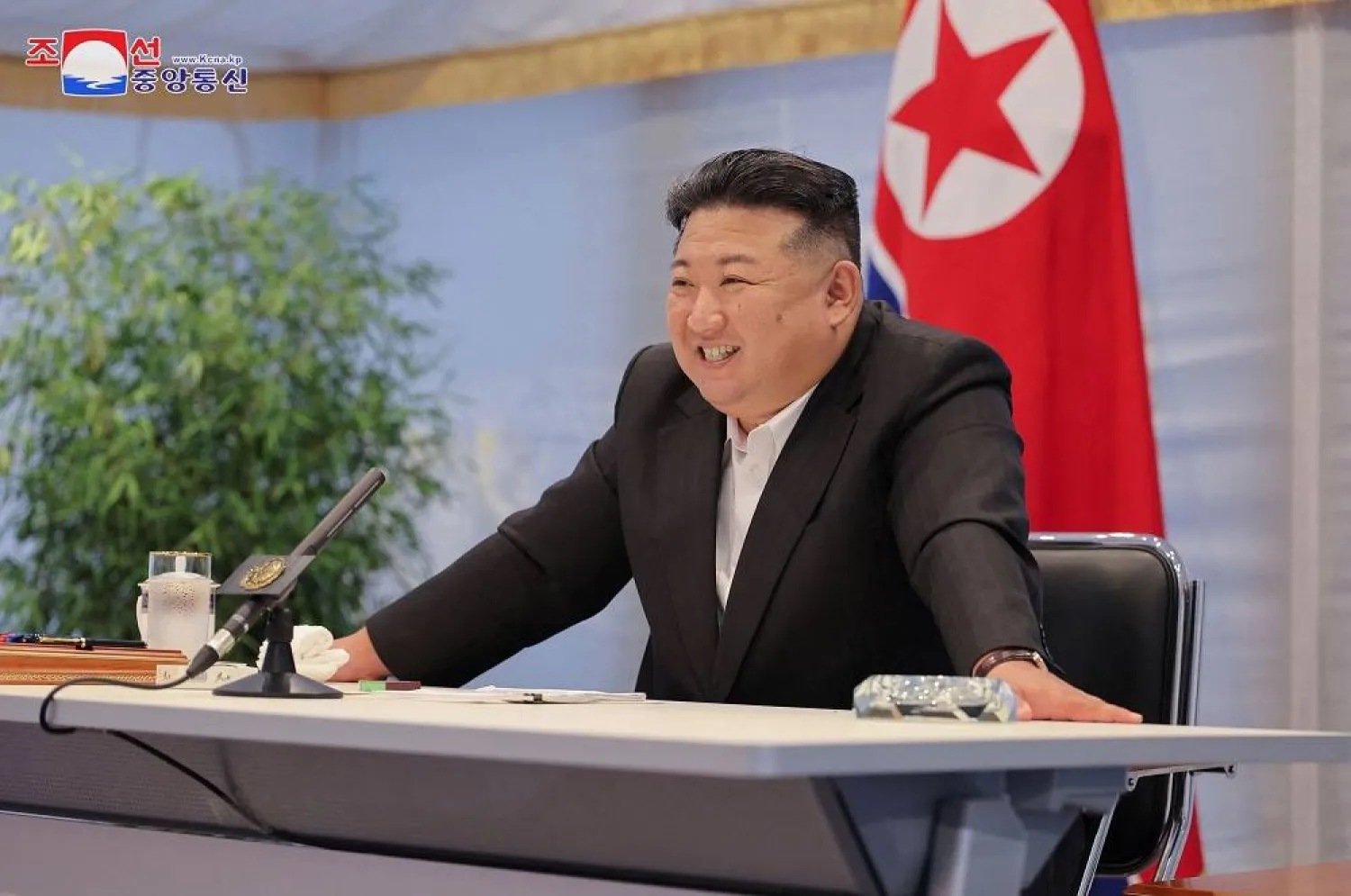
This picture taken on August 31, 2024 and released by North Korea's official Korean Central News Agency (KCNA) via KNS on September 2, 2024 shows North Korean leader Kim Jong Un attending a consultative meeting for a regional development project at an undisclosed location in North Korea. (Photo by KCNA VIA KNS / AFP) /
TT

North Korea’s Kim Pushes for Regional Development with Construction Projects, KCNA Reports 

This picture taken on August 31, 2024 and released by North Korea's official Korean Central News Agency (KCNA) via KNS on September 2, 2024 shows North Korean leader Kim Jong Un attending a consultative meeting for a regional development project at an undisclosed location in North Korea. (Photo by KCNA VIA KNS / AFP) /

North Korean leader Kim Jong Un has called for developing health, science and education facilities in rural areas alongside factories, state media KCNA reported on Monday, amid concerns over economic hardships and poor living conditions.

Kim convened a high-level meeting on Saturday as the ruling Workers' Party seeks to adopt a "new important decision" to speed up rural development under his "Regional Development 20×10 Policy" aimed at opening modernized factories in at least 20 remote counties every year for the next 10 years, KCNA reported.

He has been pushing to modernize the farming industry and rural communities because North Korea's economy relies heavily on agriculture but continues to struggle with food shortages amid sanctions over its nuclear and missile programs as well as seasonal impacts from natural disasters.

Kim said the construction of health, science and grain management facilities in cities and counties is an essential, urgent task in accelerating and improving regional development, according to KCNA.

"Building light industry factories in local areas ... alone is not enough to provide the regional people across the country with a sustained and improved material and cultural life," KCNA quoted him as telling the meeting.

Kim ordered prioritizing the completion of modern health facilities "without fail" in the face of any challenges, KCNA said.

"He said that it is his first cherished desire to build city and county hospitals which will greatly contribute to improving the regional health situation (that is) relatively inferior, and promoting the life and security and health of local people," it added.

The country has launched a new military unit and mobilized troops nationwide to spur the construction initiative, but South Korean officials and experts have questioned its feasibility, citing a lack of resources given Pyongyang has long prioritized its weapons programs.



Vatican Says It Will Not Participate in Trump’s ‘Board of Peace’ 

Pope Leo XIV speaks after leading a Mass during a visit to the parish of Santa Maria Regina Pacis in Ostia Lido, Rome, Italy, February 15, 2026. (Reuters)
TT

Vatican Says It Will Not Participate in Trump’s ‘Board of Peace’ 

Pope Leo XIV speaks after leading a Mass during a visit to the parish of Santa Maria Regina Pacis in Ostia Lido, Rome, Italy, February 15, 2026. (Reuters)

The Vatican ‌will not participate in US President Donald Trump's so-called "Board of Peace" initiative, Cardinal Pietro Parolin, the Vatican's top diplomatic official, said on Tuesday while adding that efforts to handle crisis situations should be managed by the United Nations.

Pope Leo, the first US pope and a critic of some of Trump's policies, was invited to join the board in January.

Under Trump's Gaza plan that led to a fragile ceasefire in October, the board was meant to supervise Gaza's temporary governance. Trump thereafter said the board, with him as chair, would ‌be expanded to ‌tackle global conflicts.

The board will hold its ‌first ⁠meeting in Washington ⁠on Thursday to discuss Gaza's reconstruction.

Italy and the European Union have said their representatives plan to attend as observers as they have not joined the board.

The Holy See "will not participate in the Board of Peace because of its particular nature, which is evidently not that of other States," Parolin said.

"One concern," he said, "is that ⁠at the international level it should above all ‌be the UN that manages ‌these crisis situations. This is one of the points on which we have insisted."

The ⁠Gaza truce has been repeatedly violated with hundreds of Palestinians and four Israeli soldiers reported killed since it began in October.

Israel's assault on Gaza has killed over 72,000, caused a hunger crisis and internally displaced Gaza's entire population.

Multiple rights experts, scholars and a UN inquiry say it amounts to genocide. Israel calls its actions self-defense after Hamas-led fighters killed 1,200 people and took over 250 hostages in a late 2023 attack.

Leo has repeatedly decried conditions in Gaza. The pope, leader of the world's 1.4 billion Catholics, rarely joins international boards. The Vatican has an extensive diplomatic service and is a permanent observer at the United Nations.


Poland Bars Chinese-Made Cars from Military Sites Over Data Security Fears 

A soldier from the 18th Mechanized Division stands guard on a Light Strike Vehicle "Zmija" during a media tour organized by the country's military to demonstrate the security measures on the Polish Belarusian border, near Bialowieza, Poland, January 10, 2025. (Reuters)
TT

Poland Bars Chinese-Made Cars from Military Sites Over Data Security Fears 

A soldier from the 18th Mechanized Division stands guard on a Light Strike Vehicle "Zmija" during a media tour organized by the country's military to demonstrate the security measures on the Polish Belarusian border, near Bialowieza, Poland, January 10, 2025. (Reuters)

Poland has barred Chinese-made vehicles from entering military facilities due to concerns their onboard sensors could be used to collect sensitive data, the Polish Army said on Tuesday evening.

The army said in ‌a statement ‌that such vehicles ‌may ⁠still be allowed onto ⁠secured sites if specified functions are disabled and other safeguards required under each facility's security rules are in place.

To ⁠limit the risk ‌of ‌exposing confidential information, the military has ‌also banned connecting company ‌phones to infotainment systems in vehicles manufactured in China.

The restrictions do not apply ‌to publicly accessible military locations such as hospitals, ⁠clinics, ⁠libraries, prosecutors' offices or garrison clubs, the army said.

It added that the measures are precautionary and align with practices used by NATO members and other allies to ensure high standards of protection for defense infrastructure.


Starmer, Trump discussed Russia-Ukraine, Iran after Geneva Talks, Downing Street Says 

US President Donald Trump and British Prime Minister Keir Starmer announce an agreement between the two countries as they hold a press conference at Chequers at the conclusion of a state visit on September 18, 2025 in Aylesbury, Britain. (Reuters)
TT

Starmer, Trump discussed Russia-Ukraine, Iran after Geneva Talks, Downing Street Says 

US President Donald Trump and British Prime Minister Keir Starmer announce an agreement between the two countries as they hold a press conference at Chequers at the conclusion of a state visit on September 18, 2025 in Aylesbury, Britain. (Reuters)

British ‌Prime Minister Keir Starmer spoke to US President Donald Trump on Tuesday night about US-mediated Russia-Ukraine peace talks in Geneva, as well as talks between the US and Iran on ‌their nuclear ‌dispute, a Downing Street ‌spokesperson ⁠said.

Starmer also discussed ⁠Gaza with Trump and stressed on the importance of securing further access for humanitarian aid, the spokesperson said.

Negotiators ⁠from Ukraine and ‌Russia ‌concluded the first of two days ‌of the US-mediated ‌peace talks in Geneva on Tuesday, with Trump pressing Kyiv to act fast ‌to reach a deal.

Separately, Iranian Foreign Minister ⁠Abbas ⁠Araqchi said Tehran and Washington reached an understanding on Tuesday on "guiding principles" aimed at resolving their longstanding nuclear dispute, but that did not mean a deal is imminent.