


Iran Summons 4 European Envoys Over Accusations It Supplied Ballistic Missiles to Russia 

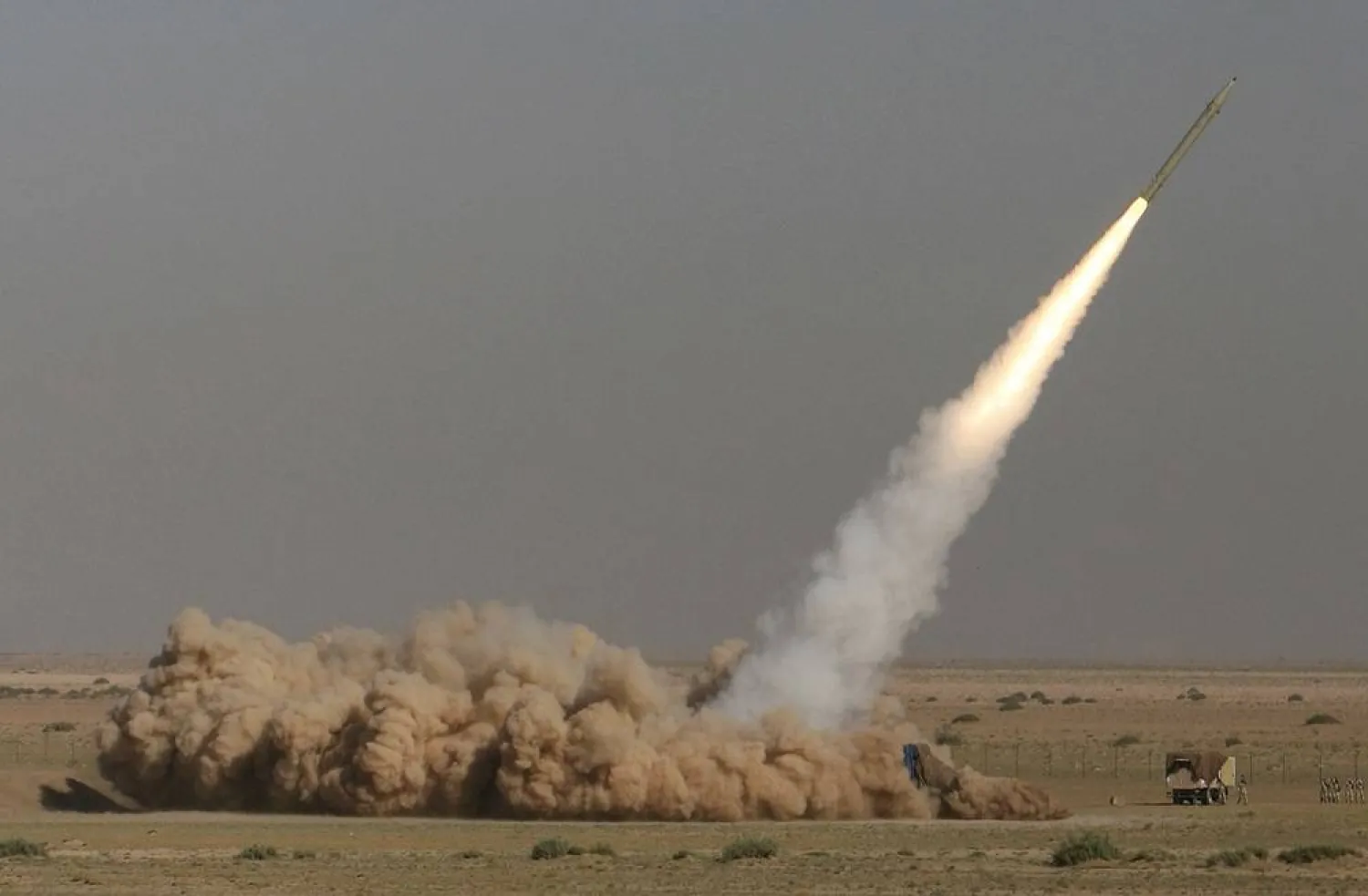
In this photo released by the Iranian semi-official Fars News Agency, Revolutionary Guard's Fateh missile is launched in a drill near the city of Qom, 80 miles (130 kilometers) south of the capital Tehran, Iran, Sept. 27, 2009. (Ali Shaigan/Fars News Agency via AP File)
TT

Iran Summons 4 European Envoys Over Accusations It Supplied Ballistic Missiles to Russia 

In this photo released by the Iranian semi-official Fars News Agency, Revolutionary Guard's Fateh missile is launched in a drill near the city of Qom, 80 miles (130 kilometers) south of the capital Tehran, Iran, Sept. 27, 2009. (Ali Shaigan/Fars News Agency via AP File)

Iran's government on Thursday summoned the envoys of Britain, France, Germany and the Netherlands over their accusations that Tehran supplied short-range ballistic missiles to Russia to use against Ukraine.

State-run IRNA news agency reported that the country’s foreign ministry summoned the envoys separately on Thursday to strongly condemn the accusations.

IRNA said the ministry also condemned Britain, France, and Germany for issuing a joint statement against Iran and called it an "unconventional and non-constructive statement."

The joint statement, issued Tuesday, condemned the alleged transfer of missiles, calling it "an escalation by both Iran and Russia" and "a direct threat to European security."

The three countries also announced new sanctions against Iran, including the cancellation of air services agreements with Iran, which will restrict Iran Air’s ability to fly to the UK and Europe.

IRNA said that Iran’s foreign ministry told the envoys that their insistence on taking such positions is seen as part of the West’s ongoing hostile policy against the Iranian people. The actions will "be met with an appropriate response from the Islamic Republic of Iran."

US Secretary of State Antony Blinken said this week that Iran had ignored warnings that the transfer of such weapons would be a profound escalation of the conflict.

He told reporters during a trip to London that dozens of Russian military personnel had been trained in Iran to use the Fath-360 close-range ballistic missile system, which has a maximum range of 75 miles (120 kilometers).



Israel Military Says It Has Destroyed Half of Iran's Missile Stockpiles

 A video grab image taken from footage released by the Israeli military on March 1, 2026, shows what it says are large-scale strikes on "the headquarters of the Iranian terror regime" in Tehran on March 1. (Photo by Handout / Israeli Army / AFP)
A video grab image taken from footage released by the Israeli military on March 1, 2026, shows what it says are large-scale strikes on "the headquarters of the Iranian terror regime" in Tehran on March 1. (Photo by Handout / Israeli Army / AFP)
TT

Israel Military Says It Has Destroyed Half of Iran's Missile Stockpiles

 A video grab image taken from footage released by the Israeli military on March 1, 2026, shows what it says are large-scale strikes on "the headquarters of the Iranian terror regime" in Tehran on March 1. (Photo by Handout / Israeli Army / AFP)
A video grab image taken from footage released by the Israeli military on March 1, 2026, shows what it says are large-scale strikes on "the headquarters of the Iranian terror regime" in Tehran on March 1. (Photo by Handout / Israeli Army / AFP)

The Israeli military on Sunday said it had destroyed roughly half of Iran's missile stockpiles in the previous war in June 2025, adding the Iranian republic had been producing dozens of surface-to-surface missiles each month.

"During the operation (in June 2025), we destroyed approximately half of the Iranian regime's missile stockpiles and prevented the production of at least 1,500 additional missiles," military spokesman Brigadier General Effie Defrin said in a televised statement.

"The regime had recently been producing dozens of surface-to-surface missiles per month and intended to increase production to hundreds per month."


North Korea Condemns US-Israel Attacks on Iran as ‘Illegal’

Smoke rises in central Tehran after an Israeli attack in Iran, 01 March 2026. (EPA)
TT

North Korea Condemns US-Israel Attacks on Iran as ‘Illegal’

Smoke rises in central Tehran after an Israeli attack in Iran, 01 March 2026. (EPA)

North Korea condemned on Sunday the ongoing United States and Israeli attack on Iran as an "illegal act of aggression", claiming it had shown Washington's "gangster-like" nature.

The military campaigns against Iran by the two states "constitute a thoroughly illegal act of aggression and the most vile form of violation of sovereignty in their nature", a spokesperson for the North's foreign ministry said in a statement carried by the official Korean Central News Agency.

Pyongyang said the military actions showed the "shameless and gangster-like conduct" of the two allies, who it said had chosen to "abuse military force to fulfil their selfish and hegemonic ambitions".

North Korea and the United States are longtime adversaries but Washington has mounted a push to revive high-level talks with Pyongyang in recent months, eyeing a potential summit between US President Donald Trump and the North's Kim Jong Un this year.

After largely ignoring those overtures for months, Kim said this week that the two nations could "get along" if Washington accepted Pyongyang's nuclear status.


EU Says Khamenei’s Killing Brings Both Hope and Peril

 EU High Representative and Vice-President for Foreign Affairs and Security Policy Kaja Kallas speaks to the press as she arrives for the EU Foreign Affairs Council in Brussels on February 23, 2026. (AFP)
EU High Representative and Vice-President for Foreign Affairs and Security Policy Kaja Kallas speaks to the press as she arrives for the EU Foreign Affairs Council in Brussels on February 23, 2026. (AFP)
TT

EU Says Khamenei’s Killing Brings Both Hope and Peril

 EU High Representative and Vice-President for Foreign Affairs and Security Policy Kaja Kallas speaks to the press as she arrives for the EU Foreign Affairs Council in Brussels on February 23, 2026. (AFP)
EU High Representative and Vice-President for Foreign Affairs and Security Policy Kaja Kallas speaks to the press as she arrives for the EU Foreign Affairs Council in Brussels on February 23, 2026. (AFP)

Top EU officials said Sunday the killing of Iran's supreme leader Ali Khamenei in US-Israeli strikes could spell "hope" for the country -- but carried a serious risk of regional instability. 

European Union's top diplomat Kaja Kallas described Khamenei's death as "a defining moment in Iran's history", while European Commission President Ursula von der Leyen said it spurred "renewed hope for the people of Iran". 

"At the same time, this moment carries a real risk of instability that could push the region into a spiral of violence," von der Leyen added. 

Von der Leyen said Brussels was engaging closely "with all key actors" to safeguard stability and security and to protect civilian lives. 

"With Khamenei gone, there is renewed hope for the people of Iran. We must ensure that the future is theirs to claim and shape," she wrote on social media, after a call with Jordan's King Abdullah II. 

Likewise, Kallas said she was in contact with regional partners "that bear the brunt of Iran's military actions" to find practical steps for de-escalation. 

"The death of Ali Khamenei is a defining moment in Iran's history. What comes next is uncertain. But there is now an open path to a different Iran, one that its people may have greater freedom to shape," Kallas wrote on X.