


US Still Believes Iran Has Not Decided to Build a Nuclear Weapon

This satellite image from Planet Labs PBC shows Iran's nuclear site in Isfahan, Iran, April 4, 2024. (Planet Labs PBC via AP)
TT

US Still Believes Iran Has Not Decided to Build a Nuclear Weapon

This satellite image from Planet Labs PBC shows Iran's nuclear site in Isfahan, Iran, April 4, 2024. (Planet Labs PBC via AP)

The United States still believes that Iran has not decided to build a nuclear weapon despite Tehran's recent strategic setbacks, including Israel's killing of Hezbollah leaders and two largely unsuccessful attempts to attack Israel, two US officials told Reuters.
The comments from a senior Biden administration official and a spokesperson for the Office of the Director of National Intelligence (ODNI) added to public remarks earlier this week by CIA Director William Burns, who said the United States had not seen any evidence Iran's leader had reversed his 2003 decision to suspend the weaponization program.
"We assess that the Supreme Leader has not made a decision to resume the nuclear weapons program that Iran suspended in 2003," said the ODNI spokesperson, referring to Iran's leader Ali Khamenei.
The intelligence assessment could help explain US opposition to any Israeli strike on Iran's nuclear program in retaliation for a ballistic missile attack that Tehran carried out last week.
President Joe Biden said after that attack he would not support an Israeli strike on Iranian nuclear sites, but did not explain why he had reached that conclusion. His remarks drew fierce criticism from Republicans, including former President Donald Trump.
US officials have long acknowledged that an attempt to destroy Iran's nuclear weapons program might only delay the country's efforts to develop a nuclear bomb and could even strengthen Tehran's resolve to do so.
"We're all watching this space very carefully," the Biden administration official said.
Iran's mission to the United Nations in New York did not immediately respond to a request for comment but Tehran has repeatedly denied ever having had a nuclear weapons program.
KEY IRAN ALLY WEAKENED
In the past weeks, Israel's military has inflicted heavy losses on Hezbollah, the most powerful member of the Iran-backed network known as the Axis of Resistance. The group's setbacks have included the killing of its leader Hassan Nasrallah in an Israeli airstrike last month.
The weakening of a key Iranian ally has prompted some experts to speculate that Tehran may restart its efforts to acquire a nuclear bomb to protect itself.
Beth Sanner, a former US deputy director of national intelligence, said the risk of Khamenei reversing his 2003 religious dictum against nuclear weapons is "higher now than it has been" and that if Israel were to strike nuclear facilities Tehran would likely move ahead with building a nuclear weapon.
That would still take time, however.
"They can't get a weapon in a day. It will take months and months and months," said Sanner, now a fellow with the German Marshall Fund.
Iran is now enriching uranium to up to 60% fissile purity, close to the 90% of weapons grade, at two sites, and in theory it has enough material enriched to that level, if enriched further, for almost four bombs, according to a yardstick of the International Atomic Energy Agency (IAEA), the UN watchdog.
The expansion in Iran's enrichment program has reduced the so-called breakout time it would need to produce enough weapons-grade uranium for a nuclear bomb to "a week or a little more," according to Burns, from more than a year under a 2015 accord that Trump pulled out of when president.
Actually making a bomb with that material would take longer. How long is less clear and the subject of debate.
POSSIBLE ISRAELI ATTACK
Israel has not yet disclosed what it will target in retaliation for Iran's attack last week with more than 180 ballistic missiles, which largely failed thanks to interceptions by Israeli air defenses as well as by the US military.
The United States has been privately urging Israel to calibrate its response to avoid triggering a broader war in the Middle East, officials say, with Biden publicly voicing his opposition to a nuclear attack and concerns about a strike on Iran's energy infrastructure.
Israel, however, views Iran's nuclear program as an existential threat.
The conflicts in the Middle East between Israel and Iran and Iran-backed groups in Lebanon, Gaza and Yemen have become campaign issues ahead of the Nov. 5 presidential election, with Trump and his Democratic rival, Vice President Kamala Harris, positioning themselves as pro-Israel.
Speaking at a campaign event last week, Trump mocked Biden for opposing an attack on Iran's nuclear sites, saying: "That's the thing you wanna hit, right?"
Avi Melamed, a former Israeli intelligence officer and government official, said Iran still had space to compensate for setbacks dealt to its proxies and missile force without having to resort to developing a nuclear warhead.
"The Iranians have to recalculate what's next. I don't think at this point they will rush to either develop or boost the (nuclear) program toward military capacity," he said.
"They will look around to find what maneuvering space they can move around in."



Poland Bars Chinese-Made Cars from Military Sites Over Data Security Fears 

A soldier from the 18th Mechanized Division stands guard on a Light Strike Vehicle "Zmija" during a media tour organized by the country's military to demonstrate the security measures on the Polish Belarusian border, near Bialowieza, Poland, January 10, 2025. (Reuters)
TT

Poland Bars Chinese-Made Cars from Military Sites Over Data Security Fears 

A soldier from the 18th Mechanized Division stands guard on a Light Strike Vehicle "Zmija" during a media tour organized by the country's military to demonstrate the security measures on the Polish Belarusian border, near Bialowieza, Poland, January 10, 2025. (Reuters)

Poland has barred Chinese-made vehicles from entering military facilities due to concerns their onboard sensors could be used to collect sensitive data, the Polish Army said on Tuesday evening.

The army said in ‌a statement ‌that such vehicles ‌may ⁠still be allowed onto ⁠secured sites if specified functions are disabled and other safeguards required under each facility's security rules are in place.

To ⁠limit the risk ‌of ‌exposing confidential information, the military has ‌also banned connecting company ‌phones to infotainment systems in vehicles manufactured in China.

The restrictions do not apply ‌to publicly accessible military locations such as hospitals, ⁠clinics, ⁠libraries, prosecutors' offices or garrison clubs, the army said.

It added that the measures are precautionary and align with practices used by NATO members and other allies to ensure high standards of protection for defense infrastructure.


Starmer, Trump discussed Russia-Ukraine, Iran after Geneva Talks, Downing Street Says 

US President Donald Trump and British Prime Minister Keir Starmer announce an agreement between the two countries as they hold a press conference at Chequers at the conclusion of a state visit on September 18, 2025 in Aylesbury, Britain. (Reuters)
TT

Starmer, Trump discussed Russia-Ukraine, Iran after Geneva Talks, Downing Street Says 

US President Donald Trump and British Prime Minister Keir Starmer announce an agreement between the two countries as they hold a press conference at Chequers at the conclusion of a state visit on September 18, 2025 in Aylesbury, Britain. (Reuters)

British ‌Prime Minister Keir Starmer spoke to US President Donald Trump on Tuesday night about US-mediated Russia-Ukraine peace talks in Geneva, as well as talks between the US and Iran on ‌their nuclear ‌dispute, a Downing Street ‌spokesperson ⁠said.

Starmer also discussed ⁠Gaza with Trump and stressed on the importance of securing further access for humanitarian aid, the spokesperson said.

Negotiators ⁠from Ukraine and ‌Russia ‌concluded the first of two days ‌of the US-mediated ‌peace talks in Geneva on Tuesday, with Trump pressing Kyiv to act fast ‌to reach a deal.

Separately, Iranian Foreign Minister ⁠Abbas ⁠Araqchi said Tehran and Washington reached an understanding on Tuesday on "guiding principles" aimed at resolving their longstanding nuclear dispute, but that did not mean a deal is imminent.


Japan PM Takaichi Reappointed Following Election

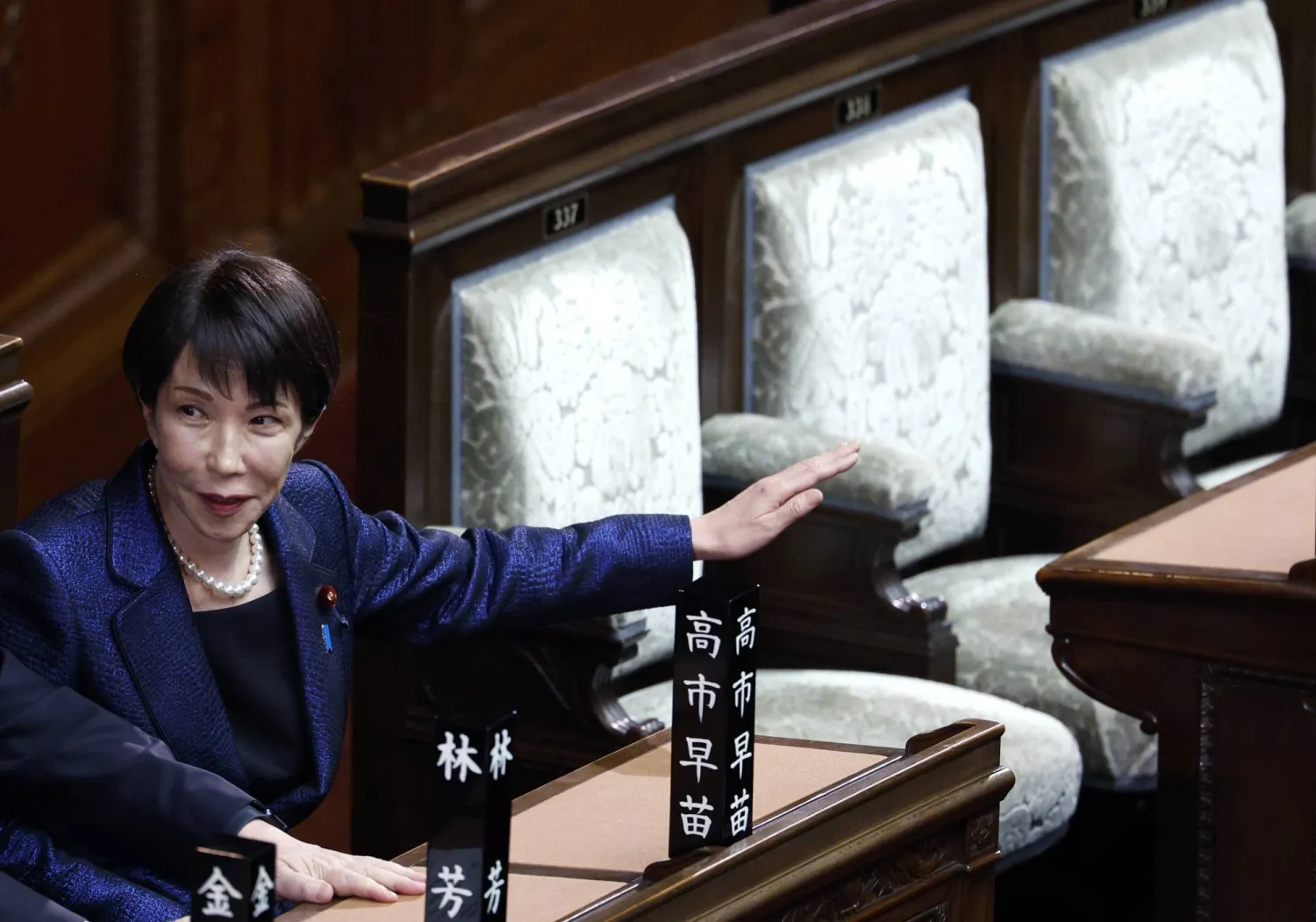
Sanae Takaichi gestures at the Lower House of the Parliament in Tokyo, Japan, 18 February 2026. EPA/FRANCK ROBICHON
TT

Japan PM Takaichi Reappointed Following Election

Sanae Takaichi gestures at the Lower House of the Parliament in Tokyo, Japan, 18 February 2026. EPA/FRANCK ROBICHON

Japan's lower house formally reappointed Sanae Takaichi as prime minister on Wednesday, 10 days after her historic landslide election victory.

Takaichi, 64, became Japan's first woman premier in October and won a two-thirds majority for her party in the snap lower house elections on February 8.

She has pledged to bolster Japan's defenses to protect its territory and waters, likely further straining relations with Beijing, and to boost the flagging economy.

Takaichi suggested in November that Japan could intervene militarily if Beijing sought to take Taiwan by force.

China, which regards the democratic island as part of its territory and has not ruled out force to annex it, was furious.

Beijing's top diplomat Wang Yi told the Munich Security Conference on Saturday that forces in Japan were seeking to "revive militarism".

In a policy speech expected for Friday, Takaichi will pledge to update Japan's "Free and Open Indo-Pacific" strategic framework, local media reported.

"Compared with when FOIP was first proposed, the international situation and security environment surrounding Japan have become significantly more severe," chief government spokesman Minoru Kihara said Monday.

In practice this will likely mean strengthening supply chains and promoting free trade through the Trans-Pacific Partnership (CPTPP) that Britain joined in 2024.

Takaichi's government also plans to pass legislation to establish a National Intelligence Agency and to begin concrete discussions towards an anti-espionage law, the reports said.

Takaichi has promised too to tighten rules surrounding immigration, even though Asia's number two economy is struggling with labor shortages and a falling population.

On Friday Takaichi will repeat her campaign pledge to suspend consumption tax on food for two years in order to ease inflationary pressures on households, local media said, according to AFP.

This promise has exacerbated market worries about Japan's colossal debt, with yields on long-dated government bonds hitting record highs last month.

Rahul Anand, the International Monetary Fund chief of mission in Japan, said Wednesday that debt interest payments would double between 2025 and 2031.

"Removing the consumption tax (on food) would weaken the tax revenue base, since the consumption tax is an important way to raise revenues without creating distortions in the economy," Anand said.

To ease such concerns, Takaichi will on Friday repeat her mantra of having a "responsible, proactive" fiscal policy and set a target on reducing government debt, the reports said.

She will also announce the creation of a cross-party "national council" to discuss taxation and how to fund ageing Japan's ballooning social security bill.

But Takaichi's first order of business will be obtaining approval for Japan's budget for the fiscal year beginning on April 1 after the process was delayed by the election.

The ruling coalition also wants to pass legislation that will outlaw destroying the Japanese flag, according to the media reports.

It wants too to accelerate debate on changing the constitution and on revising the imperial family's rules to ease a looming succession crisis.

Takaichi and many within her Liberal Democratic Party (LDP) oppose making it possible for a woman to become emperor, but rules could be changed to "adopt" new male members.