


Baltic States Successfully Switch to European Power Grid

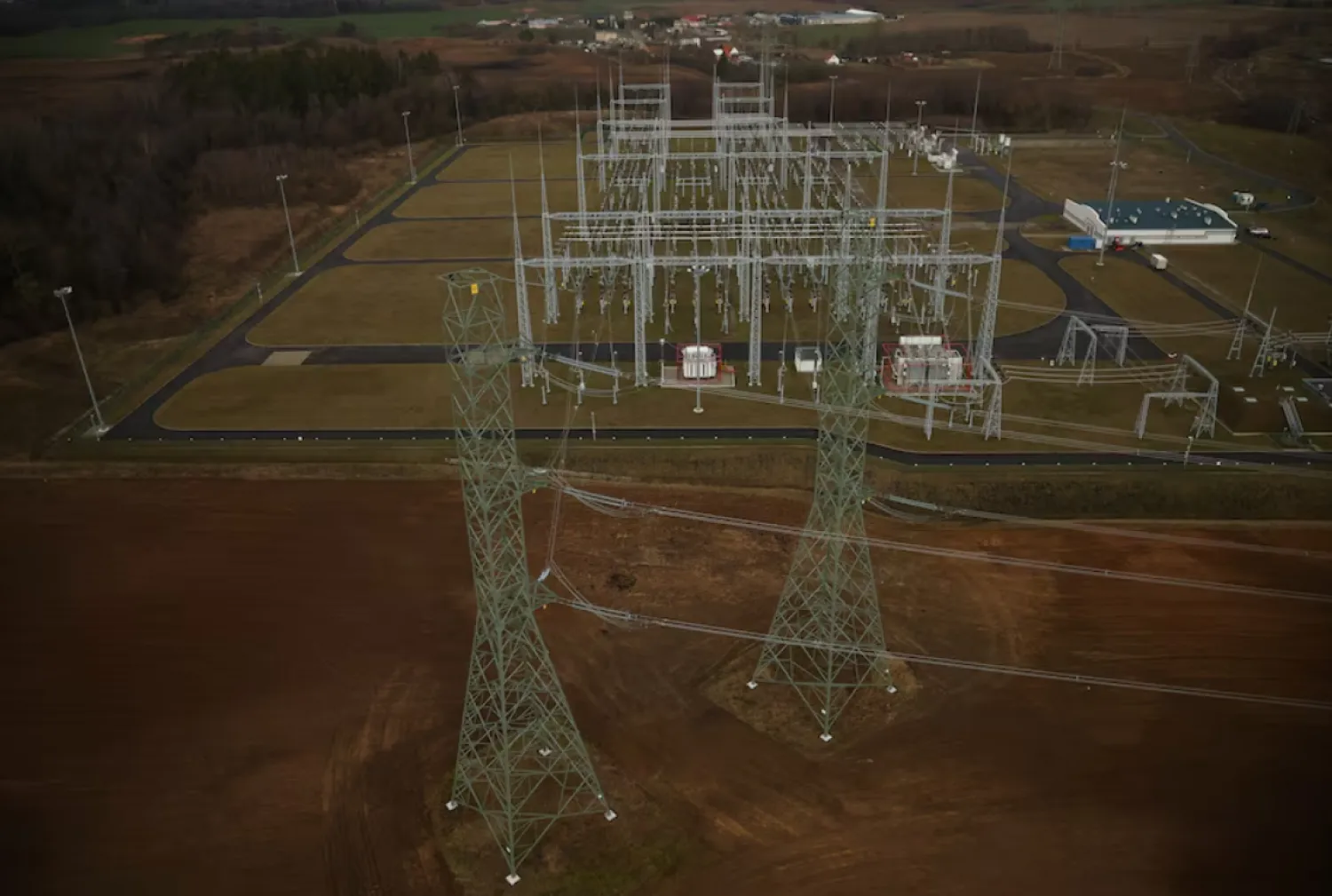
Polish transmission system operator PSE (Polskie Sieci Energetyczne) substation, part of the route of the LitPol, the interconnection between Poland and Lithuania is seen at Elk Bis substation near Elk, Poland, February 6, 2025. REUTERS/Kacper Pempel
TT

Baltic States Successfully Switch to European Power Grid

Polish transmission system operator PSE (Polskie Sieci Energetyczne) substation, part of the route of the LitPol, the interconnection between Poland and Lithuania is seen at Elk Bis substation near Elk, Poland, February 6, 2025. REUTERS/Kacper Pempel

Estonia, Latvia and Lithuania said on Sunday they had successfully synchronized their electricity systems to the European continental power grid, one day after severing decades-old energy ties to Russia and Belarus.

Planned for many years, the complex switch away from the grid of their former Soviet imperial overlord is designed to integrate the three Baltic nations more closely with the European Union and to boost the region's energy security.

"We did it!," Latvian President Edgars Rinkevics said in a post on social media X, Reuters reported.

After disconnecting on Saturday from the IPS/UPS network, established by the Soviet Union in the 1950s and now run by Russia, the Baltic nations cut cross-border high-voltage transmission lines in eastern Latvia, some 100 metres from the Russian border, handing out pieces of chopped wire to enthusiastic bystanders as keepsakes.

EU foreign policy chief Kaja Kallas, herself an Estonian, earlier this week called the switch "a victory for freedom and European unity".

The Baltic Sea region is on high alert after power cable, telecom links and gas pipeline outages between the Baltics and Sweden or Finland. All were believed to have been caused by ships dragging anchors along the seabed following Russia's invasion of Ukraine. Russia has denied any involvement.

Poland and the Baltics deployed navy assets, elite police units and helicopters after an undersea power link from Finland to Estonia was damaged in December, while Lithuania's military began drills to protect the overland connection to Poland.

Analysts say more damage to links could push power prices in the Baltics to levels not seen since the invasion of Ukraine, when energy prices soared.

The IPS/UPS grid was the final remaining link to Russia for the three countries, which re-emerged as independent nations in the early 1990s at the fall of the Soviet Union, and joined the European Union and NATO in 2004.

The three staunch supporters of Kyiv stopped purchases of power from Russia following Moscow's invasion of Ukraine in 2022, but have relied on the Russian grid to control frequencies and stabilise networks to avoid outages.



Israel PM Says Trump Agreed Any Final Iran Deal Must End ‘Nuclear Threat Entirely’

US President Donald Trump points his finger towards Israeli Prime Minister Benjamin Netanyahu during a press conference after meeting at Trump’s Mar-a-Lago club in Palm Beach, Florida, US, December 29, 2025. (Reuters)
TT

Israel PM Says Trump Agreed Any Final Iran Deal Must End ‘Nuclear Threat Entirely’

US President Donald Trump points his finger towards Israeli Prime Minister Benjamin Netanyahu during a press conference after meeting at Trump’s Mar-a-Lago club in Palm Beach, Florida, US, December 29, 2025. (Reuters)

Israeli Prime Minister Benjamin Netanyahu said on Sunday he and US President Donald Trump had agreed that any final deal with Iran must fully end the Islamic republic's "nuclear threat".

Netanyahu was referring to a conversation between the two leaders on Saturday night, which Trump had earlier said "went very well".

"President Trump and I agreed that any final agreement with Iran must eliminate the nuclear threat entirely. This means dismantling Iran's uranium enrichment facilities and removing enriched nuclear material from its territory," Netanyahu said in a statement.

"My policy, like that of President Trump, remains unchanged: Iran will not obtain nuclear weapons," he added.

Netanyahu said the two also discussed the memorandum of understanding on the reopening of the Strait of Hormuz.

"The partnership between our two nations has been proven on the battlefield, and it has never been stronger," the Israeli leader said, adding that Trump had reaffirmed his support for Israel's right to defend itself against threats on all fronts, "including in Lebanon".


Protesters in Spain Condemn Police Handling of Gaza Flotilla Activists

People hold Palestinian flags during a press conference organized by Basque Delegation within the Global Sumud Flotilla, in Bilbao, northern Spain, 24 May 2026. (EPA)
TT

Protesters in Spain Condemn Police Handling of Gaza Flotilla Activists

People hold Palestinian flags during a press conference organized by Basque Delegation within the Global Sumud Flotilla, in Bilbao, northern Spain, 24 May 2026. (EPA)

Around two thousand protesters ‌took to the streets of the Spanish city of Bilbao on Sunday to condemn the Basque police's treatment of activists from a Gaza aid flotilla on their return from detention in Israel.

When a relative of one of the six returning activists tried to approach them at Bilbao airport on Saturday, a police officer forcefully prevented him from doing so, leading to scuffles between both sides, images from state broadcaster TVE showed.

Images showed police striking people ‌with batons and ‌pinning others to the ground while being ‌jeered ⁠by onlookers. Before this, ⁠activists appeared to have blocked the exit for other passengers and police tried to move them.

The Basque regional police force said in a statement on Sunday it had launched an investigation to determine if officers complied with procedures. Reuters has reached out to the Spanish government for ⁠comment.

On Sunday's march, pro-Palestinian demonstrators carried banners ‌criticizing the Basque police force ‌and accusing the local government of being complicit with Zionism.

The ‌activists were released from Israeli custody after being detained ‌on a flotilla trying to bring aid to Gaza. Organizers alleged on Friday that the activists were subjected to abuse while in Israeli detention, with several hospitalized with injuries and at least ‌15 reporting sexual assaults, including rape.

Israel's prison service denied the allegations, and Reuters was not ⁠able to ⁠verify the activists' claims independently.

Spain was among a series of Western governments on Thursday which expressed their anger after Israeli minister Itamar Ben-Gvir posted a video of himself mocking the activists as they were pinned to the ground in a prison.

Francesca Albanese, a UN expert on the Palestinian territories, has called for those responsible for events at Bilbao airport to be held responsible, while Amnesty International has demanded a thorough investigation.

The Israeli Embassy in Spain has demanded an "explanation" from the Spanish government over the events at Bilbao airport.


Report: Macron Warns Belarus Against Involvement in Ukraine War

France's President Emmanuel Macron (C) speaks with Lens' French head coach Pierre Sage (L) ahead of the French Cup final football match between RC Lens and OGC Nice at the Stade de France stadium, in Saint-Denis, on the outskirts of Paris, on May 22, 2026. (AFP)
TT

Report: Macron Warns Belarus Against Involvement in Ukraine War

France's President Emmanuel Macron (C) speaks with Lens' French head coach Pierre Sage (L) ahead of the French Cup final football match between RC Lens and OGC Nice at the Stade de France stadium, in Saint-Denis, on the outskirts of Paris, on May 22, 2026. (AFP)

French President Emmanuel Macron on Sunday warned Belarusian leader Alexander Lukashenko, a key Russian ally, against an involvement in Moscow's war against Ukraine, a source close to Macron said.

The warning was made during the first reported phone call between the two leaders since the early days of Russia's invasion in February 2022, partly launched from Belarusian territory.

Macron "stressed the risks for Belarus of allowing itself to be drawn into Russia's war of aggression against Ukraine," the source, who spoke on condition of anonymity, said.

"He also urged Alexander Lukashenko to take the necessary steps to improve relations between Belarus and Europe," the source added.

A brief readout on the Belarusian presidency's website said that "the heads of state discussed regional issues and Belarus' relations with the EU and with France in particular."

The conversation took place "at the initiative of the French side", the readout added.

Earlier in May, Ukrainian President Volodymyr Zelensky ordered troops to reinforce the border with Belarus in the north, claiming Moscow was preparing a new offensive from there. The Kremlin denied that.

Russia and its smaller ally Belarus held nuclear drills days ago, on May 18, as Kyiv escalated its drone attacks on Russia.

Belarus, which borders NATO's eastern flank, hosts Russia's latest nuclear-capable missile, the Oreshnik.

On Sunday, Russia used the ballistic hypersonic missile for the third time in the war against Ukraine, as part of a massive drone and missile barrage that caused widespread destruction across Kyiv.