


Corruption Survey Gives Many Nations Worst Scores in Over a Decade 

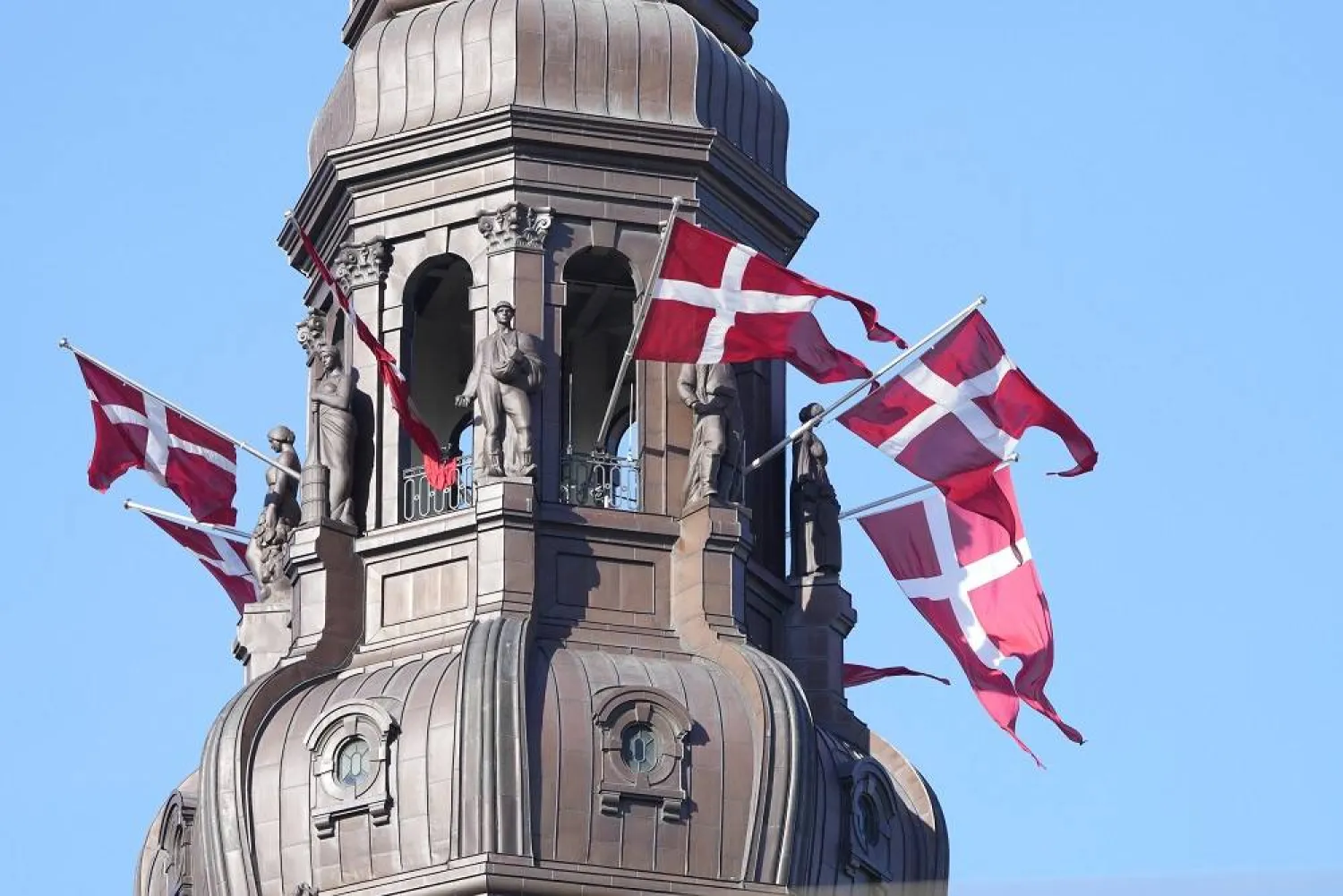
Danish flags are attached to the spire of Christiansborg Castle, the Danish Parliament building in Copenhagen, Denmark, Sept. 5, 2021. (AP)
TT

Corruption Survey Gives Many Nations Worst Scores in Over a Decade 

Danish flags are attached to the spire of Christiansborg Castle, the Danish Parliament building in Copenhagen, Denmark, Sept. 5, 2021. (AP)

Many countries had their worst showing in more than a decade in an index released Tuesday that serves as a barometer of public sector corruption worldwide, from leading powers such as the United States and France to authoritarian nations such as Russia and Venezuela.

Transparency International, which compiles the annual Corruption Perceptions Index, found that 47 countries out of the 180 it surveyed had their lowest score last year since it started using its current methodology for its global ranking in 2012. It said of its 2024 survey that “global corruption levels remain alarmingly high, with efforts to reduce them faltering.”

The group also pointed to worldwide risks from corruption to efforts to combat climate change. It said that a lack of transparency and accountability mechanisms increases the risk of climate funds being embezzled or misused, while “undue influence,” often from the private sector, obstructs the approval of ambitious policies.

The organization measures the perception of public sector corruption according to 13 data sources, including the World Bank, the World Economic Forum and private risk and consulting companies. It ranks 180 countries and territories on a scale from a “highly corrupt” 0 to a “very clean” 100.

The global average remained unchanged from 2023 at 43, with more than two-thirds of countries scoring under 50, Transparency International said. Denmark held on to first place with an unchanged 90 points, followed by Finland with 88 and Singapore with 84. New Zealand dropped from third to fourth, shedding two points to 83.

South Sudan slid to the bottom of the index with just eight points, displacing Somalia although the latter country's score dropped to nine. They were followed by Venezuela with 10 and Syria with 12.

The US slid from 69 points to 65 and from 24th place to 28th. Transparency International pointed to criticism of its judicial branch. It noted that the US Supreme Court adopted its first code of ethics in 2023, “but serious questions remain about the lack of meaningful, objective enforcement mechanisms and the strength of the new rules themselves.”

Other Western nations on the decline included France, which dropped four points to 67 and five places to 25th; and Germany, down three points to 75 and six places to 15th. It tied with Canada, which was down one point and three places.

Mexico dropped five points to 26 as the judiciary failed to take action in major corruption cases, Transparency International said.

“Despite former president Andrés Manuel López Obrador’s promises to tackle corruption and return stolen assets to the people, his six-year term ended without any convictions or recovered assets,” it added.

In Europe, Slovakia dropped five points to 49 in the first full year of Prime Minister Robert Fico's government, “as numerous reforms erode anti-corruption checks and bypass public consultation.”

Russia, which already declined significantly in recent years, shed another four points to 22 last year. Transparency International noted that Moscow's full-scale invasion of Ukraine in February 2022 has “further entrenched authoritarianism.” It said that Ukraine, while its score dipped one point to 35, “is making strides in judicial independence and high-level corruption prosecutions.”

In the Middle East and North Africa, it said that “unforeseen opportunities are also emerging,” for example in the wake of the fall of President Bashar Assad's government in Syria. Sub-Saharan Africa had the lowest average score of any region, at 33.

In Asia and the Pacific, governments “are still failing to deliver on anti-corruption pledges,” Transparency International said.



Erdogan Warns Black Sea Should Not Be 'Area of Confrontation' after Strikes

Turkish President Recep Erdogan addresses the media after the conclusion on the G20 Summit held at the Nasrec Expo Center in Johannesburg, South Africa, 23 November 2025. EPA/HALDEN KROG
TT

Erdogan Warns Black Sea Should Not Be 'Area of Confrontation' after Strikes

Turkish President Recep Erdogan addresses the media after the conclusion on the G20 Summit held at the Nasrec Expo Center in Johannesburg, South Africa, 23 November 2025. EPA/HALDEN KROG

Turkish President Recep Tayyip Erdogan on Saturday warned that the Black Sea should not turn into an "area of confrontation" between Russia and Ukraine, after several strikes in recent weeks.

"The Black Sea should not be seen as an area of confrontation. This would not benefit Russia or Ukraine. Everyone needs safe navigation in the Black Sea," he was quoted as telling reporters aboard his plane, according to the official Anadolu news agency.


Indonesia Flood Death Toll Passes 1,000

The deadly torrential rains are one of the worst recent disasters to strike Sumatra. (AFP)
TT

Indonesia Flood Death Toll Passes 1,000

The deadly torrential rains are one of the worst recent disasters to strike Sumatra. (AFP)

Devastating floods and landslides have killed 1,003 people in Indonesia, rescuers said Saturday as the Southeast Asian nation grapples with relief efforts.

The disaster, which has hit the northwestern island of Sumatra over the past fortnight, has also injured more than 5,400, the National Disaster Mitigation Agency said in its latest toll.

The deadly torrential rains are one of the worst recent disasters to strike Sumatra, where a tsunami wreaked havoc in 2004 in Aceh province, which lies at the northern tip of the island.

The final toll is expected to rise, with the disaster agency reporting 218 people are still missing.

With vast tracts of territory hit, 1.2 million residents have been forced to take refuge in temporary shelters.

Frustration has grown among flood victims, who have complained about the pace of relief efforts.

President Prabowo Subianto said Saturday the situation has improved, with several areas which had been cut off now accessible.

"Here and there, due to natural and physical conditions, there have been slight delays, but I checked all the evacuation sites: their conditions are good, services for them are adequate, and food supplies are sufficient," Prabowo said after visiting Langkat in North Sumatra province.

Costs to rebuild after the disaster could reach 51.82 trillion rupiah ($3.1 billion) and the Indonesian government has so far shrugged off suggestions that it call for international assistance.


Moscow, Tehran ‘Working Closely’ on Nuclear Program

Russian President Vladimir Putin and Iranian President Masoud Pezeshkian on the sidelines of the Peace Summit in Ashgabat, Turkmenistan, on Friday (Tasnim). 
TT

Moscow, Tehran ‘Working Closely’ on Nuclear Program

Russian President Vladimir Putin and Iranian President Masoud Pezeshkian on the sidelines of the Peace Summit in Ashgabat, Turkmenistan, on Friday (Tasnim). 

Russian President Vladimir Putin said on Friday that relations between Moscow and Tehran are “developing very positively,” stressing that the two countries are working in close coordination at the United Nations on Iran’s nuclear program.

He made the remarks during talks with Iranian President Masoud Pezeshkian on the sidelines of the International Peace and Trust Summit in Ashgabat.

According to Russian media, Putin said Russia is cooperating with Iran at the Bushehr nuclear power plant and on major infrastructure projects, including the North–South Transport Corridor.

He added that the two sides are also exploring cooperation in the gas and electricity sectors.

Pezeshkian, quoted by Iranian and Russian media, reaffirmed Tehran’s commitment to implementing the comprehensive strategic partnership agreement with Moscow.

He said Iran is “determined to activate the agreement” and expects Russia to accelerate implementation of joint understandings, particularly in energy, transport and strategic transit corridors.

The Iranian president said Iran would complete its share of the groundwork for the North–South Corridor by the end of the year, noting growing economic and trade cooperation between the two countries.

He also called for strengthening multilateral partnerships within frameworks such as the Shanghai Cooperation Organization and BRICS to counter what he described as “unilateralism.”

Russia and Iran aim to expand economic ties through projects such as the International North–South Transport Corridor, a multimodal route linking northern and southern Asia via sea, rail and road networks.

The corridor is intended to speed up cargo transport between Russia and India through Iran and other countries while reducing costs compared with traditional routes. The project is seen as part of Moscow’s efforts to deepen trade links with Central Asia and Europe and to lessen reliance on longer maritime routes.

Putin said bilateral trade between Russia and Iran increased by 13 percent last year and by 8 percent in the first nine months of the current year, underscoring continued cooperation in energy and infrastructure. He added that coordination between Moscow and Tehran on international issues remains “close and ongoing.”

On the sidelines of the summit, Pezeshkian also met Pakistani Prime Minister Shehbaz Sharif, with both sides agreeing on the need to accelerate implementation of bilateral agreements and enhance cooperation in transport, transit, energy and border infrastructure, according to Iran’s Mehr News Agency.