


At Least 7 Dead after Russian Bridge Collapses onto Railway

Authorities said a train was derailed in the incident, without giving detail. Handout / Moscow Interregional Transport Prosecutor's Office/AFP
TT

At Least 7 Dead after Russian Bridge Collapses onto Railway

Authorities said a train was derailed in the incident, without giving detail. Handout / Moscow Interregional Transport Prosecutor's Office/AFP

At least seven people were killed and dozens injured after a bridge collapsed onto a railway in a Russian region bordering Ukraine late Saturday, officials said, in an incident the railway operator blamed on "illegal interference".
A train travelling from the Russian border town of Klimovo to the capital Moscow was derailed in the incident, authorities said, without giving details, AFP reported.

Videos posted on social media showed rescuers working at the site of a large mound of rubble covering what appeared to be a train belonging to national operator Russian Railways, while another showed people shouting in distress.

"There are seven dead as a result of the collapse of a bridge onto railway tracks," Alexander Bogomaz, the Bryansk region's governor, wrote on Telegram.

At least 66 others were injured, including three children, he said, giving a revised toll.
Moscow Railways, a state-owned subsidiary, said a passenger train derailed "between Klimov and Moscow due to the collapse of a road bridge span, as a result of illegal interference in the operation of transport".

The incident happened at 10:44 pm (1944 GMT) between the Pilshino and Vygonichi stations in the Bryansk region, the national railway operator said on Telegram.

The incident did not affect other train traffic, the firm added.

In one video posted on social media, someone can be heard screaming as eyewitnesses rush to find help.

"How did the bridge collapse? There are children there!" a woman can be heard shouting in the video.

'Illegal interference'
Photos published online by Russian authorities showed a collapsed section of the bridge and damaged vehicles, as rescue workers were deployed overnight.

The disaster area is around 100 kilometers (62 miles) from the Ukrainian border.
Russia's emergency ministry said a team was on site, while Russian Railways said it had dispatched repair trains to the scene.

An AFP reporter in central Moscow saw ambulances parked at Kievsky railway station awaiting the arrival of injured passengers.

Prosecutors said they had opened an investigation.

Authorities did not explain how the incident happened and what the railway operator meant by "illegal interference".

Ukraine, which Russia has blamed for previous incidents, did not immediately comment.

Russia has been hit by dozens of sabotage attacks since Moscow launched its offensive against Ukraine in 2022, many targeting its vast railroad network.

Kyiv says Russia uses railroads to transport troops and weaponry to its forces fighting in Ukraine.

The incident came just two days before a possible meeting between Russian and Ukrainian officials in Istanbul, amid a US-led diplomatic push to end the three-year conflict.


Trump Says Deal to End War Will Be Signed on Sunday, Iran Questions Timing

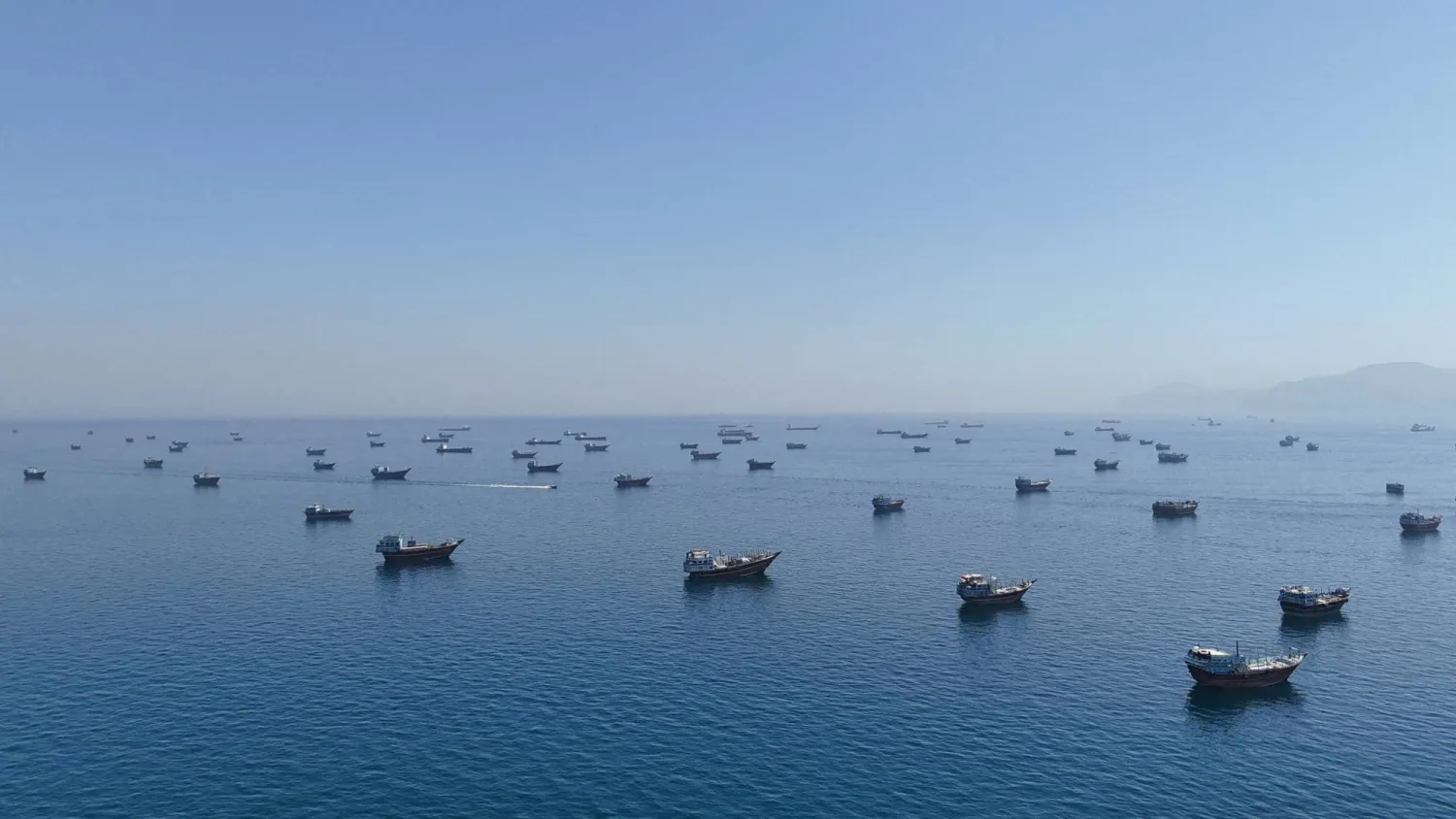
A drone view of vessels anchored in the Strait of Hormuz as seen from Musandam, Oman, June 8, 2026. (Reuters)
TT

Trump Says Deal to End War Will Be Signed on Sunday, Iran Questions Timing

A drone view of vessels anchored in the Strait of Hormuz as seen from Musandam, Oman, June 8, 2026. (Reuters)

US President Donald Trump and mediator Pakistan said on Saturday an initial deal to end the war in the Middle East would be signed on Sunday, although Iran denied the signing would take place so soon. 

Pakistani Prime Minister Shehbaz Sharif said the two sides had agreed on a framework for a peace deal and that Islamabad was preparing for an electronic signing on Sunday, to be followed by technical-level talks next week. 

Trump also said in a social media post that the deal with Iran was scheduled to be signed on Sunday and that the Strait of Hormuz, a vital artery for global oil supplies which Iran has blocked, would be immediately "open to all" after it was signed. 

Earlier on Saturday, Iranian Foreign Ministry spokesperson Esmaeil Baghaei cautioned against commenting on the timing the signing. 

"We will have to wait and see about the exact date of the signing of the memorandum of understanding, although it will not be tomorrow," state media quoted Baghaei as saying. 

"The possibility of this happening in the coming days cannot be ruled out. However, due to the ‌hesitation of the ‌other side, we must be cautious in making any comments about this process." 

A US official who spoke to ‌reporters ⁠later declined to ⁠be drawn on the timing but said: "It's a great deal and a very strong deal." 

It is not the first time the two sides have appeared close to an initial agreement on ending the war that began on February 28 with joint US-Israeli strikes on Iran, but Sharif said on X: "We are closer to a peace deal than ever before." 

The war has sent global energy prices sharply higher and killed thousands of people, mostly in Iran and Lebanon, where the war has revived a conflict between Israel and Iran-aligned Hezbollah. 

WHAT IS IN THE DEAL? 

Iranian Foreign Minister Abbas Araqchi said on Friday that while changes in the deal were still possible, the tentative agreement showed his country had emerged stronger from the conflict. 

Hours after those remarks, US forces shot down multiple Iranian one-way attack drones heading toward the Strait of Hormuz, a source familiar with ⁠the matter told Reuters. 

The source, who spoke on condition of anonymity, said the drones had posed a threat to ‌commercial traffic. US Central Command later confirmed the action and said the strait, a major artery for ‌global oil supplies, was open. 

Iran has for months effectively blockaded the strait, and the US navy has blocked Iranian ports to reduce its oil exports. 

The proposed memorandum of understanding ‌calls for reopening the strait and lifting the US naval blockade, sources on all sides of the talks said. Negotiations over Iran's nuclear program - Trump's stated ‌rationale for starting the war - would take place afterwards. 

"Iran is going to open up the Strait of Hormuz, that's a requirement. It could be open with no tolls. As they do that, we will lift our blockade," said the US official who spoke on Saturday. 

"It's going to happen in conjunction, and part of the next step, the phase after that, is going to be the demining of the straits," the official said, indicating countries in the Group of Seven major powers could have a role in this. 

FROZEN ASSETS 

Draft terms ‌described to Reuters by multiple sources indicate the US would begin releasing billions of dollars in frozen Iranian assets and waive sanctions on its oil exports, in return for Iran opening the strait. 

Iran's Fars news agency quoted ⁠Baghaei as saying the release of Iran's ⁠frozen assets was an integral part of the agreement and also that Iran would have to charge for services in the Strait of Hormuz. 

Fars also quoted him as saying foreign military bases in the region must end without providing details. 

Iran's nuclear program would be addressed during a 60-day period of talks. A US official said the agreement would ultimately lead to the dismantling of Iran’s nuclear program, with its stockpile of highly enriched uranium to be destroyed and removed. 

But Araqchi said that Iran, which sources said has not accepted the dismantling of its nuclear program, wanted to retain the uranium in diluted form. 

The proposals also include discussion of possible war reparations for Tehran and dropping longstanding US demands for limits on Iran's missile program, the sources said. The US official disputed that account. 

ISRAEL NOT PARTY TO MEMORANDUM 

Israeli Prime Minister Benjamin Netanyahu said his country would not be party to the agreement. He has clashed with Trump over US demands that Israel curb military action in Lebanon to allow Washington to reach a deal with Tehran. 

Araqchi said the agreement would end the war in Lebanon, implying an Israeli withdrawal from occupied areas. 

Israel's defense minister said it would not withdraw. A senior Israeli official said Israel expects to retain its freedom to act against threats. 

Iran's supreme leader, Ali Khamenei, was killed in an airstrike on the first day of the war and later replaced in the role by his son Mojtaba. Khamenei's funeral will begin in Tehran on July 4 and conclude with his burial in his hometown, the northeastern holy city of Mashhad, on July 9, Iranian state media reported on Saturday.  


Iran Says Funeral for Late Supreme Leader Khamenei to Begin July 4, Burial Set for July 9

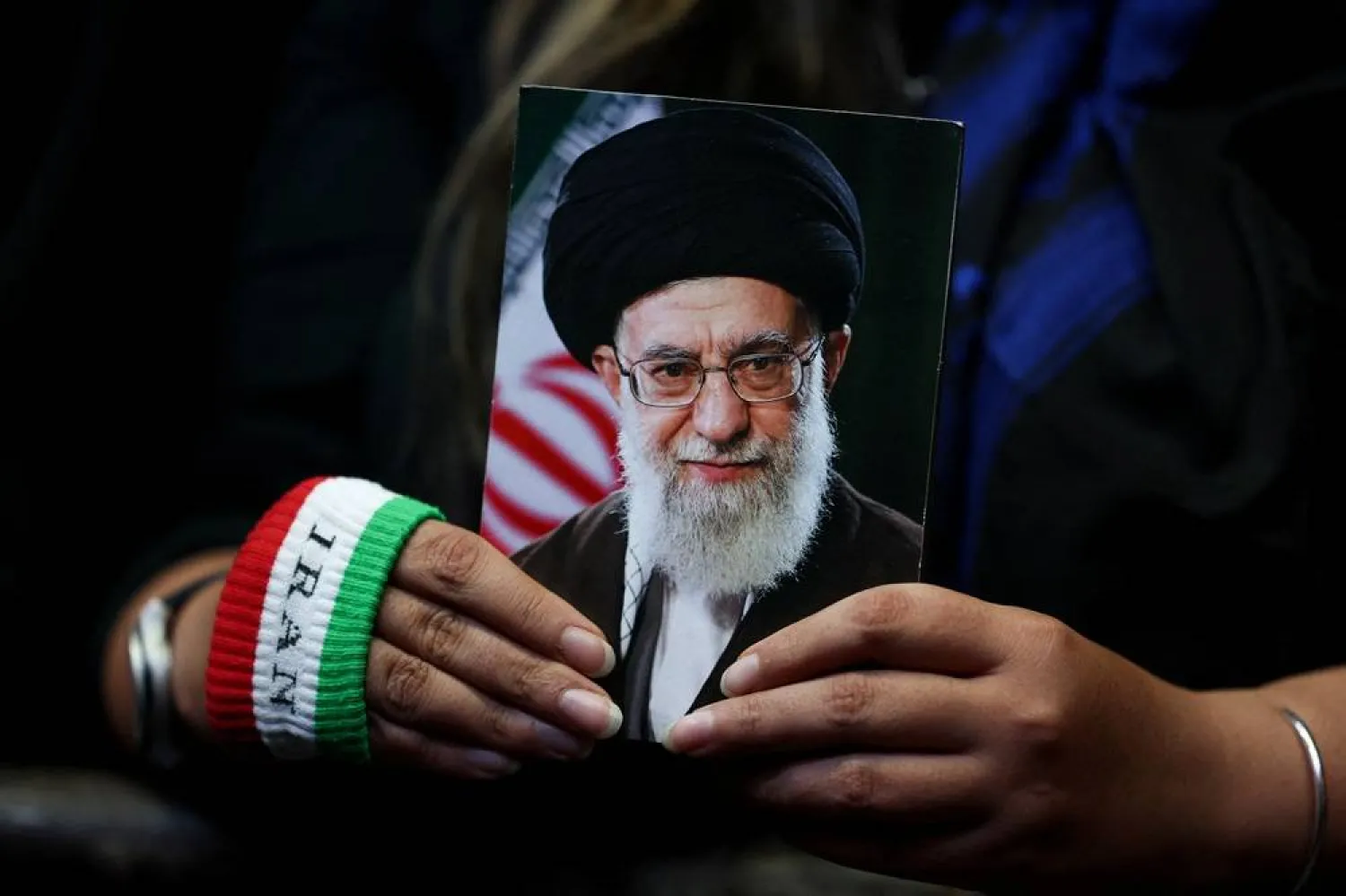
A woman holds an image of late Iranian Supreme Leader Ali Khamenei during a rally in Tehran, Iran, May 29, 2026. Majid Asgaripour/WANA (West Asia News Agency) via Reuters
TT

Iran Says Funeral for Late Supreme Leader Khamenei to Begin July 4, Burial Set for July 9

A woman holds an image of late Iranian Supreme Leader Ali Khamenei during a rally in Tehran, Iran, May 29, 2026. Majid Asgaripour/WANA (West Asia News Agency) via Reuters

The ‌funeral for Iran's late Supreme Leader Ali Khamenei will begin in Tehran on July 4 and conclude with his burial in his hometown, the northeastern holy city of Mashhad, on July 9, state media reported on Saturday. 

Khamenei was killed on the first day of Israeli and US airstrikes against Iran on February 28. The 86-year-old cleric had been at the helm of the regime ‌for 36 ‌years. 

The funeral arrangements will include ‌ceremonies ⁠on July 7 in ⁠the holy city of Qom, south of Tehran, media said. 

Islamic law requires the deceased to be buried as soon as possible, and ideally within 24 hours of death, but exceptions are allowed, for example in time of war. 

During his ⁠rule, Khamenei built Iran into a ‌powerful anti-US force, spreading ‌its military sway across the Middle East through proxy forces ‌such as Hezbollah in Lebanon, while using an ‌iron fist to crush outbreaks of unrest at home. 

Khamenei remained a strong critic of the United States throughout his rule, while successive US administrations tried unsuccessfully ‌to resolve a dispute with Iran over its nuclear program. 

The airstrike that killed ⁠him pulverized ⁠his central Tehran compound. His 56-year-old son Mojtaba, who also lost his wife in the airstrike and was himself injured, succeeded his father as Supreme Leader. 

Pakistan's Prime Minister Shehbaz Sharif said on Saturday that Iran and the United States had agreed on a framework for a peace deal after more than three months of war and are expected to sign the initial deal in the next 24 hours. 


North Korea Condemns US Missile Sale Approval to South Korea

A North Korean flag flutters at the North Korea consular office in Dandong, Liaoning province, China June 8, 2026. (Reuters)
TT

North Korea Condemns US Missile Sale Approval to South Korea

A North Korean flag flutters at the North Korea consular office in Dandong, Liaoning province, China June 8, 2026. (Reuters)

North Korea's foreign ministry condemned a US decision to approve the sale of advanced air-to-air missiles and related equipment to South Korea, warning the move would worsen tensions on the Korean peninsula, state media KCNA said on Saturday.

The ministry's director-general for external policy said in a statement carried ‌by KCNA ‌that military cooperation between Washington ‌and ⁠Seoul was being "systematically strengthened" despite ⁠what it called international concern over rising tensions in and around the peninsula.

The official cited the US State Department's approval of a nearly $300 million foreign military sale of advanced air-to-air missiles and related ⁠equipment to South Korea as ‌the latest example.

"US ‌arms exports are war exports," the official said, adding ‌that North Korea would continue strengthening ‌its self-defensive deterrent to maintain the regional balance of power.

North Korea routinely criticizes US-South Korea military cooperation as preparation for war.

It separately criticized ‌South Korea's President Lee Jae Myung over a joint statement with ⁠European Union ⁠leaders during a visit to Europe, which described North Korea's status as a nuclear weapons state and its military cooperation with Russia as "illegal", KCNA said on Saturday.

KCNA said it was a violation of North Korea's sovereignty, South Korea had shown there could be no "peaceful coexistence" between the two Koreas and that Pyongyang would continue to regard the South as a hostile state.