Trump Says US to Hold Nuclear Talks with Iran Next Week

US President Donald Trump poses for a photo during a NATO summit in The Hague, Netherlands June 25, 2025. REUTERS/Yves Herman
TT

Trump Says US to Hold Nuclear Talks with Iran Next Week

US President Donald Trump poses for a photo during a NATO summit in The Hague, Netherlands June 25, 2025. REUTERS/Yves Herman

US President Donald Trump said on Wednesday he would likely seek a commitment from Iran to end its nuclear ambitions at talks next week and credited US strikes on Iran with bringing a swift end to the war between Israel and Tehran.  

Trump said his decision to unleash huge bunker-busting bombs in Sunday's attack had devastated Iran's nuclear program and called the outcome "a victory for everybody".  

"It was very severe. It was obliteration," he said, shrugging off an initial assessment by the US Defense Intelligence Agency that Iran's path to building a nuclear weapon may have been set back only by months. 

Meanwhile, anxious Iranians and Israelis sought to resume normal life after 12 days of the most intense confrontation ever between the two foes and a ceasefire that took effect Tuesday.  

Speaking in The Hague where he attended a NATO summit on Wednesday, Trump said he did not see Iran again engaging in nuclear weapons development. Tehran has for decades denied accusations by Western leaders that it is seeking nuclear arms. 

"We're going to talk to them next week, with Iran. We may sign an agreement. I don't know. To me, I don't think it's that necessary," Trump said. 

"I'll tell you, the last thing they want to do is enrich anything right now. They want to recover," he said, referring to Western accusations that Iran has been enriching uranium to near-weapons-grade purity.  

Later on Wednesday, US Central Intelligence Agency Director John Ratcliffe said in a statement that the US air strikes had "severely damaged" Iran’s nuclear program, but he stopped short of declaring that the program had been destroyed. 

The agency confirmed a "body of credible evidence" that several key Iranian facilities were destroyed and would take years to rebuild, he said. 

Israel's nuclear agency assessed the strikes had "set back Iran's ability to develop nuclear weapons by many years". The White House also circulated the Israeli assessment, although Trump said he was not relying on Israeli intelligence. 

Trump said he was confident Tehran would pursue a diplomatic path towards reconciliation. The president gave no details on the discussions next week such as the venue and participants. 

If Iran tried to rebuild its nuclear program, "we won't let that happen. Number one, militarily we won't," he said, adding that he thought "we'll end up having something of a relationship with Iran" to resolve the issue. 

The head of the UN's nuclear watchdog, Rafael Grossi, dismissed what he called the "hourglass approach" of assessing damage to Iran's nuclear program in terms of months needed to rebuild as besides the point for an issue that needed a long-term solution. 

"In any case, the technological knowledge is there and the industrial capacity is there. That, no one can deny. So, we need to work together with them," he said. His priority was returning international inspectors to Iranian nuclear sites, which he said was the only way to find out precisely what state they were in. 

IRAN PRESIDENT HINTS AT DOMESTIC REFORMS 

Israel's bombing campaign, launched with a surprise attack on June 13, wiped out the top echelon of Iran's military leadership and killed leading nuclear scientists. Iran responded with missiles that pierced Israel's defenses in large numbers for the first time. 

Iranian authorities said 627 people were killed and nearly 5,000 injured in Iran, where the extent of the damage could not be independently confirmed because of tight restrictions on media. Twenty-eight people were killed in Israel. 

Israel claimed to have achieved its goals of destroying Iran's nuclear sites and missiles; Iran claimed to have forced the end of the war by penetrating Israeli defenses. 

Israel's demonstration that it could target Iran's senior leadership seemingly at will posed perhaps the biggest challenge yet for Iran's clerical rulers, at a critical juncture when they must find a successor for Supreme Leader Ali Khamenei, now 86 and in power for 36 years.  

Iranian President Masoud Pezeshkian, a relative moderate elected last year in a challenge to years of dominance by hardliners, said it could result in reform. 

"This war and the empathy that it fostered between the people and officials is an opportunity to change the outlook of management and the behavior of officials so that they can create unity," he said in a statement carried by state media. 

Still, Iran's authorities moved swiftly to demonstrate their control. The judiciary announced the execution of three men on Wednesday convicted of collaborating with Israel's Mossad spy agency and smuggling equipment used in an assassination. Iran had arrested 700 people accused of ties with Israel during the conflict, the state-affiliated Nournews reported. 

During the war, both Israel Prime Minister Benjamin Netanyahu and Trump publicly suggested that it could end with the toppling of Iran's entire system of clerical rule, established in its 1979 revolution. 

But after the ceasefire, Trump said he did not want to see "regime change" in Iran, which he said would bring chaos at a time when he wanted the situation to settle down. 

RELIEF, APPREHENSION, EXHAUSTION 

In both Iran and Israel, residents expressed relief at the end of the fighting, but also apprehension. 

"We came back after the ceasefire was announced. People are relieved that the war has stopped, but there's a lot of uncertainty about what comes next," said Farah, 67, who returned to Tehran from nearby Lavasan, where she had fled to escape Israeli bombing. 

In Tel Aviv, Rony Hoter-Ishay Meyer, 38, said the war's end brought mixed emotions: relief that children could return to school and normal life resume, but exhaustion from the stress. 

"Those past two weeks were catastrophic in Israel, and we are very much exhausted and we need to get back to our normal energy." 


Poland Bars Chinese-Made Cars from Military Sites Over Data Security Fears 

A soldier from the 18th Mechanized Division stands guard on a Light Strike Vehicle "Zmija" during a media tour organized by the country's military to demonstrate the security measures on the Polish Belarusian border, near Bialowieza, Poland, January 10, 2025. (Reuters)
TT

Poland Bars Chinese-Made Cars from Military Sites Over Data Security Fears 

A soldier from the 18th Mechanized Division stands guard on a Light Strike Vehicle "Zmija" during a media tour organized by the country's military to demonstrate the security measures on the Polish Belarusian border, near Bialowieza, Poland, January 10, 2025. (Reuters)

Poland has barred Chinese-made vehicles from entering military facilities due to concerns their onboard sensors could be used to collect sensitive data, the Polish Army said on Tuesday evening.

The army said in ‌a statement ‌that such vehicles ‌may ⁠still be allowed onto ⁠secured sites if specified functions are disabled and other safeguards required under each facility's security rules are in place.

To ⁠limit the risk ‌of ‌exposing confidential information, the military has ‌also banned connecting company ‌phones to infotainment systems in vehicles manufactured in China.

The restrictions do not apply ‌to publicly accessible military locations such as hospitals, ⁠clinics, ⁠libraries, prosecutors' offices or garrison clubs, the army said.

It added that the measures are precautionary and align with practices used by NATO members and other allies to ensure high standards of protection for defense infrastructure.


Starmer, Trump discussed Russia-Ukraine, Iran after Geneva Talks, Downing Street Says 

US President Donald Trump and British Prime Minister Keir Starmer announce an agreement between the two countries as they hold a press conference at Chequers at the conclusion of a state visit on September 18, 2025 in Aylesbury, Britain. (Reuters)
TT

Starmer, Trump discussed Russia-Ukraine, Iran after Geneva Talks, Downing Street Says 

US President Donald Trump and British Prime Minister Keir Starmer announce an agreement between the two countries as they hold a press conference at Chequers at the conclusion of a state visit on September 18, 2025 in Aylesbury, Britain. (Reuters)

British ‌Prime Minister Keir Starmer spoke to US President Donald Trump on Tuesday night about US-mediated Russia-Ukraine peace talks in Geneva, as well as talks between the US and Iran on ‌their nuclear ‌dispute, a Downing Street ‌spokesperson ⁠said.

Starmer also discussed ⁠Gaza with Trump and stressed on the importance of securing further access for humanitarian aid, the spokesperson said.

Negotiators ⁠from Ukraine and ‌Russia ‌concluded the first of two days ‌of the US-mediated ‌peace talks in Geneva on Tuesday, with Trump pressing Kyiv to act fast ‌to reach a deal.

Separately, Iranian Foreign Minister ⁠Abbas ⁠Araqchi said Tehran and Washington reached an understanding on Tuesday on "guiding principles" aimed at resolving their longstanding nuclear dispute, but that did not mean a deal is imminent.


Japan PM Takaichi Reappointed Following Election

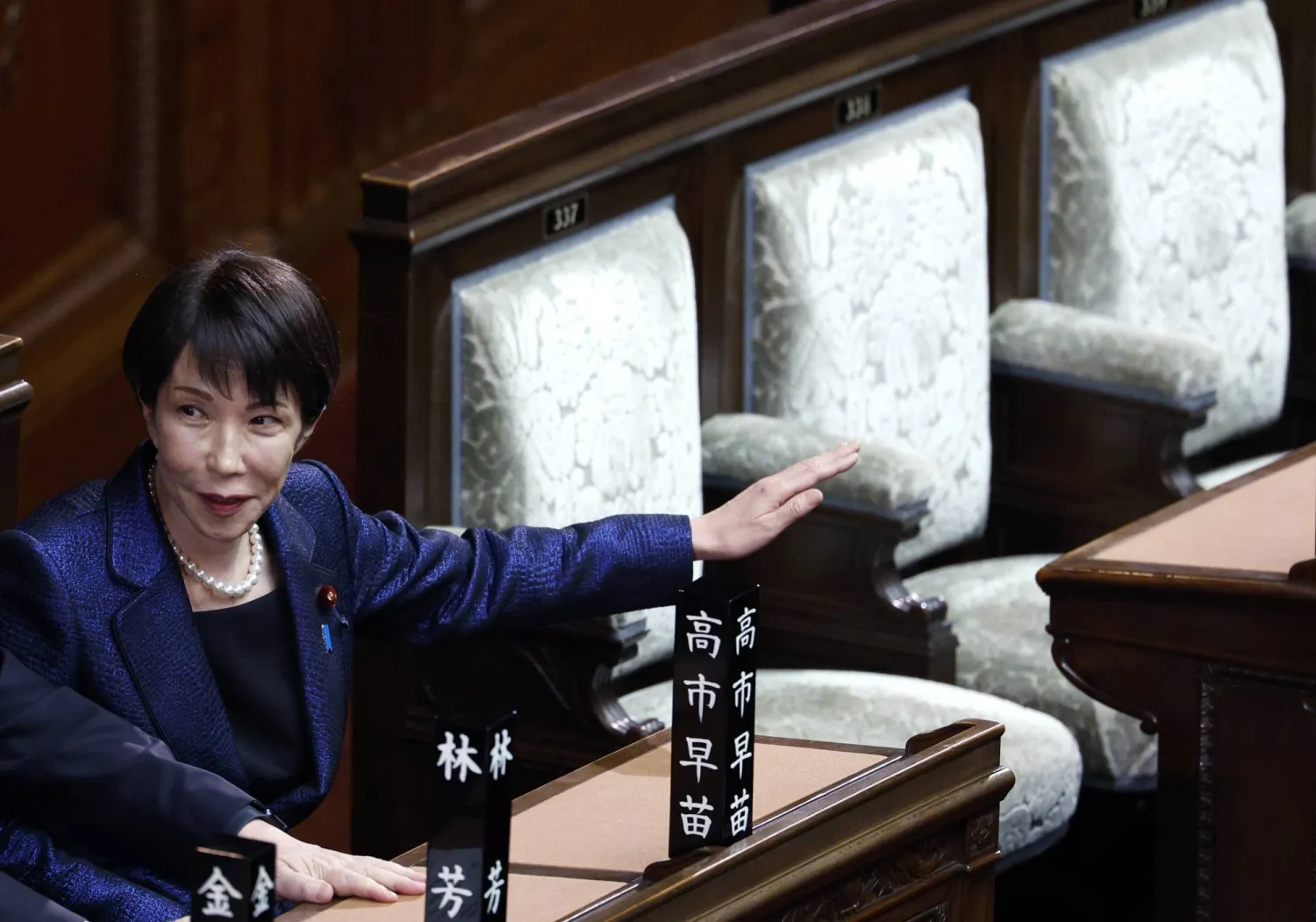
Sanae Takaichi gestures at the Lower House of the Parliament in Tokyo, Japan, 18 February 2026. EPA/FRANCK ROBICHON
TT

Japan PM Takaichi Reappointed Following Election

Sanae Takaichi gestures at the Lower House of the Parliament in Tokyo, Japan, 18 February 2026. EPA/FRANCK ROBICHON

Japan's lower house formally reappointed Sanae Takaichi as prime minister on Wednesday, 10 days after her historic landslide election victory.

Takaichi, 64, became Japan's first woman premier in October and won a two-thirds majority for her party in the snap lower house elections on February 8.

She has pledged to bolster Japan's defenses to protect its territory and waters, likely further straining relations with Beijing, and to boost the flagging economy.

Takaichi suggested in November that Japan could intervene militarily if Beijing sought to take Taiwan by force.

China, which regards the democratic island as part of its territory and has not ruled out force to annex it, was furious.

Beijing's top diplomat Wang Yi told the Munich Security Conference on Saturday that forces in Japan were seeking to "revive militarism".

In a policy speech expected for Friday, Takaichi will pledge to update Japan's "Free and Open Indo-Pacific" strategic framework, local media reported.

"Compared with when FOIP was first proposed, the international situation and security environment surrounding Japan have become significantly more severe," chief government spokesman Minoru Kihara said Monday.

In practice this will likely mean strengthening supply chains and promoting free trade through the Trans-Pacific Partnership (CPTPP) that Britain joined in 2024.

Takaichi's government also plans to pass legislation to establish a National Intelligence Agency and to begin concrete discussions towards an anti-espionage law, the reports said.

Takaichi has promised too to tighten rules surrounding immigration, even though Asia's number two economy is struggling with labor shortages and a falling population.

On Friday Takaichi will repeat her campaign pledge to suspend consumption tax on food for two years in order to ease inflationary pressures on households, local media said, according to AFP.

This promise has exacerbated market worries about Japan's colossal debt, with yields on long-dated government bonds hitting record highs last month.

Rahul Anand, the International Monetary Fund chief of mission in Japan, said Wednesday that debt interest payments would double between 2025 and 2031.

"Removing the consumption tax (on food) would weaken the tax revenue base, since the consumption tax is an important way to raise revenues without creating distortions in the economy," Anand said.

To ease such concerns, Takaichi will on Friday repeat her mantra of having a "responsible, proactive" fiscal policy and set a target on reducing government debt, the reports said.

She will also announce the creation of a cross-party "national council" to discuss taxation and how to fund ageing Japan's ballooning social security bill.

But Takaichi's first order of business will be obtaining approval for Japan's budget for the fiscal year beginning on April 1 after the process was delayed by the election.

The ruling coalition also wants to pass legislation that will outlaw destroying the Japanese flag, according to the media reports.

It wants too to accelerate debate on changing the constitution and on revising the imperial family's rules to ease a looming succession crisis.

Takaichi and many within her Liberal Democratic Party (LDP) oppose making it possible for a woman to become emperor, but rules could be changed to "adopt" new male members.