


A Month after Ceasefire with Israel, Iranians Fear another War

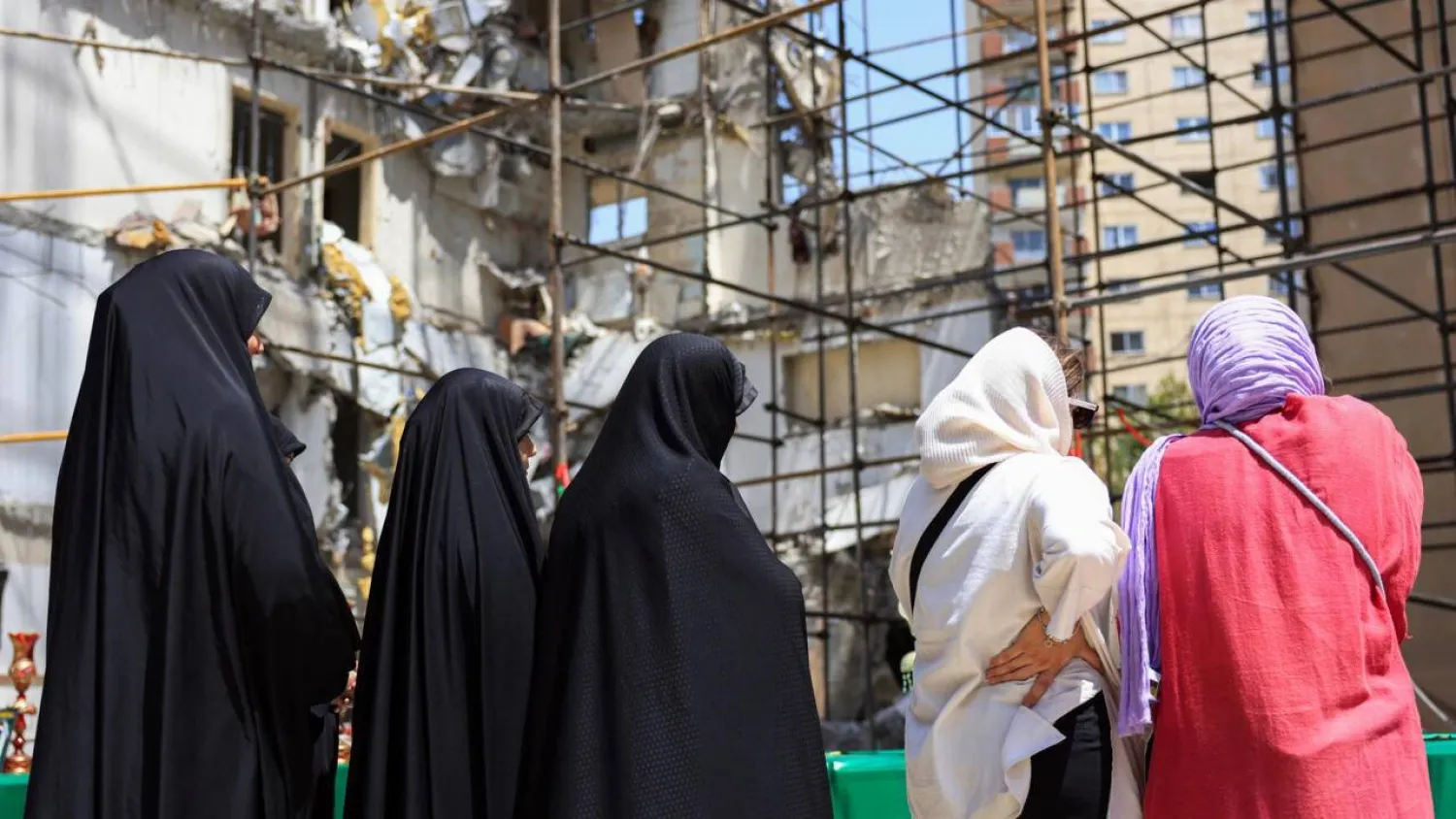
Israel struck major Iranian cities including Tehran, hitting military sites, government buildings and some residential areas. AFP
TT

A Month after Ceasefire with Israel, Iranians Fear another War

Israel struck major Iranian cities including Tehran, hitting military sites, government buildings and some residential areas. AFP

The ceasefire that ended Iran's 12-day war with Israel has held for nearly a month without incident, but many Iranians remain uneasy, struggling with uncertainty as fears of another confrontation linger.

"I don't think this ceasefire will last," said Peyman, a 57-year-old resident of Shiraz in Iran's south, one of numerous cities hit last month as Israel unleashed an unprecedented bombing campaign against its staunch rival.

The Israeli offensive targeted key nuclear facilities and military sites, killing top commanders and nuclear scientists and hundreds of other people, while also wreaking havoc in some residential areas.

The attacks triggered the fiercest fighting in history between the longtime foes, ending with a ceasefire announced on June 24.

But Israel has signaled it could return to fighting if Iran attempts to rebuild nuclear facilities or carry out any actions deemed a threat, such as moving to develop an atomic bomb -- an ambition Tehran has consistently denied it was pursuing.

Iran, in turn, has vowed to deliver a harsh response if attacked again.

Nuclear diplomacy with the United States -- which briefly joined the war with strikes on key Iranian nuclear sites -- has stalled, deepening a sense of uncertainty about what lies ahead.

"I am scared the war would start again," said Hamid, a 54-year-old government employee who gave only his first name.

"It will lead to the death of more innocent people and the destruction of the country's infrastructure."

During the war, Israel struck major Iranian cities including the capital Tehran, hitting military sites, government buildings and the state television headquarters.

More than 1,000 people were killed in Iran, according to authorities. Retaliatory missile and drone attacks killed 29 people in Israel.

'Don't want to flee again'

Many residents fled Tehran, seeking refuge in other parts of the country, even though few regions were untouched by the blasts and smoke-covered skies.

Nearly a month later, a series of fires that broke out across Iran in recent days -- including one at a major oil facility -- have triggered speculations which officials were quick to dismiss, denying any acts of sabotage.

"This war really frightened me," said 78-year-old housewife Golandam Babaei, from the western Kermanshah province.

She lived through the Iran-Iraq war of the 1980s, a painful memory for many of her generation.

"I kept telling myself, please God, do not let the past repeat itself," Babaei told AFP.

The war with Israel, although much shorter and fought mostly with air strikes and missiles rather than by ground forces, revived grim memories of the conflict with Iraq.

That war, triggered by an Iraqi invasion in 1980, killed an estimated 500,000 people on both sides.

Since then, for decades, Iran had managed to keep conflicts away from its territory. But now after the 12-day war with Israel, some Iranians feel a profound sense of vulnerability.

"I kept thinking I don't want to flee again, we have nowhere to go. I cannot run to the mountains like the past," said Babaei.

Uncertain future

For Ali Khanzadi, a 62-year-old war veteran, the conflict with Israel highlighted a change compared to the 1980s when "we didn't have any advanced military equipment" to fight the Iraqis.

Khanzadi, who was wounded in battle in 1983, said that the war with Israel, while much shorter, had a more sinister dimension.

Unlike in the past, modern military technology means "they can kill a child in his sleep remotely using a drone," he said.

In the face of the Israeli threats and attacks, Iranian authorities have repeatedly invoked national unity.

Supreme leader Ali Khamenei has said the offensive was aimed at toppling Iran's clerical system, and urged Iranian diplomats and military officials to proceed with "care and precision" as the country cautiously moves on.

Tehran has said it remained open to nuclear diplomacy with the United States which the war had derailed, but officials have expressed concerns over renewed attacks and demanded unspecified US guarantees to resume negotiations.

Ordinary Iranians appear to share fears that the conflict could erupt again.

"I hope that this will not happen," said Hamid.

Babaei said she was praying "for peace, for us to remain safe in our homes".


US Imposes Sanctions on Vessels Linked to Iran, Treasury Website Says

A crew member raises the Iranian flag on Iranian oil tanker Adrian Darya 1, previously named Grace 1, as it sits anchored after the Supreme Court of the British territory lifted its detention order, in the Strait of Gibraltar, Spain, August 18, 2019. REUTERS/Jon Nazca
TT

US Imposes Sanctions on Vessels Linked to Iran, Treasury Website Says

A crew member raises the Iranian flag on Iranian oil tanker Adrian Darya 1, previously named Grace 1, as it sits anchored after the Supreme Court of the British territory lifted its detention order, in the Strait of Gibraltar, Spain, August 18, 2019. REUTERS/Jon Nazca

The United States imposed sanctions on Thursday on 29 vessels and their management firms, the Treasury Department said, as Washington continues targeting Tehran's "shadow fleet" it says exports Iranian petroleum and petroleum products, Reuters reported.

The targeted vessels and companies have transported hundreds of millions of dollars of the products through deceptive shipping practices, Treasury said.

Thursday's action also targets businessman Hatem Elsaid Farid Ibrahim Sakr, whose companies are associated with seven of the vessels cited, as well as multiple shipping companies.


Zelenskiy Says Ukraine Faces Foreign Aid Shortfall of up to 50 billion Euros Next Year

Ukrainian President Volodymyr Zelensky. File Photo/The AP
TT

Zelenskiy Says Ukraine Faces Foreign Aid Shortfall of up to 50 billion Euros Next Year

Ukrainian President Volodymyr Zelensky. File Photo/The AP

Ukraine is facing a foreign aid shortfall of 45-50 billion euros ($53-59 billion) in 2026, President Volodymyr Zelenskiy said on Thursday, Reuters reported.

He added that if Kyiv did not receive a first tranche of a loan secured by Russian assets by next spring, it would have to significantly cut drone production.

Speaking in Brussels as EU leaders were set to take a decision on Moscow's seized sovereign wealth, Zelenskiy said this would mean that Ukraine would have far fewer drones than Russia, and would not be able to conduct long-range strikes on Russian energy facilities.


China Says Arms Trade With Cambodia, Thailand Unrelated to Border Conflict

Flags flutter at an entrance of Thai-Chinese Rayong Industrial Zone in Rayong province, east of Bangkok, Thailand, April 7, 2016. REUTERS/Chaiwat Subprasom
TT

China Says Arms Trade With Cambodia, Thailand Unrelated to Border Conflict

Flags flutter at an entrance of Thai-Chinese Rayong Industrial Zone in Rayong province, east of Bangkok, Thailand, April 7, 2016. REUTERS/Chaiwat Subprasom

China said on Thursday its arms trade with Thailand and Cambodia is unrelated to the current conflict between the Southeast Asian neighbours, with which Beijing has close ties.

"We hope relevant parties will refrain from making subjective speculation and malicious hype," the Chinese Defense Ministry said in response to reports that Thai troops seized Chinese-made weapons from Cambodian positions as border clashes between the two nations reignited, Reuters reported.

Beijing hopes the two countries can reach a ceasefire as soon as possible, the ministry said, adding that China will continue to advocate for peace and talks.

Border clashes between Thailand and Cambodia resumed this month and have killed more than 40 people and displaced over half a million in both countries.

China's Foreign Minister Wang Yi, in separate calls with his Thai and Cambodian counterparts on Thursday, also called for an immediate ceasefire and criticised "false information" that he said was aimed at smearing China's ties with the two countries.

"As a friend and close neighbour of both Cambodia and Thailand, China least wants to see the two sides engage in armed conflict, and is deeply saddened by civilian casualties caused by the clashes," the Foreign Ministry quoted Wang as saying.

China will continue to play a constructive role in facilitating peace, Wang said, urging both countries to protect the safety of Chinese projects and personnel.

Beijing last week warned Chinese citizens to leave border areas after media reports of injuries.

The Chinese Foreign Ministry said on Wednesday a special envoy for Asian affairs would be visiting Cambodia and Thailand on Thursday to conduct mediation.
