
Iran Says It Held ‘Frank’ Nuclear Talks with European Powers

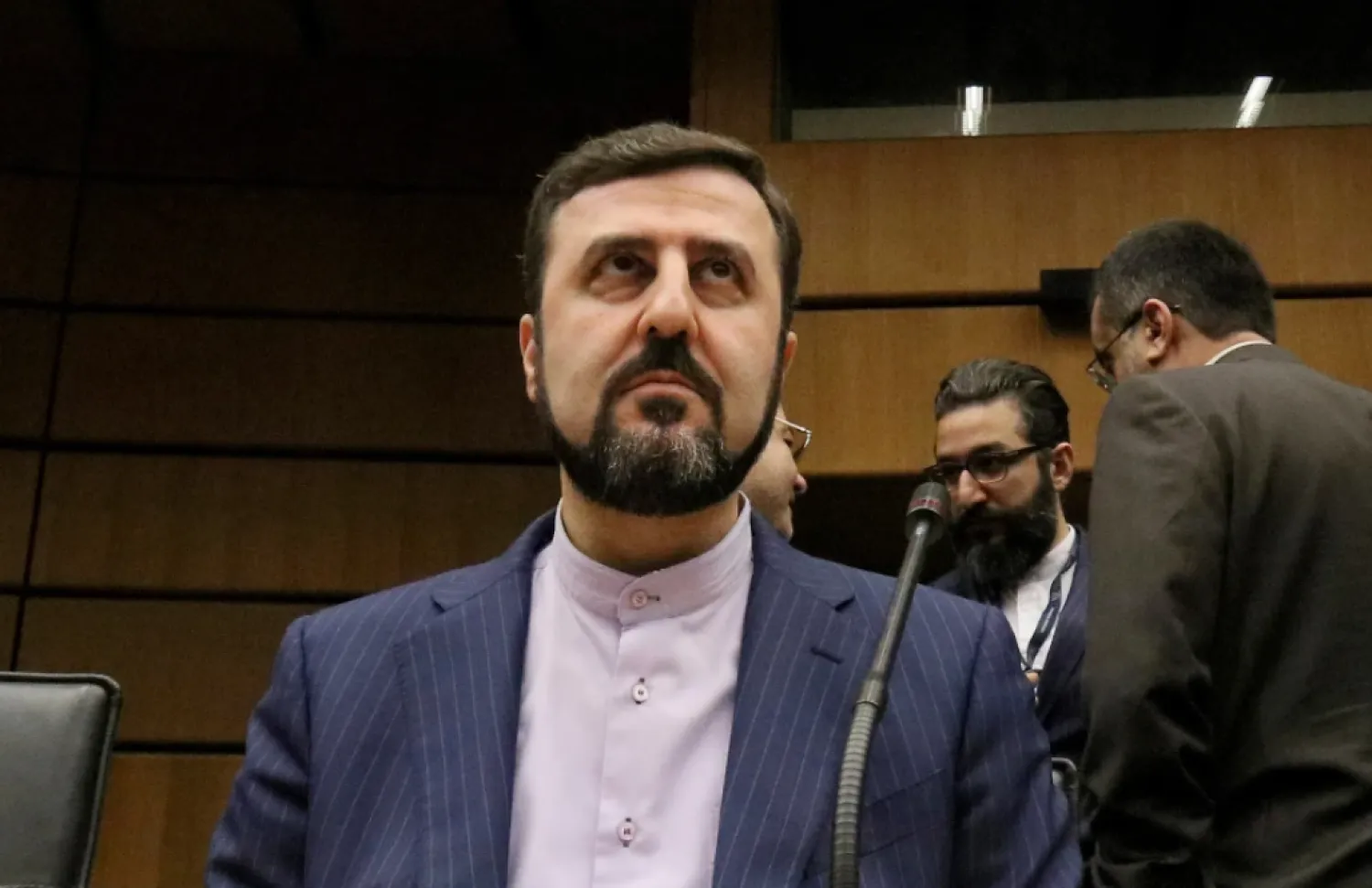
Iran’s Ambassador to the International Atomic Energy Agency, IAEA, Kazem Gharibabadi, waits for the start of the IAEA board of governors meeting at the International Center in Vienna, Austria, Nov. 21, 2019. (AP Photo/Ronald Zak, file)
TT

Iran Says It Held ‘Frank’ Nuclear Talks with European Powers

Iran’s Ambassador to the International Atomic Energy Agency, IAEA, Kazem Gharibabadi, waits for the start of the IAEA board of governors meeting at the International Center in Vienna, Austria, Nov. 21, 2019. (AP Photo/Ronald Zak, file)

Iranian diplomats said they held "frank and detailed" nuclear talks on Friday with counterparts from Germany, Britain and France, who have threatened to trigger sanctions if Tehran fails to agree a deal on uranium enrichment and cooperation with UN inspectors.  

The meeting in Istanbul was the first since Israel launched an attack on Iran last month targeting key nuclear and military sites, sparking a 12-day war and leading Tehran to pull away from working with the UN watchdog.  

The European diplomats were seen leaving the Iranian consulate shortly before 1100 GMT after spending several hours inside. 

Israel's offensive -- which killed top commanders, nuclear scientists and hundreds of others and in which residential areas and military sites were struck -- also derailed US-Iran nuclear talks that began in April. 

Since then, the European powers, known as the E3, have threatened to trigger a so-called "snapback mechanism" under a moribund 2015 nuclear deal that would reinstate UN sanctions on Iran by the end of August.  

The sanctions trigger expires in October, and Tehran has warned of consequences should the E3 opt to activate it.  

Iran's Deputy Foreign Minister Kazem Gharibabadi, who attended the talks alongside senior Iranian diplomat Majid Takht-Ravanchi, wrote on X that he had used the meeting to criticize the European stance on the 12-day conflict with Israel.  

He said the snapback mechanism had also been discussed, adding: "It was agreed that consultations on this matter will continue."  

Takht-Ravanchi told state news agency IRNA the Iranian side had demanded "punitive sanctions" be lifted "as soon as possible".  

Before the talks, a European source said the three countries were preparing to trigger the mechanism "in the absence of a negotiated solution".  

The source urged Iran to make "clear gestures" on uranium enrichment and resuming cooperation with the UN nuclear watchdog.  

- 'Common ground' -  

Gharibabadi warned earlier in the week that triggering sanctions -- which would deepen Iran's international isolation and place further pressure on its already strained economy -- would be "completely illegal". 

He accused European powers of "halting their commitments" under the 2015 deal, which the United States unilaterally withdrew from in 2018 during President Donald Trump's first term.  

"We have warned them of the risks, but we are still seeking common ground to manage the situation," said Gharibabadi.  

Iranian diplomats have previously warned that Tehran could withdraw from the global nuclear non-proliferation treaty if sanctions were reimposed.  

Israeli Foreign Minister Gideon Saar has urged European powers to trigger the mechanism.  

Israel's June 13 attack on Iran came two days before Tehran and Washington were scheduled to meet for a sixth round of nuclear negotiations.  

On June 22, the US joined Israel's offensive by striking Iranian nuclear facilities at Fordo, Isfahan, and Natanz.  

Before the war, the US and Iran were divided over uranium enrichment -- with Tehran describing it as a "non-negotiable" right, while Washington called it a "red line".  

The International Atomic Energy Agency (IAEA) says Iran is enriching uranium to 60 percent purity -- far above the 3.67 percent cap under the 2015 deal and close to weapons-grade levels.  

Tehran has said it is open to discussing the rate and level of enrichment, but not the right to enrich uranium.  

A year after the US withdrew from the nuclear deal, Iran began rolling back its commitments, which had placed restrictions on its nuclear activities in exchange for sanctions relief.  

Israel and Western powers accuse Iran of pursuing nuclear weapons, a charge Tehran has repeatedly denied.  

- 'New form' -  

Iran insists it will not abandon its nuclear program, with Foreign Minister Abbas Araghchi describing the position as "unshakable".  

Though he claimed enrichment had come to a halt because of "serious and severe" damage to nuclear sites caused by US and Israeli strikes, the full extent of the damage sustained in the US bombing remains unclear.  

Trump claimed at the time the sites had been "completely destroyed", but US media reports based on Pentagon assessments cast doubt on the scale of destruction.  

Since the 12-day war, Iran has suspended cooperation with the IAEA, accusing it of bias and failing to condemn the attacks.  

Inspectors have since left the country but a technical team is expected to return in the coming weeks after Iran said future cooperation would take a "new form".  

Israel has warned it may resume strikes if Iran rebuilds facilities or moves toward weapons capability.  

Iran has pledged a "harsh response" to any future attacks. 


Trump to Attend Ceremony to Witness Return of US Personnel Killed in Syria

US President Donald Trump speaks to the media - Reuters
TT

Trump to Attend Ceremony to Witness Return of US Personnel Killed in Syria

US President Donald Trump speaks to the media - Reuters

US President Donald Trump and first lady Melania Trump will attend a ceremony on Wednesday to honor US personnel killed in Syria over the weekend by a suspected ISIS attacker.

Trump and his wife will travel to Dover Air Force Base in Delaware to be present for what the Air Force calls the "dignified transfer" of the bodies from overseas back into the United States in the presence of their families. The ceremony is scheduled to take place at 1:15 p.m. EST (1815 GMT), Reuters reported.

Two US Army soldiers and a civilian interpreter were killed on Saturday in the central Syrian town of Palmyra by an attacker who targeted a convoy of American and Syrian forces before being shot dead, according to the U.S. military.

Trump called the incident terrible, vowed retaliation and referred to the three that were slain as "great patriots."

Three US soldiers were also wounded in the attack.

US presidents, vice presidents and dignitaries regularly attend the solemn transfer ceremonies at Dover during times of war or conflict that result in the deaths of US troops. Flag-draped transfer cases are brought off of a military plane with the bodies of the fallen and put with precision in an awaiting vehicle as officials and family members watch and often weep.


Putin Says Russia will Achieve War Goals, Keep Expanding 'Buffer Zone'

Russian President Vladimir Putin attends a meeting with Kazbek Kokov, head of the North Caucasus region of Kabardino-Balkaria, in Moscow, Russia December 16, 2025. Sputnik/Mikhail Metzel/Pool via REUTERS
TT

Putin Says Russia will Achieve War Goals, Keep Expanding 'Buffer Zone'

Russian President Vladimir Putin attends a meeting with Kazbek Kokov, head of the North Caucasus region of Kabardino-Balkaria, in Moscow, Russia December 16, 2025. Sputnik/Mikhail Metzel/Pool via REUTERS

President Vladimir Putin said on Wednesday that Russia would achieve its goals in Ukraine by diplomatic or military means, and would seek to expand a "security buffer zone" there.

"First, the goals of the special military operation will undoubtedly be achieved. We would prefer to do this and address the root causes of the conflict through diplomacy," Putin said.

"If the opposing side and their foreign patrons refuse to engage in substantive discussions, Russia will achieve the liberation of its historical lands by military means. The task of creating and expanding a security buffer zone will also be consistently addressed."

Of the regions of Ukraine that Russia has claimed as its own territory, it currently controls Crimea, around 90% of the Donbas region and 75% of Kherson and Zaporizhzhia, Reuters reported.

In addition, Russia holds some territory in the adjoining regions of Kharkiv, Sumy, Dnipropetrovsk and Mykolaiv. Putin's comments signalled that Moscow would seek further gains on some of these fronts.

With the war at a key juncture as US President Donald Trump pushes hard for a quick peace agreement, Putin said Russia was advancing on all fronts.

But his defense minister, Andrei Belousov, acknowledged that Ukrainian forces were trying to take back control of the northeastern town of Kupiansk - an effort he said was not succeeding.

Ukraine said on Wednesday it had taken 90% of the town, which Russia said it had captured in November.

Putin said people in Europe were being indoctrinated with fears of a war with Russia, and accused their leaders of whipping up hysteria.

"I have repeatedly stated: this is a lie, nonsense, pure nonsense about some imaginary Russian threat to European countries. But this is being done quite deliberately," he said.

Putin has said Russia is not seeking war with Europe, but is ready for war if that is Europe's choice.


Pakistan Says ‘Hostile Countries’ behind False Online Claims Linking it to Australia Shootings

A man waves Pakistan's flag as he along with others gather in support of Pakistan Army, day after the ceasefire announcement between India and Pakistan, in Islamabad, Pakistan, May 11, 2025. REUTERS/Akhtar Soomro
TT

Pakistan Says ‘Hostile Countries’ behind False Online Claims Linking it to Australia Shootings

A man waves Pakistan's flag as he along with others gather in support of Pakistan Army, day after the ceasefire announcement between India and Pakistan, in Islamabad, Pakistan, May 11, 2025. REUTERS/Akhtar Soomro

Pakistan’s information minister said Wednesday that his country has been the victim of a coordinated online disinformation campaign following the mass shooting at Australia’s Bondi Beach.

Attaullah Tarar accused “hostile countries,” including India, of spreading false claims that one of the two attackers was a Pakistani national.

Speaking at a news conference in Islamabad, Tara said Pakistan's leadership strongly condemned Sunday's attack, which killed 15 people in an antisemitic shooting targeting Jews celebrating Hanukkah, The AP news reported.

The minister said misleading information began circulating almost immediately after the attack, with social media posts falsely identifying one of the suspects as a Pakistani national named Naveed Akram. He said the claims spread rapidly across digital platforms and were repeated by some media outlets without verification.

Tarar said subsequent findings, including confirmation by Indian police, established that one of the attackers, Sajid Akram, was from India, while his 24-year-old son, Naveed Akram — who was also involved — was born in Australia.

The minister said the misinformation appeared to stem from a case of mistaken identity, as a Pakistani man living in Sydney shares the same name as one of the two suspects.

“How do we restore the situation to where it was before the Bondi Beach attack?” Tarar asked, adding that the Pakistani man — also named Naveed Akram — had released a video denying any involvement and urging the public not to associate him with the attack.

Tara said the Pakistani man was “a victim of a malicious and organized campaign” and that the disinformation effort originated in India.

There was no immediate response from Indian officials.

Tarar called on media outlets that published the false reports to issue apologies and said Pakistan had not yet decided whether to pursue legal action.

Pakistan and India, nuclear-armed rivals, have a long history of strained relations and have fought three wars since gaining independence from British rule in 1947, most of them over the disputed Himalayan region of Kashmir. The two sides came close to war in May before US President Donald Trump brokered a ceasefire.