

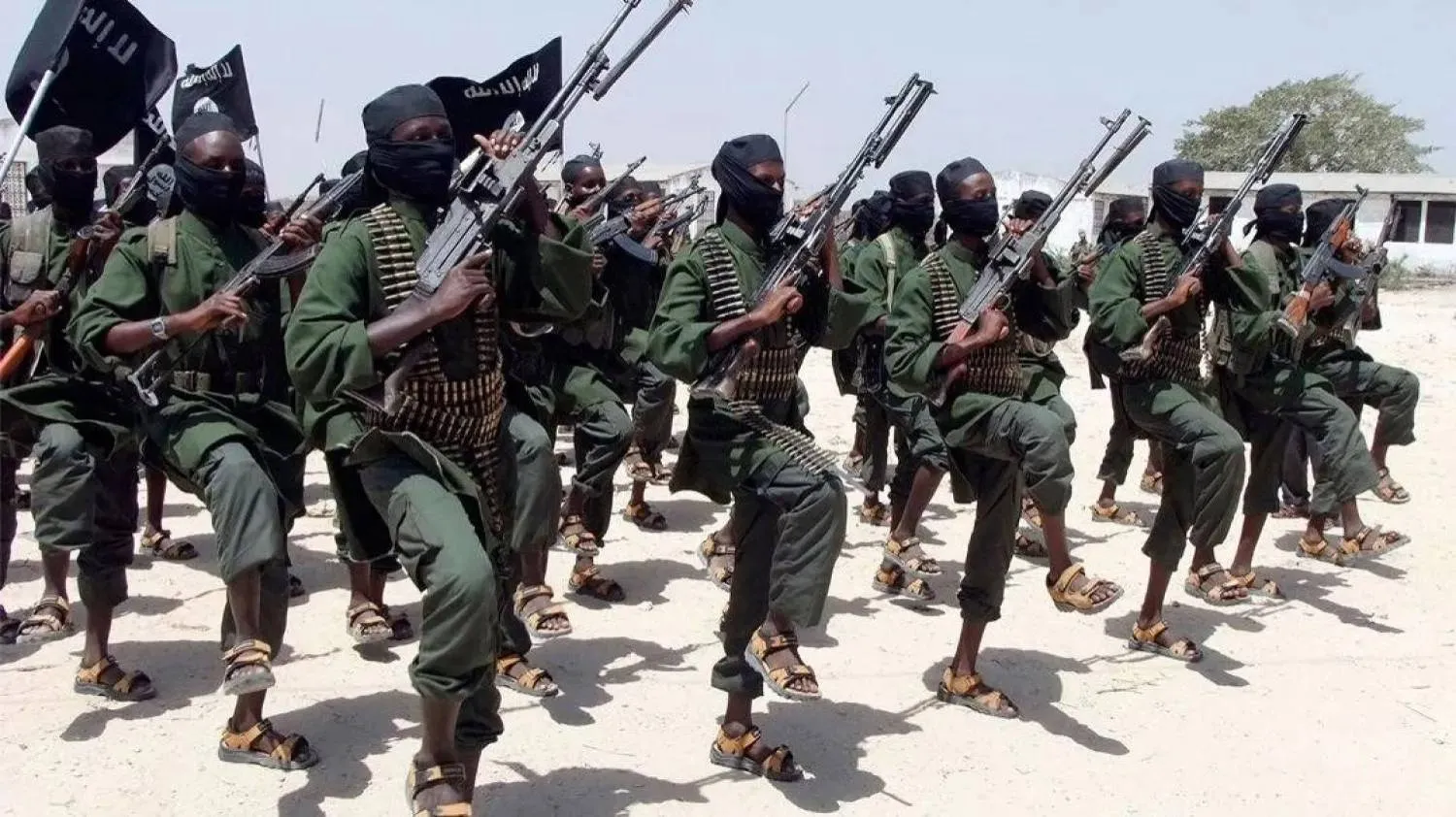

Terrorism Expands in Africa, Threatens Global Security

Terrosim expands in Africa 
TT

Terrorism Expands in Africa, Threatens Global Security

Terrosim expands in Africa 

Senegalese authorities on Saturday positioned new gendarmerie units near the country’s eastern border, to address growing insurgent threats from neighboring Mali.

The move came amid UN reports warning that in recent months, there has been a marked increase in attacks by armed groups and terrorists on military bases and raids targeting civilian centers across the Central Sahel region—particularly in Mali, Burkina Faso, and Niger—raising concerns about the stability of these countries.

In early July, several Malian army positions in western Mali, some near the Senegalese border, were targeted in coordinated attacks, including Diboli, a town less than 500 meters from Senegal's Kidira.

Senegalese feared further violence could spill into Senegal, particularly after the attacks were claimed by the Group for the Support of Islam and Muslims (JNIM), an extremist group aligned with al-Qaeda.

UN Warnings

Experts warned last week that the situation in the Sahel remained deeply concerning. They said the overall trend was an expansion of the area of operations of JNIM and a resurgence of activity by ISIS in the Greater Sahara, particularly along the Niger and Nigeria border, where the group was seeking to entrench itself.

In a report presented to the Security Council, the experts said that partly because of ISIS losses in the Middle East, the organization’s pivot towards parts of Africa continued.

But, they added, there were concerns that some extremist fighters could move to Afghanistan and further to stage operations against regional States, firstly in Central Asia.

According to the report, ISIS continued to represent the most significant terrorist threat to Europe and the US.

“The nature of this threat has evolved little since the previous assessment and is primarily driven by ISIS – with individuals often, although not exclusively, radicalized via social media and encrypted messaging platforms,” the experts said.

It stated that in contrast to 2024, fallout from the Gaza and Israel conflict had less visible impact.

While such events still featured prominently in terrorist propaganda, references to them were less frequent in interviews with suspects involved in either completed attacks or foiled plots, the experts stated.

In the United States, the report said there were several alleged terrorist attack plots, largely motivated by the Gaza and Israel conflict or individuals inspired and radicalized by ISIS.

On 1 January, an American citizen pledging support to ISIS drove a truck into a crowd in New Orleans, killing 14 people – the deadliest attack associated with al-Qaeda or ISIS in the United States since 2016. Also, authorities disrupted attacks, including an ISIS-inspired plot to conduct a mass shooting at a military base in Michigan.

In addition to the ISIS and al-Qaeda threats, the report said JNIM is now able to maneuver freely and is now capable of directly threatening regional capitals.

In a new report released by the Africa Center for Strategic Studies last month, Africa surpassed 150,000 deaths linked to ISIS militant in the past decade.

It said the 22,307 fatalities linked to terrorist groups over the past year sustain a record level of lethality observed since 2023 and represent a 60% increase from the 2020-2022 period.

The Center showed that for the last 4 years, Burkina Faso has been the epicenter of violent events and fatalities linked to militant groups in the Sahelian theater.

In the past year, Burkina Faso accounted for 55% of these fatalities.

Also, militant groups linked to JNIM network account for 83% of all fatalities in the Sahel, it said.

Led by the Macina Liberation Front and Ansar Dine, these JNIM groups primarily operate in north, central, and southern Mali and southern Burkina Faso.

Comprising an estimated 6,000-7,000 fighters, these groups are also pushing into the border areas of the coastal West African countries.

The report also said that estimates are that al Shabab capabilities in Somalia have expanded in the past year due to an increasingly cooperative relationship with Yemen’s Houthis.

Due to the growing instability, the number of forcibly displaced people in the region is now over 3.5 million—a figure that is likely much higher given lack of independent reporting and the failure of military authorities in Burkina Faso to update these figures since 2023.

Civilians in Mali and Burkina Faso must also contend with predatory violence from security forces and Russian Wagner and Africa Corps paramilitaries.

For the last 4 years, there have been a reported 1,292 such attacks, causing 6,058 fatalities.

This exceeds the 5,708 civilian fatalities linked to militant groups in the two countries over this timeframe, the Center said.

It also stated that the Lake Chad Basin saw a 7% increase in fatalities (3,982) linked to militant extremist violence over the past year, demonstrating the continued resilience of Jama’atu Ahlis Sunna Lidda’Awati Wal Jihad (Boko Haram) and the ISIS group in West Africa (ISWA).

Experts concluded that terrorist groups in Africa have become “more organized and innovative” in weak-run States. They said the targeting of civilians is a key driver to recruitment.


Ukraine Strikes Ballistic Missile Producer Deep Inside Russia, Kyiv Says

Ukrainian firefighters work at the scene of a recent multiple Russian drone strike on a gas station in Kramatorsk, Ukraine, 09 February 2026. (EPA)
TT

Ukraine Strikes Ballistic Missile Producer Deep Inside Russia, Kyiv Says

Ukrainian firefighters work at the scene of a recent multiple Russian drone strike on a gas station in Kramatorsk, Ukraine, 09 February 2026. (EPA)

Ukraine hit a Russian plant manufacturing ballistic missiles in a missile strike in the remote Udmurtia region, the Ukrainian General Staff said on Saturday.

Ukraine said its forces attacked the plant manufacturing Russian missiles, including the short-range Iskander and intercontinental Topol-M, in Votkinsk, east of Moscow and about 1,400 km (800 miles) from Ukraine.

It said in a statement on the Telegram messaging app that the Ukrainian forces used ‌domestically produced ground-launched ‌Flamingo cruise missiles. The attack caused ‌a fire ⁠on the site, ⁠the Ukrainian military said.

Alexander Brechalov, the governor of the Udmurtia region in Russia, had earlier said a site there had been attacked overnight with drones.

"There has been damage and injuries as a result," Brechalov said in a video posted on the Telegram ⁠app. He provided no other details.

The airport ‌in Udmurtia's main city, ‌Izhevsk, and those in cities in nearby regions suspended ‌operations, the civil aviation authority Rosaviatsiya said.

The unofficial Russian ‌Telegram channel SHOT, which often quotes contacts in the security services, said residents in Votkinsk reported hearing at least three explosions and the humming of drones.

Russia uses its ballistic ‌missiles to reinforce its drone attacks on the Ukrainian energy infrastructure, knocking out electricity ⁠and heating ⁠supplies for millions across Ukraine during the cold winter months.

Ukraine is increasingly targeting military and energy infrastructure deep inside Russia. Kyiv says that hitting the weapons producers and the energy system that fuels Russia's military is the best way to gain leverage over its bigger enemy as the war enters its fifth year next week.

The Ukrainian military said it also hit a gas processing plant in the Russian Samara region. Russian officials in the Samara region issued no report of such an attack.


Iranian Students Chant Anti-Government Slogans, as US Threats Loom

This video grab taken from UGC images posted on social media and verified by AFPTV teams in Paris on February 21, 2026, shows Iranians clashing near the Department of Aerospace Engineering of Sharif University in Tehran. (UGC / AFP)
TT

Iranian Students Chant Anti-Government Slogans, as US Threats Loom

This video grab taken from UGC images posted on social media and verified by AFPTV teams in Paris on February 21, 2026, shows Iranians clashing near the Department of Aerospace Engineering of Sharif University in Tehran. (UGC / AFP)

Iranian students chanted anti-government slogans and scuffled with counter-protesters on Saturday in the latest display of anger at the country's clerical leaders, who also face a US military build-up aimed at pressuring them into a nuclear deal.

The gatherings at universities, which were reported by both local and diaspora media outlets, followed a mass protest movement that was met with a government crackdown last month that left thousands dead.

The crackdown had prompted US President Donald Trump to threaten to intervene militarily, though the focus of his threats eventually shifted to Iran's nuclear program, which Western governments fear is aimed at producing a bomb.

The US and Iran recently resumed Oman-mediated talks aimed at securing a deal, but Washington has simultaneously increased its military presence in the region, dispatching two aircraft carriers, jets and weaponry to back its warnings.

Videos geolocated by AFP to Tehran's top engineering university showed fights breaking out in a crowd on Saturday as people shouted "bi sharaf", or "disgraceful" in Farsi.

Footage posted by the Persian-language TV channel Iran International, which is based outside the country, also showed a large crowd chanting anti-government slogans at Sharif University of Technology.

Iranians had reprised their protest slogans earlier this week to mark the 40th day since thousands of people were killed as a wave of demonstrations was peaking on January 8 and 9.

They gathered again at several universities in the capital on Saturday, local media reported.

The unrest first broke out in December over prolonged financial strain, but exploded into mass anti-government demonstrations that were suppressed in a violent crackdown by security forces.

The clerical authorities acknowledge more than 3,000 deaths, but say the violence was caused by "terrorist acts" fueled by Iran's enemies.

The US-based Human Rights Activists News Agency (HRANA), however, has recorded more than 7,000 killings in the crackdown, the vast majority protesters, though the toll may be far higher.

Iranian authorities had initially acknowledged the legitimacy of the protesters' economic demands, but as the movement took on an overtly anti-government tone, they accused archenemies the United States and Israel of whipping up "riots".

Local news outlet Fars said that what was supposed to be a "silent and peaceful sit-in" on Saturday of students commemorating those killed was disrupted by people chanting slogans including "death to the dictator" -- a reference to Iran's supreme leader.

A video posted by Fars showed a group chanting and waving Iranian flags facing off with a crowd wearing masks and being held back by men in suits.

Both groups were holding what appeared to be memorial photographs.

- Talks and threats -

Ever since the initial wave of protests, the United States and Iran have been trading threats of military action.

Trump sent the aircraft carrier USS Abraham Lincoln to the region, accompanied by a flotilla of 12 support ships, while a second carrier group attached to the USS Gerald R Ford is en route to the area via the Mediterranean.

The US has also redeployed dozens of other warplanes to the Middle East -- where it maintains several bases -- while boosting its land-based air defenses.

The build-up is aimed at pressuring Iran's authorities to cut a deal on the country's nuclear program, even as the two sides have pursued talks on the subject.

Iranian Foreign Minister Abbas Araghchi told US media this week that following the latest round of negotiations in Geneva, Iran would be submitting a draft proposal for an agreement, saying "in the next two, three days, that would be ready".

Araghchi also said the "US side has not asked for zero enrichment" of uranium, contradicting statements from American officials.

Trump had suggested on Thursday that "bad things" would happen if Tehran did not strike a deal within 10 days, a period which he subsequently extended to 15.

Iran denies it is trying to produce nuclear weapons and says its program is peaceful, but insists on its right to enrich uranium for civilian purposes.

The US media outlet Axios reported this week, citing an unnamed senior US official, that the US was prepared to consider a proposed deal that only permitted "small, token enrichment".

A previous round of nuclear diplomacy between the US and Iran last year was interrupted by Israel's surprise bombing campaign against country.

The United States ultimately joined its ally, striking key nuclear facilities before declaring a ceasefire.


Macron Urges 'Calm' ahead of Tense Rally for Slain Far-right Activist

French police secure the area after a bomb threat at the headquarters of France's hard-left party La France Insoumise (France Unbowed - LFI) and its evacuation in Paris, France, February 18, 2026. REUTERS/Sarah Meyssonnier
TT

Macron Urges 'Calm' ahead of Tense Rally for Slain Far-right Activist

French police secure the area after a bomb threat at the headquarters of France's hard-left party La France Insoumise (France Unbowed - LFI) and its evacuation in Paris, France, February 18, 2026. REUTERS/Sarah Meyssonnier

French President Emmanuel Macron appealed on Saturday for cooler heads to prevail ahead of a rally for a far-right activist whose killing, blamed on the hard left, has put the country on edge.

Macron also said his government would hold a meeting next week to discuss "violent action groups" in the wake of the fatal beating of Quentin Deranque, which has ignited tensions between the left and right ahead of the 2027 presidential vote.

The 23-year-old died from head injuries following clashes between radical left and far-right supporters on the sidelines of a demonstration against a politician from the left-wing France Unbowed (LFI) party in the southeastern city of Lyon last week.

A rally, widely publicized online by ultra-nationalist and far-right groups, is expected to be attended by 2,000 to 3,000 people, with the authorities fearing further clashes with left-wing protesters.

Speaking at a farming trade fair in Paris, Macron urged "everyone to remain" calm ahead of the rally for Deranque in Lyon, which is set to go ahead under high security later on Saturday despite Lyon's left-wing green mayor asking the state to ban it.

"In the Republic, no violence is legitimate," said Macron, who will be unable to contest next year's election after hitting the two-term limit. "There is no place for militias, no matter where they come from."

- 'Over 1,000 neo-Nazis' -

Ahead of the Lyon rally, some residents living near the march's planned route had barricaded the ground floor windows of their apartments, fearing unrest.

"At my age, I'm not going to play the tough guy. If I have to go out somewhere, I'll avoid the places where they're marching," said Lyon local Jean Echeverria, 87.

"They'll just keep fighting each other, it'll never end. Between the extreme of this and the extreme of that, it's non-stop," he added.

Two friends of Deranque's were behind the official call to march in his honor.

But according to the Deranque family's lawyer, Fabien Rajon, his parents will not take part in the rally, which they have urged to go ahead "without violence" and "without political statements".

Several ultra-right-wing groups, including Deranque's nationalist Allobroges Bourgoin faction, have nonetheless heavily publicized the march on social media.

The authorities fear that far-right and hard-left activists from elsewhere in Europe might travel to France for the event, stoking concerns of further unrest.

Jordan Bardella, the head of the anti-immigration National Rally (RN) party -- which senses its best chance ever of scoring the presidency in next year's vote -- has urged supporters not to go.

"We ask you, except in very specific and strictly supervised local situations not to attend these gatherings nor to associate the National Rally with them," he wrote in a message sent to party officials and seen by AFP.

LFI coordinator Manuel Bompard backed the Lyon mayor's call for a ban, warning on X that the march would be a "fascist demonstration" which "over 1,000 neo-Nazis from all over Europe" were expected to attend.

But Interior Minister Laurent Nunez declined to ban the rally, arguing that he had to "strike a balance between maintaining public order and freedom of expression" and pledging an "extremely large police deployment".

- 'Wound' -

Deranque's death has provoked a reaction from US President Donald Trump's administration, with state department official Sarah Rogers on Friday branding the killing "terrorism" and claiming that "violent radical leftism is on the rise".

Likewise, Italian Prime Minister Giorgia Meloni on Wednesday called Deranque's death "a wound for all Europe", prompting Macron to urge the far-right leader to stay out of French matters.

Six men suspected of involvement in the fatal assault have been charged over the killing, while a parliamentary assistant to a radical left-wing MP has also been charged with complicity.

A far-right collective called Nemesis, which claims to "defend Western women" from the violence allegedly wrought by immigrants, said Deranque had been at the protest in Lyon to protect its members when he was assaulted by "anti-fascist" activists.

Having urged both the far right and hard left to clean up their acts, Macron said his administration would hold a meeting next week "take stock of violent action groups which are active and have links with political parties of any description".
