


Trump's Higher Tariff Rates Hit Goods from Major US Trading Partners

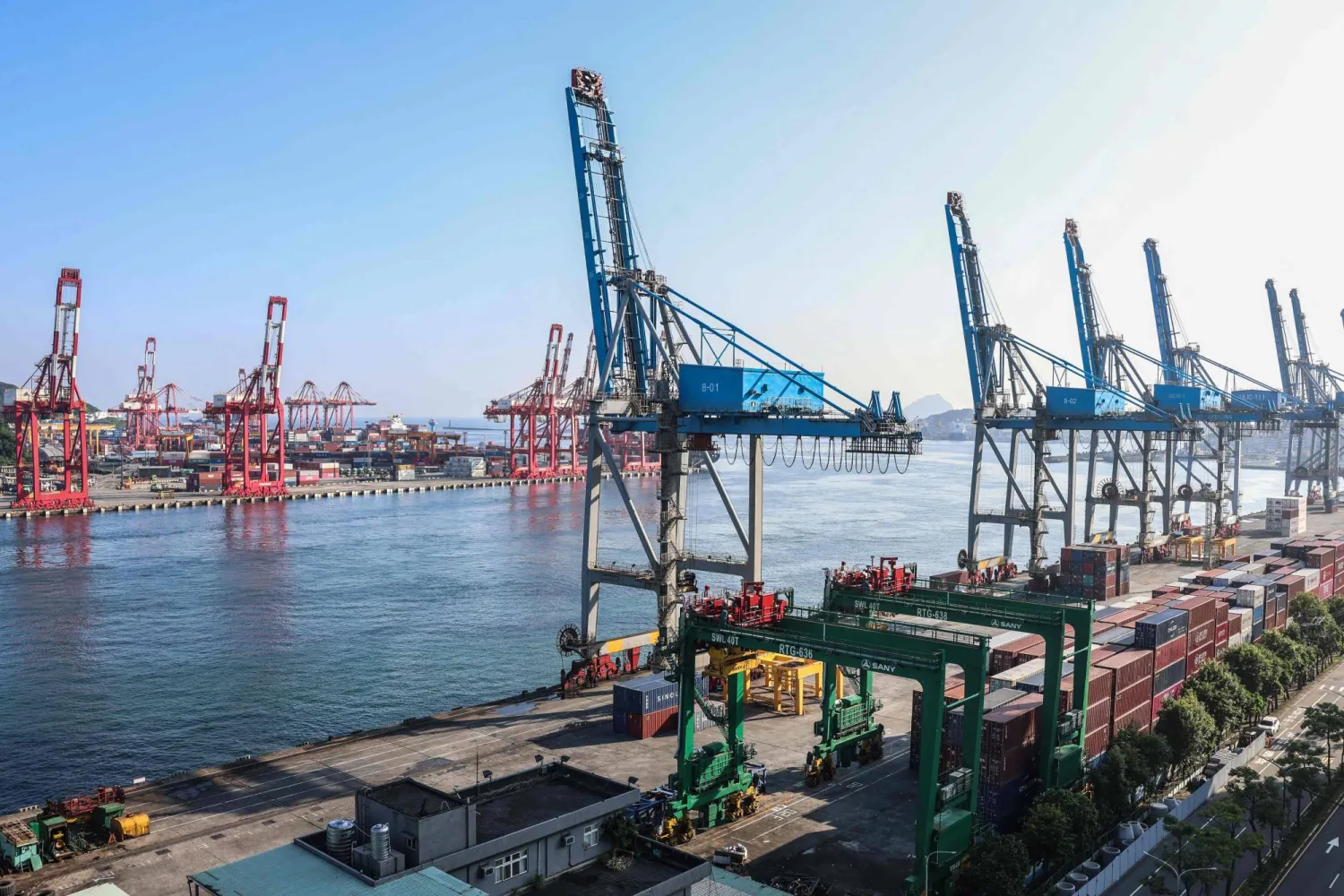
Gantry cranes are seen at the Port of Keelung in Keelung on August 7, 2025. (Photo by I-Hwa Cheng / AFP)
TT

Trump's Higher Tariff Rates Hit Goods from Major US Trading Partners

Gantry cranes are seen at the Port of Keelung in Keelung on August 7, 2025. (Photo by I-Hwa Cheng / AFP)

President Donald Trump's higher tariff rates of 10% to 50% on dozens of trading partners kicked in on Thursday, testing his strategy for shrinking US trade deficits without massive disruptions to global supply chains, higher inflation and stiff retaliation from trading partners.

US Customs and Border Protection agency began collecting the higher tariffs at 12:01 a.m. EDT (0401 GMT) after weeks of suspense over Trump's final tariff rates and frantic negotiations with major trading partners that sought to lower them.

Goods loaded onto US-bound vessels and in transit before the midnight deadline can enter at lower prior tariff rates before October 5, according to a CBP notice to shippers issued this week.

Imports from many countries had previously been subject to a baseline 10% import duty after Trump paused higher rates announced in early April. But since then, Trump has frequently modified his tariff plan, slapping some countries with much higher rates, including 50% for goods from Brazil, 39% from Switzerland, 35% from Canada and 25% from India.

He announced a separate 25% tariff on Indian goods on Wednesday to be imposed in 21 days over the South Asian country's purchases of Russian oil.

Ahead of the deadline, Trump heralded the "billions of dollars" that will flow into the US, largely from countries that he said had taken advantage of the United States.

"THE ONLY THING THAT CAN STOP AMERICA'S GREATNESS WOULD BE A RADICAL LEFT COURT THAT WANTS TO SEE OUR COUNTRY FAIL!" Trump said on Truth Social.

Eight major trading partners accounting for about 40% of US trade flows have reached framework deals for trade and investment concessions with Trump, including the European Union, Japan and South Korea, reducing their base tariff rates to 15%.

Britain won a 10% rate, while Vietnam, Indonesia, Pakistan and the Philippines secured rate reductions to 19% or 20%.

"For those countries, it's less bad news," said William Reinsch, a senior fellow and trade expert at the Center for Strategic and International Studies in Washington.

"There'll be some supply chain rearrangement. There'll be a new equilibrium. Prices here will go up, but it'll take a while for that to show up in a major way," Reinsch said. Countries with punishingly high duties, such as India and Canada, "will continue to scramble around trying to fix this," he added.

Trump's order has specified that any goods determined to have been trans-shipped from a third country to evade higher US tariffs will be subject to an additional 40% import duty, but his administration has released few details on how these goods would be identified or the provision enforced.

Trump's July 31 tariff order imposed duties above 10% on 67 trading partners, while the rate was kept at 10% for those not listed. These import taxes are one part of a multilayered tariff strategy that includes national security-based sectoral tariffs on semiconductors, pharmaceuticals, autos, steel, aluminum, copper, lumber and other goods.

Trump said on Wednesday the microchip duties could reach 100%. China is on a separate tariff track and will face a potential tariff increase on August 12 unless Trump approves an extension of a prior truce after talks last week in Sweden. He has said he may impose additional tariffs over China's purchases of Russian oil as he seeks to pressure Moscow into ending its war in Ukraine.

Financial markets largely shrugged off the new tariffs, with stock markets in Asia at or near record highs while the dollar dipped slightly.

REVENUES, PRICE HIKES

Trump has touted the vast increase in federal revenues from his import tax collections, which are ultimately paid by companies importing the goods and consumers of end products.

US Treasury Secretary Scott Bessent has said that US tariff revenues could top $300 billion a year. The move will drive average US tariff rates to around 20%, the highest in a century and up from 2.5% when Trump took office in January, the Atlantic Institute estimates.

Commerce Department data released last week showed more evidence that tariffs began driving up US prices in June, including for home furnishings and durable household equipment, recreational goods and motor vehicles.

Costs from Trump's tariff war are mounting for a wide swath of companies, including bellwethers Caterpillar, Marriott, Molson Coors and Yum Brands. All told, global companies that have reported earnings so far this quarter are looking at a hit of around $15 billion to profits in 2025, Reuters' global tariff tracker shows.



Asian Economies Weigh Impact of Fresh Trump Tariff Moves, Confusion

 Shoppers crowd for the upcoming Chinese Lunar New Year celebrations at the Dihua Street market in Taipei, Taiwan, Sunday, Feb. 15, 202. (AP)
Shoppers crowd for the upcoming Chinese Lunar New Year celebrations at the Dihua Street market in Taipei, Taiwan, Sunday, Feb. 15, 202. (AP)
TT

Asian Economies Weigh Impact of Fresh Trump Tariff Moves, Confusion

 Shoppers crowd for the upcoming Chinese Lunar New Year celebrations at the Dihua Street market in Taipei, Taiwan, Sunday, Feb. 15, 202. (AP)
Shoppers crowd for the upcoming Chinese Lunar New Year celebrations at the Dihua Street market in Taipei, Taiwan, Sunday, Feb. 15, 202. (AP)

US trading partners in Asia started weighing fresh uncertainties on Saturday after President Donald Trump vowed to impose a new tariff on imports, hours after the Supreme Court struck down many of the sweeping levies he used to launch a global trade war.

The court's ruling invalidated a number of tariffs that the Trump administration had imposed on Asian export powerhouses from China and South Korea to Japan and Taiwan, the world's largest chip maker and a key player in tech supply chains.

Within hours, Trump said he would impose a new 10% duty on US imports from all countries starting on Tuesday for an initial 150 days under a different law, prompting analysts to warn that more measures could follow, threatening more confusion for businesses and investors.

In Japan, a government spokesman said Tokyo "will carefully examine the content of this ruling and ‌the Trump administration's response ‌to it, and respond appropriately."

China, which is preparing to host Trump in ‌late ⁠March, has yet to ⁠formally comment or launch any counter moves with the country on an extended holiday. But a senior financial official in China-ruled Hong Kong described the US situation as a "fiasco".

Christopher Hui, Hong Kong's secretary for financial services and the treasury, Trump's new levy served to underscore Hong Kong's "unique trade advantages", Hui said.

"This shows the stability of Hong Kong's policies and our certainty ... it shows global investors the importance of predictability," Hui said at a media briefing on Saturday when asked how the new US tariff's would affect the city's economy.

Hong Kong operates as a separate customs territory from mainland China, a ⁠status that has shielded it from direct exposure to US tariffs targeting Chinese goods.

While ‌Washington has imposed duties on mainland exports, Hong Kong-made products have ‌generally faced lower tariff rates, allowing the city to maintain trade flows even as Sino-US tensions escalated.

Before the Supreme Court's ruling, Trump's ‌tariff push had strained Washington's diplomatic relations across Asia, particularly for export-reliant economies integrated into US-bound supply chains.

Friday's ruling ‌concerns only the tariffs launched by Trump on the basis of the International Emergency Economic Powers Act, or IEEPA, intended for national emergencies.

Trade policy monitor Global Trade Alert estimated that by itself, the ruling cuts the trade-weighted average US tariff almost in half from 15.4% to 8.3%.

For those countries on higher US tariff levels, the change is more dramatic. For China, Brazil and ‌India, it will mean double-digit percentage point cuts, albeit to still-high levels.

In Taiwan, the government said it was monitoring the situation closely, noting that the US government ⁠had yet to determine how ⁠to fully implement its trade deals with many countries.

"While the initial impact on Taiwan appears limited, the government will closely monitor developments and maintain close communication with the US to understand specific implementation details and respond appropriately," a cabinet statement said.

Taiwan has signed two recent deals with the US - one was a Memorandum of Understanding last month that committed Taiwan to invest $250 billion and the second was signed this month to lowering reciprocal tariffs.

Analysts say the Supreme Court's ruling against Trump's more aggressive tariff measures may offer little relief for the global economy. They warned of looming confusion as trading nations brace for moves by Trump to find other means of using levies to circumvent the ruling.

Thailand's Trade Policy and Strategy Office head Nantapong Chiralerspong said the ruling might even benefit its exports as uncertainty drove a fresh round of "front loading", where shippers race to move goods to the US, fearing even higher tariffs.

In corporate disclosures tracked by Reuters, firms across the Asia-Pacific region reported financial hits, supply shifts and withdrawals as levies escalated through 2025 and early 2026.


Brazil, India Eye Critical Minerals Deal as Leaders Meet

Brazil's President Luiz Inacio Lula da Silva (L) and Indian Prime Minister Narendra Modi are expected to discuss efforts to increase trade links. Ludovic MARIN / AFP/File
TT

Brazil, India Eye Critical Minerals Deal as Leaders Meet

Brazil's President Luiz Inacio Lula da Silva (L) and Indian Prime Minister Narendra Modi are expected to discuss efforts to increase trade links. Ludovic MARIN / AFP/File

India's Prime Minister Narendra Modi and Brazilian President Luiz Inacio Lula da Silva are set to meet in New Delhi on Saturday, seeking to boost cooperation on critical minerals and rare earths.

Brazil has the world's second-largest reserves of these elements, which are used in everything from electric vehicles, solar panels and smartphones to jet engines and guided missiles.

India, seeking to cut its dependence on top exporter China, has been expanding domestic production and recycling while scouting for new suppliers.

Lula, heading a delegation of more than a dozen ministers as well as business leaders, arrived in New Delhi on Wednesday for a global summit, reported AFP.

Officials have said that in talks with Modi on Saturday, the two leaders are expected to sign a memorandum on critical minerals and discuss efforts to increase trade links.

The world's most populous nation is already the 10th largest market for Brazilian exports, with bilateral trade topping $15 billion in 2025.

The two countries have set a trade target of $20 billion to be achieved by 2030.

With China holding a near-monopoly on rare earths production, some countries are seeking alternative sources.

Rishabh Jain, an expert with the Delhi-based Council on Energy, Environment and Water think tank, said India's growing cooperation with Brazil on critical minerals complements recent supply chain engagements with the United States, France and the European Union.

While these partnerships grant India access to advanced technologies, finance and high-end processing capabilities, "Global South alliances are critical for securing diversified, on-ground resource access and shaping emerging rules of global trade", Jain told AFP.

- 'Challenges' -

Modi and Lula are also expected to discuss global economic headwinds and strains on multilateral trade systems after both of their countries were hit by US tariffs in 2025, prompting the two leaders to call for stronger cooperation.

Washington has since pledged to roll back duties on Indian goods under a trade deal announced earlier this month.

"Lula and Modi will have the opportunity to exchange views on... the challenges to multilateralism and international trade," said Brazilian diplomat Susan Kleebank, the secretary for Asia and the Pacific.

Brazil is India's biggest partner in Latin America.

Key Brazilian exports to India include sugar, crude oil, vegetable oils, cotton and iron ore.

Demand for iron ore has been driven by rapid infrastructure expansion and industrial growth in India, which is on track to become the world's fourth largest economy.

Brazilian firms are also expanding in the country, with Embraer and Adani Group announcing plans last month to build aircraft in India.

Lula addressed the AI Impact summit in Delhi on Thursday, calling for a multilateral and inclusive global governance framework for artificial intelligence.

He will travel on to South Korea for meetings with President Lee Jae Myung and to attend a business forum.


Türkiye, Saudi Arabia Sign Comprehensive Power Purchase Agreement

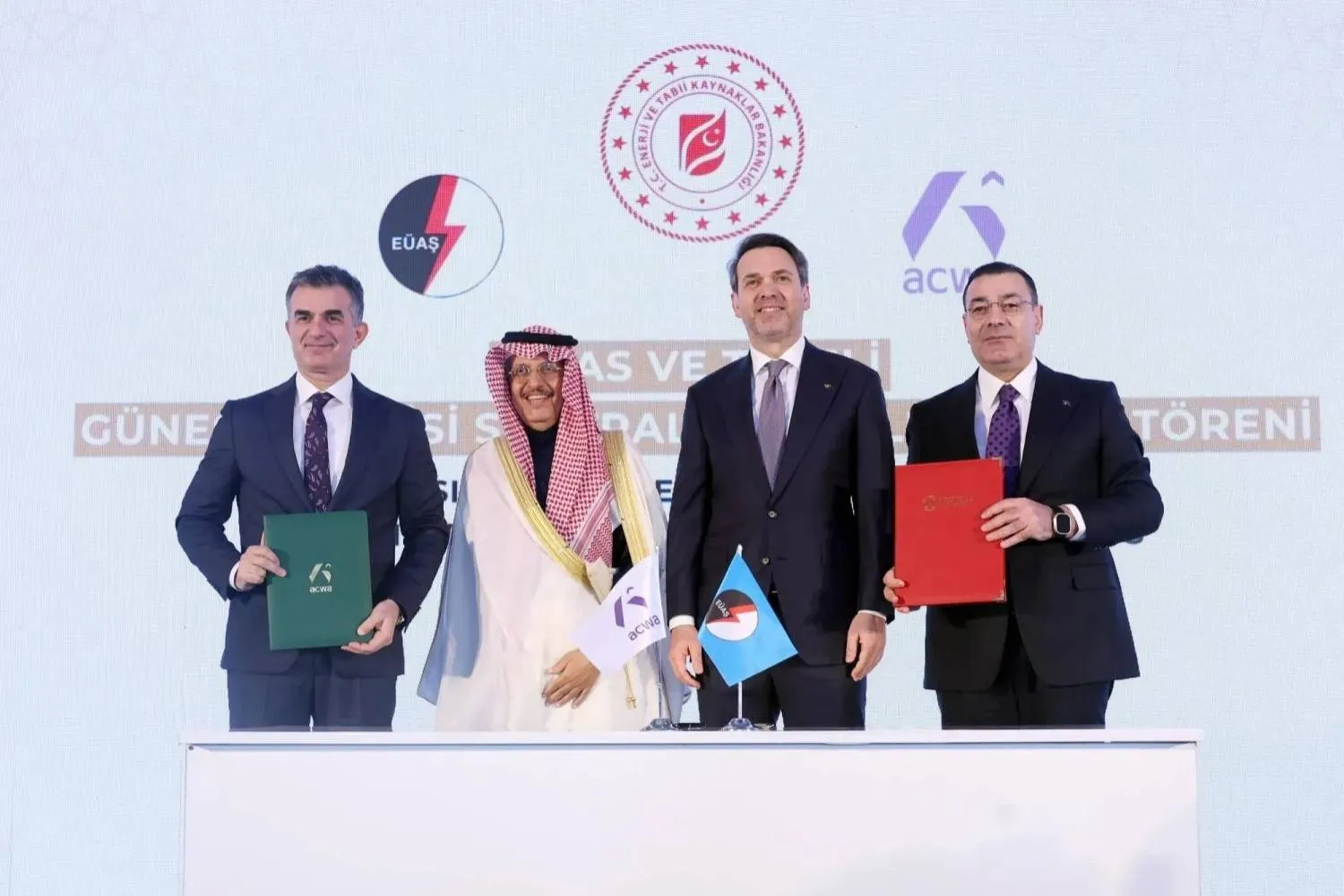
Saudi Energy Minister Prince Abdulaziz bin Salman Al Saud and Turkish Energy and Natural Resources Minister Alparslan Bayraktar attend the signing of a power purchase agreement between Türkiye and ACWA Power in Istanbul on Friday (photo from the Turkish minister’s account on X).
TT

Türkiye, Saudi Arabia Sign Comprehensive Power Purchase Agreement

Saudi Energy Minister Prince Abdulaziz bin Salman Al Saud and Turkish Energy and Natural Resources Minister Alparslan Bayraktar attend the signing of a power purchase agreement between Türkiye and ACWA Power in Istanbul on Friday (photo from the Turkish minister’s account on X).

Türkiye’s Energy and Natural Resources Ministry signed a comprehensive power purchase agreement with Saudi energy giant ACWA Power to develop solar power plants and projects in Türkiye with major investments.

The agreement, signed in Istanbul on Friday, was attended by Türkiye’s Energy and Natural Resources Minister Alparslan Bayraktar and Saudi Energy Minister Prince Abdulaziz bin Salman Al Saud.

It includes the construction of two solar power plants in the Turkish provinces of Sivas and Karaman with a combined capacity of 2,000 megawatts and investments totaling $2 billion, as well as the implementation of large-scale solar projects with a total capacity of 5,000 megawatts in Türkiye.

Commenting on the agreement, Bayraktar said: “During our president Recep Tayyip Erdogan’s visit to Riyadh on Feb. 3, we signed an intergovernmental agreement on renewable power plant projects with my Saudi counterpart, HRH Prince Abdulaziz bin Salman Al Saud, which provides for total investments in solar and wind energy in Türkiye of 5,000 megawatts.”

“Today, we reinforced this cooperation by signing the agreement with ACWA Power in Istanbul. In the first phase of the project, two solar power plants with a total capacity of 2,000 megawatts will be built in Sivas and Karaman, with an investment of around $2 billion. This will add capacity to our grid to meet the electricity needs of 2.1 million households,” he added.

Bayraktar said on X that in Sivas, the agreed purchase price is 2.35 euro cents per kilowatt-hour, while in Karaman, electricity will be bought at a fixed price of 1.99 euro cents per kilowatt-hour, the lowest price recorded in Türkiye. The agreed prices will be valid for 25 years.

He said the projects, which are expected to make a significant contribution to the energy sector, require a minimum 50% local content ratio, adding that groundwork is targeted this year, operations are scheduled for 2028, and full production capacity will be reached as soon as possible.

In the second phase of the agreement, with a total capacity of 5,000 megawatts, “we aim to expand our cooperation with additional investments in solar and wind energy amounting to 3,000 megawatts,” Bayraktar said, expressing hope that the move would strengthen confidence in Türkiye’s renewable energy transition and investment climate and benefit the Turkish energy sector.

Two-phase plan

Construction under the first phase of ACWA Power’s investments in Türkiye is scheduled to begin in the first or second quarter of 2027, with electricity supply expected to start by mid-2028.

ACWA Power aims to sign an agreement with Türkiye on the second phase of its renewable energy investments before November.

The first-phase projects offer highly competitive electricity sale prices compared with other renewable power plants in Türkiye. In addition, the plants, valued at about $2 billion, will supply electricity to more than 2 million Turkish households.

A Turkish state-owned company will purchase the electricity generated by the plants for 30 years. During implementation, maximum use will be made of locally sourced equipment and services.

In recent years, Türkiye has sought to attract Gulf investments into its energy sector as it works to raise renewable power generation capacity to 120 gigawatts by 2035. Several previous attempts were not completed due to disagreements over financial valuations and pricing.

ACWA Power announced in June its intention to build two large solar power plants in Türkiye as part of a plan to invest billions of dollars in the Turkish energy sector.

Major investments

While the exact value of ACWA Power’s investment has not been disclosed, Türkiye said two years ago it was in talks with the company over projects worth up to $5 billion.

Türkiye’s Treasury and Finance Minister Mehmet Simsek described the intergovernmental energy agreement signed during Erdogan’s visit to Riyadh as a major boost for foreign direct investment inflows into Türkiye.

He said the pace of foreign direct investment in Türkiye is accelerating, reflecting growing confidence in its economic program, adding that the inflow of $2 billion in foreign direct investment into renewable energy projects through the agreement with Saudi Arabia would accelerate the green transition, strengthen energy security, and structurally reduce dependence on energy imports.

ACWA Power’s portfolio, 44% owned by Saudi Arabia’s Public Investment Fund, includes a gas-fired power plant in Türkiye. The company also expanded its solar energy projects in 2024 in Malaysia, Indonesia, and Uzbekistan.