


Human Rights Watch Says Israeli Airstrike on Iranian Prison was an 'Apparent War Crime'

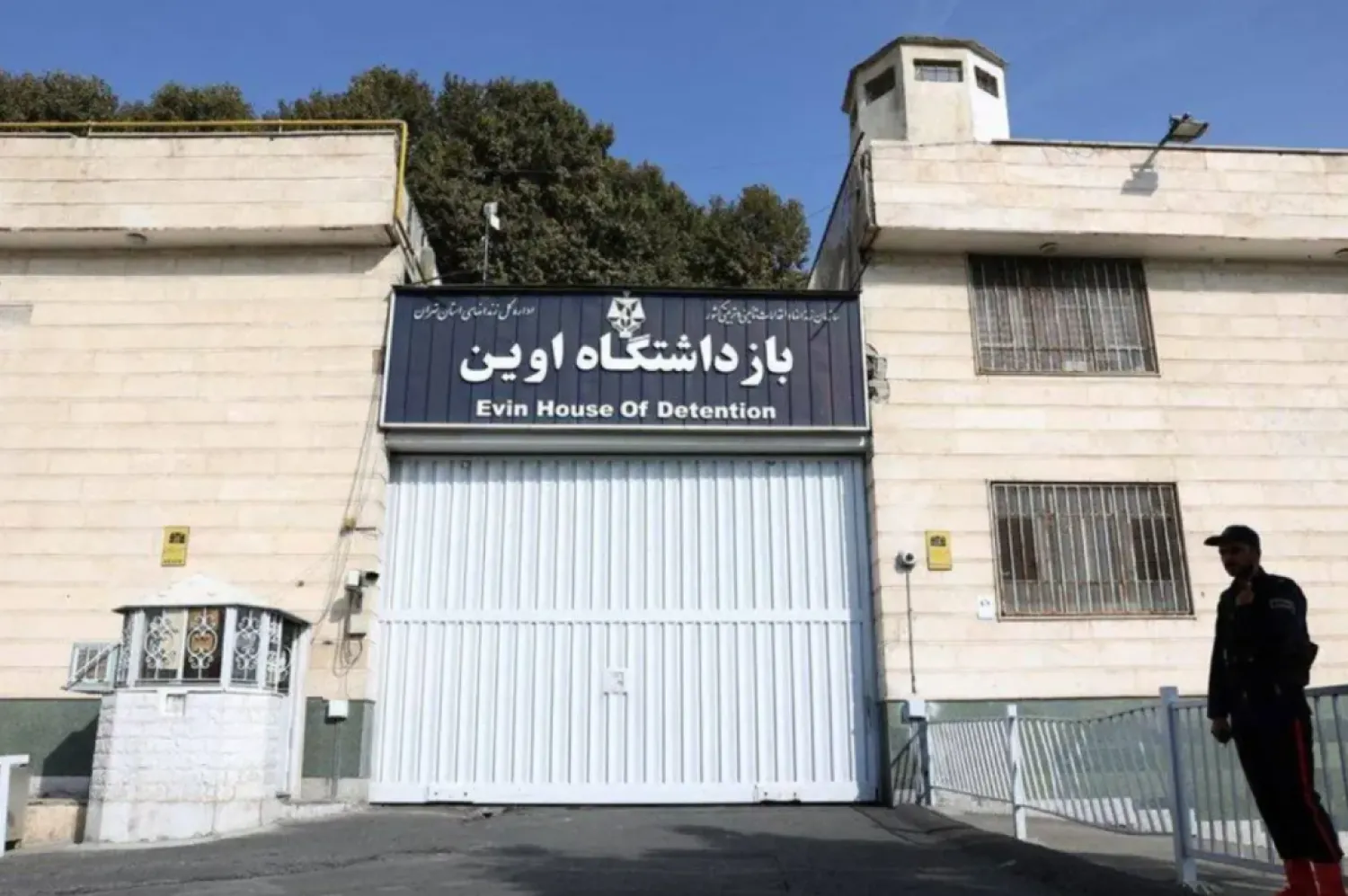
Evin Prison (File photo: Reuters)
TT

Human Rights Watch Says Israeli Airstrike on Iranian Prison was an 'Apparent War Crime'

Evin Prison (File photo: Reuters)

Human Rights Watch alleged Thursday that an Israeli airstrike on a notorious Iranian prison was “an apparent war crime”, while also accusing Tehran of harming and disappearing prisoners after the attack.

Israel struck Evin Prison in Tehran, one of Iran's most notorious detention facilities for political activists and dissidents, on June 23, during its 12-day war with the Islamic Republic, Reuters reported.

The strikes during visiting hours hit Evin Prison’s main southern entrance, another northern entrance and other areas of the complex, destroying buildings that had medical facilities and prison wards.

The Iranian authorities initially said at least 71 people were killed during the airstrike, among them civilians including inmates, visiting relatives, and prison staff. Iranian media later raised that number to 80. It was unclear why Israel targeted the prison.

Human Rights Watch said the attack was “unlawfully indiscriminate” and that there was no evidence of an advance warning or a military target before striking the prison complex, which it estimates holds over 1,500 prisoners.

“To make matters worse, Israeli forces put at grave risk prisoners who were already victims of Iranian authorities’ brutal repression,” said Michael Page, the rights group’s deputy Middle East director.

Human Rights Watch says prisoners were subject to “ill-treatment and violence” both as they were being taken out of the prison following the attack and as they were returned.

Calls to Iranian authorities were not immediately returned on Thursday, a public holiday in the country. The Israeli military also did not respond to an immediate request for comment on the Human Rights Watch reports.

After the attack, Iranian authorities evacuated and transferred the prisoners to two other facilities in Tehran province and said on August 8 that they were gradually returned. Iranian state media said the prisoners were transferred peacefully and without any conflict.

But relatives and Human Rights Watch said some political prisoners were beaten with batons and “electric shock weapons” for resisting wearing handcuffs and protesting prison guards separating death-row inmates.

The group said some of the prisoners have disappeared, including Swedish-Iranian doctor, Ahmadreza Djalali, who is at risk of execution. The rights group says Iran had refused to give them any information about his whereabouts.

“Iranian authorities should not use Israel’s strikes on Evin prison as another opportunity to subject prisoners, including those who should never have been in prison in the first place, to ill-treatment,” said Page.

The war in June, which killed about 1,100 people in Iran and 28 in Israel, started after Israeli jets struck key nuclear and military facilities. Iran then launched a barrage of missiles over Israel.



Media Dinner Shooting Suspect Wrote About Targeting Administration Officials

US President Donald Trump gestures as he speaks during a press briefing in the Brady Briefing Room at the White House in Washington. (Photo by Mandel NGAN / AFP)
TT

Media Dinner Shooting Suspect Wrote About Targeting Administration Officials

US President Donald Trump gestures as he speaks during a press briefing in the Brady Briefing Room at the White House in Washington. (Photo by Mandel NGAN / AFP)

The man accused of opening fire at the White House Correspondents’ Dinner sent writings to family members minutes before the shooting referring to himself as a “Friendly Federal Assassin,” railing against Trump administration policies and signaling what investigators increasingly believe was a politically driven attack, according to a law enforcement official familiar with the investigation.

The writings, sent shortly before shots were fired at the Washington Hilton, made repeated references to President Donald Trump without naming him directly and alluded to grievances over a range of administration actions and recent events, including US strikes on drug smuggling boats in the eastern Pacific, the official said.

Investigators are treating the writings, along with a trail of social media posts and interviews with family members, as some of the clearest evidence yet of the suspect’s mindset and possible motives.

Authorities also uncovered what the official described as numerous anti-Trump social media posts linked to the suspect, Cole Tomas Allen, a 31-year-old California man accused of trying to breach a security checkpoint at the dinner while armed with multiple weapons.

Allen’s brother contacted police in New London, Connecticut, after receiving the writings, according to the official. A police spokesperson said they contacted federal law enforcement after receiving that information.

Federal agents have also interviewed Allen’s sister in Maryland, who told investigators her brother had legally purchased several weapons from a California gun store and stored them at their parents’ home in Torrance without their knowledge, according to the official.

She described her brother as prone to making radical statements, the official said.

Allen legally bought a .38-caliber semiautomatic pistol in October 2023 and a 12-gauge shotgun two years later, the official and another law enforcement official told The Associated Press.

Authorities are still trying to determine how specific Allen’s alleged targets were. Officials have said investigators are examining whether his grievances centered on Trump and Vice President JD Vance personally or reflected a broader hostility toward the administration.

The officials were not authorized to discuss the ongoing investigation and spoke to AP on condition of anonymity.


Trump Says Iran Can Call if it Wants to Talk, as Iranian Envoy Returns to Pakistan

US President Donald Trump takes questions from media at a press briefing at the White House, in Washington, D.C., US, April 25, 2026. REUTERS/Jonathan Ernst
TT

Trump Says Iran Can Call if it Wants to Talk, as Iranian Envoy Returns to Pakistan

US President Donald Trump takes questions from media at a press briefing at the White House, in Washington, D.C., US, April 25, 2026. REUTERS/Jonathan Ernst

President Donald Trump said on Sunday that Iran can reach out to the United Stated if it wants to negotiate an end to the war between the two countries.

"If they ⁠want to talk, they ⁠can come to us, or they can call us. You know, there is a telephone. We ⁠have nice, secure lines," Trump said in an interview on Fox News' "The Sunday Briefing."

"They know what has to be in the agreement. It's very simple: they cannot have a nuclear weapon, otherwise there's no reason to meet," Trump said.

Iran has long demanded Washington acknowledge its right to enrich uranium, which Tehran says ⁠it only seeks ⁠for peaceful purposes but which Western powers and Israel say is aimed at building nuclear weapons.

Although a ceasefire has paused full-scale fighting in the conflict, which began with US-Israeli strikes on Iran on February 28, no agreement has been reached on terms to end a war that has killed thousands, driven up oil prices, fueled inflation and darkened the outlook for global growth.

Tehran has largely closed the Strait of Hormuz, which normally carries a fifth of global oil shipments, while Washington has imposed a blockade of Iran's ports.

Trump canceled a trip by his envoys Steve Witkoff and Jared Kushner to Pakistan on Saturday, dealing a new ⁠setback ⁠to peace prospects after Iranian Foreign Minister Abbas Araghchi departed Islamabad after speaking only to Pakistani officials.

Araghchi flew to Oman - another mediator in the war - where he met the country's leader, Haitham ⁠bin Tariq al-Said, on Sunday.

They discussed security in the strait and Araghchi called for a regional security framework free of outside interference, according to Iran's foreign ministry.

Araghchi later returned to Islamabad, Iranian state media reported. Pakistani government sources said he would hold talks with the country's leadership before heading to Moscow.

Iran's semi-official Tasnim news agency reported that Araghchi's talks with Pakistani officials would include "implementing a new legal regime over the Strait of Hormuz, receiving compensation, guaranteeing no renewed military aggression by warmongers, and lifting the naval blockade."

The talks would be unrelated to Iran's nuclear program, the report said.

Speaking in Florida before being rushed out of the White House Correspondents' Association dinner in Washington when a man opened fire nearby, Trump said he cancelled his envoys' visit due to too much travel and expense for what he considered an inadequate Iranian offer.

Iran "offered a lot, but not enough," Trump said.


Russia, North Korea Agree 'Long-term' Military Cooperation

FILE - Russian President Vladimir Putin, left, and North Korea's leader Kim Jong Un pose for a photo during a signing ceremony of a new partnership in Pyongyang, North Korea, June 19, 2024. (Kristina Kormilitsyna, Sputnik, Kremlin Pool Photo via AP, File)
TT

Russia, North Korea Agree 'Long-term' Military Cooperation

FILE - Russian President Vladimir Putin, left, and North Korea's leader Kim Jong Un pose for a photo during a signing ceremony of a new partnership in Pyongyang, North Korea, June 19, 2024. (Kristina Kormilitsyna, Sputnik, Kremlin Pool Photo via AP, File)

Russia and North Korea have agreed to "long-term" military cooperation, Russia's defense ministry said Sunday, as Moscow's military chief visited officials in Pyongyang.

Pyongyang has sent thousands of troops -- as well as missiles and munitions -- to support Russia's war in Ukraine.

In return, analysts say North Korea is receiving financial aid, military technology, food and energy from Russia, helping Pyongyang circumvent heavy international sanctions over its banned nuclear programs.

The two countries signed a military treaty in 2024, obligating both states to provide military assistance "without delay" in the event of an attack on the other.

"We agreed with the DPRK Defense Ministry to place our military cooperation on a stable, long-term footing," Moscow's Defense Minister Andrey Belousov said, using the initials of North Korea's official name.

"We are ready to sign a plan this year for Russian-Korean military cooperation for the period of 2027-2031," he added.

Russian officials are in Pyongyang for the opening ceremony of a memorial complex honouring those killed while supporting Moscow's war effort against Ukraine.

Belousov met North Korea's leader Kim Jong-un and Defense Minister No Kwang Chol on Sunday, while Russia's parliamentary speaker Vyacheslav Volodin also met Kim and thanked him for the role of North Korean troops in "the liberation of Kursk".

Pyongyang has deployed troops to Russia's western Kursk region to fend off a months-long counter-offensive by Kyiv's troops.

Belousov presented military awards to North Korean servicemen who took part in the Kursk operation, the Russian defence ministry said.

"Korean soldiers fought shoulder to shoulder with our soldiers and officers, liberating Russian soil from the Ukrainian Nazis," Volodin said.

Seoul estimates about 2,000 North Koreans have been killed in Moscow's war with Ukraine.

North Korean soldiers are said to have been instructed to kill themselves rather than be captured in battle.

Only two North Korean troops have been captured alive and are currently in custody of Ukrainian authorities.