


Iran Downplays ‘Snapback’ Threat, Reserves Right to Respond

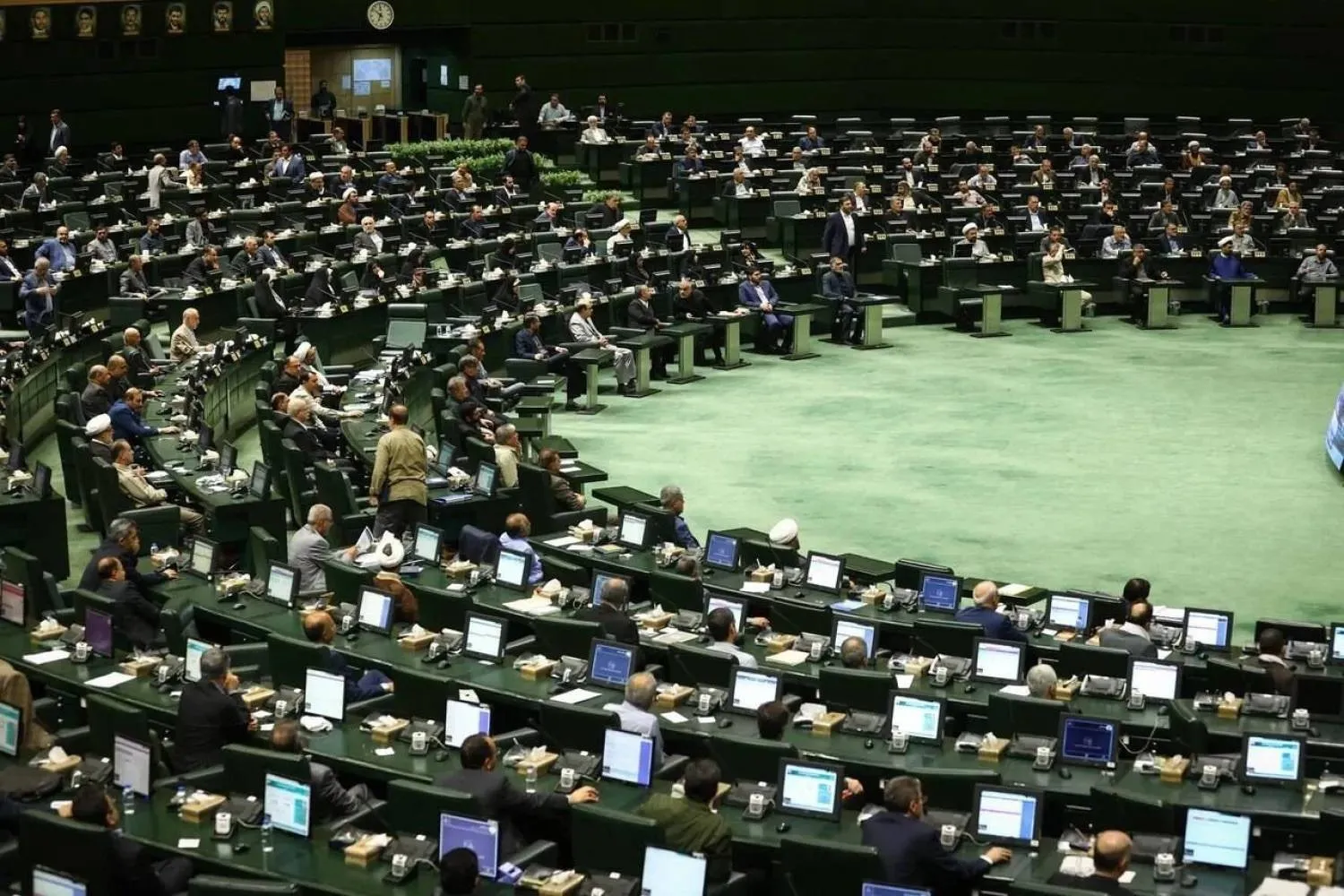
A photo released by the Iranian Parliament’s website of one of its meetings.
TT

Iran Downplays ‘Snapback’ Threat, Reserves Right to Respond

A photo released by the Iranian Parliament’s website of one of its meetings.

Iran sought on Friday to play down the potential impact of the so-called “snapback” mechanism, which allows for the automatic reimposition of United Nations sanctions on Tehran over its nuclear program, unless a diplomatic solution is reached by the end of August.

Hossein-Ali Haji Deligani, a member of the Iranian parliament’s Article 90 Committee, dismissed the measure as largely symbolic, describing it as “a weapon without bullets” that carries more psychological than practical weight.

Speaking to the Tasnim news agency, affiliated with the Iranian Revolutionary Guard Corps, Deligani argued that Britain, Germany, and France had already exhausted the tool in previous rounds of pressure, leaving it with “no new capacity to inflict damage” on Iran’s economy.

Under UN Security Council Resolution 2231, which enshrines the 2015 nuclear deal and expires in October, any signatory may reimpose sanctions. Neither China nor Russia would be able to block the step, which obliges all UN member states to enforce restrictions on uranium enrichment and ballistic missile development.

However, Deligani noted that many of these provisions had already been applied for years, and the snapback would not extend to Iranian oil or medicine exports.

China pushes back

Beijing, meanwhile, expressed firm opposition to the European move. Foreign Ministry spokesman Lin Jian reiterated China’s preference for a political and diplomatic solution, rejecting the use of sanctions as leverage.

The statement came in response to an AFP inquiry following remarks by Iranian Foreign Minister Abbas Araghchi, who said Tehran was working with both China and Russia to prevent the Europeans from restoring sanctions lifted under the 2015 accord.

European ultimatum

Earlier this week, the foreign ministers of Britain, France, and Germany sent a joint letter to UN Secretary-General Antonio Guterres and the Security Council, warning that they would invoke the snapback unless Iran complies with its nuclear commitments by the end of August.

They stressed their determination to use “all available diplomatic tools” to ensure Iran does not develop nuclear weapons.

In an interview with Iranian state television, Araghchi called the threat “negative” and vowed to resist. “If they proceed, we have tools to respond, and we will reveal them in due time,” he said.

While acknowledging that renewed sanctions could complicate matters, he downplayed fears of significant economic fallout.

Last month, he wrote to the UN arguing that the European trio lacked the legitimacy to trigger the mechanism, a claim the three foreign ministers firmly rejected in their latest letter.



ISIS Claims Deadly Blast at Chinese-run Restaurant in Afghan Capital

Security forces stand at the site of an explosion in Kabul, Afghanistan, 19 January 2026. EPA/SAMIULLAH POPAL
TT

ISIS Claims Deadly Blast at Chinese-run Restaurant in Afghan Capital

Security forces stand at the site of an explosion in Kabul, Afghanistan, 19 January 2026. EPA/SAMIULLAH POPAL

ISIS claimed an explosion that officials said killed a Chinese national and six Afghans, while injuring several more as it tore through a Chinese-run restaurant in a heavily guarded part of Afghanistan's capital.

Monday's blast took place in the commercial Shahr-e-Naw area that is home to offices, shopping complexes and embassies, police spokesperson Khalid Zadran said.

It is considered one of the safest neighborhoods in the city.

According to Reuters, the Afghan branch of ISIS claimed responsibility, saying in a statement it ‌was carried out ‌by a suicide bomber.

The restaurant serving the Chinese ‌Muslim ⁠community was jointly run ‌by a Chinese Muslim man, Abdul Majid, his wife, and an Afghan partner, Abdul Jabbar Mahmood, Zadran said.

"The nature of the explosion is unknown so far and is being investigated," he said.

A Chinese national, identified only as Ayub, and six Afghans were killed in the blast near the restaurant's kitchen, while several others were injured, Zadran added.

The Amaq news agency said the domestic arm of ISIS had put Chinese citizens on its list of targets, citing "growing crimes by the Chinese government against ‌Uyghurs".

Rights groups accuse Beijing of widespread abuses of Uyghurs, ‍a mainly Muslim ethnic minority group ‍numbering about 10 million who live in China's far western region of ‍Xinjiang.

Beijing denies any abuse and has accused Western countries of interference and peddling lies.

The blast injured five Chinese nationals, and China has requested that Afghanistan spare no effort to treat the injured, Guo Jiakun, a spokesperson for China's foreign ministry, said at a press briefing on Tuesday.

China also requested that Afghanistan take effective measures to protect the safety of ⁠its citizens and investments, and investigate, Guo said.

On Monday, videos shared on social media showed smoke billowing from a large hole torn in the facade of the restaurant building, while debris littered the street outside.

"We have received 20 people at our hospital," Dejan Panic, the Afghanistan director of humanitarian group EMERGENCY, said in a statement, adding that seven were dead on arrival. "Among the wounded are four women and a child."


Ukraine’s FM Calls for Urgent Support After Russian Attack

Police officers inspect remains of a Russian suicide drone, amid Russia's attack on Ukraine, in Kyiv, Ukraine, January 20, 2026. (Reuters)
TT

Ukraine’s FM Calls for Urgent Support After Russian Attack

Police officers inspect remains of a Russian suicide drone, amid Russia's attack on Ukraine, in Kyiv, Ukraine, January 20, 2026. (Reuters)

Ukraine's foreign minister called ​on Tuesday for urgent support for Ukraine, including air defense and sanctions pressure ‌on ‌Russia, ‌saying ⁠Moscow's ​latest "barbaric ‌strike" was a wake-up call to world leaders gathering in Davos.

"We ⁠need urgent additional ‌energy assistance, ‍air ‍defense and interceptors, ‍as well as sanctions pressure on Moscow," Andrii ​Sybiha said in a post ⁠on X, adding that thousands of houses were without heating in capital Kyiv in freezing temperatures.


Spain Mourns as Train Crash Toll Rises to 40

Members of the Spanish Civil Guard crime department work next to the trains involved in the accident, at the site of a deadly derailment of two high-speed trains near Adamuz, in Cordoba, Spain, January 19, 2026. (Reuters)
TT

Spain Mourns as Train Crash Toll Rises to 40

Members of the Spanish Civil Guard crime department work next to the trains involved in the accident, at the site of a deadly derailment of two high-speed trains near Adamuz, in Cordoba, Spain, January 19, 2026. (Reuters)

Spain begins three days of national mourning on Tuesday for the 40 people killed in a high-speed train crash that the prime minister has vowed to investigate.

The crash late on Sunday is Spain's deadliest train accident since 2013, when 80 people died after a train veered off a curved section of track outside the northwestern city of Santiago de Compostela.

The latest disaster took place when a train operated by rail company Iryo, travelling from Malaga to Madrid, derailed near Adamuz in the southern Andalusia region.

It crossed onto the other track, where it crashed into an oncoming train, which also derailed.

"This is a day of sorrow for all of Spain, for our entire country," Prime Minister Pedro Sanchez told reporters during a visit to Adamuz on Monday as he declared three days of mourning.

"We will uncover the answer, and once the cause of this tragedy is determined, we will present it with absolute transparency."

Forty deaths have been confirmed due to the crash, the head of Andalucia's regional government, Juan Manuel Moreno, told a news conference, raising the toll from 39.

It would take 24-48 hours "to know with certainty how many deaths have resulted from this terrible accident," he added.

Heavy machinery was deployed on Monday to lift the most severely damaged train carriages and give rescuers better access to the site of the disaster.

Over 120 people were injured, with 41 still in hospitals in the nearby city of Cordoba, Moreno said.

Relatives and friends of missing passengers have turned to social media, posting photos in an effort to find them.

- 'Extremely strange' -

Aerial footage of the crash site from Spain's Guardia Civil police force showed the two trains far apart, as rescuers in high-visibility neon vests worked nearby.

Unlike the 2013 accident, the derailment occurred on a straight section of track, and the trains were travelling within the speed limit, officials said.

Transport Minister Oscar Puente said the first train to derail was "practically new" and the section of the track where the disaster happened had been recently renovated, making the accident "extremely strange".

Train operator Iryo said the locomotive was built in 2022 and last inspected just three days before the accident. It said it "veered onto the adjacent track for still unknown reasons".

The company said around 300 people were on board its service from the Andalusian city of Malaga to the capital, Madrid.

Renfe, the operator of the second train travelling to the southern city of Huelva, said it was carrying 184 passengers.

Human error has "been practically ruled out", Renfe President Alvaro Fernandez Heredia told Spanish public radio RNE.

Heredia also ruled out speeding as a cause of the accident. He said both trains were traveling just over 200 kilometers (120 miles) per hour, below the 250 kilometers per hour limit for that section of track.

"It must be related to Iryo's rolling stock or an infrastructure issue," he added.

- 'Strong hit' -

Spain has Europe's largest high-speed rail network, with more than 3,000 kilometers of dedicated tracks connecting major cities including Madrid, Barcelona, Seville, Valencia and Malaga.

Survivor Lucas Meriako, who was travelling on the first train that derailed, told La Sexta television that it looked "like a horror movie".

"We felt a very strong hit from behind and the feeling that the whole train was about to collapse, break... there were many injured due to the glass," he said.

In Adamuz, where white buildings gleam among orange-lined streets, residents rushed to the town hall with supplies as news of the disaster spread.

"We started bringing water, blankets, everything we could," Manuel Munoz, a 60-year-old olive oil factory worker, told AFP.

Among those offering condolences were Pope Leo XIV and French President Emmanuel Macron.