



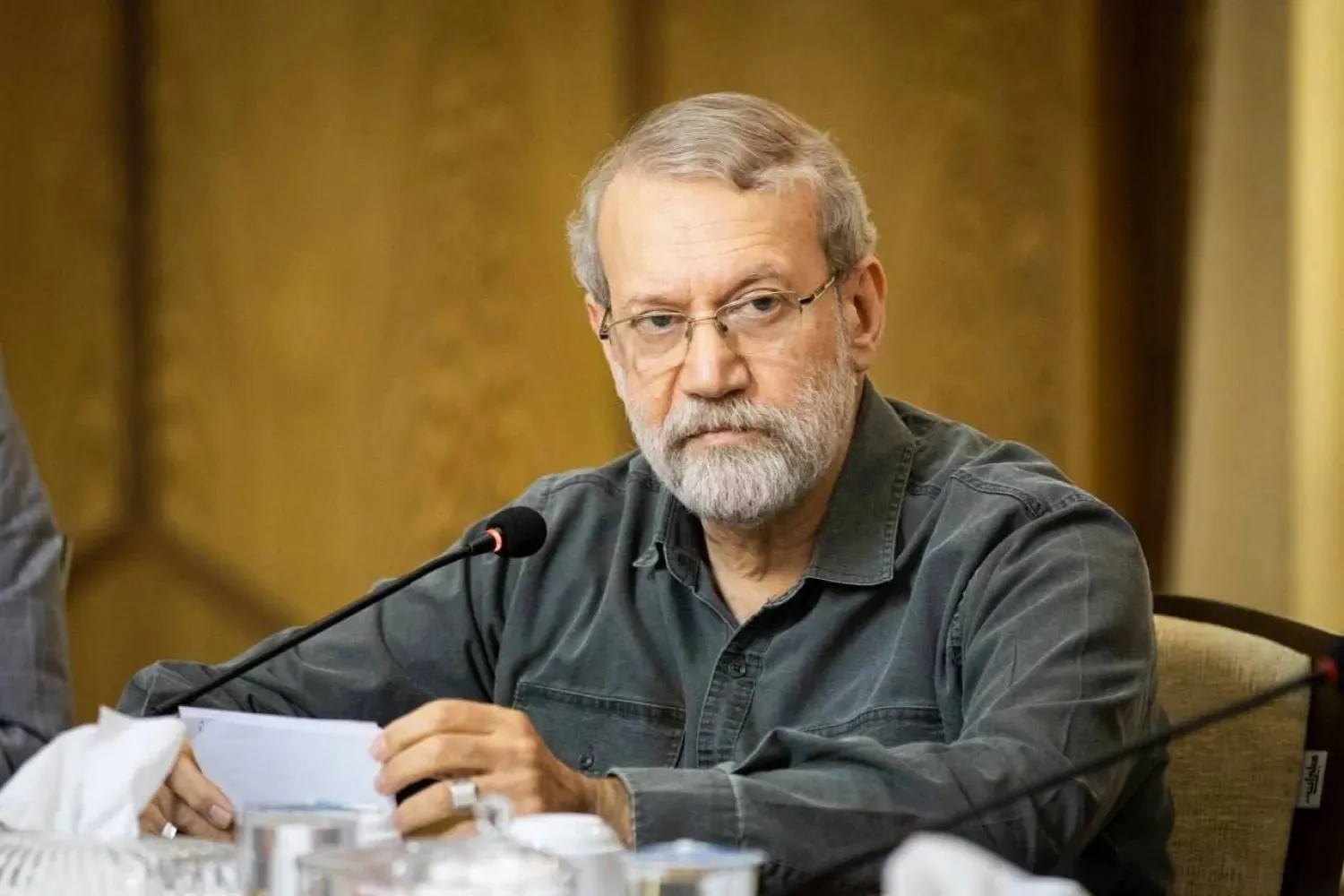

Secretary of Iran’s Supreme National Security Council (SNSC) Ali Larijani said he exchanged with British counterpart, Jonathan Powell, views on the ‘snapback mechanism’ which could result in the return of UN sanctions on Iran, as well as ways to resume nuclear negotiations.
Last week, France, Germany and the UK launched a 30-day process to reimpose sanctions on Iran over its nuclear program, sending a letter stating their intent to the UN Security Council.
The European countries, known as the E3, had offered Iran a delay of the snapback during talks in July if Iran met three conditions: resuming negotiations with the United States over its nuclear program, allowing UN nuclear inspectors access to its nuclear sites, and accounting for the over 400 kilograms of highly enriched uranium the UN watchdog says it has.
Tehran, which now enriches uranium at near weapons-grade levels, has rejected that proposal.
In a short statement posted Wednesday on Telegram, Larijani’s office said the Secretary of Iran’s SNSC had a phone conversation with Powell and the two men agreed that consultations should continue with the aim of addressing nuclear matters through dialogue.
A day earlier, Larijani said the path to nuclear negotiations between Iran and the United States is not closed but US demands for curbs on Iranian missiles are obstructing prospects for talks.
A sixth round of Iran-US talks was suspended after the start of a 12-day war in June, in which Israel and the US struck Iranian nuclear facilities and Iran retaliated with waves of ballistic missiles against Israel.
“We indeed pursue rational negotiations. By raising unrealizable issues such as missile restrictions, they set a path that negates any talks,” Larijani said in a post on X.
Western countries fear Iran's uranium enrichment program could yield material for an atomic warhead and that it seeks to develop a ballistic missile to carry one.
Iran says its nuclear program is only for electricity generation and other civilian uses and that it is enriching uranium as fuel for these purposes.
It has denied seeking to create missiles capable of carrying nuclear payloads and says its defense capabilities cannot be open to negotiation in any talks over its atomic program.


