


US Sanctions Target Financing of Iran’s Military, Treasury Says

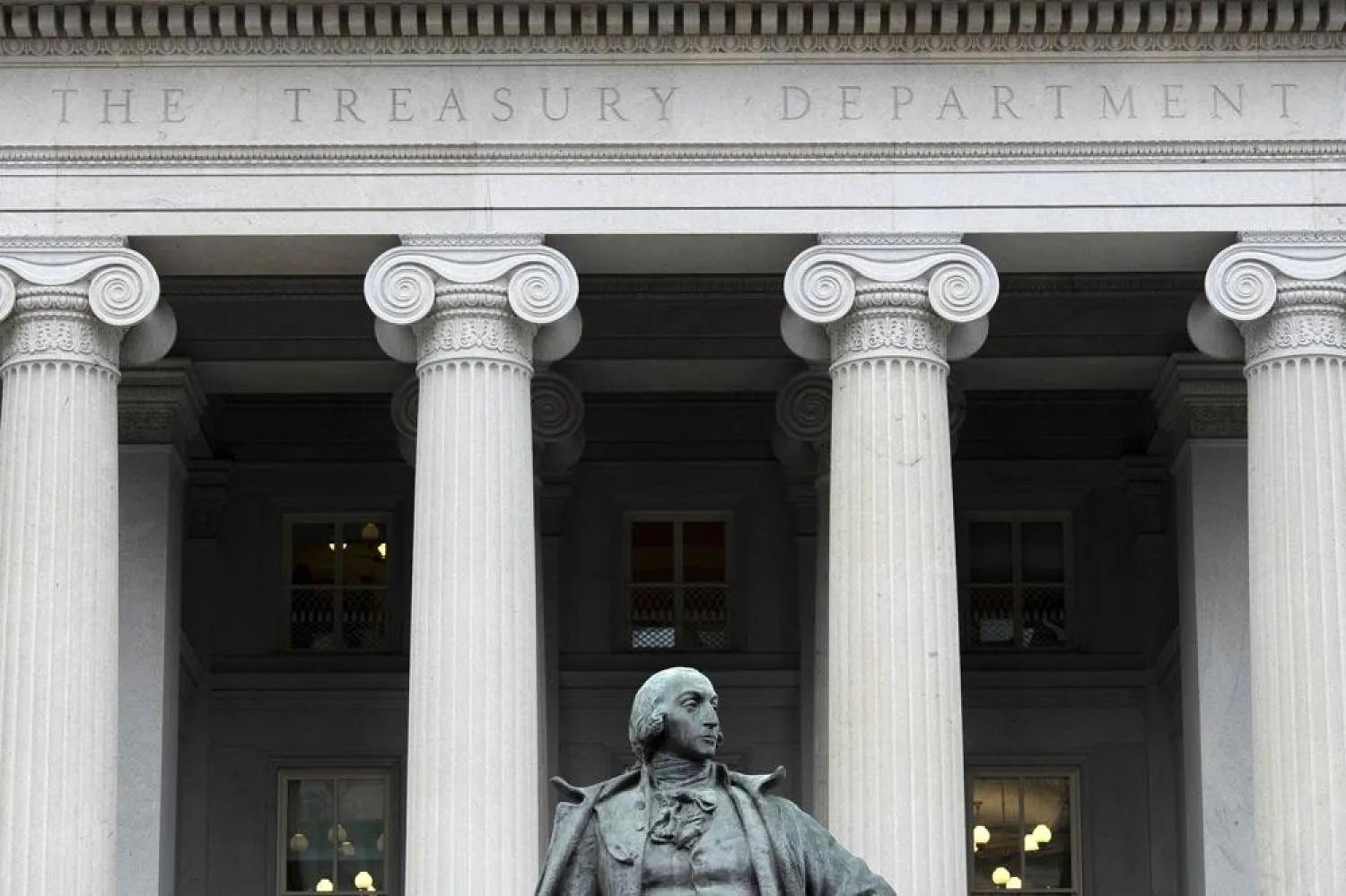
The Treasury Department building is seen, March 13, 2025, in Washington. (AP)
TT

US Sanctions Target Financing of Iran’s Military, Treasury Says

The Treasury Department building is seen, March 13, 2025, in Washington. (AP)

The US has issued a fresh round Iran-related sanctions targeting individuals and entities that Washington says finance Tehran's military, including some in Hong Kong and the United Arab Emirates, the US Treasury Department said on Tuesday.

Those targeted have helped coordinate funds transfers, including from the sale of Iranian oil, that benefit Iran's military force, the Iranian Revolutionary Guard Corp (IRGC)- Quds Force and its Ministry of Defense and Armed Forces Logistics (MODAFL), Treasury said.

"Iranian 'shadow banking' networks like these - run by trusted illicit financial facilitators - abuse the international financial system and evade sanctions by laundering money through overseas front companies and cryptocurrency," it said in a statement.

US sanctions generally prohibit American individuals and companies from engaging in any business transactions with those targeted.



Cautious Calm in Iran Amid Heightened Security Measures

Iranians walk past a sign reading in Persian “This is not a protest” on a street in Tehran (EPA) 
TT

Cautious Calm in Iran Amid Heightened Security Measures

Iranians walk past a sign reading in Persian “This is not a protest” on a street in Tehran (EPA) 

Iran is facing a sweeping security crackdown after a wave of arrests and the heavy deployment of forces in Tehran and other cities, as residents and a rights group said protests have largely abated under the weight of the clampdown.

Accounts from residents in the capital described a cautious calm since Sunday, with drones circling overhead and patrols stationed at major intersections and squares, amid a sharp curtailment of information flows because of internet outages and restricted communications.

Videos circulating online pointed to what were described as “maximum security” conditions in cities, including Mashhad, where security personnel in dark uniforms and special vehicles were seen on the streets, alongside a complete internet blackout that has lasted for eight days.

Despite the broader lull, videos showed a group of residents in Zahedan marching through the city’s streets on Friday after weekly prayers, even as reports spoke of tight security and extensive measures around the prayers. Independent rights sources, including the Baloch Activists Campaign, said Zahedan had seen a heavy security presence.

Protests erupted on Dec. 28 after a surge in inflation and worsening economic conditions in Iran, whose economy is weighed down by sanctions, before escalating into one of the biggest challenges to the ruling establishment since 1979.

While residents said streets appeared calm, many asked not to be named for safety reasons. A resident in a northern city on the Caspian Sea said conditions there were also quiet, with security overshadowing daily life. An elderly woman in a northwestern town that was an early flashpoint said sporadic protests were still occurring but with less intensity, adding she had never seen scenes like those that accompanied the earlier escalation in violence.

Iran’s education ministry said it would decide on Saturday whether Tehran’s schools would return to in-person classes or continue remote learning, as they did last week, a sign of broader disruption to public life.

On the ground, a woman in Tehran told Reuters by phone that her daughter was killed on Friday after taking part in a protest near their home. She said the girl was 15 and rejected descriptions of her as a “terrorist” or “rioter,” adding that her daughter was chased by Basij forces as she tried to return home.

The Iranian Kurdish rights group Hengaw, based in Norway, said no protest gatherings had been recorded since Sunday, adding that “security conditions remain extremely tight” with a dense military and security presence in several areas.

Hengaw said its independent sources confirmed a significant security and military deployment in cities and towns that had seen earlier protests, as well as in places that had not witnessed large demonstrations, reflecting the breadth of precautionary measures.

In Isfahan, Tasnim, which is affiliated with the Iranian Revolutionary Guard Corps, said “rioters” had set fire to a local education office in the Falavarjan district.

New videos from last week showed protests in the Piroozi area in eastern Tehran, with sustained gunfire audible. A voice in one video is heard telling people, “They are shooting at us. One of us has been killed.”

Official narrative

In an effort to reinforce the security agencies’ account, state-owned Press TV quoted Iran’s police chief as saying calm had returned nationwide, while state television aired footage of traffic flowing through major Tehran intersections.

Alongside that narrative, state television aired a report on disturbing images from a forensic medicine center in southern Tehran, presenting them as evidence of what authorities described as the “organized and violent nature” of the unrest, insisting armed elements and “terrorist attacks” were involved.

Videos circulating in recent days showed scenes of panic inside the center, with dozens of bodies lying on floors and stretchers, most in body bags and some uncovered.

A security expert interviewed on state television said forensic facilities had been overwhelmed by the number of bodies, leading to overcrowding in halls, which the report framed as a sign of a “non-spontaneous killing wave.”

The expert said forensic examinations showed the use of weapons and ammunition “not in circulation in Iran,” alongside hunting rifles and bladed weapons. He pointed to knives, sharp tools, and injuries he said were caused by “prepared” gunfire.

He described repeated strikes carried out by more than one attacker and killings he called “brutal,” including broken necks, arguing that the nature of the injuries pointed to “organized terrorist attacks” rather than spontaneous clashes, according to Tasnim.

State television also aired footage it said showed the arrest of armed suspects in security operations linked to the unrest, while official media broadcast videos of pursuits and weapons seizures.

Tasnim published clips it said showed confrontations between security forces and “rioters,” including what it described as a surprise arrest of armed men by police.

Tasnim said “rioters” broke into a public parking garage and destroyed all vehicles inside, part of an official narrative that blames opponents of the state for organized sabotage.

Arrests and casualties

Casualty figures reported by the rights agency HRANA showed little change since Wednesday, standing at 2,677 dead, including 2,478 protesters and 163 people identified as government-affiliated, according to the group.

An Iranian official told Reuters this week that about 2,000 people had been killed in the unrest, a lower figure than HRANA’s tally, which is based on a network of sources inside the country.

The differing numbers come amid the absence of comprehensive official data.

HRANA said more than 19,000 people had been arrested, while Tasnim put the number at 3,000.

Tasnim said many leaders of what it called “riots” had been detained in Kermanshah in western Iran, adding that five suspects were arrested over the vandalism of a fuel station and a Basij base in the southeastern city of Kerman.

In a parallel display of deterrence, state television broadcast funerals for security personnel in Semnan in northern Iran and Semirom in central Iran, highlighting state losses and framing them within a narrative of “defending security.”

“Await severe retaliation”

Abdolrahim Mousavi, chief of staff of Iran’s armed forces, said, “If our young men wanted to confront the instigators with weapons, they would have resolved the matter and rounded them all up within two hours,” in a direct threat.

He said protesters had used “human shields,” while “our young men defended this country and its people with their lives alone,” remarks that sought to justify the use of force and underscore readiness to escalate.

For his part, Ahmad Khatami, Tehran’s Friday prayer imam, called for the execution of detained protesters and for the arrest of anyone who supported the protests “in any form.”

He described protesters as “servants of Netanyahu” and “soldiers of Trump.”

Khatami said in his sermon that Netanyahu and Trump should “await severe retaliation,” and that Americans and “Zionists” should not expect peace.

He cited figures he said showed damage to 350 mosques, 126 prayer halls, and 20 religious sites, as well as 80 homes of Friday prayer leaders.

International dimension

The internal developments came as fears of a US attack eased from Wednesday, when President Donald Trump said he had received information indicating that killings had declined.

The White House said warnings of “severe consequences” remained in place.

White House spokeswoman Karoline Leavitt said Trump and his team had warned Tehran of consequences if killings continued, adding that Trump was aware of a halt to 800 executions while keeping “all options” on the table.

A US official, speaking on condition of anonymity, said the US military was expected to send additional defensive and offensive capabilities to the region, without detailing their nature or timing. US Central Command declined to comment.

A source familiar with the matter said David Barnea, head of Israel’s Mossad, was visiting the United States for talks on Iran and was expected to meet US envoy Steve Witkoff, with no immediate comment from the office of Israeli Prime Minister Benjamin Netanyahu.

In contrast, the Kremlin said President Vladimir Putin discussed the situation in Iran in separate calls with Netanyahu and Iranian President Masoud Pezeshkian, expressing Moscow’s readiness to mediate and ease tensions.

Iranian state media said Pezeshkian told Putin that the United States and Israel had played a direct role in the unrest.

“Key figures of the system”

At home, the office of Supreme Leader Ali Khamenei urged what it called the system’s “key figures” to act publicly and break their silence, addressing prominent political figures across factions, including former reformist president Mohammad Khatami, his ally Hassan Rouhani, hardliner Mahmoud Ahmadinejad, and former parliament speaker Ali Akbar Nategh-Nuri.

The weekly magazine “Voice of Iran,” affiliated with the leader’s office, said responsibility lay with elites to counter what it called “the enemies’ nonsense” and stand with “the facts,” adding there was “no longer room for doubt or silence” because the issue “concerns Iran itself.”

In a swift response, Mohammad Khatami described the protests as a “major, premeditated conspiracy,” saying he did not doubt the role of Israel and the United States.

He said the entry of “naked violence” had quickly altered acceptance of the right to protest.

Khatami added that Israeli officials’ statements and US support left no doubt about the “formation of a major conspiracy,” while also saying the protests stemmed from “existing policies and structural imbalances,” as well as sanctions and external pressure.

He called the failure to draw lessons from past events regrettable, but said the conduct of Pezeshkian’s government in the early days of the protests had been “civil.”

Pahlavi calls for international help

In Washington, Reza Pahlavi, son of Iran’s last shah, urged the international community to intensify political, economic, and military pressure to help protesters overthrow the ruling system.

Speaking at a news conference, Pahlavi said “large segments” of the army and security forces had pledged loyalty to him “in secret,” and that the time had come for the international community to join fully. Pahlavi has lived outside Iran since before 1979.

“The Iranian people are taking decisive action on the ground. Now is the time for the international community to join them fully,” he said, according to Reuters.

He said he was uniquely positioned to ensure a stable transition, although the US president expressed skepticism this week about Pahlavi’s ability to mobilize support inside Iran.

The opposition remains fragmented among competing groups and rival ideological factions.


Israel Sees Spike in Suicide Among Troops

Israeli soldiers stand on tanks, amid the conflict between Israel and Hamas, near the Israel-Gaza border, in southern Israel, January 1, 2024. REUTERS/Violeta Santos Moura/File Photo
TT

Israel Sees Spike in Suicide Among Troops

Israeli soldiers stand on tanks, amid the conflict between Israel and Hamas, near the Israel-Gaza border, in southern Israel, January 1, 2024. REUTERS/Violeta Santos Moura/File Photo

Israel is grappling with a dramatic increase in post-traumatic stress disorder and suicide among its troops after its two-year assault on Gaza, precipitated by the October 7, 2023, Hamas attack on southern Israel.

Recent reports by the Defense Ministry and by health providers have detailed the military's mental health crisis, which comes as fighting persists in Gaza and Lebanon and as tensions flare with Iran, according to Reuters.

The Gaza war quickly expanded with cross-border fire between Israel and Lebanon's Hezbollah, and saw hundreds of thousands of soldiers and reservists deployed across both fronts in some of the heaviest fighting in the country's history.

Israeli forces have killed more than 71,000 Palestinians in Gaza and 4,400 in southern Lebanon, according to Gazan and Lebanese officials, and Israel says more than 1,100 service members have been killed since October 2023.

The war has left much of Gaza destroyed and its 2 million people overwhelmingly lack proper shelter, food or access to medical and health services.

Palestinian mental health specialists have said Gazans are suffering “a volcano” of psychological trauma, with large numbers now seeking treatment, and children suffering symptoms such as night terrors and an inability to focus.

Post-Trauma Cases UP 40% Among Soldiers
Israeli studies show the war has taken its toll on the mental health of soldiers carrying out Israel's stated war aims of eliminating Hamas in Gaza, retrieving hostages there and disarming Hezbollah.

Some soldiers who came under attack when their military bases were invaded by Hamas on October 7 are also struggling.

Israel's Defense Ministry said it has recorded a nearly 40% increase in PTSD cases amongst its soldiers since September 2023, and predicts the figure will increase by 180% by 2028. Of the 22,300 troops or personnel being treated for war wounds, 60% suffer from post-trauma, the ministry said.

It has expanded the health care provided to those dealing with mental health issues, expanded the budget, and said there was an increase of about 50% in the use of alternative treatments.

The country's second-largest healthcare provider, Maccabi, said in its 2025 annual report that 39% of Israeli military personnel under its treatment had sought mental health support while 26% had voiced concerns about depression.

Several Israeli organizations like NGO HaGal Sheli, which uses surfing as a therapy technique, have taken on hundreds of soldiers and reservists suffering from PTSD. Some former soldiers have therapy dogs.

Feeling Guilty
Ronen Sidi, a clinical psychologist who directs combat veteran research at Emek Medical Center in northern Israel, said soldiers were generally grappling with two different sources of trauma.

One source was related to “deep experiences of fear” and “being afraid to die” while deployed in Gaza and Lebanon and even while at home in Israel.

Many witnessed the Hamas assault on southern Israel - in which the militants also took around 250 hostages back into Gaza - and its aftermath firsthand.

Sidi said the second source is from moral injury, or the damage done to a person's conscience or moral compass from something they did.

“A lot of (soldiers') split-second decisions are good decisions,” which they take under fire, “but some of them are not, and then women and children are injured and killed by accident, and living with the feeling that you have killed innocent people... is a very difficult feeling and you can't correct what you have done,” he said.

One reservist, Paul, a 28-year-old father of three, said he had to leave his job as a project manager with a global firm because “the whistles of the bullets” above his head lingered with him even after returning home.

Paul, who declined to give his last name over privacy concerns, said he deployed in combat roles in Gaza, Lebanon and Syria.

Although fighting has abated in recent months, he said he lives in a constant state of alert.

“I live that way every day,” Paul said.

Untreated Trauma
A soldier seeking state support for their mental health must appear before a defense ministry assessment committee which determines the severity of their case and grants them official recognition.

That process can take months and can deter soldiers from seeking help, some trauma professionals said.

Israel's Defense Ministry said it provides some immediate help to soldiers once they start the evaluation process and has increased this effort since the war began.

An Israeli parliamentary committee found in October that 279 soldiers had attempted suicide in the period from January 2024 to July 2025, a sharp increase from previous years.

The report found that combat soldiers comprised 78% of all suicide cases in Israel in 2024.

The risk of suicide or self-harm increases if trauma is untreated, said Sidi, the clinical psychologist.

“After October 7 and the war, the mental health institutions in Israel are overwhelmed completely, and a lot of people either can't get therapy or don't even understand the distress that they are feeling has to do with what they have experienced.”

For soldiers, the chance of seeing combat remains high. Israel's military remains deployed in over half of Gaza and fighting has persisted there despite a US-backed truce in October, with more than 440 Palestinians and three Israeli soldiers killed.

Its troops still occupy parts of southern Lebanon, as the Lebanese army presses on with disarming Hezbollah under a separate US-brokered deal.

In Syria, Israeli troops have occupied an expanded section of the country's south since the ouster of former leader Bashar al-Assad.

As tensions flare with Iran and the US threatens to intervene, Israel could also find itself in another violent confrontation with Tehran, after last June's 12-day war.


First Flight of Deported Venezuelan Migrants Arrives in Caracas after Maduro's Capture

A migrant participating in the government's program Great Mission Return to the Homeland, waves upon arrival at Maiquetia International Airport, in Venezuela 16 January 2026. EPA
TT

First Flight of Deported Venezuelan Migrants Arrives in Caracas after Maduro's Capture

A migrant participating in the government's program Great Mission Return to the Homeland, waves upon arrival at Maiquetia International Airport, in Venezuela 16 January 2026. EPA

A flight with 231 Venezuelan migrants deported from the US city of Phoenix arrived Friday to their home country, nearly two weeks after the United States captured former President Nicolás Maduro and took him to New York to face drug trafficking charges.

The Eastern Airlines plane arrived at an airport outside the capital, Caracas, marking the resumption of flights after Washington — according to Venezuelan officials — unilaterally suspended direct deportation air transfers in mid-December, The Associated Press reported.

The previous direct flight from the US was on Dec. 10.

Return flights for deported migrants had been regularized since late March as part of the transfers agreed upon by both governments.

The transfers were successively affected amid heightened tensions since US military forces began to execute a series of deadly attacks against boats suspected of smuggling drugs in international waters of the Caribbean and Pacific Ocean, including several vessels that they claim departed from Venezuela.

Maduro maintained at all times that US President Donald Trump could order military action to try to overthrow him.

The flight’s arrival comes 13 days after Maduro was captured along with his wife, Cilia Flores, during a military intervention in Caracas. Subsequently, he was transferred to US territory, where both appeared on Jan. 5 before a New York court to face narcoterrorism charges. Both have pleaded not-guilty.