


Trump Says He and Xi Will Meet in South Korea in Coming Weeks and He’ll Later Go to China

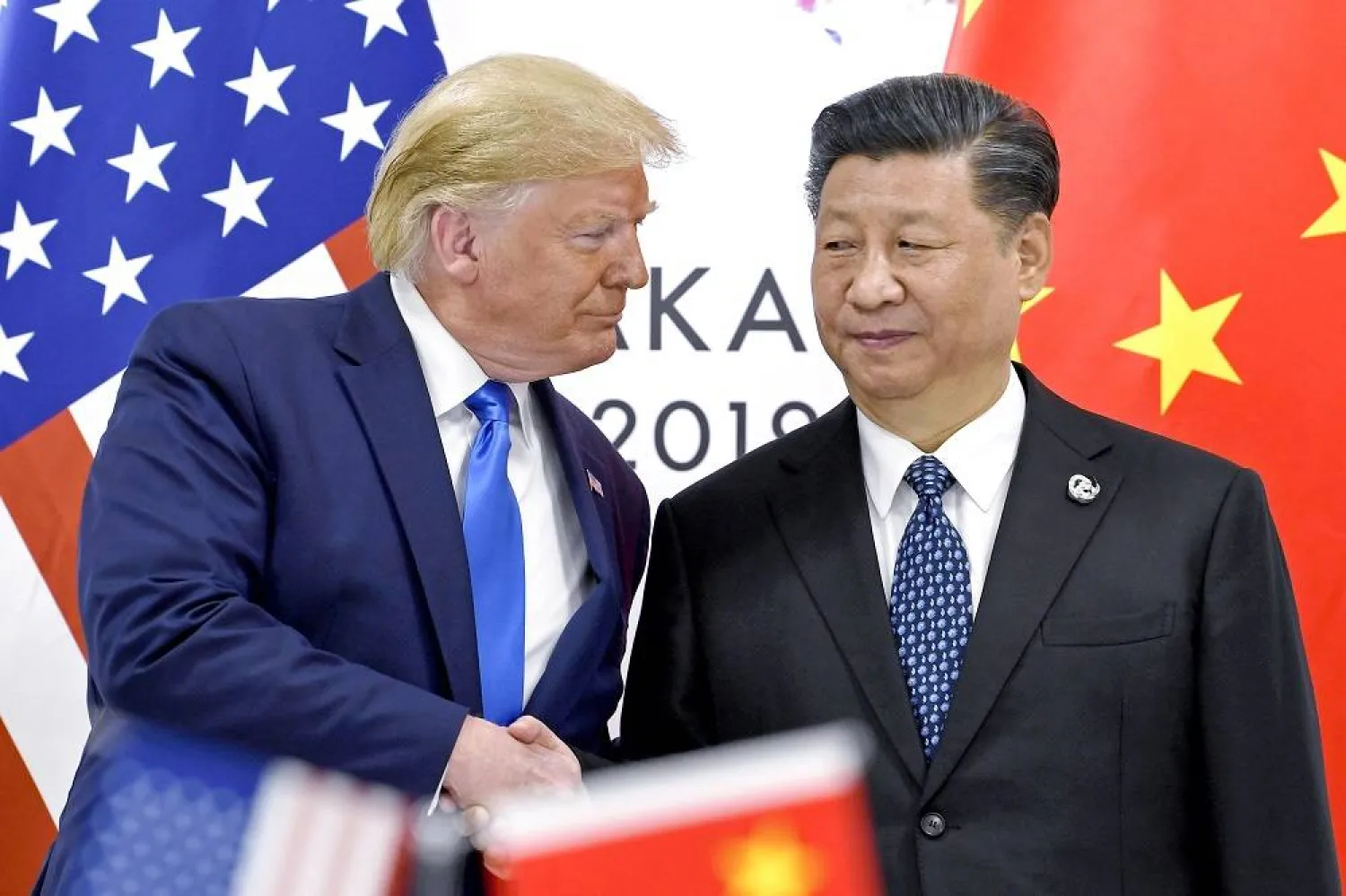
President Donald Trump, left, shakes hands with China's President Xi Jinping during a meeting on the sidelines of the G20 summit in Osaka, Japan, June 29, 2019. (AP)
TT

Trump Says He and Xi Will Meet in South Korea in Coming Weeks and He’ll Later Go to China

President Donald Trump, left, shakes hands with China's President Xi Jinping during a meeting on the sidelines of the G20 summit in Osaka, Japan, June 29, 2019. (AP)

US President Donald Trump said he would meet Chinese leader Xi Jinping at a regional summit taking place at the end of October in South Korea and will visit China in the “early part of next year,” following a phone call between the two on Friday. 

In a Truth Social post, Trump also said Xi would come to the United States “at an appropriate time” and that they had made progress on “the approval of the TikTok Deal” to allow the popular social media app to keep operating in the United States. 

“The call was a very good one, we will be speaking again by phone, appreciate the TikTok approval, and both look forward to meeting at APEC!” Trump wrote, referring to the Asia-Pacific Economic Cooperation group of 21 economies on the Pacific Rim. 

Trump gave no further details about the TikTok deal, and a statement from the Chinese government did not mention the visits and offered no clarity on what Xi had agreed to regarding a sale of a controlling stake by TikTok's Chinese parent company to avoid a US ban. 

Beijing “would be happy to see productive commercial negotiations in keeping with market rules lead to a solution that complies with China’s laws and regulations and takes into account the interests of both sides," the statement said. 

"The US side needs to provide an open, fair and non-discriminatory environment for Chinese investors,” it said. 

This was the second call with Xi since Trump returned to the White House and imposed sky-high tariffs on China, triggering back-and-forth trade restrictions that strained ties between the two largest economies. But Trump, a Republican, has expressed willingness to negotiate trade deals with Beijing, notably for TikTok. 

Efforts to finalize the TikTok deal  

TikTok did not immediately respond to The Associated Press’ request for more details on the call or the framework deal for the app's ownership that the Trump administration said was reached with Chinese officials early this week during trade talks in Madrid. 

Trump, who has credited the app with helping him win another term, several times has extended a deadline for it to be spun off from its Chinese parent company, ByteDance. It is a requirement under a law passed last year seeking to address data privacy and national security concerns. 

Trump said Thursday that TikTok “has tremendous value” and the US “has that value in its hand because we’re the ones that have to approve it.” 

US officials have been concerned about ByteDance’s roots and ownership, pointing to laws in China that require Chinese companies to hand over data requested by the government. Another concern is the proprietary algorithm that populates what users see on TikTok. 

Chinese officials said Monday that a consensus was reached on authorization of the “use of intellectual property rights,” including the algorithm, and that the two sides agreed on entrusting a partner with handling US user data and content security. 

Wendy Cutler, senior vice president of the Asia Society Policy Institute, warned that “important details surrounding such matters as who would own and control the algorithm remain unclear.” 

Trump and Xi speak on wider trade tensions  

Trump said Friday the two also made progress on “many very important issues including Trade, Fentanyl, the need to bring the War between Russia and Ukraine to an end,” besides the TikTok deal. 

The Chinese statement said Xi stressed the importance of ties between the two nations and urged the US side to avoid imposing any trade restrictions. 

“Both sides need to work hard and in the same direction, so as to realize mutual respect, peaceful coexistence and win-win cooperation,” the Chinese statement said. 

Trump on Thursday said his relationship with China is “very good” but noted that Russia's war in Ukraine could end if European countries put higher tariffs on China. Trump didn’t say if he planned to raise tariffs on Beijing over its purchase of Moscow's oil, as he has done with India. 

Cutler of the Asia Society Policy Institute said the Chinese statement indicated Beijing's willingness to “play hardball, and a need to get paid by Washington for any concessions it makes.” 

“This will complicate the talks, particularly if China continues to insist on relaxation of US export controls and tariffs, areas where the US is reluctant to move,” she said. 

More trade issues on the table  

Top US and Chinese officials have held four rounds of trade talks between May and September, with another likely in the coming weeks. Both sides have paused high tariffs and pulled back from harsh export controls, but many issues remain unresolved. 

No deals have been announced on tech export restrictions, Chinese purchases of US agricultural products or fentanyl. The Trump administration has imposed additional 20% tariffs on Chinese goods linked to allegations that Beijing has failed to stem the flow to the US of the chemicals used to make opioids. 

Trump’s second-term trade war with Beijing has cost US farmers one of their top markets. From January through July, American farm exports to China fell 53% compared with the same period last year. The damage was even greater in some commodities: US sorghum sales to China, for instance, were down 97%. 

Sean Stein, president of the US-China Business Council, said “we’re enormously pleased that the call happened” and called it “a really important step in getting the trade relationship back on track.” 


Transport Minister: Türkiye-operated Oil Tanker Attacked in Black Sea

Altura, a Turkish-owned crude oil tanker, transits the Bosphorus in Istanbul, Türkiye, March 16, 2026. REUTERS/Yoruk Isik
TT

Transport Minister: Türkiye-operated Oil Tanker Attacked in Black Sea

Altura, a Turkish-owned crude oil tanker, transits the Bosphorus in Istanbul, Türkiye, March 16, 2026. REUTERS/Yoruk Isik

A Turkish-operated oil tanker was attacked early Thursday in the Black Sea, possibly by an unmanned surface vehicle, Türkiye's transport minister Abdulkadir Uraloglu said.

"I can say that a foreign-flagged ship operated by a Turkish company, which had loaded crude oil from Russia, reported an explosion in its engine room after midnight to our emergency call center," the minister said in a televised interview.

"We believe that the engine room was specifically targeted. We think the attack was not carried out by a drone, but by an unmanned surface vehicle at water level."

The minister would not specify if the attack on the Sierra Leone-flagged tanker happened in Turkish waters but local media reported that it took place less than 30 kilometers from the Bosphorus strait.

"It appears to be an externally caused explosion, particularly directed at the engine room, with the aim of completely disabling the ship," Uraloglu said.

"We have sent the necessary units to the scene and are monitoring the situation," he added.

In December, Türkiye witnessed a series of security incidents linked to the Russia-Ukraine conflict, with President Recep Tayyip Erdogan warning against the Black Sea becoming an "area of confrontation" between the warring parties.

Türkiye, whose northern shore faces Ukraine and annexed Crimea, has maintained close ties with both Kyiv and Moscow since Russia's invasion of Ukraine in February 2022.


Australia Bans Visitors from Iran

Commuters walk past Wynyard Station in Sydney, Australia, March 25, 2026. REUTERS/Hollie Adams
TT

Australia Bans Visitors from Iran

Commuters walk past Wynyard Station in Sydney, Australia, March 25, 2026. REUTERS/Hollie Adams

Australia banned visitors from Iran on Thursday, saying war in the Middle East increased the risk they would refuse to fly home once their short-term visas expired.

For the next six months people travelling on Iranian passports will be barred from visiting Australia for tourism or work, the Home Affairs department said.

"The conflict in Iran has increased the risk that some temporary visa holders may be unable or unlikely to depart Australia when their visas expire," it said in a statement.

Some exceptions would be made on a case-by-case basis, the department added, such as for the parents of Australian citizens.

"There are many visitor visas which were issued before the conflict in Iran which may not have been issued if they were applied for now," Home Affairs Minister Tony Burke said.

"Decisions about permanent stays in Australia should be deliberate decisions of the government, not a random consequence of who booked a holiday."

More than 85,000 Australian residents were born in Iran, according to government figures, with vibrant diaspora communities found in major cities such as Sydney and Melbourne.

Australia angered Iran this month when it granted asylum to seven players and officials from the visiting women's football team.

The players were branded "traitors" at home after refusing to sing the national anthem before an Asian Cup match -- a gesture seen as an act of defiance against the Iranian republic.

Five of those seven later reversed their decisions to seek sanctuary in Australia, fueling suspicions their families had come under threat.


Iran and the US Harden their Positions as Tehran Keeps Its Grip on the Strait of Hormuz

FILE - A thick plume of smoke rises from an oil storage facility hit by a US-Israeli strike in Tehran, Iran, March 8, 2026. (AP Photo/Vahid Salemi, File)
TT

Iran and the US Harden their Positions as Tehran Keeps Its Grip on the Strait of Hormuz

FILE - A thick plume of smoke rises from an oil storage facility hit by a US-Israeli strike in Tehran, Iran, March 8, 2026. (AP Photo/Vahid Salemi, File)

Iran and the United States hardened their positions as diplomacy aimed at reaching a ceasefire in the war in the Middle East appeared to be faltering on Thursday. Tehran moved to formalize its control over the crucial Strait of Hormuz while Washington prepared for the arrival of US combat forces in the region that could be used on the ground in the Iranian Republic.

Iran is instituting a “de facto ‘toll booth’ regime,” industry experts say, with some ships paying in Chinese yuan to pass through the strait, where 20% of all traded oil and natural gas is transported in peacetime.

Meanwhile, a strike group anchored by the amphibious assault ship USS Tripoli drew closer to the Mideast with some 2,500 Marines. Also, at least 1,000 paratroopers from the 82nd Airborne have been ordered to the region, The Associated Press said.

The troop movements don’t guarantee US President Donald Trump will try to use force to compel Iran to open the strait and halt its attacks on Gulf Arab states.

Trump previously deployed a large force in the Caribbean before the American military captured former Venezuelan leader Nicolás Maduro in January. In the current situation, the US is seen as focused on possibly seizing Iran’s oil terminal at Kharg Island or other sites near the strait.

US Navy Adm. Brad Cooper, who commands the American military in the region, said his forces have hit more than 10,000 targets since Israel and the US started the war Feb. 28, destroying 92% of Iran's largest ships and more than two-thirds of the country's missile, drone and naval production facilities.

“We’re not done yet,” said Cooper, who heads the US Central Command, in a video message. “We are on a path to completely eliminate Iran’s wider military apparatus.”

Iran seen as operating Strait of Hormuz as ‘de facto toll booth’

With its stranglehold on traffic through the Strait of Hormuz, which leads from the Arabian Gulf toward the open ocean, Iran has been blocking ships it perceives as linked to the US and Israeli war effort, but letting through a trickle of others.

The Fars and Tasnim news agencies, both close to Iran’s paramilitary Revolutionary Guard, quoted lawmaker Mohammadreza Rezaei Kouchi as saying that parliament was working to formalize the process of charging fees to let ships pass.

“We provide its security, and it is natural that ships and oil tankers should pay such fees,” he was quoted as saying.

Lloyd’s List Intelligence called it a “de facto ‘toll booth’ regime.”

The shipping intelligence firm said vessels have to provide manifests, crew details and their destination to Iran’s Guard for sanctions screening, cargo alignment checks that currently prioritizes oil over all other commodities, and for what is described as ‘geopolitical vetting.’”

“While not all ships are paying a direct toll, at least two vessels have and the payment is settled in yuan,” Lloyd’s List said, referring to China’s currency.

Iran's grip on the strait and relentless attacks on Gulf regional energy infrastructure has sent oil prices skyrocketing and concerns of a global energy crisis surging. Brent crude, the international standard, traded at US$104 early Thursday, up more than 40% from the day the war started.

“To make it crystal clear, this war is a catastrophe for world's economies,” German Defense Minister Boris Pistorius told reporters during a visit to Australia.

US maintains negotiations are ongoing but Iran says there are no talks

Using Pakistan as an intermediary, Washington has delivered to Iran a 15-point ceasefire proposal, which includes the reopening of the Strait of Hormuz.

Trump, speaking at a fundraiser Wednesday night in Washington, insisted that Iran still wants to cut a deal.

“They are negotiating, by the way, and they want to make a deal so badly, but they’re afraid to say it because they figure they’ll be killed by their own people,” Trump said.

Iran’s Foreign Minister Abbas Araghchi said in an interview on state TV, however, that his government has not engaged in talks to end the war, “and we do not plan on any negotiations.”

Araghchi said the US had tried to send messages to Iran through other nations, “but that is not a conversation nor a negotiation.”

Press TV, the English-language broadcaster on Iranian state television, said Iran has its own five-point proposal, which includes “sovereignty over the Strait of Hormuz.”

A wave of Israeli airstrikes hits as Iran fires on Gulf neighbors

Israel said it carried out a wave of attacks early on Thursday targeting Iranian infrastructure, and air defenses were heard in Tehran, while heavy strikes were also reported around Isfahan, a city some 330 kilometers (205 miles) south of the Iranian capital.

Ifahan is home to a major Iranian air base and other military sites, as well as one of the nuclear sites bombed by the US during the 12-day war between Israel and Iran in June.

Sirens sounded very early on Thursday morning in parts of Tel Aviv and cities in central Israel. Rescue workers said two people were injured in a blast in Kfar Qasim.

Saudi Arabia's Defense Ministry said it intercepted multiple drones over its oil-rich Eastern Province, the United Arab Emirates' air defenses also worked to intercept incoming fire, and Bahrain reported extinguishing a blaze in a neighborhood that is home to the Bahrain International Airport.

Since the war began, more than 1,500 people have been killed in Iran, its Health Ministry says. Twenty people have been killed in Israel; two Israeli soldiers have also been killed in Lebanon. At least 13 US military members have been killed. More than a dozen civilians in the occupied West Bank and Gulf Arab states have also died.

Nearly 1,100 people have died in Lebanon, authorities said. In Iraq, where Iranian-supported militant groups have entered the conflict, 80 members of the security forces have been killed.
