

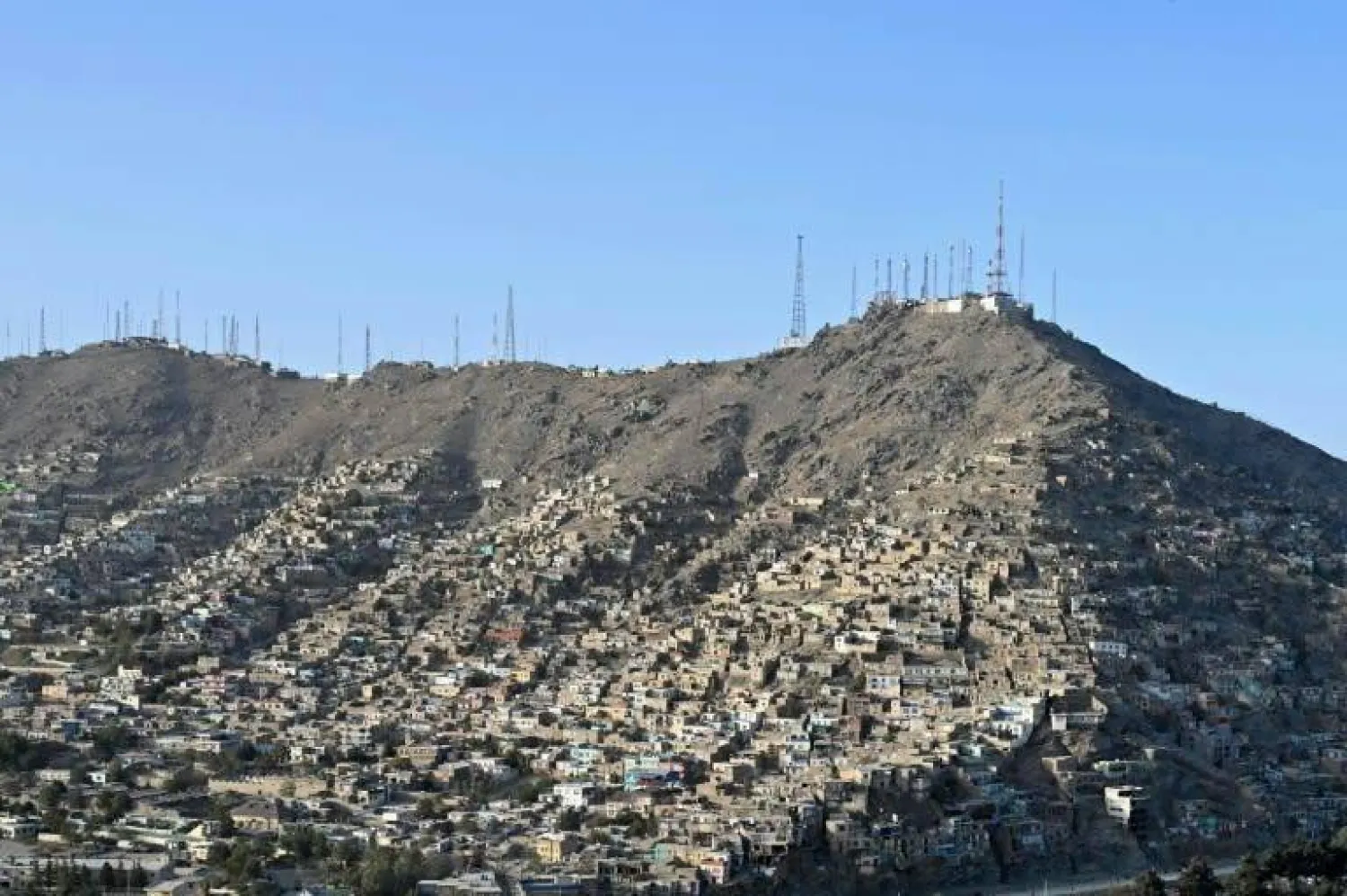

Taliban Internet Cut Sparks Afghanistan Telecoms Blackout

It is the first time since the Taliban returned to power in 2021 that communications have been shut down across Afghanistan. Wakil KOHSAR / AFP
TT

Taliban Internet Cut Sparks Afghanistan Telecoms Blackout

It is the first time since the Taliban returned to power in 2021 that communications have been shut down across Afghanistan. Wakil KOHSAR / AFP

Afghanistan faced a second day without internet and mobile phone service on Tuesday, after Taliban authorities cut the fiber optic network.

The government began shutting down high speed internet connections to some provinces earlier in the month to prevent "vice" on the orders of shadowy supreme leader Hibatullah Akhundzada, AFP said.

On Monday night, mobile phone signal and internet service gradually weakened nationwide until connectivity was less than one percent of ordinary levels, according to internet watchdog NetBlocks.

"We are blind without phones and internet," said 42-year-old shopkeeper Najibullah in Kabul.

"All our business relies on mobiles. The deliveries are with mobiles. It's like a holiday, everyone is at home. The market is totally frozen."

In the minutes before it happened, a government official warned AFP that the fiber optic network would be cut, affecting mobile phone services too.

"Eight to nine thousand telecommunications pillars" would be shut down, he said, adding that the blackout would last "until further notice".

"There isn't any other way or system to communicate... the banking sector, customs, everything across the country will be affected," said the official who asked not to be named.

The Taliban leader reportedly ignored warnings from some officials earlier this month about the economic fallout of cutting the internet and ordered authorities to press ahead with a nationwide ban.

Radio communications

Diplomatic sources told AFP on Tuesday that mobile networks were mostly shut down.

A UN source meanwhile said "operations are severely impacted, falling back to radio communications and limited satellite links".

Telephone services are often routed over the internet, sharing the same fiber optic lines, especially in countries with limited telecoms infrastructure.

Over the past weeks, internet connections have been extremely slow or intermittent.

On September 16, Balkh provincial spokesman Attaullah Zaid said the ban had come from the Taliban leader's orders.

"This measure was taken to prevent vice, and alternative options will be put in place across the country to meet connectivity needs," he wrote on social media.

At the time, AFP correspondents reported the same restrictions in the northern provinces of Badakhshan and Takhar, as well as in Kandahar, Helmand, Nangarhar and Uruzgan in the south.

Netblocks, a watchdog organization that monitors cybersecurity and internet governance, said the blackout "appears consistent with the intentional disconnection of service".

AFP lost all contact with its bureau in the capital Kabul at around 5:45 pm (1315 GMT) on Monday.

"Because of the shutdown, I'm totally disconnected with my family in Kabul," a 40-year-old Afghan living in Oman told AFP via text message, asking not to be named.

"I don't know what's happening, I'm really worried."

In 2024, Kabul had touted the 9,350-kilometer (5,800-mile) fiber optic network -- largely built by former US-backed governments -- as a "priority" to bring the country closer to the rest of the world and lift it out of poverty.



Iran Says Redirects US-sanctioned Oil Tanker to Its Shores

FILE PHOTO: An aerial view of the Iranian shores and the island of Qeshm in the strait of Hormuz, December 10, 2023. REUTERS/Stringer/File Photo
TT

Iran Says Redirects US-sanctioned Oil Tanker to Its Shores

FILE PHOTO: An aerial view of the Iranian shores and the island of Qeshm in the strait of Hormuz, December 10, 2023. REUTERS/Stringer/File Photo

Iran said on Friday it redirected a US-sanctioned oil tanker carrying Iranian oil back to its shores, though it was unclear from its statement why it would have returned it, reported AFP.

"The Islamic Republic of Iran's navy, through a specially planned operation in the Sea of Oman, seized the offending tanker Ocean Koi," the army said in a statement carried by state television, adding that the oil belonged to Iran.

It said the ship was redirected to Iran's southern shores after it sought "to damage and disrupt Iran's oil exports," without elaborating.


Meloni Meets Rubio as Iran War Strains Italy-US Ties

US Secretary of State Marco Rubio leaves the San Damaso courtyard after meeting Pope Leo XIV at the Vatican, May 7, 2026. REUTERS/Yara Nardi
TT

Meloni Meets Rubio as Iran War Strains Italy-US Ties

US Secretary of State Marco Rubio leaves the San Damaso courtyard after meeting Pope Leo XIV at the Vatican, May 7, 2026. REUTERS/Yara Nardi

Italian Prime Minister Giorgia Meloni met US Secretary of State Marco Rubio on Friday at a moment of unusual strain between her government and President Donald Trump's administration, driven largely by the war with Iran.

Rubio is in Italy for a two-day trip aimed at easing ties with Pope Leo after unprecedented attacks on the pontiff by Trump, while also addressing Washington's frustration over Italy's refusal to support the US-Israeli war on Iran.

Meloni had been one of Trump's firmest supporters in Europe, cultivating close ties with him and presenting herself as a natural ‌bridge between Washington ‌and other EU states that had no natural political ‌affinity ⁠with the Republican ⁠US leader.

But that alignment has come under increasing strain in recent months, as the Iran war has forced her to balance loyalty to the United States against Italian public animosity to the war and the growing economic cost of the conflict.

Before heading to the prime minister's office, Rubio met Italy's Foreign Minister Antonio Tajani, who said the talks had been positive.

"I am convinced ⁠that Europe needs America, Italy needs America, but the United ‌States also needs Europe and Italy," Tajani ‌told reporters.

Meloni and Rubio were expected to discuss the situation in the Gulf, as ‌well as Russia's war on Ukraine, US tariffs on European goods and ‌the outlook for Cuba, which Washington is seeking to isolate both diplomatically and economically.

TRUMP'S ATTACKS ON POPE

The Italians will also be keen for a readout on Rubio's meetings at the Vatican. Trump's recent attacks on Pope Leo crossed a sensitive ‌line in overwhelmingly Catholic Italy and prompted Meloni to call them "unacceptable."

Her criticism in turn drew a sharp rebuke ⁠from Trump, who said ⁠she lacked courage and had let Washington down. He subsequently threatened to withdraw US troops from Italy.

Meloni said on Monday she would not support such a move, but acknowledged that the decision "doesn't depend on me".

Italy last month refused to allow US aircraft to use the Sigonella air base in Sicily for combat operations linked to the Iran conflict. Italian officials have said Washington had not sought prior authorization from Rome for the use of the site.

Defense Minister Guido Crosetto, a close Meloni ally, later warned that the Iran war was putting US global leadership at risk and said he feared the "madness" of nuclear escalation.

Pollsters say Meloni's ties to Trump could prove a potential liability with voters ahead of national elections due next year.


Trump Says Ceasefire Still Holds after Fighting Between the US and Iran Flares

US President Donald Trump looks on as he speaks to reporters near the Lincoln Memorial Reflecting Pool as it undergoes renovations, in Washington, D.C., US, May 7, 2026. REUTERS/Kylie Cooper
TT

Trump Says Ceasefire Still Holds after Fighting Between the US and Iran Flares

US President Donald Trump looks on as he speaks to reporters near the Lincoln Memorial Reflecting Pool as it undergoes renovations, in Washington, D.C., US, May 7, 2026. REUTERS/Kylie Cooper

US and Iranian forces clashed in the Gulf, but President Donald Trump said a ceasefire was still holding despite the flare-up, which dented hopes for a swift diplomatic resolution to the crisis.

The escalation came as Washington awaited Tehran's response to a US proposal to end the war, which began on February 28 when the US and Israel launched airstrikes on Iran.

Trump said on Thursday three US Navy destroyers were attacked as they moved through the Strait of Hormuz, a conduit for around a fifth of the world's oil and liquefied natural gas flows that Iran has all but closed since the conflict began.

"Three World Class American Destroyers just transited, very successfully, out of the Strait of Hormuz, under fire. There was no damage done to the three Destroyers, but great damage done to the Iranian attackers," Trump wrote on Truth Social.

He later told reporters the ceasefire remained in effect and played down the exchange.

"They trifled with us today. We blew them away," Trump said in Washington.

Iran, however, accused the United ⁠States of breaching ⁠the ceasefire, an agreement that has been punctuated by intermittent clashes since it was announced on April 7.

Iran's top joint military command said US forces had targeted an Iranian oil tanker and another ship, and carried out air attacks on civilian areas on Qeshm Island in the Strait of Hormuz and nearby coastal areas. It said Iranian forces responded by attacking US military vessels east of the strait and south of the port of Chabahar.

A spokesperson for Iran's Khatam al-Anbiya Central Headquarters said the Iranian strikes inflicted "significant damage," but US Central Command said none of its assets were hit.

Iranian state media later signaled a de-escalation, with Press TV reporting that, after several hours of exchanges, "the situation on Iranian islands and coastal cities by the Strait of Hormuz is back to normal now."