French Police Detain 2 Crew Members of Oil Tanker Linked to Russia's Shadow Fleet

Shun Tai crude oil tanker is seen anchored at the terminal Kozmino in Nakhodka Bay near the port city of Nakhodka, Russia, December 4, 2022. REUTERS/Tatiana Meel
TT

French Police Detain 2 Crew Members of Oil Tanker Linked to Russia's Shadow Fleet

Shun Tai crude oil tanker is seen anchored at the terminal Kozmino in Nakhodka Bay near the port city of Nakhodka, Russia, December 4, 2022. REUTERS/Tatiana Meel

A French prosecutor said police have detained two crew members of an oil tanker immobilized off the country's Atlantic coast which President Emmanuel Macron linked to Russia.

Macron has alleged that the tanker belongs to Russia's so-called shadow fleet of aging tankers of uncertain ownership and safety practices that are avoiding Western sanctions over Moscow’s war in Ukraine.

Stéphane Kellenberger, prosecutor of the western port city of Brest, said Thursday that the crew members presenting themselves as the ship’s captain and chief mate have been in custody since at least Wednesday, The AP news reported.

A preliminary investigation was opened into the crew’s “refusal to cooperate” and “failure to justify the nationality of the vessel” after the Atlantic Maritime Prefect alerted justice authorities Monday, Kellenberger said.

The tanker, which was sailing last week off the coast of Denmark, was cited by European naval experts as possibly being involved in drone flights over the country.

French military spokesman Col. Guillaume Vernet on Thursday said a specialized team of navy commandos boarded the ship a few days ago “in line with international law” when there appeared to be a discrepancy between its apparent nationality and its real nationality. The ship was ordered to stay in place in a safe area, he said.

Col. Vernet said he would not further comment pending investigation.

On Thursday, Macron praised the work of the French navy to “identify the presence of a shadow fleet.”

“You kill the business model by detaining even for days or weeks these vessels and forcing them to organize themselves differently,” he said.

Speaking at a European summit in Copenhagen, Denmark, Macron said “30 to 40%” of Russia's war effort is “financed through the revenues of the shadow fleet.”

“It represents more than 30 billion euros. So it’s extremely important to increase the pressure on this shadow fleet, because it will clearly reduce the capacity to finance this war effort for Russia,” he said.

Macron said the ship was flying a fake flag, but that it was “exactly the same” one which was detained by Estonia earlier this year for the same flag issue.

In April, Estonian public broadcaster EE reported that the ship, then identified under the name “Kiwala,” was stopped outside Tallinn Bay on way to the Russian port of Ust-Luga. At the time, Prime Minister Kristen Michal tweeted that Estonia’s navy had “detained a sanctioned vessel with no flag state” and authorities had boarded the ship -- without specifying.

The ship, now known as “Pushpa” or “Boracay,” left the Russian oil terminal in Primorsk near St. Petersburg on Sept. 20, and sailed off the coast of Denmark. It has stayed off the coast of the French western port of Saint-Nazaire since Sunday, according to the Marine Traffic monitoring website.

The tanker, whose name has changed several times, was sailing under the flag of Benin and appears on a list of ships targeted by EU sanctions against Russia.

Asked by journalists about it, Kremlin spokesperson Dmitry Peskov said he had “no information” on the ship. He also said that many countries were carrying out “provocative actions” against Russia.

The shadow fleet is made up of used, aging tankers that were often bought by nontransparent entities with addresses in non-sanctioning countries and were sailing under flags from non-sanctioning countries. Their role is to help Russia’s oil exporters elude the price cap imposed by Ukraine’s allies.

Iran's Parliament Speaker Meets Supreme Leader to Discuss War Impact

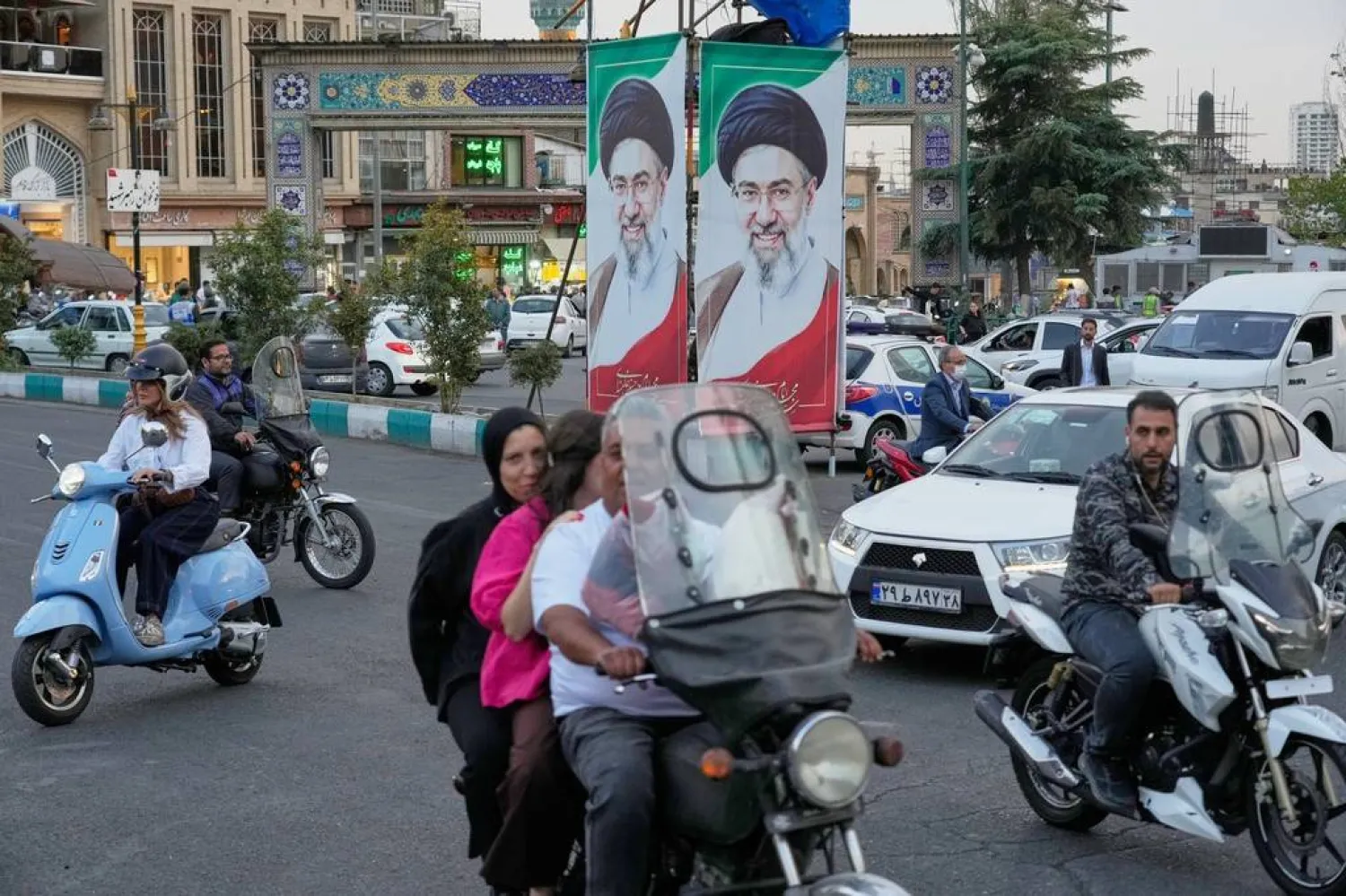
Motorists ride past portraits of Iran's Supreme Leader Mojtaba Khamenei in Tehran, Iran, Oct 21, 2026. (AP) 
TT

Iran's Parliament Speaker Meets Supreme Leader to Discuss War Impact

Motorists ride past portraits of Iran's Supreme Leader Mojtaba Khamenei in Tehran, Iran, Oct 21, 2026. (AP) 

Iran's Supreme Leader Mojtaba Khamenei met on Wednesday with Parliament Speaker Mohammad Baqer Qalibaf to review the latest developments related to the US-Israeli war against Iran.

“The meeting discussed the latest developments in the US-Israeli enemy’s military and economic warfare and stressed the need to strengthen the country’s national capabilities," a statement published on the leader's website said.

This was the first publicly announced meeting of its kind between Mojtaba Khamenei and Ghalibaf, whose influence has expanded following the recent war.

The two sides addressed maintaining social cohesion, tackling economic difficulties and “advancing relations with strategic partners,” the statement added.

They also discussed improving cooperation between the government and parliament to address economic and livelihood challenges.

Qalibaf briefed Khamenei on parliamentary activities since the outbreak of the US-Israeli war against Iran on February 28 and outlined ongoing and future plans to address the country’s challenges.

Continuous Absence

Mojtaba has not made a public appearance since succeeding his father, Ali Khamenei, on March 8, who was killed in US-Israeli strikes on February 28.

The Supreme Leader has only communicated through written statements, while his absence from public view has fueled speculation about his health condition.

A limited number of officials have publicly announced meeting with him, most notably President Masoud Pezeshkian and the current chief of the General Staff, Ali Abdollahi.

In August, Pezeshkian said that communication with Mojtaba Khamenei is “extremely difficult” at the moment.

On August 10, the President told State TV he held a seven-hour meeting with the Supreme Leader. Despite Pezeshkian's account, no publicly verified footage of the meeting was released.

In July, Iran’s Foreign Minister Abbas Araghchi has revealed that he has never met Mojtaba Khamenei since he assumed the role of Iran's Supreme Leader.

Three people close to the supreme leader’s inner circle told Reuters last April that Mojtaba Khamenei is still recovering from severe facial and leg injuries suffered in the airstrike that killed his father at the beginning of the war.

Khamenei's face was disfigured in the attack on the supreme leader's compound in central Tehran and he suffered a significant injury to one or both legs, all three sources said.

Social media accounts of the people close to Khamenei's inner circle provide the most detailed description of the leader's condition for weeks but the reports could not be independently verified.

Lat month, US President Donald Trump said he believes Khamenei is “very seriously wounded”, but not dead.

Iranian officials say the supreme leader is taking part in meetings with senior officials via audio conferencing and is engaged in decision-making on major issues including the war and negotiations ‌with Washington.

Thee Hamshahri newspaper, an Iranian media outlet affiliated with Tehran municipality has explained the prolonged absence of Khamenei from public view, arguing that modern intelligence agencies can extract highly sensitive information from even the simplest audio recordings, making any public appearance a security risk.


Iran's IRGC Navy Says Seven Vessels Hit, Warns US of Wider Response

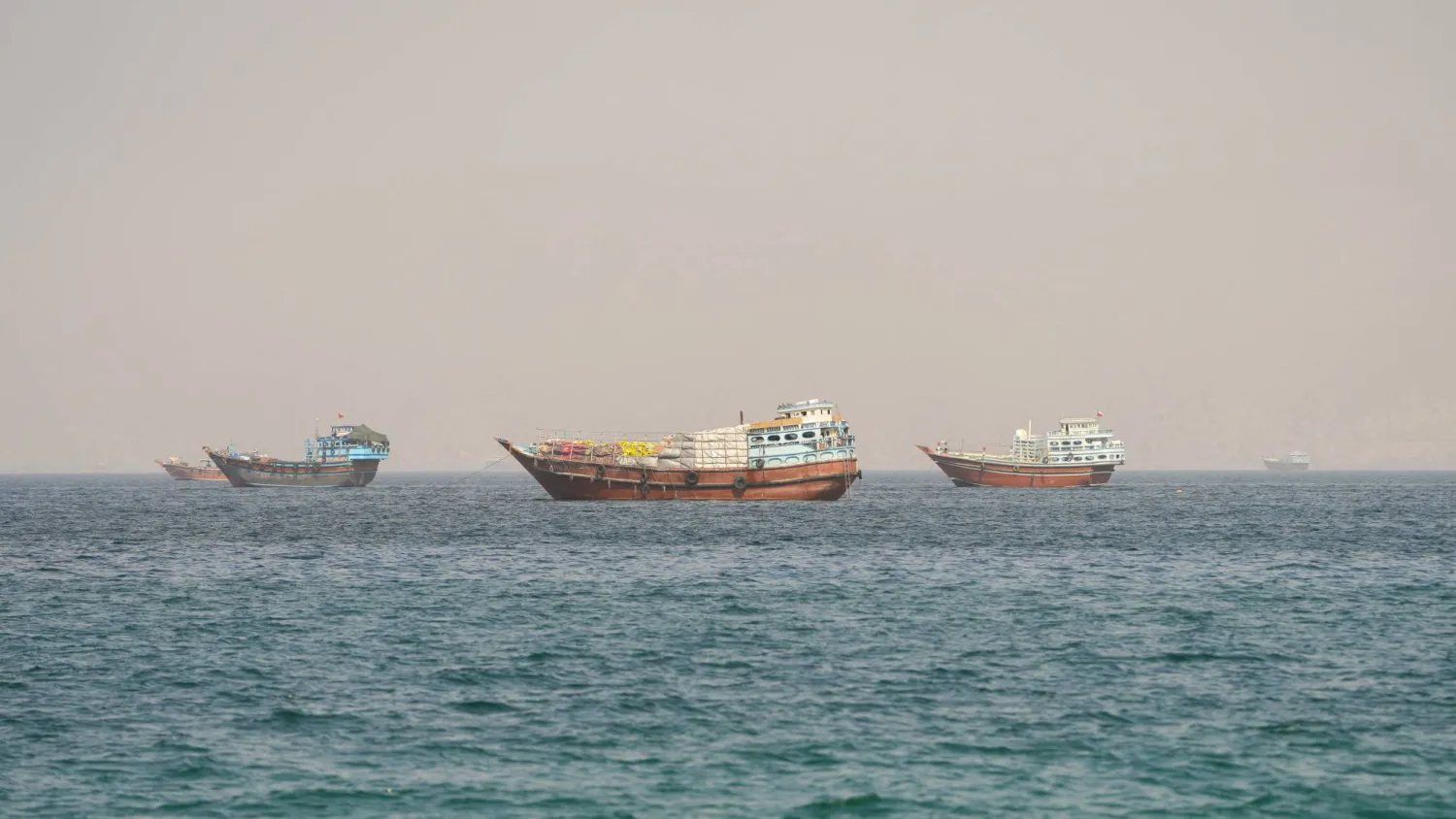
Vessels at the Strait of Hormuz, as seen from Musandam, Oman, October 19, 2026. REUTERS/Stringer
TT

Iran's IRGC Navy Says Seven Vessels Hit, Warns US of Wider Response

Vessels at the Strait of Hormuz, as seen from Musandam, Oman, October 19, 2026. REUTERS/Stringer

Iran's Revolutionary Guard Corps Navy said on Thursday that four vessels involved in illegal ‌oil transfers ‌in the ‌northern ⁠Arabian Gulf were simultaneously ⁠hit and caught fire after being tracked by ⁠its forces on ‌Wednesday, reported Reuters.

The ‌IRGC added ‌that three ‌more vessels collided with mines west of the ‌Strait of Hormuz, and warned ⁠the ⁠US military that continued provocations could lead to a wider response against its regional bases.

The report didn't provide details about possible casualties or the flags of the tankers.

If verified, it would be the largest single-day number of vessels damaged in the waterway since the start of the Iran war on Feb. 28 when the United States launched joint strikes against Iran.


Report: Trump’s Son ‘Expressed Private Concerns About Iran War to his Father’

US President Donald Trump approaches to embrace Donald Trump Jr at his campaign rally, at PPG Paints Arena in Pittsburgh, Pennsylvania, US, November 4, 2024. REUTERS/Brian Snyder/File Photo
TT

Report: Trump’s Son ‘Expressed Private Concerns About Iran War to his Father’

US President Donald Trump approaches to embrace Donald Trump Jr at his campaign rally, at PPG Paints Arena in Pittsburgh, Pennsylvania, US, November 4, 2024. REUTERS/Brian Snyder/File Photo

Donald Trump Jr has reportedly privately expressed concerns about the war in Iran to his father, The Telegraph wrote on Wednesday quoting reports.

The US president’s eldest son opposed the war from the outset and made his opinions known to his father, two sources told The Atlantic.

He believed the US should not enter another war in the Middle East, consistent with his long-standing skepticism of foreign intervention.

“Don has kept his views on the subject private, as he would never publicly break with his dad on an issue like this, but I can’t imagine anyone who knows Don would be surprised by his personal views on the subject,” a person close to the president’s son said.

‘America First’ Friction

The president’s decision to align himself with Israel in the war against Tehran has caused a rift within his Maga base, which believes the conflict flies in the face of the “America First” position they voted for.

Vice President JD Vance is widely understood to be against the war.

Like Trump, he has a long-standing history of skepticism toward military intervention in the Middle East, though his role shifted when the US launched military strikes on Feb 28.

Charlie Kirk, the conservative political activist who was assassinated last year, was among the loudest voices in Maga to oppose a conflict in the Middle East, particularly after Trump first launched strikes on Iran in June 2025.

Trump Jr was exceptionally close to Kirk, whom he described as a “little brother.”

“Don Jr is the most Maga of them all,” one of the people who spoke with Trump said.

The Cost of Conflict

High fuel prices caused by a global diesel shortage resulting from the conflict have made it harder for the US president and his ⁠Republican Party to defend narrow congressional majorities in the upcoming midterm elections.

As the specter of a painful election looms, the White House has tried to lower costs to appeal to voters, who rank the cost of living as one of their highest priorities.

A spokesman for Trump declined to comment to The Atlantic.

The White House official told the magazine in a statement: “Iran has been decimated, and one way or the other, the conflict in Iran will be over very soon.”