


Trump’s Quest for Nobel Peace Prize Falls Short Despite High-Profile Nominations 

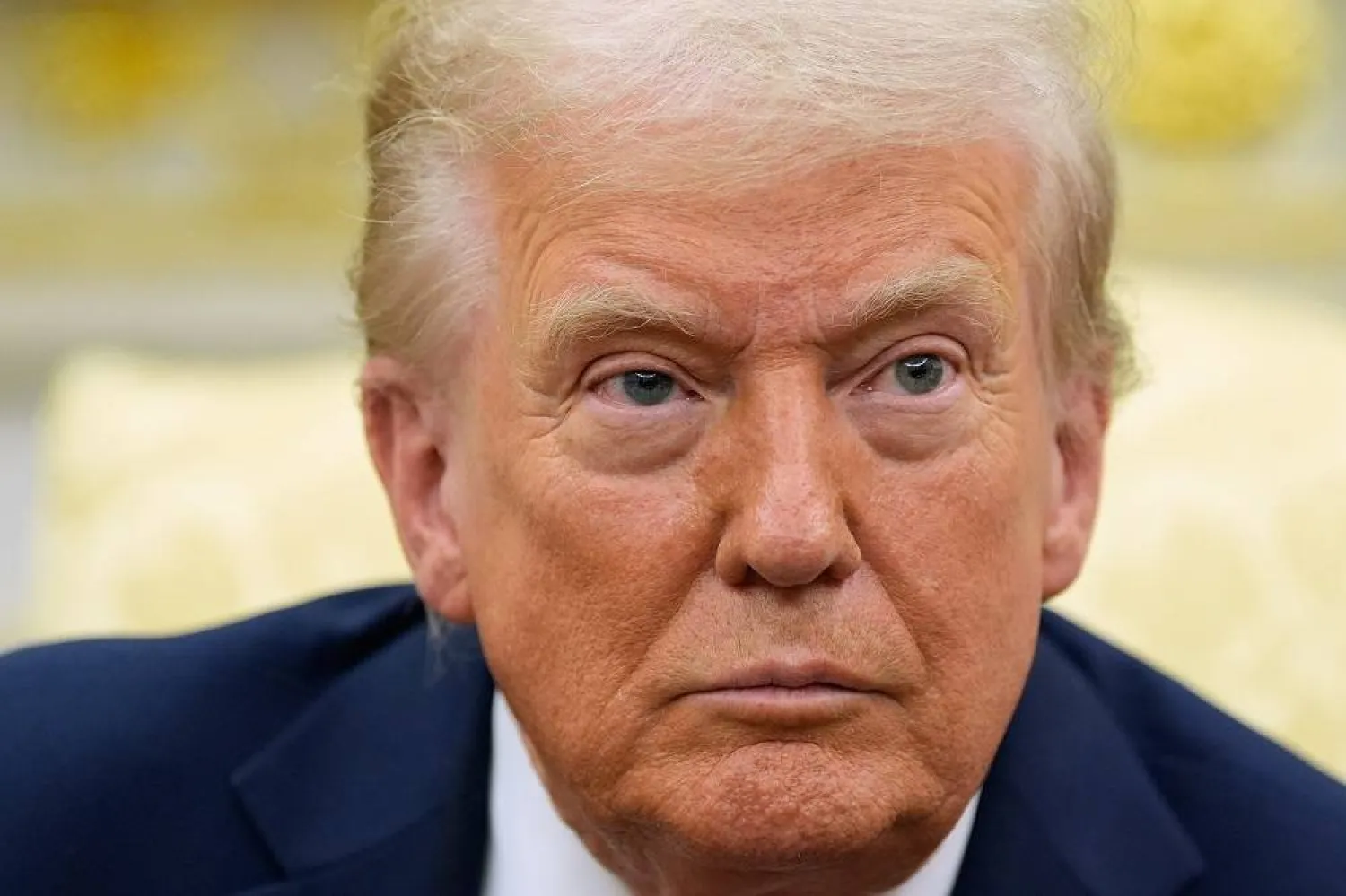
President Donald Trump listens during a meeting with Finland's President Alexander Stubb in the Oval Office at the White House, Thursday, Oct. 9, 2025, in Washington. (AP)
TT

Trump’s Quest for Nobel Peace Prize Falls Short Despite High-Profile Nominations 

President Donald Trump listens during a meeting with Finland's President Alexander Stubb in the Oval Office at the White House, Thursday, Oct. 9, 2025, in Washington. (AP)

President Donald Trump was passed over for the Nobel Peace Prize on Friday despite jockeying from his fellow Republicans, various world leaders and — most vocally — himself.

Opposition activist María Corina Machado of Venezuela was awarded the prize. The Norwegian Nobel Committee said it was honoring her “for her tireless work promoting democratic rights for the people of Venezuela and for her struggle to achieve a just and peaceful transition from dictatorship to democracy.”

Trump, who has long coveted the prestigious prize, has been outspoken about his desire for the honor during both of his presidential terms, particularly lately as he takes credit for ending conflicts around the world. He has expressed doubts that the Nobel committee would ever grant him the award.

“They’ll have to do what they do. Whatever they do is fine. I know this: I didn’t do it for that. I did it because I saved a lot of lives,” Trump said Thursday.

Although Trump received a number of nominations for the prize, many of them occurred after the Feb. 1 deadline for the 2025 award, which fell just a week and a half into his first term. His name was, however, put forth in December by Republican Rep. Claudia Tenney of New York, her office said in a statement, for his brokering of the Abraham Accords, which normalized relations between Israel and some Arab states in 2020.

Nevertheless, Trump and his supporters are likely to view the decision to pass him over for the award as a deliberate affront to the US leader, particularly after the president's involvement in getting Israel and Hamas to initiate the first phase of ending their devastating two-year-old war.

The peace prize, first awarded in 1901, was created partly to encourage ongoing peace efforts. Alfred Nobel stipulated in his will that the prize should go to someone “who shall have done the most or the best work for fraternity between nations, for the abolition or reduction of standing armies and for the holding and promotion of peace congresses.”

Three sitting US presidents have won the Nobel Peace Prize: Theodore Roosevelt in 1906, Woodrow Wilson in 1919 and Barack Obama in 2009. Jimmy Carter won the prize in 2002, a full two decades after leaving office. Former Vice President Al Gore received the prize in 2007.

Obama, who was a focus of Trump's attacks well before the Republican was elected, won the prize early in his tenure as president.

“He got the prize for doing nothing,” Trump said of Obama on Thursday. “They gave it to Obama for doing absolutely nothing but destroying our country.”

As one of his reasons for deserving the award, Trump often says he has ended seven wars, though some of the conflicts the president claims to have resolved were merely tensions and his role is easing them is disputed.

But while there is hope for the end to Israel and Hamas’ war, much remains uncertain about the aspects of the broader ceasefire plan, including whether and how Hamas will disarm and who will govern Gaza. And little progress seems to have been made on the war between Russia and Ukraine, a conflict Trump claimed during the 2024 campaign that he could end in one day. (He later said he made that remark in jest.)

Trump invited Russian President Vladimir Putin to Alaska in August, but not Ukrainian President Volodymyr Zelenskyy, for a summit aimed at reaching peace, but he left empty-handed, and the war started by Russia's invasion in 2022 has since raged on.

As Trump pushes for peaceful resolutions to conflicts abroad, the country he governs remains deeply divided and politically fraught. Trump has kicked off what he hopes to be the largest deportation program in American history to remove immigrants in the US illegally. He is using the levers of government, including the Justice Department, to go after his perceived political enemies. He has sent the military into US cities over local opposition to stop crime and crack down on immigration enforcement.

He withdrew the United States from the landmark Paris climate agreement, dealing a blow to worldwide efforts to combat global warming. He touched off global trade wars with his on-again, off-again tariffs, which he wields as a threat to bend other countries and companies to his will. He asserted presidential war powers by declaring cartels to be unlawful combatants and launching lethal strikes on boats in the Caribbean that he alleged were carrying drugs.

The full list of people nominated is secret, but anyone who submits a nomination is free to talk about it. Trump's detractors say supporters, foreign leaders and others are submitting Trump's name for nomination for the prize — and, specifically, announcing it publicly — not because he deserves it but because they see it as a way to manipulate him and stay in his good graces.

Others who formally submitted a nomination for Trump for the Nobel Peace Prize — but after this year's deadline — include Israeli Prime Minister Benjamin Netanyahu, Cambodian Prime Minister Hun Manet and Pakistan's government, all citing his work in helping end conflicts in their regions.



Armed Group in Nigeria Kills at Least 20 People and Exchanges Gunfire with Police

Security personnel stand guard near Eagle Square during a Democracy Day protest in Abuja, Nigeria, June 12, 2026. REUTERS/ Marvellous Durowaiye
TT

Armed Group in Nigeria Kills at Least 20 People and Exchanges Gunfire with Police

Security personnel stand guard near Eagle Square during a Democracy Day protest in Abuja, Nigeria, June 12, 2026. REUTERS/ Marvellous Durowaiye

An armed group killed at least 20 people in a community located in the north-central region of Nigeria, police said Monday.

The attack occurred Sunday in the Kawel community located in the Bokkos area of Plateau State, The Associated Press quoted police spokesman Alfred Alabo as saying in a statement.

Police officers quickly arrived at the scene and exchanged gunfire with the assailants, forcing them to retreat, Alabo said. No arrests were reported.

No group immediately claimed responsibility for the attack in a region that has experienced a recurring pattern of violence.

“The remains of the victims have since been released to their families for burial, as the families declined autopsy,” Alabo said.

Plateau State Gov. Caleb Mutfwang instructed the government's emergency management and humanitarian agencies to provide immediate relief and support to victims and families, spokesperson Joyce Ramnap said in a statement.

An insurgency in northeastern Nigeria has killed thousands of people and displaced millions over the years, according to the United Nations. Armed gangs are also active in the northwest and north-central parts of the country.

A nighttime attack in March, killed 20 people in Gari Ya Waye community in Plateau.


Afghan Taliban to Hold Rare, Closed-door Talks with EU Officials on Deportations

Taliban administrative staff use feature phones at the Department of Information and Culture building in Kandahar on June 22, 2026. (Photo by Sanaullah SEIAM / AFP)
TT

Afghan Taliban to Hold Rare, Closed-door Talks with EU Officials on Deportations

Taliban administrative staff use feature phones at the Department of Information and Culture building in Kandahar on June 22, 2026. (Photo by Sanaullah SEIAM / AFP)

A delegation from the Afghan Taliban is traveling to Brussels on Tuesday for closed-door talks with European Union staff, expected to focus on deportations, said a Taliban official. 

Afghans make up one of the largest groups of migrants seeking asylum in the European Union, but a growing number of governments in the 27-nation bloc want to speed up and increase deportations for those whose claims are rejected or who commit crimes in their host countries. 

Afghan authorities have imposed draconian restrictions on rights, particularly for women and girls, since the Taliban seized power in the country in 2021 in the wake of the withdrawal of US-led forces. 

Rights groups said Tuesday's meeting undercuts the EU’s human rights obligations and could endanger people in Europe and Afghanistan. 

“Any engagement with the Taliban needs to prioritize protecting human rights and accountability — not deporting people to danger there,” said Fereshta Abbasi, a researcher at Human Rights Watch. “EU countries are undermining their credibility by condemning Taliban abuses and pursuing accountability on one hand, while cooperating with the Taliban to forcibly return Afghans on the other.” 

With not a single EU nation recognizing the Taliban, the meeting in Brussels symbolizes a small crack in the group’s diplomatic isolation since seizing power five years ago. 

The five-person delegation in Brussels from the Taliban — a government that none of 27 EU nations recognizes — includes Abdul Qahar Balkhi, a New Zealand-born spokesperson for the Taliban’s foreign ministry, said a Taliban official speaking on condition of anonymity. 

Belgian Foreign Minister Maxime Prévot said that while Belgium doesn’t recognize the Taliban, it would comply with EU requests to grant the Taliban visas. 

“Belgium cannot confer legitimacy on a regime accused of serious human rights violations,” he said in a statement referring to Belgium’s hosting of the EU institutions. “Making a meeting possible in the framework of our host-state policy does not amount to recognition, does not amount to legitimacy, and does not constitute an invitation by the Belgian government.” 

Members of the Taliban delegation were issued visas after security screening with limited territorial validity, giving them 24 hours in Belgium and no access to other countries in the Schengen border-free travel zone. 

Since neither Belgium nor the EU officially recognizes the Taliban government, the meeting will not take place on official buildings or sites belonging to either. The European Commission has declined repeated requests to provide additional information. 

Drive to increase deportations  

A spokesperson for the European Commission said Monday that the meeting is in response to pressure from a clear majority of the 27 EU nations – 20 of whom signed a letter in October calling for stronger migration policies including a ramping up of deportations. 

“They had asked the Commission to coordinate such technical contacts on returns,” said spokesperson Markus Lammert. “Member states are looking into ways to return persons who have committed serious crimes and who are possibly a security threat.” 

The first EU-Taliban meeting was held in Afghanistan in January when the Commission sent a mission to Kabul. It also maintains staff there. 

The October letter was drafted in part by Belgian Migration Minister Anneleen Van Bossuyt, who said then that “we have sent a clear and powerful message to the European Commission: we can no longer afford a standstill. It is high time for a firm and joint approach, so that Europe can regain control over migration and security.” 

Bossuyt said that across the EU, only 2% of the 22,870 Afghans told to return had done so. 

Another Commission spokesperson said the meeting “does not mean by any means recognition.” 

Deteriorating situation in Afghanistan  

Afghanistan has been dealing with the return of about 3 million Afghans from Pakistan and Iran in the past year alone, all of whom have pretty much been forcibly repatriated from those two countries, exacerbating a humanitarian disaster in Afghanistan, already reeling from food and economic crises including biting sanctions. 

Afghan Taliban authorities have imposed draconian restrictions on women and girls, including bans on education beyond primary school and on working in all but very few professions, as well as strict regulations on what women are allowed to wear in public. 

“The desperate scenes of people — including EU staff — fleeing Afghanistan are a recent memory. It is unconscionable that the EU would now try and deport people to Afghanistan, which has only become more dangerous in the meantime,” said Eve Geddie, Director of Amnesty International’s European Institutions Office. 

Facing political pressure to toughen migration policies across the 27-nation bloc, the EU has recently passed deep reforms to its collective rules aiming to ramp up deportations -- including allowing the setting up of so-called “return hubs,” increased domestic surveillance capabilities, tighter border controls, and engagement with the Taliban government which it does not recognize because of human rights abuse allegations. 

With Afghanistan facing food shortages and economic collapse, the Taliban government is in need of humanitarian aid and hopes to lessen its international economic and political isolation. 


UN Chief Urges AI Firms 'Come Clean' on Environmental Footprint

United Nations Secretary-General Antonio Guterres speaks during a press conference in the Petion-Ville commune of Port-au-Prince, Haiti, on June 16, 2026. (Photo by Clarens SIFFROY / AFP)
TT

UN Chief Urges AI Firms 'Come Clean' on Environmental Footprint

United Nations Secretary-General Antonio Guterres speaks during a press conference in the Petion-Ville commune of Port-au-Prince, Haiti, on June 16, 2026. (Photo by Clarens SIFFROY / AFP)

UN Secretary-General Antonio Guterres called on artificial intelligence companies on Tuesday to disclose their growing environmental footprint and commit to powering every data center with renewable energy by 2030.

"It is time to come clean. If AI is to help build a better future, it must be honest about what it costs us now," Guterres said at London Climate Action Week, an annual gathering of policymakers, company executives and NGOs.

A UN study earlier this month found that data centers consumed more electricity than all but 10 countries in 2025. By 2030, they could use more power than all but five countries.