White House to Lay Off More Than 4,000 Employees During Government Shutdownhttps://english.aawsat.com/world/5196038-white-house-lay-more-4000-employees-during-government-shutdown
White House to Lay Off More Than 4,000 Employees During Government Shutdown
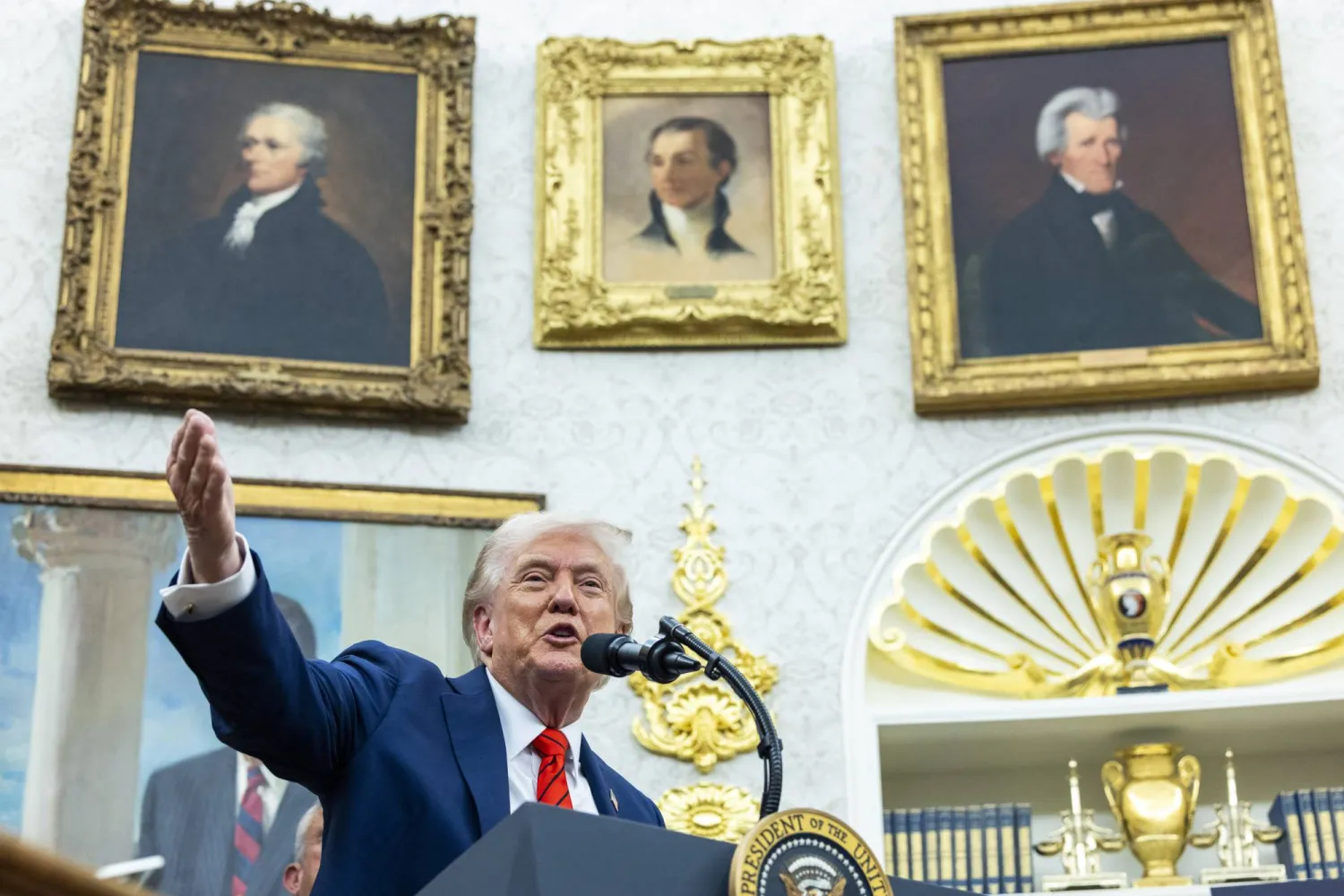
US President Donald Trump responds to a question from the news media in the Oval Office of the White House in Washington, DC, USA, 10 October 2025. EPA/SHAWN THEW / POOL
White House to Lay Off More Than 4,000 Employees During Government Shutdown
US President Donald Trump responds to a question from the news media in the Oval Office of the White House in Washington, DC, USA, 10 October 2025. EPA/SHAWN THEW / POOL
The White House budget office said Friday it plans to lay off more than 4,000 employees in order to force Senate Democrats to vote for an end to the government shutdown, The Associated Press reported on Friday.
In a court filing, the budget office said well over 4,000 employees would be fired, though it noted that the funding situation was “fluid and rapidly evolving.”
The firings would hit the hardest at the departments of the Treasury, which would lose over 1,400 employees, and Health and Human Services, with a loss of over 1,100.
The Education Department and Housing and Urban Development each would lose over 400 staffers.
The departments of Commerce, Energy and Homeland Security and the Environmental Protection Agency were all set to fire hundreds of more employees. It was not clear which particular programs would be affected.
Trump has repeatedly threatened to fire federal workers during the shutdown standoff, in its 10th day on Friday, and has suggested his administration will aim primarily at parts of the government championed by Democrats.
Nonessential government work stopped after the September 30 funding deadline, with Senate Democrats repeatedly blocking a Republican resolution to reopen federal agencies.
Caption: The White House
NATO and China: A Slow Alliance Confronts a Fast-Rising Rivalhttps://english.aawsat.com/world/5268537-nato-and-china-slow-alliance-confronts-fast-rising-rival
NATO and China: A Slow Alliance Confronts a Fast-Rising Rival
People visit the BYD booth at the Beijing Auto Show in Beijing on April 30, 2026. (Photo by Adek BERRY / AFP)
NATO was established in 1949 to provide collective defense against the Soviet Union, based on the principle that an attack on one member is an attack on all. At the time, US President Harry Truman also sought to anchor an American presence in war-ravaged Europe to ensure security and prevent a strategic vacuum.
The collapse of the Soviet Union, along with the socialist bloc, brought the Cold War to an end and forced NATO to adapt. The alliance expanded its operations beyond Europe, intervening in the Balkans during the Bosnia and Kosovo wars, then in Afghanistan after the September 11, 2001 attacks in the United States. It also undertook maritime missions to combat piracy, including off the Horn of Africa, alongside intelligence-sharing and counterterrorism cooperation.
NATO has since built partnerships with countries beyond its traditional scope and broadened its definition of threats to include cybersecurity, hybrid warfare, and energy security, as well as, more recently, the challenge posed by China.
In sum, NATO has evolved from a purely European defensive alliance into a broader global security actor, largely driven by the United States, while still maintaining a central focus on deterring threats within Europe.
In recent years, the Brussels-based alliance has expanded its attention toward the Indo-Pacific region for strategic reasons that extend beyond Europe. Chief among these are the interconnected nature of global security, particularly in cyberspace, the need to ensure resilient and unobstructed supply chains, and the rapid spread of advanced technologies that increasingly diminish the importance of geographic boundaries.
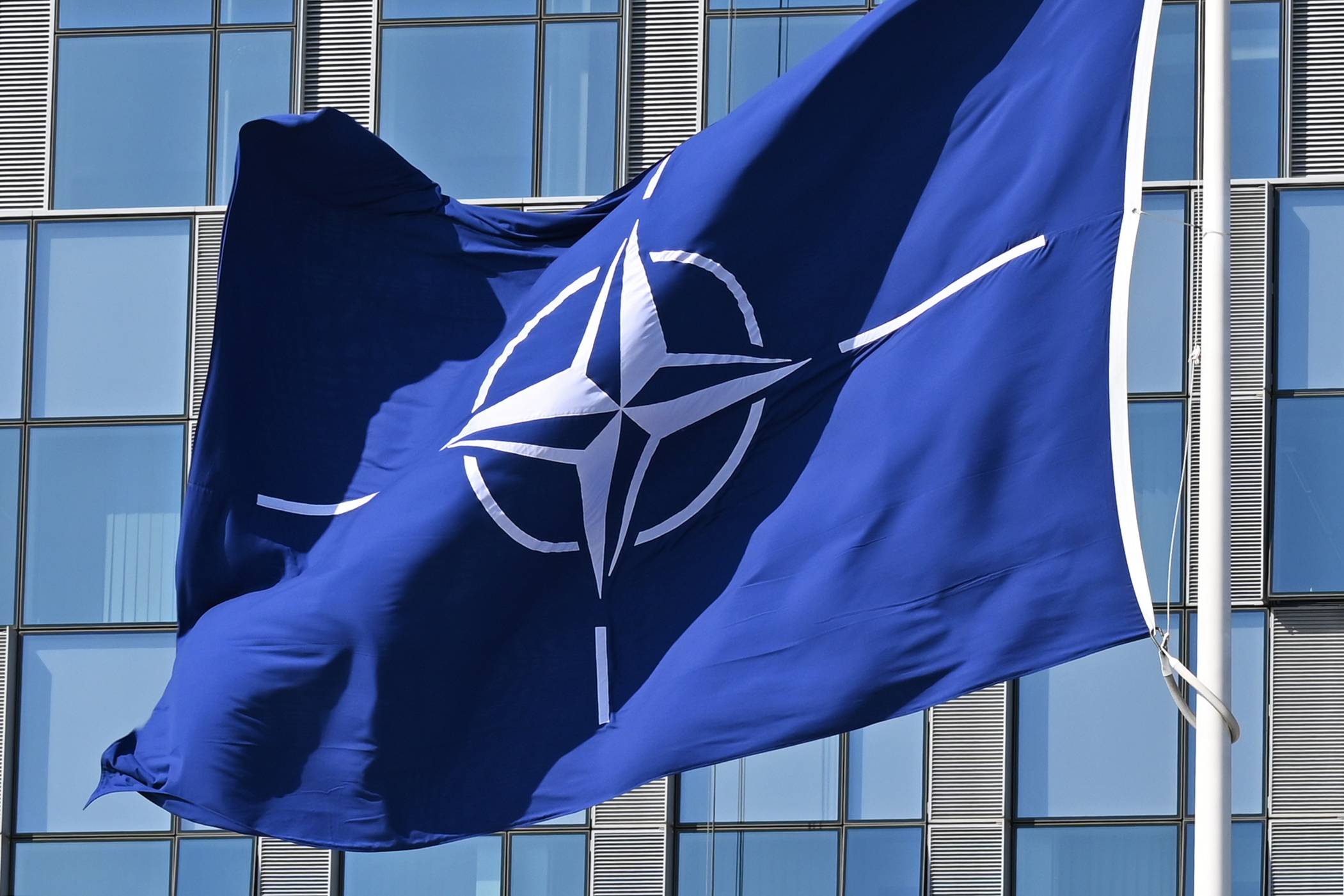
FILED - 03 April 2025, Belgium, Brussels: A NATO flag flies in the wind in front of the NATO headquarters in Brussels. Photo: Anna Ross/dpa
China’s Rise
Another key factor is the view of China’s rise as a strategic challenge reshaping the global balance of power. For NATO’s 32 member states, up from 12 at its founding, safeguarding trade routes is a priority, especially maritime corridors in the Indo-Pacific that are critical to the global economy.
These include the Strait of Malacca between Malaysia and Indonesia, the world’s most important shipping lane, linking the Indian Ocean to the South China Sea and carrying roughly 25 percent of global trade annually. It is also a vital artery for oil and energy flows to major Asian economies such as China, Japan, and South Korea.
NATO member states express “strategic concern” over China for several core reasons. First, China is rapidly modernizing its military, particularly in areas such as missile systems, space capabilities, and cyber operations, developments that are shifting the global balance of power.
Second, and closely linked, is China’s economic rise, reflected in initiatives such as the Belt and Road, which provide Beijing with avenues to expand its economic and political influence across Asia, Africa, and Europe. This expansion risks creating dependencies among countries in or near NATO’s strategic periphery.
Concerns are also fueled by growing ties between China and Russia, particularly following Russia’s invasion of Ukraine in February 2022, which could signal coordination between two major powers against the West.
At the same time, an indirect competition is underway over leadership in fields such as artificial intelligence, telecommunications networks, and semiconductors. NATO sees technological superiority as a core component of security.
The alliance has concluded partnership and cooperation agreements with Japan, South Korea, Australia, and New Zealand, encompassing joint military exercises, intelligence sharing, and political coordination. However, NATO does not appear to be planning an expansion of membership into the Indo-Pacific, instead favoring flexible partnerships over a permanent military presence.
Iran Delivered New Proposal for US Talks via Pakistanhttps://english.aawsat.com/world/5268530-iran-delivered-new-proposal-us-talks-pakistan
Iran Delivered New Proposal for US Talks via Pakistan
US and Iran flags are seen in this illustration taken June 18, 2025. REUTERS/Dado Ruvic/Illustration/File Photo
Iran has delivered a new proposal for talks with the United States via mediator Pakistan, state media reported on Friday.
"The Islamic Republic of Iran delivered the text of its latest negotiating proposal to Pakistan, as the mediator in talks with the United States, on Thursday evening," the official IRNA news agency reported, without elaborating.
This came as President Donald Trump's administration is arguing that the war in Iran has already ended because of the ceasefire that began in early April, an interpretation that would allow the White House to avoid the need to seek congressional approval.
The statement furthers an argument laid out by Defense Secretary Pete Hegseth during testimony in the Senate on Thursday, when he said the ceasefire effectively paused the war. Under that rationale, the administration has not yet met the requirement mandated by a 1973 law to seek formal approval from Congress for military action that extends beyond 60 days.
While the ceasefire has since been extended, Iran maintains its chokehold on the Strait of Hormuz, and the US Navy is maintaining a blockade to prevent Iran’s oil tankers from getting out to sea.
US Navy Turns to AI Firm Domino for Options to Counter Iranian Mineshttps://english.aawsat.com/world/5268493-us-navy-turns-ai-firm-domino-options-counter-iranian-mines
US Navy Turns to AI Firm Domino for Options to Counter Iranian Mines
Ships and boats in the Strait of Hormuz, Musandam, Oman, May 1, 2026. REUTERS/Stringer
The US Navy is ramping up its AI capabilities to hunt for Iranian mines in the Strait of Hormuz, one of the world's most critical shipping lanes, a recently awarded contract shows.
President Donald Trump has said the US Navy is clearing Iranian mines from the strait, a vital sea route for oil shipments, whose disruption is increasingly threatening the global economy.
Sweeping for underwater explosives could take months despite a tenuous ceasefire between the US and Iran in their weeks-long war.
The up to $100 million contract for the San Francisco artificial intelligence company Domino Data Lab could quicken this process with software that can teach underwater drones to identify new types of mines in a matter of days.
"Mine-hunting used to be a job for ships," Thomas Robinson, Domino's chief operating officer, said in an interview with Reuters. "It's becoming a job for AI.
The Navy is paying for the platform that lets it train, govern, and field that AI at a speed required for contested waters that block global trade and imperil sailors."
Last week, the US Navy awarded the up to $99.7 million contract to expand Domino's role as the AI backbone of the Navy's Project AMMO - Accelerated Machine Learning for Maritime Operations - a program to make underwater mine detection faster, more accurate, and less dependent on human sailors.
The software integrates data from multiple sensor types, including side-scan sonar and visual imaging systems, and allows the Navy to monitor how well various AI detection models are performing in the field, identify failures, and push corrections to improve performance.
The core of Domino's pitch - and the Navy's wager - is speed. Before the company's involvement, updating the AI models that power the Navy's unmanned underwater vehicles (UUVs) to recognize new or previously unseen mines could take up to six months. Domino says it has cut that cycle to days.
Robinson illustrated the relevance to the Middle East crisis: "If there were UUVs in the Baltic Sea trained on Russian mines, and then they needed to be deployed to the Strait of Hormuz to detect Iranian mines, with Domino's technology, the Navy could be ready in a week rather than a year."
A Navy spokesman was not immediately able to provide comment.
لم تشترك بعد
انشئ حساباً خاصاً بك لتحصل على أخبار مخصصة لك ولتتمتع بخاصية حفظ المقالات وتتلقى نشراتنا البريدية المتنوعة