
Araghchi: Iran Ready to Hold Talks on Nuclear Program if it Serves People's Interest

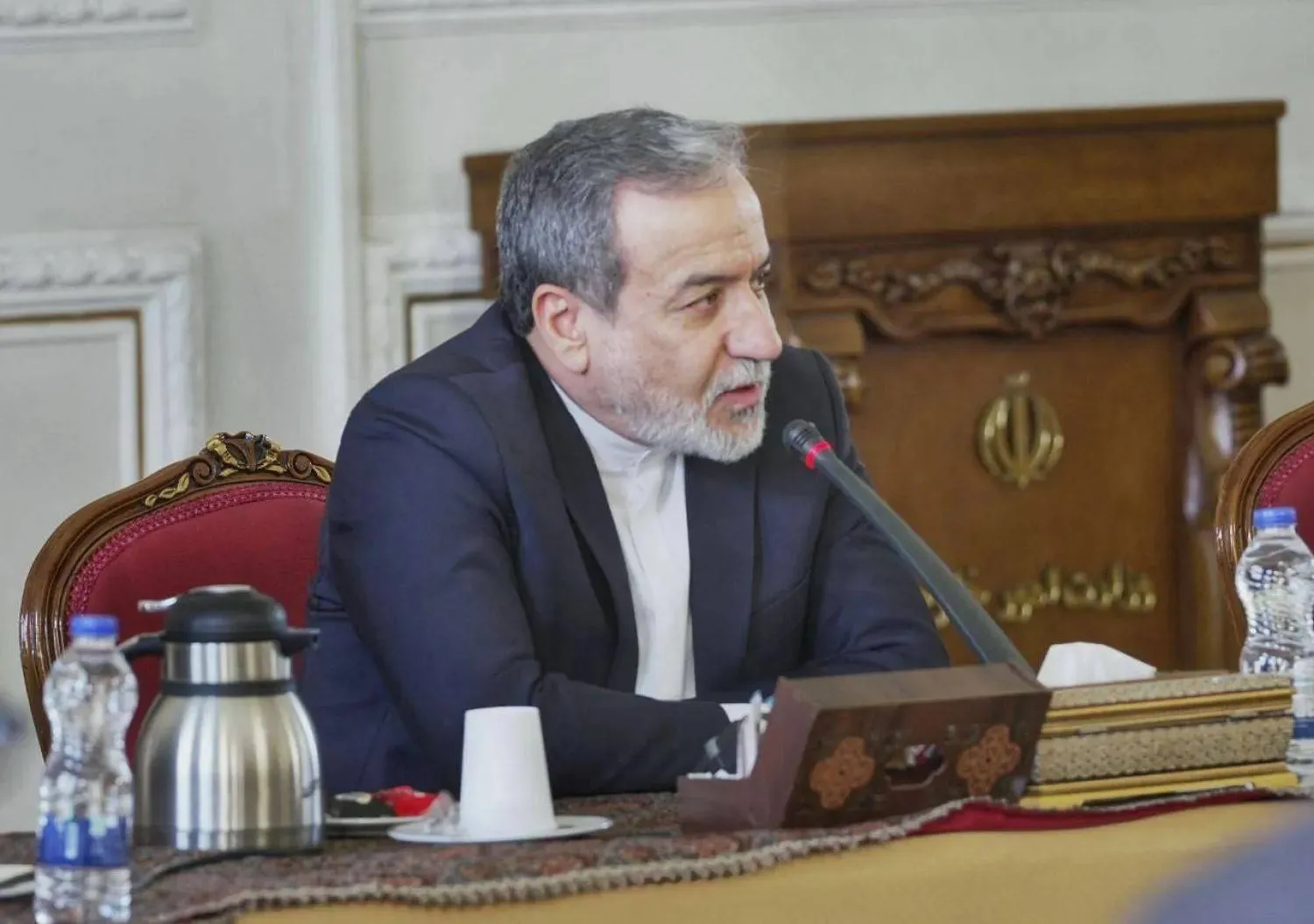
Iranian Foreign Minister Abbas Araghchi (Iranian Foreign Ministry) 
TT

Araghchi: Iran Ready to Hold Talks on Nuclear Program if it Serves People's Interest

Iranian Foreign Minister Abbas Araghchi (Iranian Foreign Ministry) 

Iranian Foreign Minister Abbas Araghchi said that his country does not accept a comprehensive agreement, noting that Iran is ready to hold talks about its nuclear program if it serves the people’s interests.

“Iran has not held negotiations or exchanged messages with the United States concerning Gaza,” the FM said in a televised interview on Saturday night.

He also dismissed reports of any contact with US Special Envoy Steven Witkoff to discuss Iran’s support for a truce in the Strip.

The FM then expressed doubts about the ceasefire in Gaza and said Israel's repeated breaches of a ceasefire in Lebanon, in place since last November, indicated Israel was unlikely to adhere to the Gaza truce plan.

Araghchi then rejected remarks by US President Donald Trump, who said Iran might join the Abraham Accords and normalize relations with Israel.

In late September, Trump said: “Who knows, maybe even Iran can get in there,” referring to the Abraham Accords.

Last Thursday, the US President said Iran is seeking to work on a broader Middle East peace deal after lending its support to his plan to bring a ceasefire to the Gaza Strip.

The FM said the agreement has no alignment with the ideals of the Iranian Revolution or the Iranian nation; therefore, “such an event will never happen.”

Addressing Trump’s remarks that Iran’s support for his Gaza peace plan shows it wants peace, Araghchi said, “Trump’s interpretation of the foreign ministry’s statement is his own concern. We're not afraid of saying it, we supported parts of this plan, that’s all.”

He also said “We have always firmly stated that Iran’s negotiations are solely on the nuclear issue, and we have never negotiated with Americans or any other party on any other matter.”

The FM added that Washington and Tehran exchange messages through intermediary countries.

Iran’s top diplomat then spoke about the message Witkoff sent to Tehran, calling on the Iranian Republic to attend direct talks in New York.

“Our response was that we were ready, provided the European countries also joined. So, we said we are ready to negotiate around one table; we set the condition, but he did not attend. Witkoff insisted that before negotiations start, we accept their condition, which we did not,” the FM said.

Araghchi stressed that if the Americans want to return to negotiations, their proposals should be reasonable, balanced and based on mutual interests.

“We will not give up Iran’s enrichment rights, but if they want clarification, we are ready to examine it. If the other side respects our rights and presents proposals based on a balanced formula, we will review them.”

Regarding the US position on the snapback, Araghchi said, “Washington suggested that if Iran handed over the 60% enriched material, they would postpone the snapback for six months. This was an excessive demand, and that’s why the New York negotiations did not succeed.”

On Friday, the leaders of the UK, France and Germany affirmed they are determined to reinitiate negotiations with Iran and the United States towards a comprehensive, durable and verifiable agreement that ensures Iran never acquires a nuclear weapon.

“We agree that it was right that the snapback mechanism had been triggered. Iran’s nuclear program poses a serious threat to global peace and security,” the three European countries said.

In response to the E3 calls, Araghchi said, “We see no grounds for negotiation with these three countries now, and the concept of ‘the troika’ is not relevant to us. We deal with European countries and manage our relations with them based on Iran’s interests.”

Referring to the Cairo agreement with the International Atomic Energy Agency (IAEA), he noted, “The Cairo agreement is currently suspended. The reason we reached an agreement with the Agency was due to changes on the ground. With the actions of the three European countries, this agreement has lost its effectiveness. Any request from the Agency will go to the Supreme National Security Council according to law, and decisions will be made.”

Russian Mediation

Araghchi also said that Iran had received a message relayed by Russia indicating that Israel did not want any new confrontation with his country.

“Apparently, three or four days ago, there was a telephone call between Netanyahu and [Russian President Vladimir] Putin,” he said.

“Netanyahu emphasized that he had no intention of restarting a war with Iran,” Araghchi said. He noted that the message was relayed to Tehran’s ambassador in Russia.


Dam Reservoir Levels Drop Below 3% in Iran's Second City

A general view shows part of the Iranian capital Tehran on June 13, 2025. (AFP)
TT

Dam Reservoir Levels Drop Below 3% in Iran's Second City

A general view shows part of the Iranian capital Tehran on June 13, 2025. (AFP)

Water levels at the dam reservoirs supplying Iran's northeastern city of Mashhad plunged below three percent, media reported Sunday, as the country suffers from severe water shortages.

"The water storage in Mashhad's dams has now fallen to less than three percent," Hossein Esmaeilian, the chief executive of the water company in Iran's second largest city by population, told ISNA news agency.

He added that "the current situation shows that managing water use is no longer merely a recommendation -- it has become a necessity".

Mashhad, home to around four million people, relies on four dams for its water supply.

Esmaeilian said consumption in the city had reached around "8,000 liters per second, of which about 1,000 to 1,500 liters per second is supplied from the dams".

It comes as authorities in Tehran warned over the weekend of possible rolling cuts to water supplies in the capital amid what officials call the worst drought in decades.

In the capital, five major dams supplying drinking water are at "critical" levels, with one empty and another at less than eight percent of capacity, officials say.

"If people can reduce consumption by 20 percent, it seems possible to manage the situation without rationing or cutting off water," Esmaeilian said, warning that those with the highest consumption could face supply cuts first.

Nationwide, 19 major dams -- about 10 percent of the country's reservoirs -- have effectively run dry, Abbasali Keykhaei of the Iranian Water Resources Management Company said in late October, according to Mehr news agency.

President Masoud Pezeshkian has cautioned that without rainfall before winter, even Tehran could face evacuation, though he did not elaborate.

The water crisis in Iran follows month of drought across the country.

Authorities over the summer announced public holidays in Tehran to cut back on water and energy consumption as the capital faced almost daily power outages during a heatwave.

Local papers on Sunday slammed what they described as the politicization of environmental decision-making for the water crisis.

The reformist Etemad newspaper cited the appointment of "unqualified managers... in key institutions" as being the main cause of the crisis.

Shargh, another reformist daily, said that "climate is sacrificed for the sake of politics".


Spanish PM Calls for Stronger Ties with Mexico After Colonialism Row

Spain's Prime Minister Pedro Sanchez speaks during the COP30 leaders' summit in Belem, Brazil, 07 November 2025. (EPA)
TT

Spanish PM Calls for Stronger Ties with Mexico After Colonialism Row

Spain's Prime Minister Pedro Sanchez speaks during the COP30 leaders' summit in Belem, Brazil, 07 November 2025. (EPA)

Spanish Prime Minister Pedro Sanchez on Sunday said improving ties with Mexico is a priority for his government after years of diplomatic tensions over Spain's colonial past.

Sanchez acknowledged the "light and shadow" in their shared history during an interview with El Pais daily, stressing that recognizing both is key to building stronger relations.

"I can guarantee that for Spain, normalizing our relations with a country we consider very close is a priority," he said.

The prime minister highlighted Mexico's support for Spanish exiles after the 1936–39 civil war, noting the historic and cultural bonds between the two nations.

Relations have been strained in recent years due to calls by Mexican leaders for an official apology from Spain for colonial-era abuses.

In 2019, then-President Andres Manuel Lopez Obrador sent a letter to Spain’s King Felipe VI demanding an apology for the abuses committed during the 1519–1521 Spanish conquest of Mexico and the ensuing three centuries of colonial rule.

Spain rejected the request while the king did not respond publicly.

The issue resurfaced last month when Mexican President Claudia Sheinbaum renewed calls for an official apology.

In response, Spain's Foreign Minister Jose Manuel Albares acknowledged the "pain and injustice" inflicted on Indigenous peoples during the Spanish conquest of the Americas.

"There was injustice -- it is only fair to recognize it today, and fair to regret it. Because that is also part of our shared history, and we cannot deny or forget it," he added.

Mesoamerica, a region that comprised parts of Mexico and Central America, had an estimated population of 15 million to 30 million people when conquistador Hernan Cortes arrived with an army of several hundred men, bringing horses, swords, guns -- and smallpox -- in 1519.

After a century of battles, massacres and plagues, only an estimated one million to two million Indigenous inhabitants remained.


UK Sends Defense Equipment to Help Belgium Deal with Disruptive Drones

Passengers in the departures terminal after several cancellations and delays due to reported overnight drone activity over Brussels International Airport in Zaventem, Wednesday, Nov. 5, 2025. (AP Photo/Virginia Mayo)
TT

UK Sends Defense Equipment to Help Belgium Deal with Disruptive Drones

Passengers in the departures terminal after several cancellations and delays due to reported overnight drone activity over Brussels International Airport in Zaventem, Wednesday, Nov. 5, 2025. (AP Photo/Virginia Mayo)

Britain is sending experts and equipment to Belgium to help it combat disruptive drone sightings, which have temporarily closed airports, the head of the British military said on Sunday.

Drones have been spotted over airports and military bases in Belgium in the last week, having caused major disruption across Europe in recent months, Reuters said.

Richard Knighton, head of Britain's armed forces, told the BBC that his Belgian counterpart had asked for assistance and that equipment and personnel were on the way.

"The defense secretary and I agreed at the end of last week that we would deploy our people and our equipment to Belgium to help them," he said, without giving details of what sort of equipment would be sent or how many personnel.

Knighton said it was not known yet who was behind the drone sightings, but noted Russia has been involved in a pattern of "hybrid warfare" in recent years.

Russia has denied any connection with the incidents.

Drones spotted flying over airports serving the capital, Brussels, and Liege, in the country's east, forced the diversion of many incoming planes and the grounding of some due to depart on Tuesday.

Drone sightings also forced the temporary closures of airports in several countries including Sweden on Thursday.

The German defense minister suggested a link on Friday between recent drone incidents in Belgium and discussions over the use of frozen Russian assets, held by Belgian financial institution Euroclear, to fund a large loan to Ukraine.