


Russia’s Medvedev Says Supplying US Tomahawks to Ukraine Could End Badly for All, Especially Trump 

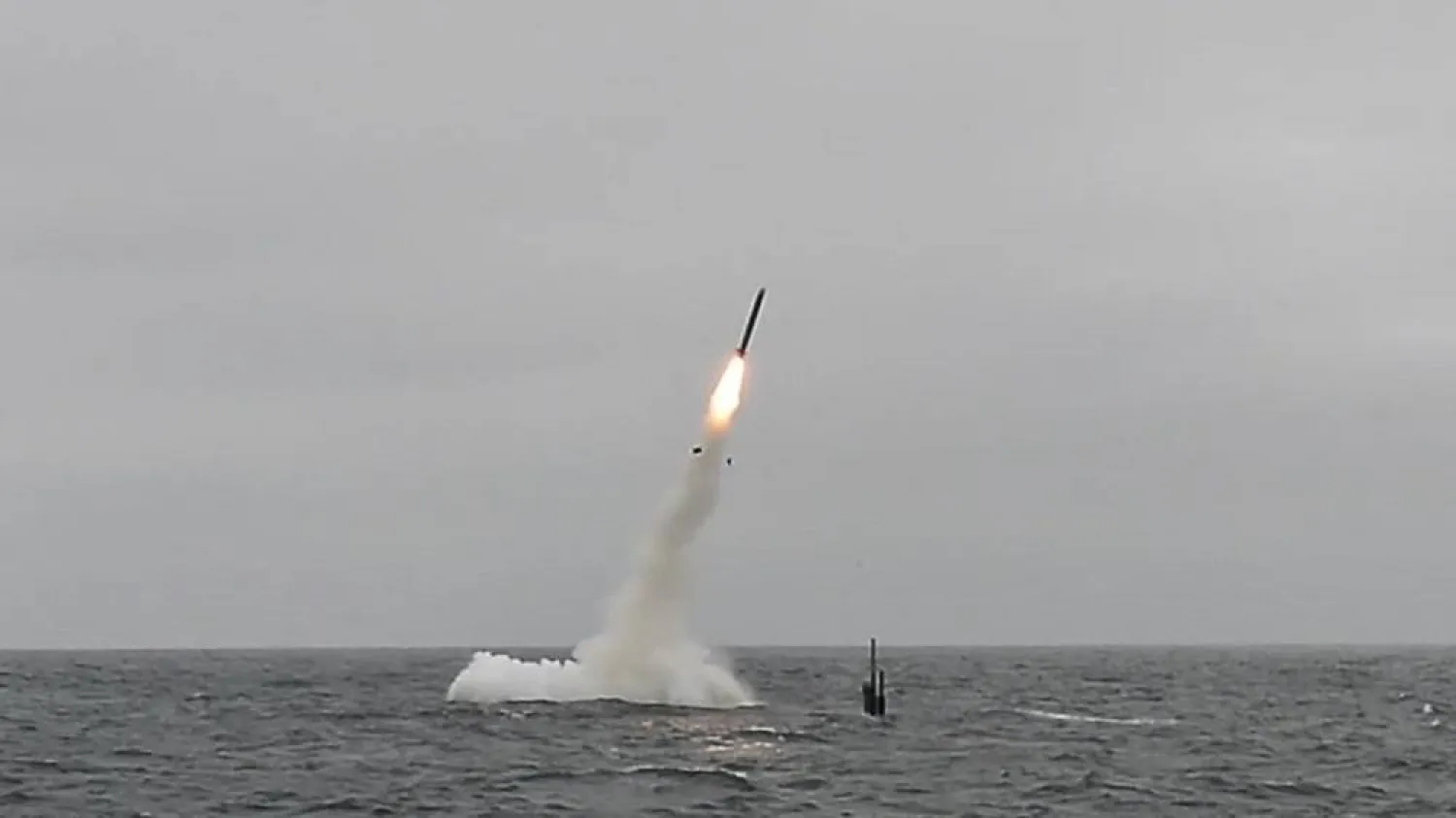
The crew of the Los Angeles-class fast-attack submarine USS Annapolis (SSN 760) successfully launches Tomahawk cruise missiles off the coast of southern California in 2018. (US Navy)
TT

Russia’s Medvedev Says Supplying US Tomahawks to Ukraine Could End Badly for All, Especially Trump 

The crew of the Los Angeles-class fast-attack submarine USS Annapolis (SSN 760) successfully launches Tomahawk cruise missiles off the coast of southern California in 2018. (US Navy)

Former Russian president Dmitry Medvedev said on Monday that supplying US Tomahawk missiles to Ukraine could end badly for everyone, especially US President Donald Trump. 

Medvedev, an arch-hawk who has repeatedly goaded Trump on social media, said it is impossible to distinguish between Tomahawk missiles carrying nuclear warheads and conventional ones after they are launched - a point that President Vladimir Putin's spokesman has also made. 

"How should Russia respond? Exactly!" Medvedev said on Telegram, appearing to hint that Moscow's response would be nuclear. 

Trump said again on Sunday that he may offer long-range Tomahawk missiles that could be used by Kyiv if Putin does not end the war in Ukraine. 

"Yeah, I might tell him (Putin), if the war is not settled, we may very well do it," Trump said. "We may not, but we may do it... Do they want to have Tomahawks going in their direction? I don’t think so." 

Medvedev wrote: "One can only hope that this is another empty threat... Like sending nuclear submarines closer to Russia." 

He was alluding to Trump's statement in August that he had ordered two nuclear subs to move closer to Russia in response to what he called "highly provocative" comments from Medvedev about the risk of war. 

Putin has said supplying Ukraine with Tomahawks, which have a range of 2,500 km (1,550 miles) and could therefore strike anywhere within European Russia, including Moscow, would destroy relations between the United States and Russia. 

Ukrainian President Volodymyr Zelenskiy said Ukraine would only use Tomahawk missiles for military purposes and not attack civilians in Russia, should the US provide them. 


More Than 300 US Troops Injured Since Start of Iran War

US Navy sailors taxi an F/A-18F Super Hornet on the flight deck aboard Nimitz-class aircraft carrier USS Abraham Lincoln in support of the Operation Epic Fury attack on Iran from an undisclosed location March 17, 2026. (US Navy/Handout via Reuters)
TT

More Than 300 US Troops Injured Since Start of Iran War

US Navy sailors taxi an F/A-18F Super Hornet on the flight deck aboard Nimitz-class aircraft carrier USS Abraham Lincoln in support of the Operation Epic Fury attack on Iran from an undisclosed location March 17, 2026. (US Navy/Handout via Reuters)

More than 300 US troops have been wounded since the start of the Iran war on February 28, US Central Command said on Friday.

"Since the start of Operation Epic Fury, approximately 303 US service members have been wounded. The vast majority of these injuries have been minor, and 273 troops have returned to duty," US Navy Captain Tim Hawkins said.

A US official who asked not to be identified told AFP that 10 troops remain seriously wounded.

A further 13 troops have been killed in the war, according to the latest figures, with seven killed in the Gulf and six in Iraq.

In a separate development Friday, Iran's military said that hotels housing US soldiers in the region would be considered targets.

"When all the Americans (forces) go into a hotel, then from our perspective that hotel becomes American," armed forces spokesman Abolfazl Shekarchi told state television on Thursday.

Iran's government has not released an updated casualty toll, but a US-based activist group said on March 23 that some 1,167 Iranian troops had been killed and 658 troops' status is unknown. AFP is not able to independently verify tolls in Iran due to reporting restrictions.

The war began on February 28 when the United States and Israel launched strikes on Iran, killing its supreme leader Ali Khamenei.

Since then, the conflict has spread across the Middle East. Iran has fired drone and missiles at Gulf states home to American military bases and other interests.

US President Donald Trump insisted on Thursday that talks to end the conflict were "ongoing" and "going very well".


UN Appeals for $80 Mn for Refugees, Hosts in Iran

 A man clears debris from a building damaged after a nearby residential building was hit in a US-Israeli strike in Tehran, Friday, March 27, 2026. (AP)
A man clears debris from a building damaged after a nearby residential building was hit in a US-Israeli strike in Tehran, Friday, March 27, 2026. (AP)
TT

UN Appeals for $80 Mn for Refugees, Hosts in Iran

 A man clears debris from a building damaged after a nearby residential building was hit in a US-Israeli strike in Tehran, Friday, March 27, 2026. (AP)
A man clears debris from a building damaged after a nearby residential building was hit in a US-Israeli strike in Tehran, Friday, March 27, 2026. (AP)

The United Nations said Friday it had launched an $80-million appeal to address the urgent humanitarian needs of nearly two million refugees in Iran and their host communities as the Middle East war rages.

Iran hosts the largest number of refugees in the world and has a significant migrant population, including 4.5 million Afghans, according to Tehran, and, according to the UN, hundreds of thousands of Iraqis.

"With the recent escalation of conflict, refugees, other Afghans and host communities in Iran are struggling with concerns for their safety, job losses, psychological distress and urgent shelter needs," said Babar Baloch, spokesman for UNHCR, the UN refugee agency.

UNHCR and its humanitarian partners have put together a flash refugee response plan, urgently seeking $80 million to respond to the immediate humanitarian needs from March to May.

"This will cover 1.8 million Afghan refugees and Afghans under other status living in Iran, plus also a million in their hosting communities who have also been affected," Baloch told a press conference.

"In Iran, most Afghan refugees, they live with the urban communities side by side, and everyone is affected," he said, adding that UNHCR was getting "thousands of desperate calls every day" from Afghans seeking support.

The Middle East war erupted on February 28 when Washington and Israel launched strikes on Iran, with Tehran in turn attacking targets in Israel and Gulf nations.

The UN's International Organization for Migration said no atypical outflows of people from Iran had been detected.

Meanwhile, the International Committee of the Red Cross said the month of war had upended the lives of millions and sent shockwaves far beyond the region at a speed "that threatens to overwhelm the humanitarian response".

"Essential infrastructure critical for the supply of energy, water and health care has been damaged or destroyed. The use of heavy explosive weapons with wide area impact in urban settings has caused suffering and fear," the ICRC said in a statement.

"Without respect for the rules of war, civilians will continue to suffer profound consequences that could outlast the current conflict."


France Hits Back at Lavrov, Says Russia Does Not Defend International Law

Russian Foreign Minister Sergei Lavrov at the Russian Foreign Ministry headquarters in Moscow on Jan 20, 2026. (AFP)
TT

France Hits Back at Lavrov, Says Russia Does Not Defend International Law

Russian Foreign Minister Sergei Lavrov at the Russian Foreign Ministry headquarters in Moscow on Jan 20, 2026. (AFP)

France's Foreign Minister Jean-Noel Barrot said on Friday that Russia does not defend international law either in Ukraine or Iran with its actions, in response to comments made by his Russian counterpart Sergei Lavrov in an interview on French TV.

"Mr. Lavrov was able to calmly spread his propaganda last night on a French television channel... You do not defend international law by launching a war of aggression," Barrot told reporters on the sidelines of a G7 meeting in France, Reuters reported.

Speaking to France Television on Thursday, Lavrov said that by standing with Iran in its war against the US and Israel, Russia's focus was upholding international law.
