


Trump to Attend Signing of Thailand-Cambodia 'Peace Deal' 

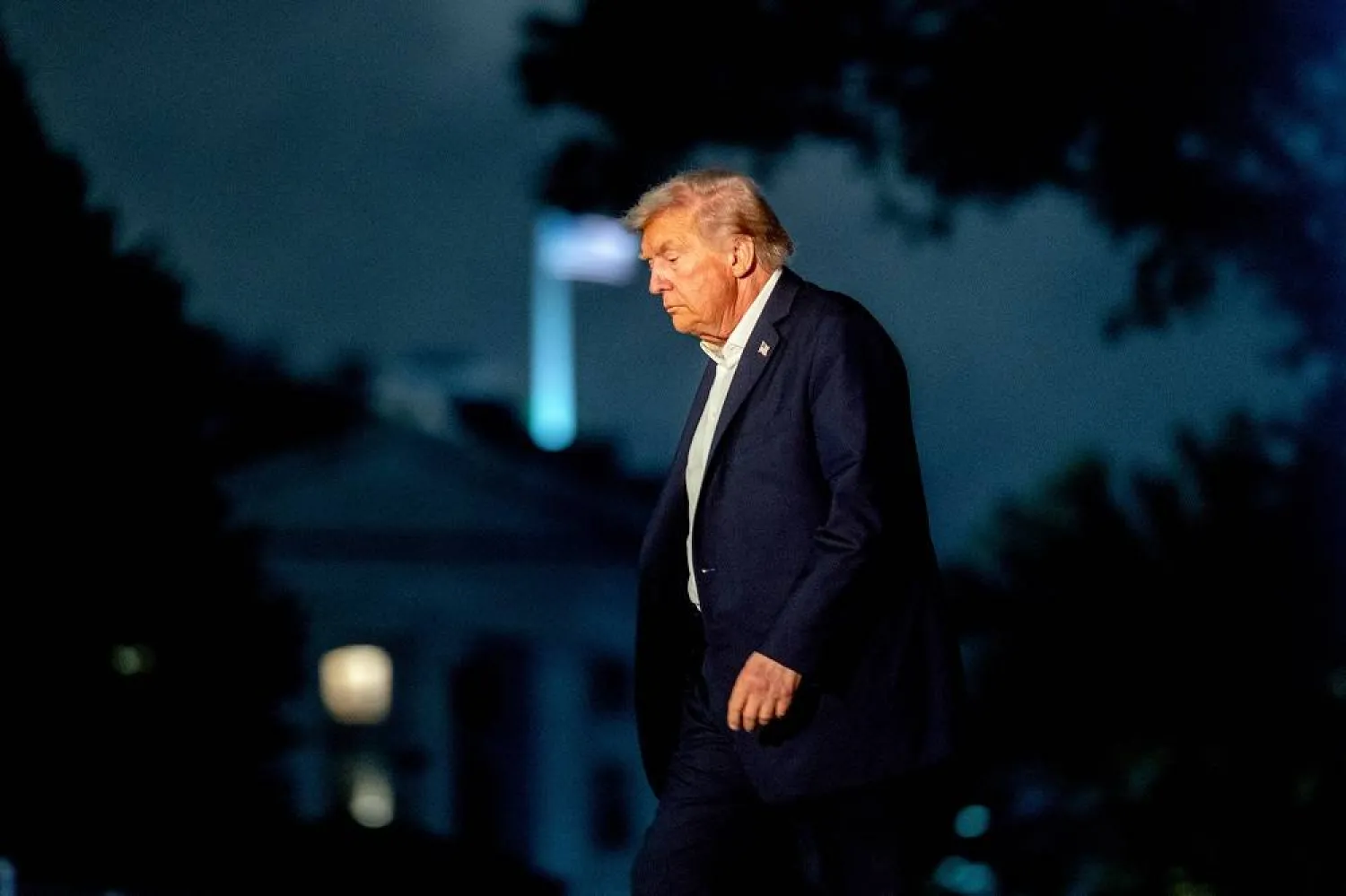
US President Donald Trump walks on the South Lawn of the White House after arriving on Marine One in Washington, DC, USA, 14 October 2025. (EPA) 
TT

Trump to Attend Signing of Thailand-Cambodia 'Peace Deal' 

US President Donald Trump walks on the South Lawn of the White House after arriving on Marine One in Washington, DC, USA, 14 October 2025. (EPA) 

US President Donald Trump will attend the ceremonial signing of a peace agreement between Thailand and Cambodia at an upcoming summit of Southeast Asian nations, the foreign minister of host Malaysia said Tuesday.

Tensions between Thailand and Cambodia erupted in July into the deadliest military clashes in decades, killing more than 40 people and forcing around 300,000 to flee their homes.

The two sides agreed to a ceasefire -- brokered in part by Trump -- after five days of fighting and have since repeatedly traded accusations of truce violations.

Trump "is looking forward to witness the Thailand-Cambodia peace deal," Mohamad Hasan told reporters at a news conference in Kuala Lumpur.

Mohamad said the US leader would visit Malaysia on October 26 to attend the Association of Southeast Asian Nations (ASEAN) summit in the Malaysian capital from October 26-28.

He said Malaysia and the United States would serve as facilitators to "see a more extensive ceasefire deal" between Thailand and Cambodia, which will require "both sides to remove all landmines and withdraw their military machinery from their borders".

"We hope that both parties can fulfil these conditions and during the ASEAN summit a declaration can be signed.

"We can call it the Kuala Lumpur Declaration or the Kuala Lumpur Accord, we want to make sure that these two neighboring countries can come together to make peace and also implement their ceasefire," Mohamad added.

Thai government spokesman Siripong Angkasakulkiat told reporters Bangkok was aware the United States was giving the dispute priority.

"But what Cambodia has to do first, before we accept the US offer, are our four points that we have raised," he said.

Thailand Prime Minister Anutin Charnvirakul said Thursday that he had received a letter from Trump, with the US leader saying he wanted to see the two neighbors resolve tensions.

Anutin also said Thailand was ready to negotiate if Cambodia withdrew heavy weapons from border areas, removed landmines, cracked down on internet scammers and relocated its citizens from borderlands Thailand considers its own.

Cambodia has said its nationals have lived in the disputed border villages for decades.

Anutin's remarks came a day after the Thai premier appeared to brush off a continued role for Trump -- who has been chasing a Nobel Peace Prize -- in any further negotiations between the two nations aimed at solving their border dispute.

Cambodian Prime Minister Hun Manet has said he nominated Trump for a Nobel Peace Prize, crediting him with "innovative diplomacy" that ended the military clashes.



Four Arrested after Protesters Disrupt Israeli Concert in Paris

A view shows streets Rue Ferdinand Flocon, one of the pedestrianized streets, ahead of the March 23 citywide vote on a proposition from city hall to pedestrianize 500 streets, in Paris, France, March 21, 2025. (Reuters)
TT

Four Arrested after Protesters Disrupt Israeli Concert in Paris

A view shows streets Rue Ferdinand Flocon, one of the pedestrianized streets, ahead of the March 23 citywide vote on a proposition from city hall to pedestrianize 500 streets, in Paris, France, March 21, 2025. (Reuters)

Four people were arrested after protesters used flares to disrupt a concert by the Israeli Philharmonic Orchestra in Paris on Thursday night, the latest in a wave of anti-Israel incidents linked to the Gaza conflict, French officials said on Friday.

In footage posted on social media, protesters were seen lighting flares and chanting pro-Palestinian slogans in La Philharmonie concert hall in northern Paris as some audience members and security personnel tried to remove them.

Despite the chaos and several interruptions, the concert went ahead after the protesters were evacuated, Reuters reported.

"I strongly condemn the actions committed last night during a concert at the Philharmonie de Paris. Nothing can justify them," Interior Minister Laurent Nunez said on X.

"I thank the personnel from the Paris police who enabled the rapid arrest of several perpetrators of serious disturbances inside the venue and contained the demonstrators outside. Four people have been placed in custody," he added.

The Paris prosecutor's office said three women and a man were in custody, on charges ranging from violence, destruction and organising an unauthorised protest.

Culture Minister Rachida Dati on X condemned the disruptions as going against the "fundamental rights of our Republic."

The Philharmonie said it had filed a criminal complaint.


Türkiye Preparing Law to Let PKK Fighters Return under Peace Plan

(FILES) Supporters display a poster depicting jailed leader of the Kurdistan Workers' Party (PKK) Abdullah Ocalan, after he called on the Kurdistan Workers' Party (PKK) to disarm and dissolve itself in Diyarbakir, southeastern Türkiye, on February 27, 2025.(Photo by Yasin AKGUL / AFP)
TT

Türkiye Preparing Law to Let PKK Fighters Return under Peace Plan

(FILES) Supporters display a poster depicting jailed leader of the Kurdistan Workers' Party (PKK) Abdullah Ocalan, after he called on the Kurdistan Workers' Party (PKK) to disarm and dissolve itself in Diyarbakir, southeastern Türkiye, on February 27, 2025.(Photo by Yasin AKGUL / AFP)

Türkiye is preparing a law to let thousands of Kurdistan Workers Party (PKK) fighters and civilians return home from hideouts in northern Iraq under negotiations to end generations of war.

A senior Middle East official and a Kurdish political party source in Türkiye said the proposed law would protect those returning home but stop short of offering a general amnesty for crimes committed by former militants. Some militant leaders could be sent to third countries under the plans.

Bringing PKK guerrillas and their families home from their bases in mountainous northern Iraq is seen as one of the final hurdles in a peace process launched a year ago to end a war that has killed 40,000 people.

While officials have spoken publicly about reconciliation efforts in general terms, the sources disclosed details that have not previously been reported, including proposals for returns to take place in separate waves of civilians and fighters, and for commanders to be sent to third countries.

The Middle East official, describing the sensitive negotiations on condition of anonymity, said legislation to allow the returns could come before the Turkish parliament as soon as this month.

PLAN COULD INCLUDE SEPARATE WAVES OF RETURNS

Türkiye‘s intelligence agency MIT, which has led talks with the PKK, did not immediately comment on the proposal. The PKK did not immediately comment.

Since Kurdish militants launched their insurgency in 1984 - originally with the aim of creating an independent Kurdish state - the conflict has exerted a huge economic and social burden on Türkiye and neighboring countries.

Ending it would boost NATO member Türkiye’s political and economic stability, and ease tensions in Iraq where the PKK is based, and Syria where Kurdish fighters have been allied with US forces.

In a major breakthrough, the PKK announced a decision in May to disarm and disband after a call to end its armed struggle from its jailed leader Abdullah Ocalan.

In July the group symbolically burned weapons, and last month it announced it was withdrawing fighters from Türkiye as part of the disarmament process. It called on Ankara to take steps to let its members participate in "democratic politics".

But the terms of reconciliation have been sensitive, with Türkiye wary of offering a wide amnesty for what it considers past crimes of a terrorist organization.

Numan Kurtulmus, who heads a reconciliation commission set up by Türkiye in August, said last week that any legal steps would come only after Türkiye verifies that the PKK has completed its dissolution process.

"Once Türkiye’s security and intelligence units have verified and confirmed that the organiئation has truly laid down its arms and completed its dissolution process, the country will enter a new phase of legal regulations aimed at building a terror-free Türkiye," he said.

According to the senior Middle East official, the proposal now being discussed would see roughly 1,000 civilians and non-combatants return first, followed by about 8,000 fighters after individual screening.

Beyond that, the official said Türkiye had so far rejected taking back around 1,000 senior and mid-level PKK figures, and wants them relocated to a third country, possibly in Europe.

Talks were ongoing on that issue, with some parties involved in the negotiations concerned that excluding PKK top brass from repatriation could eventually fuel a renewed insurgency, the official said.

Legislation to enable returns could come before the Turkish parliament as early as the end of November, the official added.

Tayip Temel, deputy co-chair of the pro-Kurdish DEM Party - which though an opposition party has worked closely with the government on the peace process - said the ongoing negotiations focused on a formula personally emphasiئed by Ocalan.

"Work is underway on a special law for the PKK to enable the democratic and social reintegration of its members," Temel told Reuters.

"The law will cover everyone returning from the PKK, whether civilian or militant. There is no plan for a phased return. The formula being worked on is comprehensive and applies to all."

He confirmed that Türkiye had raised the idea of some PKK figures being sent to third countries, but said this would have to be discussed with the potential hosts.

DIFFERENT PROCEDURES FOR DIFFERENT GROUPS

Another source at DEM, parliament's third-biggest party, said the commission drafting the proposal was working on a single, PKK-specific law that would avoid the language of a general amnesty.

"Different procedures will apply to different groups of returnees," the source said, adding that some returning PKK members will likely face investigations and trials. "Otherwise it will be hard to reach common ground among parties in the commission."

Once the parliamentary commission completes its work, it is expected to recommend the special PKK law to parliament, paving the way for potential legislation.

Human Rights Watch urged lawmakers to use the peace process to reform laws that have long been used to charge and incarcerate non-violent Kurdish activists.

The commission "has a unique opportunity to help shape a post-conflict society and should make bold recommendations to repeal abusive laws used to silence and marginalize people," said Hugh Williamson, Europe and Central Asia director at HRW.


Russia Urges Trump Administration to Clarify 'Contradictory' Signals on Nuclear Testing

Representation photo: This photograph shows a general view of Kurskaya nuclear power plant taken outside the town of Kurchatov on August 27, 2024. (Photo by TATYANA MAKEYEVA / AFP)
TT

Russia Urges Trump Administration to Clarify 'Contradictory' Signals on Nuclear Testing

Representation photo: This photograph shows a general view of Kurskaya nuclear power plant taken outside the town of Kurchatov on August 27, 2024. (Photo by TATYANA MAKEYEVA / AFP)

Russia urged the United States on Friday to clarify what it called contradictory signals about a resumption of nuclear testing, saying such a step would trigger responses from Russia and other countries.

President Donald Trump last week ordered the US military to immediately restart the process for testing nuclear weapons. But he did not make clear if he meant flight-testing of nuclear-capable missiles or a resumption of tests involving nuclear explosions - something neither the US nor Russia has done for more than three decades.

"If it is the latter, then this will create negative dynamics and trigger steps from other states, including Russia, in response," Russian Foreign Ministry spokeswoman Maria Zakharova told reporters.

"For now, we note that the signals emanating from Washington, which are causing justified concern in all corners of the world, remain contradictory, and, of course, the real state of affairs must be clarified."

Citing the lack of clarity around US plans, President Vladimir Putin on Wednesday instructed top officials to prepare proposals for Russia to carry out its own potential nuclear test in response to any US test.

Security analysts say a resumption of testing by any of the world's nuclear powers would be a destabilizing step at a time of acute geopolitical tension, notably over the war in Ukraine, and would likely prompt other countries to follow suit.

Russia and the US possess the world's largest nuclear arsenals.

The last remaining treaty between them that limits the number of strategic nuclear warheads on both sides is due to expire in three months, potentially fueling an arms race that is already in progress.

Putin has proposed that both sides continue to observe the treaty limits for another year, but Trump has yet to respond formally to the idea.