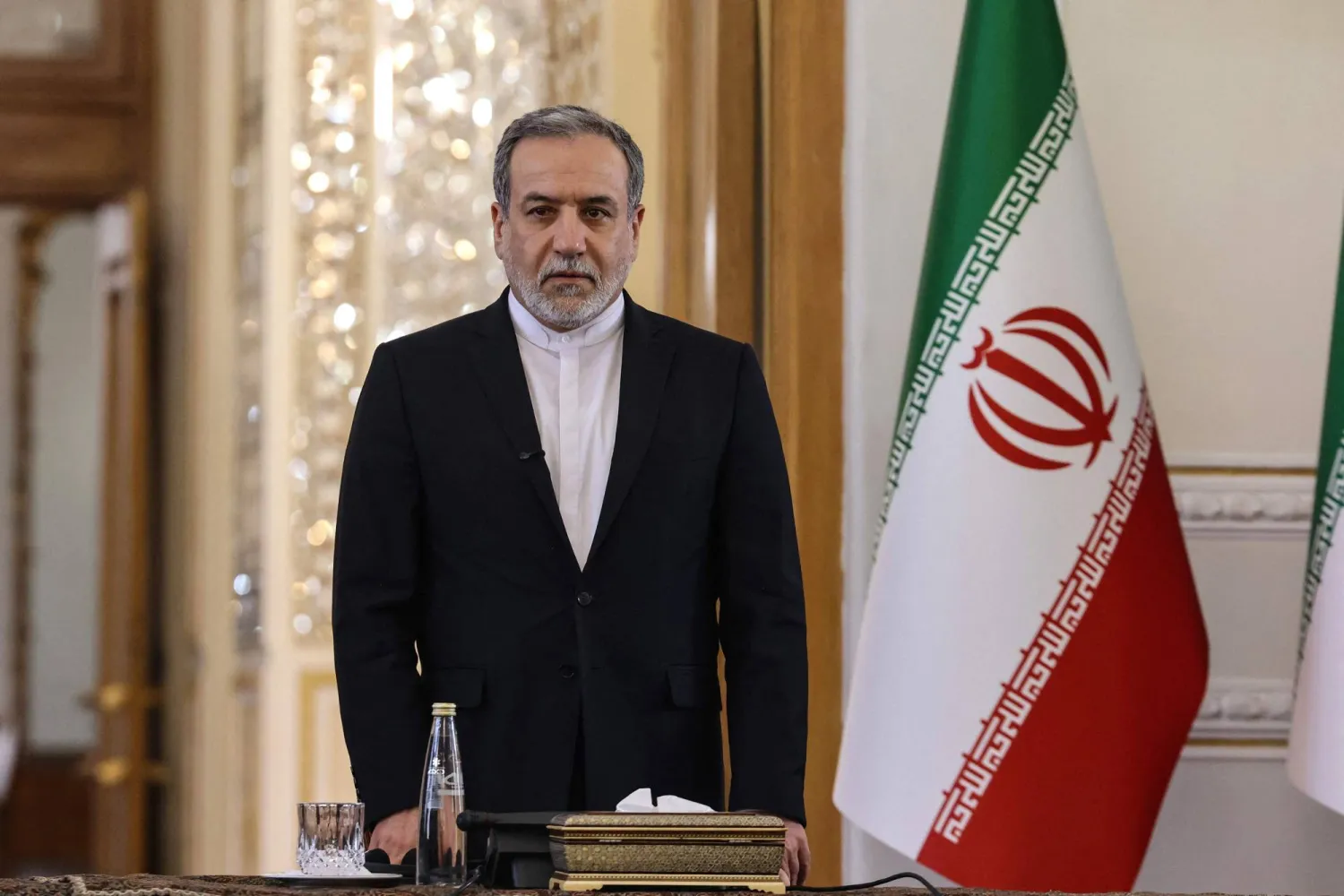

Iranian Foreign Minister Abbas Araghchi on Thursday warned against any fresh attacks on the country’s nuclear facilities, after the UN nuclear watchdog chief said he fears a possible “renewed use of force” if attempts at diplomacy with Tehran fail.
Iranian Foreign Minister Abbas Araghchi told reporters on Thursday it was not clear whether IAEA chief Rafael Grossi’s remarks were meant “out of concern or as a threat.”
“But those who issue such threats must understand that repeating a failed experience will only lead to another failure,” he added in a video published by the foreign ministry.
Iran suspended cooperation with the agency following the 12-day war with Israel in June.
In an interview with Swiss newspaper Le Temps published Wednesday, Grossi noted that diplomatic channels remain open through Araghchi, although Tehran is currently allowing only limited access to inspectors citing “security concerns.”
He added that “if diplomacy fails, I fear a renewed use of force.”
The head of UN's nuclear watchdog confirmed that while Iran’s enrichment infrastructure suffered significant physical damage, its technical expertise and capacity to rebuild centrifuges remain largely intact.
“Iran still possesses around 400 kilograms of uranium enriched up to 60%, despite recent US and Israeli strikes on its nuclear facilities,” he noted.
Grossi warned that the current stockpile could provide enough material for roughly 10 nuclear weapons if further enriched, though he stressed that there is no evidence Iran intends to produce a bomb.
Grossi is expected to present an updated report on Iran's nuclear program during a meeting of the IAEA's 35-nation Board of Governors in Vienna early next month.
Tensions between Iran and the IAEA surged after 12-day war, with Tehran suspending its cooperation with the agency over what it described as its failure to adequately condemn the Israeli and US strikes.
Last June, the Board of Governors declared Iran in breach of its non-proliferation obligations for the first time in almost 20 years.
This week, Western sources said the US and its European partners may push for a new draft resolution to condemn Iran for its non-cooperation with the IAEA.
In September, Iran and the IAEA agreed on a new cooperation framework, but weeks later Tehran deemed that framework invalid after Britain, France, and Germany triggered the “snapback mechanism” that allowed the return of UN sanctions removed under a 2015 nuclear deal.
On Monday, Iran’s Supreme National Security Council Secretary Ali Larijani said his country has scrapped a cooperation deal that it signed with the IAEA in September, according to state media.
The statement came around three weeks after Araghchi said Tehran would scrap the agreement, which let the IAEA resume inspections of its nuclear sites, if Western powers reinstated UN sanctions.
“The agreement has been cancelled,” Larijani said while meeting with his Iraqi counterpart in Tehran, according to state media.
“Of course, if the agency has a proposal, we will review it in the secretariat,” he added.
Last Sunday, Grossi said inspectors at the IAEA do not believe that Iran has hidden large quantities of its highly enriched uranium at different locations, noting that most of Iran's enriched uranium is held in known facilities.
Chairman of the Iranian Parliamentary National Security and Foreign Policy Committee Ebrahim Azizi said: “Had Grossi adhered to professional principles, the war would not have erupted and people’s trust would not have been lost.”
He added: “The party that resorted to force in the 12-day war is now worried about diplomacy?!”