


China Says It ‘Absolutely Will Not’ Rule Out Use of Force Over Taiwan 

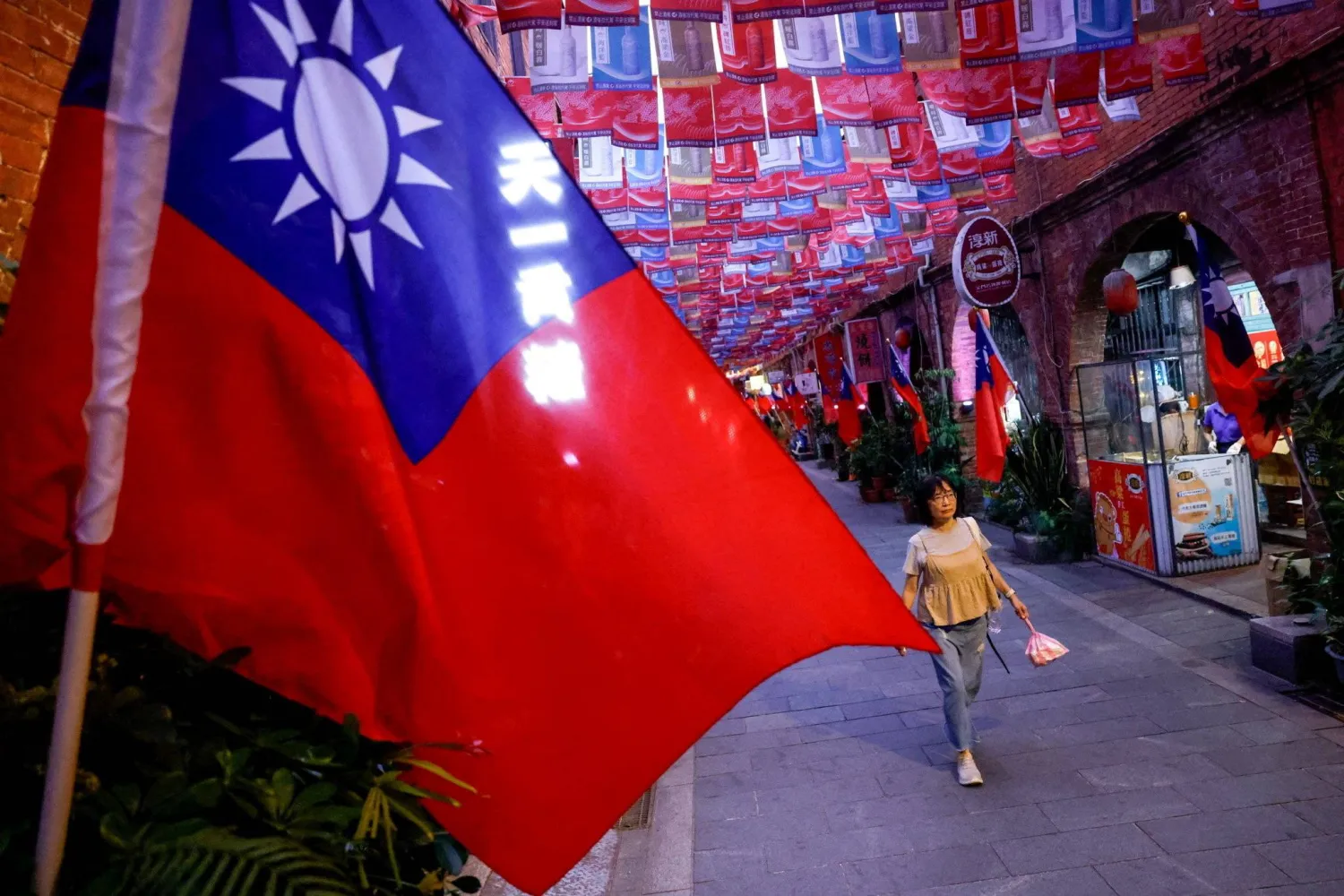
A woman walks past a street lined with Taiwanese flags, in Kinmen, Taiwan, October 19, 2025. (Reuters)
TT

China Says It ‘Absolutely Will Not’ Rule Out Use of Force Over Taiwan 

A woman walks past a street lined with Taiwanese flags, in Kinmen, Taiwan, October 19, 2025. (Reuters)

China "absolutely will not" rule out using force over Taiwan, a government spokesperson said on Wednesday, striking a much tougher tone than a series of articles in state media this week that pledged benign rule if the island comes over to Beijing.

China, which views democratically governed Taiwan as its own territory, has never renounced use of force to "reunify" with the island.

But the policy is not often directly voiced in public and did not appear in three Xinhua news agency commentaries this week about Taiwan, one of which mapped out how "patriots" could rule the island after "reunification" and promised Taiwan's existing social system and way of life would be respected.

Peng Qing'en, a spokesperson for China's Taiwan Affairs Office, told a regular news conference in Beijing that peaceful "reunification" under the "one country, two systems" model is the fundamental approach to "resolving the Taiwan issue".

"We are willing to create ample space for peaceful reunification and will spare no effort to pursue this prospect with the utmost sincerity," he said.

"However, we absolutely will not renounce the use of force and reserve the option to take all necessary measures."

China's top official in charge of Taiwan policy, the ruling Communist Party's fourth ranked leader Wang Huning, did not mention force in a key policy speech on Saturday, that instead focused on how both sides would benefit from "reunification".

China's renewed push on an autonomy model for Taiwan, which no major Taiwanese political party supports and the government in Taipei has repeatedly denounced, comes ahead of a meeting in Thursday between US President Donald Trump and Chinese President Xi Jinping.

Trump told reporters on Wednesday he did not know whether he would even discuss Taiwan with Xi.

Taiwan's government rejects Beijing's sovereignty claims.

Speaking earlier on Wednesday in Taipei, Taiwan National Security Bureau Director-General Tsai Ming-yen said China's "patriots" model was what Beijing used in Hong Kong and Macau and had no market in Taiwan.

"The aim is to belittle Taiwan's international standing, and Hong Kong-ify and Macau-ify Taiwan, to achieve the political objective of eliminating Taiwan's sovereignty, which the Chinese Communist Party seeks to do," he said.

"I think the Chinese communists have no way to enact the application of the Macau or Hong Kong model in Taiwan."

In 2021, Hong Kong, which returned to Chinese rule from Britain in 1997, held its first "patriots-only" election with candidates vetted as loyal to Beijing. Turnout hit a record low.

Taiwan held its first direct presidential election in 1996 and democracy on the island is a noisy and vibrant affair where candidates are free to espouse any point of view, including being pro-independence or pro-Beijing.

China's government refuses to talk to Taiwan President Lai Ching-te, saying he is a "separatist".



NATO Allies Refuse to Join Trump's Strait of Hormuz Blockade

FILE PHOTO: A NATO flag flutters at the Tapa military base, Estonia April 30, 2023. REUTERS/Ints Kalnins/File Photo
TT

NATO Allies Refuse to Join Trump's Strait of Hormuz Blockade

FILE PHOTO: A NATO flag flutters at the Tapa military base, Estonia April 30, 2023. REUTERS/Ints Kalnins/File Photo

The United States' NATO allies said on Monday they would not get involved in President Donald Trump's plan to blockade the Strait of Hormuz, further ratcheting up tensions within the increasingly fragile alliance. Trump said the US military would work with other countries to block all maritime traffic in the waterway, after weekend talks failed to reach an agreement to end the six-week conflict with Iran. The US military later specified that the blockade, due to start at 1400 GMT on Monday, would only apply to ships going to or from Iranian ports.

"The Blockade will begin shortly. Other Countries will be involved with this Blockade," Trump said in a post on Truth Social on Sunday.

But NATO allies including Britain and France said they would not be drawn into the conflict by taking part in the blockade, saying instead that it was vital to open the waterway through which one-fifth of the world's oil usually passes, which Iran has effectively closed since the conflict began on February 28. Their refusal to participate is yet another point of friction with Trump, who has threatened to withdraw from the military alliance and is weighing pulling some US troops from Europe after several countries resisted supporting the US campaign against Iran by denying US military planes use of their airspace.

CONSIDERABLE PRESSURE

"We're not supporting the blockade," British Prime Minister Keir Starmer told the BBC.

"My decision has been very clearly that whatever the pressure, and there's been some considerable pressure, we're not getting dragged into the war," he said. NATO Secretary General Mark Rutte told European governments that Trump wants concrete commitments in the near future to help secure the Strait of Hormuz, diplomats told Reuters last week.

NATO could play a role in the strait if its 32 members could agree on the formation of a mission, Rutte said on April 9.

Several European countries have said they're willing to help in the strait but only once there is a durable end to hostilities and an agreement with Iran that their ships will not be attacked.

France will organize a conference with Britain and other countries to create a multinational mission to restore navigation in the strait, French President Emmanuel Macron said on X on Monday.

"This strictly defensive mission, distinct from the belligerents, will be deployed as soon as the situation allows," Macron said.

Britain is working on ways to reduce insurance premiums for ships passing through the strait once the fighting has stopped, according to a senior European official.

The Strait of Hormuz should be reopened by diplomacy, Turkish Foreign Minister Hakan Fidan said on Monday, adding that creating an international force to oversee it would be complicated as he called for NATO to reset its ties with Trump at a summit in Ankara in July.


Netanyahu Says Israel Supports Trump's Iran Naval Blockade

FILE PHOTO: A map showing the Strait of Hormuz is seen in this illustration taken March 23, 2026. REUTERS/Dado Ruvic/Illustration/File Photo
TT

Netanyahu Says Israel Supports Trump's Iran Naval Blockade

FILE PHOTO: A map showing the Strait of Hormuz is seen in this illustration taken March 23, 2026. REUTERS/Dado Ruvic/Illustration/File Photo

Prime Minister Benjamin Netanyahu said Monday that Israel supports US President Donald Trump's decision to impose a naval blockade on Iran, adding that his government is in full coordination with Washington on the matter.

"Iran violated the rules (of the peace talks in Pakistan), President Trump decided to impose a naval blockade," Netanyahu said at a cabinet meeting, according to a video statement released by his office, AFP reported.

"We, of course, support this firm position, and we are in constant coordination with the United States."

The US military said it would begin a blockade of all Iranian ports on Monday after weekend talks with Tehran ended without a deal.

Trump had announced on social media that he would blockade the strategic Strait of Hormuz trade route that he has been demanding Tehran fully re-open, after Vice President JD Vance left the failed negotiations with an Iranian delegation in Islamabad.

The US military said the blockade would begin at 1400 GMT, and apply to all ships leaving or seeking to dock at Iranian ports on either side of the key waterway.

Netanyahu said Tehran had violated the terms of the talks to begin with, saying Vance had briefed him after the negotiations ended in Islamabad.

"The breakdown came from the American side, which could not tolerate Iran's blatant violation of the terms for entering negotiations," Netanyahu told the cabinet.

"The agreement was that there would be a ceasefire, and that the Iranians would immediately open the strait. They did not do so. The Americans could not accept this."

Netanyahu also said Vance had told him the "central issue" for Trump was the removal of all enriched uranium from Iran and "ensuring that there is no further enrichment in the years ahead -- even decades ahead -- no enrichment within Iran".

"That is their focus, and of course it is important to us as well," Netanyahu added.


Iran in Touch with India on Ships Passage through Strait of Hormuz, Iranian Envoy Says

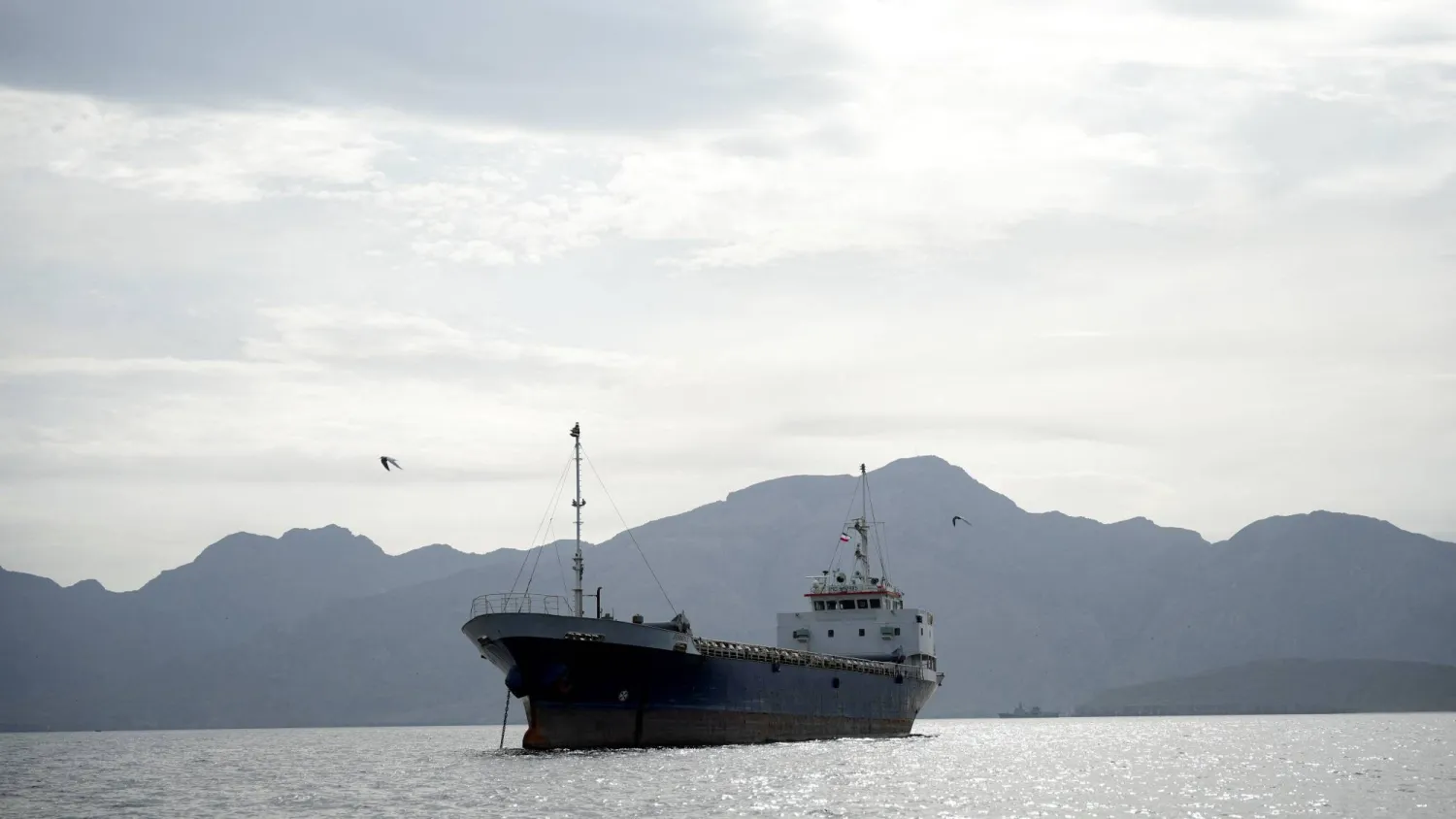
A vessel at the Strait of Hormuz, off the coast of Oman’s Musandam province, April 12, 2026. REUTERS
TT

Iran in Touch with India on Ships Passage through Strait of Hormuz, Iranian Envoy Says

A vessel at the Strait of Hormuz, off the coast of Oman’s Musandam province, April 12, 2026. REUTERS

Iran has "good contact" with the Indian government on passage of the South Asian nation's ships through the Strait of Hormuz and wants to help New Delhi, Iranian Ambassador to India Mohammad Fathali said on Monday.

The US-Israeli war on Iran, which began in February, has restricted shipping through the key route - a conduit for 40% of India's crude imports - impacting trade and squeezing oil supplies.

This came as ⁠the US Central Command said in a note to seafarers seen by Reuters on ⁠Monday that US military will enforce a blockade ​in Gulf of Oman and Arabian Sea east of the Strait of Hormuz and it will ‌apply to ‌all ​vessel ‌traffic regardless ⁠of ​flag.

The advanced note ‌said ‌the blockade ​would ‌come into effect at ‌1400 GMT on Monday.

"Any vessel entering or departing the blockaded ‌area without authorization is subject to interception, ⁠diversion, ⁠and capture," the note said.

"The blockade will not impede neutral transit passage through the Strait of Hormuz to or from non-Iranian destinations."