


Haiti, Jamaica and Cuba Pick Up the Pieces after Melissa's Destruction

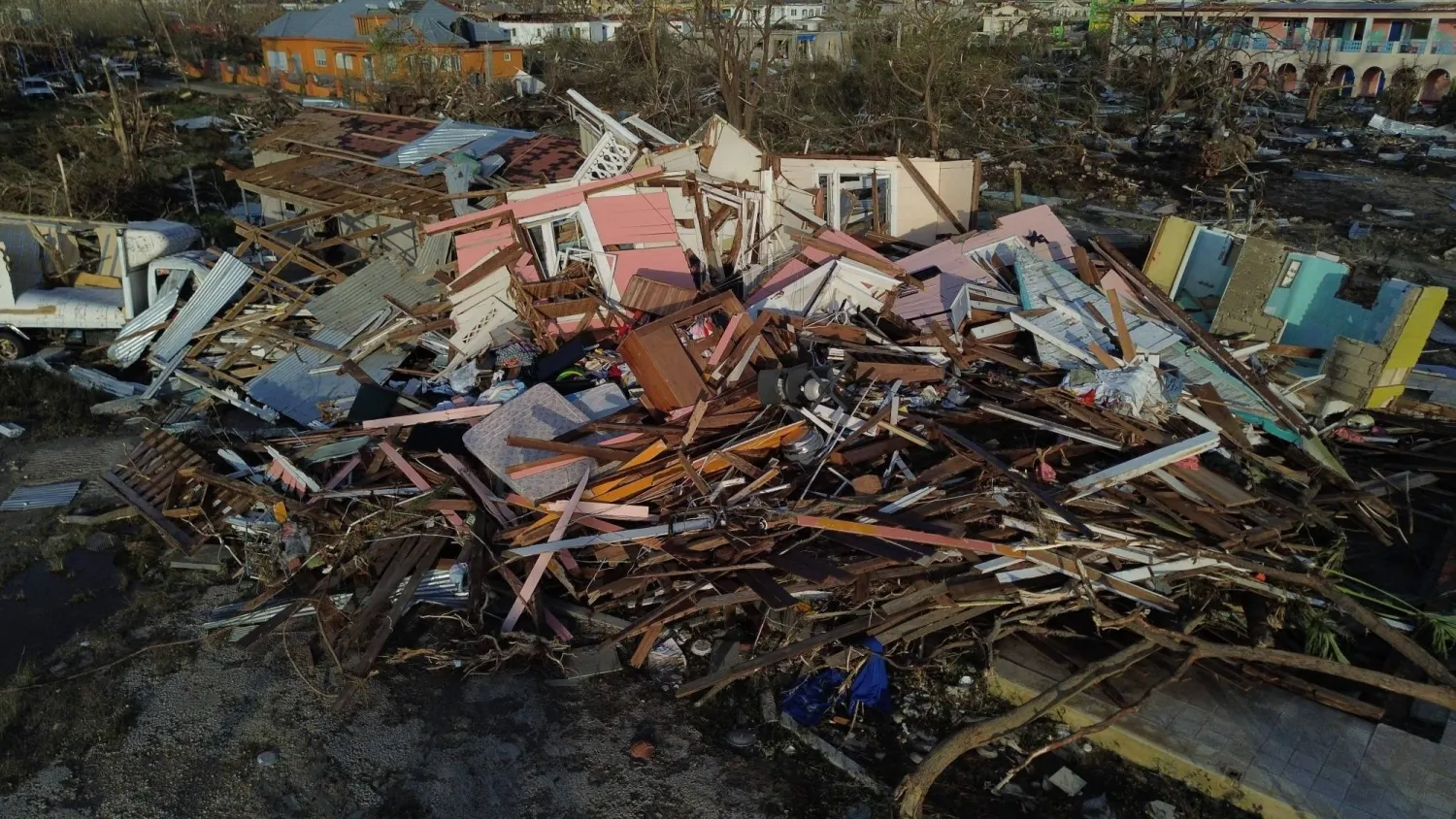
An aerial view of destroyed buildings following the passage of Hurricane Melissa, in Black River, St. Elizabeth, Jamaica on October 29, 2025. (Photo by Ricardo MAKYN / AFP)
TT

Haiti, Jamaica and Cuba Pick Up the Pieces after Melissa's Destruction

An aerial view of destroyed buildings following the passage of Hurricane Melissa, in Black River, St. Elizabeth, Jamaica on October 29, 2025. (Photo by Ricardo MAKYN / AFP)

People across the northern Caribbean were digging out from the destruction of Hurricane Melissa on Thursday as deaths from the catastrophic storm climbed.

The rumble of large machinery, whine of chainsaws and chopping of machetes echoed throughout southeast Jamaica as government workers and residents began clearing roads in a push to reach isolated communities that sustained a direct hit from one of the most powerful Atlantic storms on record.

Stunned residents wandered about, some staring at their roofless homes and waterlogged belongings strewn around them, The Associated Press reported.

"I don’t have a house now,” said a distressed Sylvester Guthrie, a resident of Lacovia in the southern parish of St. Elizabeth, as he held onto his bicycle, the only possession of value left after the storm.

“I have land in another location that I can build back but I am going to need help,” the sanitation worker pleaded.

Emergency relief flights began landing at Jamaica’s main international airport, which reopened late Wednesday, as crews distributed water, food and other basic supplies.

“The devastation is enormous,” Jamaican Transportation Minister Daryl Vaz said.

Some Jamaicans wondered where they would live.

“I am now homeless, but I have to be hopeful because I have life,” said Sheryl Smith, who lost the roof of her home.

Authorities said they have found at least four bodies in southwest Jamaica.

Prime Minister Andrew Holness said up to 90% of roofs in the southwest coastal community of Black River were destroyed.

“Black River is what you would describe as ground zero,” he said. “The people are still coming to grips with the destruction.”

More than 25,000 people remained crowded into shelters across the western half of Jamaica, with 77% of the island without power.

Melissa also unleashed catastrophic flooding in Haiti, where at least 25 people were reported killed and 18 others missing, mostly in the country’s southern region.

Steven Guadard, who lives in Petit-Goâve, said Melissa killed his entire family.

“I had four children at home: a 1-month-old baby, a 7-year-old, an 8-year-old and another who was about to turn 4,” he said.

Haiti’s Civil Protection Agency said Hurricane Melissa killed at least 20 people in Petit-Goâve, including 10 children. It also damaged more than 160 homes and destroyed 80 others.

Officials warned that 152 disabled people in Haiti’s southern region required emergency food assistance. More than 11,600 people remained sheltered in Haiti because of the storm.

Meanwhile, in Cuba, people began to clear blocked roads and highways with heavy equipment and even enlisted the help of the military, which rescued people trapped in isolated communities and at risk from landslides.

No fatalities were reported after the Civil Defense evacuated more than 735,000 people across eastern Cuba. They slowly were starting to return home.

“We are cleaning the streets, clearing the way,” said Yaima Almenares, a physical education teacher from the city of Santiago, as she and other neighbors swept branches and debris from sidewalks and avenues, cutting down fallen tree trunks and removing accumulated trash.

In the more rural areas outside the city of Santiago de Cuba, water remained accumulated in vulnerable homes on Wednesday night as residents returned from their shelters to save beds, mattresses, chairs, tables and fans they had elevated ahead of the storm.

A televised Civil Defense meeting chaired by President Miguel Díaz-Canel did not provide an official estimate of the damage. However, officials from the affected provinces — Santiago, Granma, Holguín, Guantánamo, and Las Tunas — reported losses of roofs, power lines, fiber optic telecommunications cables, cut roads, isolated communities and losses of banana, cassava and coffee plantations.

Officials said the rains were beneficial for the reservoirs and for easing a severe drought in eastern Cuba.

Many communities were still without electricity, internet and telephone service due to downed transformers and power lines.

A historic storm When Melissa came ashore in Jamaica as a Category 5 hurricane with top winds of 185 mph (295 kph) on Tuesday, it tied strength records for Atlantic hurricanes making landfall, both in wind speed and barometric pressure. It was still a Category 3 hurricane when it made landfall again in eastern Cuba early Wednesday.

A hurricane warning remained in effect early Thursday for the southeastern and central Bahamas and for Bermuda.

Hurricane conditions were expected to continue through the morning in the southeastern Bahamas, where dozens of people were evacuated.

Melissa was a Category 2 storm with top sustained winds near 100 mph (155 kph) early Thursday and was moving north-northeast at 21 mph (33 kph) according to the US National Hurricane Center in Miami.

The hurricane was centered about 145 miles (235 kilometers) northeast of the central Bahamas and about 755 miles (1,215 kilometers) southwest of Bermuda.

Melissa was forecast to pass near or to the west of Bermuda late Thursday and may strengthen further before weakening Friday.



Larijani Calls Trump, Netanyahu ‘Main Killers of People of Iran’ as Russia Slams Threats

Protesters participate in a demonstration supporting protesters in Iran, in front of the US Consulate, Milan, Italy, Tuesday, Jan. 13, 2026. (AP)
TT

Larijani Calls Trump, Netanyahu ‘Main Killers of People of Iran’ as Russia Slams Threats

Protesters participate in a demonstration supporting protesters in Iran, in front of the US Consulate, Milan, Italy, Tuesday, Jan. 13, 2026. (AP)

A senior Iranian official responded Tuesday to US President Donald Trump’s latest threat to intervene in deadly protests, saying that the US and Israel will be the ones responsible for the death of Iranian civilians.

Shortly after Trump’s social media post urging Iranians to “take over” government institutions, Ali Larijani, a former parliament speaker who serves as the secretary of Iran’s Supreme National Security Council, posted on X: “We declare the names of the main killers of the people of Iran: 1- Trump 2- Netanyahu.”

Russia’s Foreign Ministry called Trump's threats “categorically unacceptable.”

The ministry warned in a statement that any such strikes would have “disastrous consequences” for the situation in the Middle East and global security.

It also criticized what it called “brazen attempts to blackmail Iran’s foreign partners by raising trade tariffs.”

The statement noted that the protests in Iran had been triggered by social and economic problems resulting from Western sanctions.

It also denounced “hostile external forces” for trying to “exploit the resulting growing social tension to destabilize and destroy the Iranian state” and charged that “specially trained and armed provocateurs acting on instructions from abroad” sought to provoke violence.

The ministry voiced hope that the situation in Iran will gradually stabilize and advised Russian citizens in the country not to visit crowded places.


Satellite Internet Provider Starlink Now Offering Free Service Inside Iran

Protesters participate in a demonstration supporting protesters in Iran, in front of the US Consulate, Milan, Italy, Tuesday, Jan. 13, 2026. (AP)
TT

Satellite Internet Provider Starlink Now Offering Free Service Inside Iran

Protesters participate in a demonstration supporting protesters in Iran, in front of the US Consulate, Milan, Italy, Tuesday, Jan. 13, 2026. (AP)

The satellite internet provider Starlink now offers free service in Iran, activists said Wednesday.

Mehdi Yahyanejad, a Los Angeles-based activist who has helped get the units into Iran, told The Associated Press that the free service had started. Other activists also confirmed in messages online that the service was free.

Starlink has been the only way for Iranians to communicate with the outside world since authorities shut down the internet Thursday night as nationwide protests swelled and they began a bloody crackdown against demonstrators.

Starlink itself did not immediately acknowledge the decision.


Trump Warns of ‘Very Strong Action’ if Iran Hangs Protesters

 In this photo obtained by The Associated Press, Iranians attend an anti-government protest in Tehran, Iran, Friday, Jan. 9, 2026. (UGC via AP)
In this photo obtained by The Associated Press, Iranians attend an anti-government protest in Tehran, Iran, Friday, Jan. 9, 2026. (UGC via AP)
TT

Trump Warns of ‘Very Strong Action’ if Iran Hangs Protesters

 In this photo obtained by The Associated Press, Iranians attend an anti-government protest in Tehran, Iran, Friday, Jan. 9, 2026. (UGC via AP)
In this photo obtained by The Associated Press, Iranians attend an anti-government protest in Tehran, Iran, Friday, Jan. 9, 2026. (UGC via AP)

US President Donald Trump warned of unspecified "very strong action" if Iranian authorities go ahead with threatened hangings of some protesters, with Tehran calling American warnings a "pretext for military intervention".

International outrage has built over the crackdown that a rights group said has likely killed thousands during protests posing one of the biggest challenges yet to Iran's clerical leadership.

Iran's UN mission posted a statement on X, vowing that Washington's "playbook" would "fail again".

"US fantasies and policy toward Iran are rooted in regime change, with sanctions, threats, engineered unrest, and chaos serving as the modus operandi to manufacture a pretext for military intervention," the post said.

Iranian authorities have insisted they had regained control of the country after successive nights of mass protests nationwide since.

Rights groups accuse the government of fatally shooting protesters and masking the scale of the crackdown with an internet blackout that has now surpassed the five-day mark.

New videos on social media, with locations verified by AFP, showed bodies lined up in the Kahrizak morgue just south of the Iranian capital, with the corpses wrapped in black bags and distraught relatives searching for loved ones.

Trump -- who earlier told the protesters in Iran that "help is on its way" -- said Tuesday in a CBS News interview that the United States would act if Iran began hanging protesters.

Tehran prosecutors have said Iranian authorities would press capital charges of "moharebeh", or "waging war against God", against some suspects arrested over recent demonstrations.

"We will take very strong action if they do such a thing," said the American leader, who has repeatedly threatened Iran with military intervention.

"When they start killing thousands of people -- and now you're telling me about hanging. We'll see how that's going to work out for them," Trump said.

The US State Department on its Farsi language X account said 26-year-old protestor Erfan Soltani had been sentenced to be executed on Wednesday.

"Erfan is the first protester to be sentenced to death, but he won't be the last," the State Department said, adding more than 10,600 Iranians had been arrested.

Rights group Amnesty International called on Iran to immediately halt all executions, including Soltani's.

Trump urged on his Truth Social platform for Iranians to "KEEP PROTESTING", adding: "I have cancelled all meetings with Iranian Officials until the senseless killing of protesters STOPS. HELP IS ON ITS WAY."

It was not immediately clear what meetings he was referring to or what the nature of the help would be.

- 'Rising casualties' -

European nations also signaled their anger over the crackdown, with France, Germany and the United Kingdom among the countries that summoned their Iranian ambassadors, as did the European Union.

"The rising number of casualties in Iran is horrifying," said EU chief Ursula von der Leyen, vowing further sanctions against those responsible.

Norway-based NGO Iran Human Rights said it had confirmed 734 people killed during the protests, including nine minors, but warned the death toll was likely far higher.

"The real number of those killed is likely in the thousands," IHR's director Mahmood Amiry-Moghaddam said.

Iranian state media has said dozens of members of the security forces have been killed, with their funerals turning into large pro-government rallies.

Authorities in Tehran have announced a mass funeral ceremony in the capital on Wednesday for the "martyrs" of recent days.

Amir, an Iraqi computer scientist, returned to Baghdad on Monday and described dramatic scenes in Tehran.

"On Thursday night, my friends and I saw protesters in Tehran's Sarsabz neighborhood amid a heavy military presence. The police were firing rubber bullets," he told AFP in Iraq.

Reza Pahlavi, the US-based son of Iran's ousted shah, called on the military to stop suppressing protests.

"You are the national military of Iran, not the military of the Islamic Republic," he said in a statement.

- 'Serious challenge -

The government on Monday sought to regain control of the streets with mass nationwide rallies that supreme leader Ali Khamenei hailed as proof that the protest movement was defeated, calling them a "warning" to the United States.

In power since 1989 and now aged 86, Khamenei has faced significant challenges, most recently the 12-day war in June against Israel, which forced him to go into hiding.

Analysts have cautioned that it is premature to predict the immediate demise of the theocratic system, pointing to the repressive levers the leadership controls, including the Revolutionary Guard Corps, which is charged with safeguarding the revolution.

Nicole Grajewski, professor at the Sciences Po Center for International Studies, told AFP the protests represented a "serious challenge" to the country, but it was unclear if they would unseat the leadership, pointing to "the sheer depth and resilience of Iran's repressive apparatus".