



US Says 4 Killed in New Strike on Alleged Pacific Drug Boat

US Secretary of Defense Pete Hegseth said the vessel struck in the eastern Pacific on Wednesday was 'involved in illicit narcotics smuggling, was transiting along a known narco-trafficking route, and carrying narcotics'. Eugene Hoshiko / POOL/AFP
TT

US Says 4 Killed in New Strike on Alleged Pacific Drug Boat

US Secretary of Defense Pete Hegseth said the vessel struck in the eastern Pacific on Wednesday was 'involved in illicit narcotics smuggling, was transiting along a known narco-trafficking route, and carrying narcotics'. Eugene Hoshiko / POOL/AFP

The US military on Wednesday struck another boat in the eastern Pacific it claimed was trafficking drugs, killing four people, Pentagon chief Pete Hegseth said, bringing the death toll from Washington's controversial anti-narcotics campaign to at least 62.

The strike occurred in international waters, Hegseth announced on X, and a video accompanying his post showed a boat floating stationary in the water before a large explosion and subsequent fire, AFP said.

Like previous videos released by the US government, areas on the boat are obfuscated, rendering it impossible to verify how many people were on board.

"This vessel, like all the others, was known by our intelligence to be involved in illicit narcotics smuggling, was transiting along a known narco-trafficking route, and carrying narcotics," Hegseth said.

Experts say the attacks, which began in early September, amount to extrajudicial killings even if they target known traffickers, and Washington has yet to make public any evidence that its targets were smuggling narcotics or posed a threat to the United States.

Wednesday's deadly attack comes two days after multiple strikes on four boats killed 14 people in the eastern Pacific and left one survivor.

The United States asked Mexico to attempt to rescue the survivor, but Mexican President Claudia Sheinbaum said Wednesday that search efforts had failed.

Earlier Wednesday, Venezuelan President Nicolas Maduro said his country had intercepted three planes allegedly used for drug trafficking, as tensions mount over the US boat strikes and its military deployment in the region.

"The day before yesterday...a drug-trafficking plane entered through the Caribbean. Our aviation detected it in a second," Maduro said at an official event.

"Today, two drug-trafficking aircraft entered from the north. And in accordance with our law, we have an interception law...bam, boom, bang!"

It was not immediately clear if this meant the planes were shot down.

Maduro said the action was taken "to make them respect Venezuela...what is that called? Exercising sovereignty."

Caracas has sought to showcase anti-drug efforts in the face of a massive US military deployment within striking distance of the country.

The United States has deployed seven US Navy warships as well as F-35 stealth warplanes, and ordered the USS Gerald R. Ford aircraft carrier strike group to the region, bringing a massive increase in firepower.

Washington calls its deployment an anti-drug operation, but Caracas fears it is a guise for military action to oust Maduro.

US President Donald Trump's administration says Maduro is a drug lord, an accusation he denies, and has issued a $50 million reward for information leading to his capture.

Maduro insists there is no drug cultivation in Venezuela, which he says is used as a trafficking route for Colombian cocaine against its will.


Pentagon Reaches Deals with Defense Firms to Expand Munitions Production

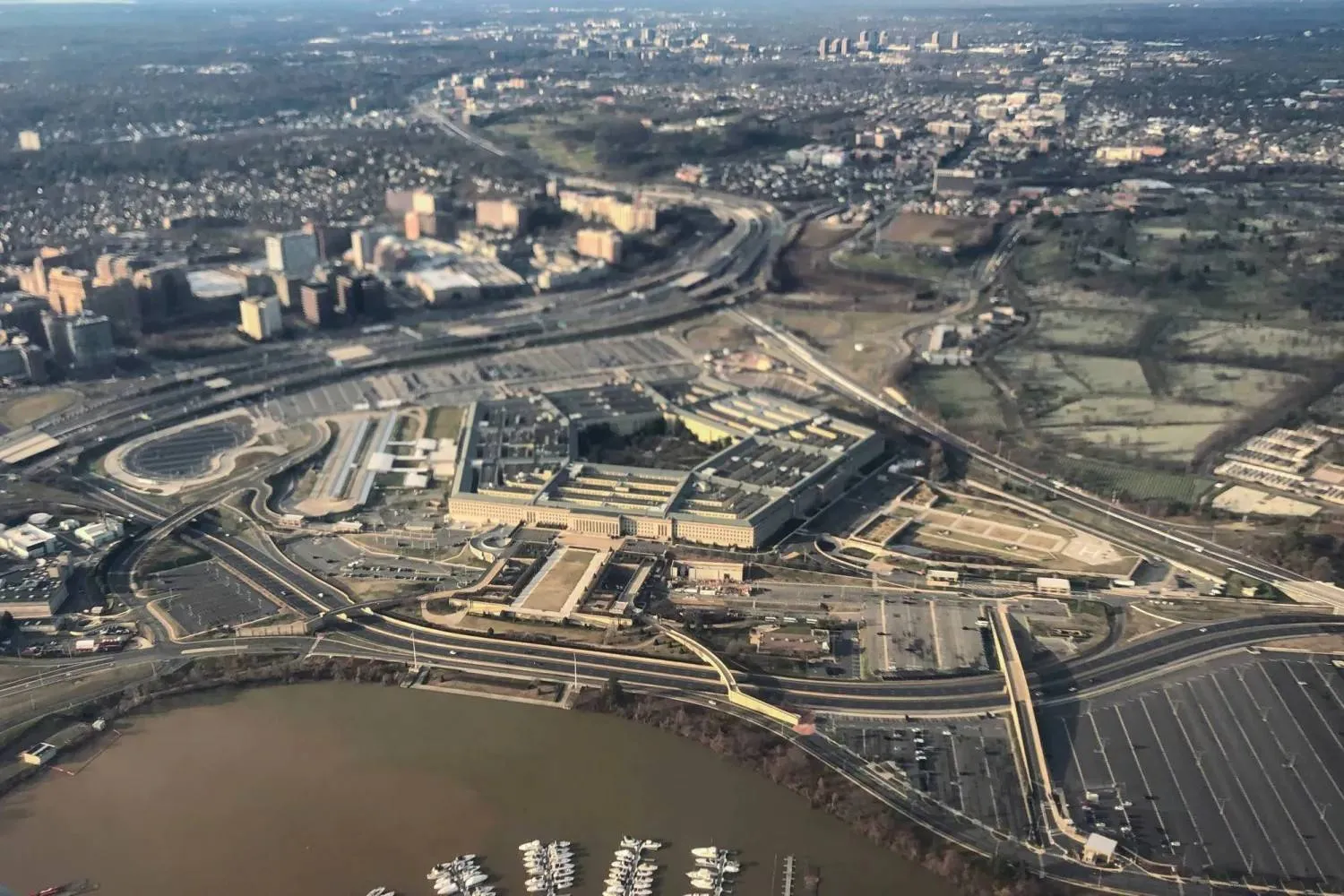
A general view of the Pentagon in Washington, DC (AP) 
TT

Pentagon Reaches Deals with Defense Firms to Expand Munitions Production

A general view of the Pentagon in Washington, DC (AP) 

The Pentagon said on Wednesday it had reached framework agreements with BAE Systems, Lockheed and Honeywell to boost production of defense systems munitions as part of a push to put the US military on a “wartime footing.”

The ‌announcements come more than three weeks after US President Donald Trump and Israel launched a war on Iran. They also follow Trump's meeting earlier this month with executives from seven defense contractors as the Pentagon sought to replenish weapons stocks depleted by US strikes on Iran and other recent military operations.

The Pentagon also plans to send thousands of airborne troops to ⁠the Gulf to give Trump more options to order a ground assault, Reuters reported on Tuesday.

Under the agreements, Honeywell Aerospace will “surge production of critical components for America's munitions stockpile,” as part of a $500 million multi-year investment, the Pentagon said.

BAE Systems and Lockheed Martin will also quadruple production of seekers for the Terminal High Altitude Area Defense (THAAD) interceptor, while a new framework agreement with Lockheed will accelerate production of its Precision Strike Missile, the Pentagon added.

Honeywell said the agreement would support increased output of navigation systems, missile steering actuators and electronic warfare products used ‌across ⁠US military platforms.

Honeywell Aerospace CEO Jim Currier said the company was ready to help meet the urgent demand.

Lockheed Martin CEO Jim Taiclet also said the company was “working closely with the Department of War and the US Army to scale production to meet operational demand.”

Trump in January signed an executive order directing ⁠officials to identify contractors deemed to be underperforming on government contracts while continuing to return profits to shareholders. His administration has also stepped up pressure on defense companies to prioritize production over shareholder payouts.

“We discussed ⁠production and production schedules,” Trump said of the earlier meeting, which included executives from Lockheed Martin, RTX, BAE Systems, Boeing, Honeywell Aerospace, L3Harris Technologies and Northrop Grumman.

The United States has drawn ⁠down billions of dollars worth of weapons from its stockpiles since Russia invaded Ukraine in 2022, and during Israel's military operations in Gaza, including artillery systems, ammunition and anti-tank missiles.


Strikes Near Iran, Israel Nuclear Sites Risk ‘Unmitigated Catastrophe’, Says UN

 A drone view shows a damage in a residential neighborhood, following a night of Iranian missile strikes which injured dozens of Israelis, amid the US-Israel conflict with Iran, in Dimona, southern Israel March 22, 2026. (Reuters)
A drone view shows a damage in a residential neighborhood, following a night of Iranian missile strikes which injured dozens of Israelis, amid the US-Israel conflict with Iran, in Dimona, southern Israel March 22, 2026. (Reuters)
TT

Strikes Near Iran, Israel Nuclear Sites Risk ‘Unmitigated Catastrophe’, Says UN

 A drone view shows a damage in a residential neighborhood, following a night of Iranian missile strikes which injured dozens of Israelis, amid the US-Israel conflict with Iran, in Dimona, southern Israel March 22, 2026. (Reuters)
A drone view shows a damage in a residential neighborhood, following a night of Iranian missile strikes which injured dozens of Israelis, amid the US-Israel conflict with Iran, in Dimona, southern Israel March 22, 2026. (Reuters)

Strikes around Iran and Israel's nuclear sites risk unleashing an "unmitigated catastrophe", the United Nations rights chief said Wednesday, warning that the Middle East war had created an "extremely dangerous" situation.

Speaking before the UN Human Rights Council, where countries were holding an urgent debate on Tehran's attacks across the Gulf, Volker Turk warned that many of the strikes in the weeks-long war "raise serious concerns under international law".

In particular, Turk cautioned that "recent missile strikes near nuclear sites in both Israel and Iran underscore the immense danger of further escalation".

"States are flirting with unmitigated catastrophe."

His comments came after the UN nuclear watchdog said Iran had informed it that "another projectile hit the premises" of the Bushehr nuclear power plant on Tuesday, without damaging it.

Over the weekend, an Iranian strike hit the southern Israeli town of Dimona, home to a nuclear facility, in what Tehran said was in response to an earlier attack on its nuclear site at Natanz.

"The situation is extremely dangerous and unpredictable, and has created chaos across the region," Turk said, insisting that "we cannot go back to war as a tool of international relations".

The UN rights chief also warned that "this conflict has an unprecedented power to ensnare countries across borders and around the world".

"The complex dynamics could ignite further national, regional or global crises at any moment, with an appalling impact on civilians and people everywhere."


Hungary Says Will Phase Out Gas Deliveries to Ukraine

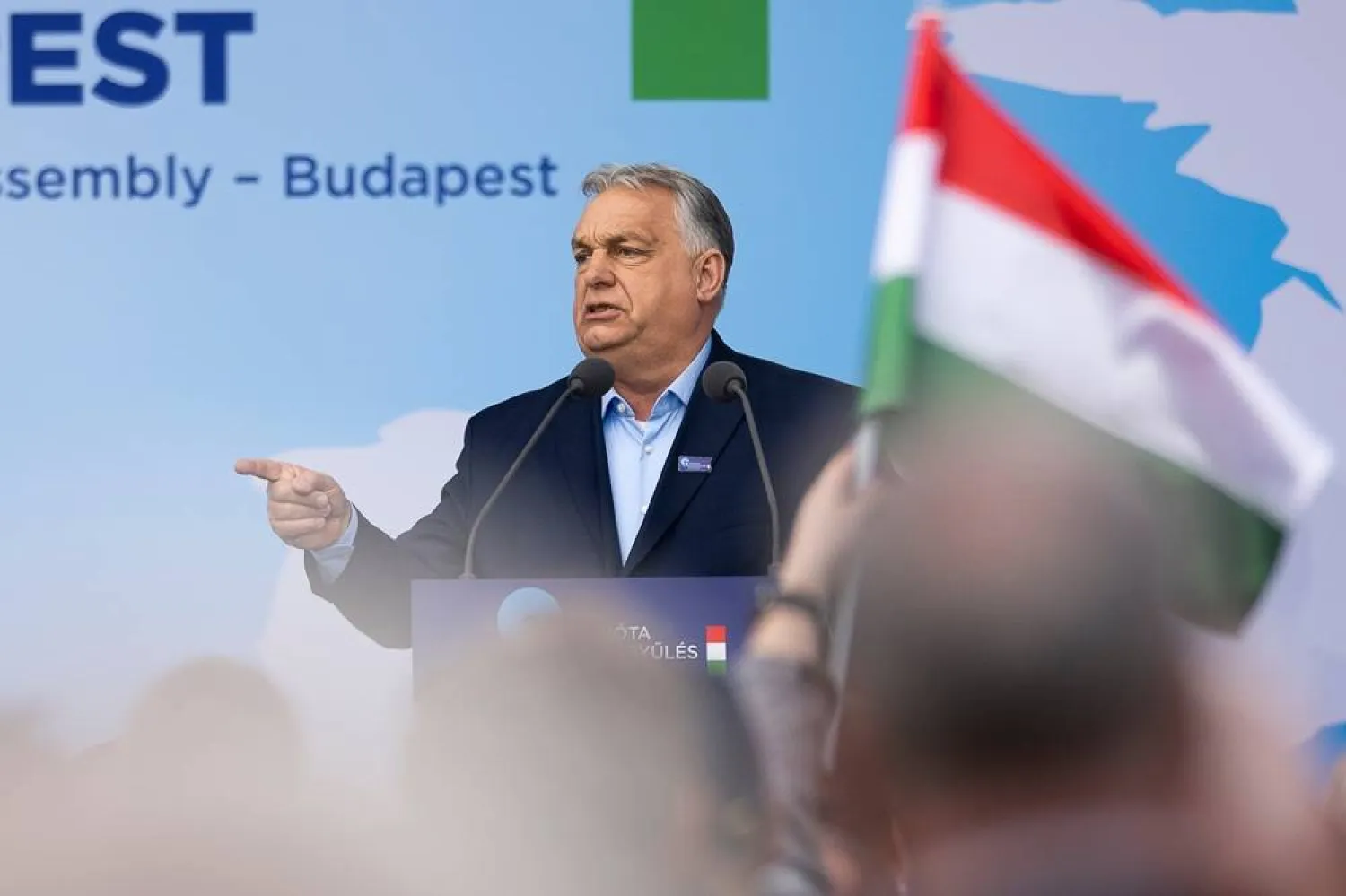
Hungarian Prime Minister Viktor Orban speaks during an assembly of European far-right parties with Orban’s Patriots for Europe group, in Budapest, Hungary, Monday, March 23, 2026. (AP)
TT

Hungary Says Will Phase Out Gas Deliveries to Ukraine

Hungarian Prime Minister Viktor Orban speaks during an assembly of European far-right parties with Orban’s Patriots for Europe group, in Budapest, Hungary, Monday, March 23, 2026. (AP)

Hungary's prime minister said on Wednesday that Budapest would phase out gas deliveries to Ukraine, the latest salvo in a bitter feud between the two countries over a damaged pipeline transporting Russian oil. 

Hungarian Prime Minister Viktor Orban, whose country is a major gas supplier to Ukraine, has accused Kyiv of delaying repairs on the pipeline, effectively stopping the flow of Russian oil to Hungary and its neighbor Slovakia. 

"To break the oil blockade and guarantee the security of Hungary's energy supply, new measures are now necessary," Orban said in a video posted on Facebook. 

"We are gradually halting gas shipments from Hungary to Ukraine and storing the gas that remains here domestically. Until Ukraine supplies oil, it will receive no gas from Hungary," he added. 

Ukrainian authorities have said that the Druzhba (Friendship) pipeline, which crosses its territory, was damaged by Russian airstrikes on January 27. 

Hungary and Slovakia, which have obtained exemptions from the European Union to continue purchasing Russian oil, accuse Kyiv of dragging their feet to repair it. 

In retaliation, Orban -- who is facing crucial parliamentary elections next month -- is blocking a European loan of 90 billion euros ($104 billion) to Ukraine. 

Last week, European Commission President Ursula von der Leyen announced that the EU would help reopen the Druzhba pipeline. 

Budapest and Bratislava are also blocking the official adoption of new economic sanctions against Russia, endorsed by other EU countries. 

According to analysts at the pro-government Hungarian Economic Research Foundation (Oeconomus), Hungary has become one of Ukraine's main gas suppliers. 

Ukraine imported 2.94 billion cubic meters of gas from Hungary in 2025, the top source for Ukrainian imports, accounting for 45.5 percent of all Ukrainian imports, Ukrainian consultancy ExPro said in a report. 

ExPro said separately that Ukraine's imports from Hungary were already slightly dropping as a share in 2026, down to 34 percent of Ukraine's import mix in March 2026. 

Ukraine's total gas consumption in 2025 was 21 billion cubic meters, the Dixi group consultancy said in a report in March, meaning Hungary accounted for 14 percent of Ukraine's total gas use in 2025.