


Dutch Appeals Court Rejects Bid to Stop Arms Exports to Israel

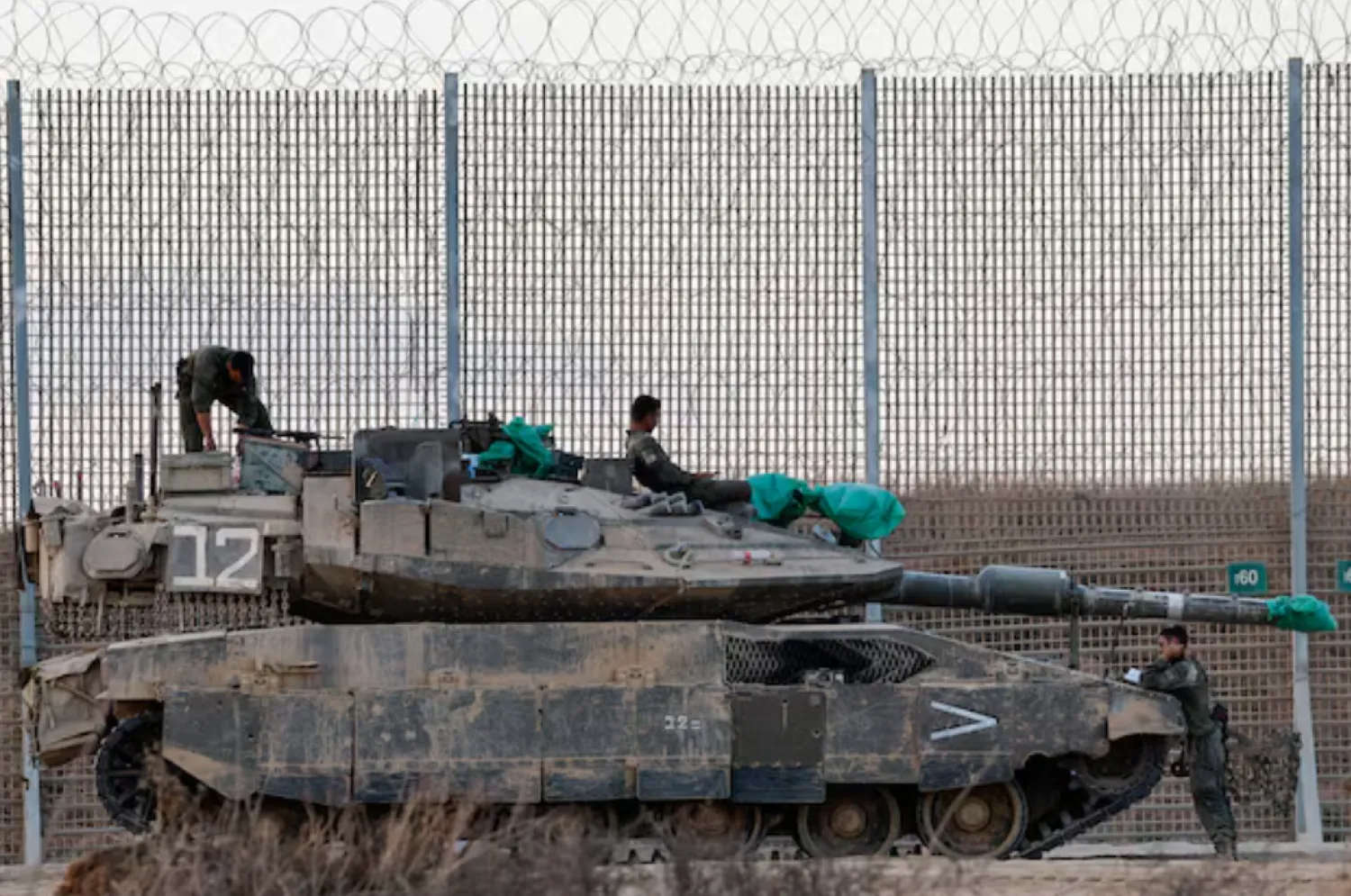
An Israeli tank stands on the Israeli side of the border with Gaza, in Israel, October 19, 2025. REUTERS/Amir Cohen
TT

Dutch Appeals Court Rejects Bid to Stop Arms Exports to Israel

An Israeli tank stands on the Israeli side of the border with Gaza, in Israel, October 19, 2025. REUTERS/Amir Cohen

A Dutch appeals court on Thursday confirmed a decision to throw out a case brought by pro-Palestinian groups to stop the Netherlands exporting weapons to Israel and trading with Israeli settlements in occupied Palestinian territories.

The court said it was up to the state to decide what actions to take and not judges, Reuters reported.

In a written ruling, the court said it could not order a blanket ban because the pro-Palestinian groups had not shown that the government was routinely failing to consider whether exported arms or dual-use goods would be used to violate rights.

The court in The Hague added that the Dutch government already did enough to discourage companies from working in the occupied territories.

The plaintiffs, citing high civilian casualties in Israel's war in the Gaza Strip, had argued that the Dutch state, as a signatory to the 1948 Genocide Convention, has a duty to take all reasonable measures at its disposal to prevent genocide. Israel has repeatedly dismissed accusations of genocide and said its Gaza campaign was focused solely on fighting Hamas.

The court said the Netherlands did have that obligation under the Genocide Convention and that there was "a grave risk" that Israel was committing genocide in Gaza.

But it backed a decision by a lower court in December last year. In that case, the judges sided with the Dutch state which had said it continually assesses the risk around exported arms, and that it has refused some exports.

The pro-Palestinian NGOs had said the Netherlands had exported radar systems, parts for F-16 fighter jets and warships, police dogs and cameras and software for surveillance systems.

The Dutch government says that it has halted most arms exports to Israel and only allows parts for defence systems such as the Iron Dome.



Last Protester in Immigration Detention after Trump’s Campus Crackdown Has Been Released

Leqaa Kordia talks to The Associated Press Television News as she stands by friends, family and supporters after being released from the Prairieland Detention Center in Alvarado, Texas, Monday, March 16, 2026. (AP Photo/Tony Gutierrez)
TT

Last Protester in Immigration Detention after Trump’s Campus Crackdown Has Been Released

Leqaa Kordia talks to The Associated Press Television News as she stands by friends, family and supporters after being released from the Prairieland Detention Center in Alvarado, Texas, Monday, March 16, 2026. (AP Photo/Tony Gutierrez)

A Palestinian woman who was the last person still in immigration detention after the Trump administration's 2025 crackdown on pro-Palestinian activism on college campuses was freed Monday after a year in custody.

Leqaa Kordia, a 33-year-old from the West Bank who has lived in New Jersey since 2016, had been held in a US immigration detention center in Texas since last March. Her detention was linked, in part, to her participation in a protest outside Columbia University in 2024.

“I don’t know what to say. I’m free! I’m free! Finally, after one year,” Kordia, with a beaming smile, told reporters after emerging from the detention center.

An immigration judge had ordered her released on bond three times. The government challenged the first two rulings, but Kordia was freed Monday on $100,000 bond after it did not challenge the third.

Kordia said she was looking forward to going home and hugging her mother “so hard.” But she also said she would keep fighting on behalf of people still being held at the detention center.

“There is a lot of injustice in this place,” she said. “There is a lot of people that shouldn’t be here the first place.”

Kordia was among a number of people arrested last year after the Trump administration began using its immigration enforcement powers on noncitizens who had criticized or protested Israel’s military actions in Gaza, many students and scholars at American universities.

Among them was Mahmoud Khalil, a former Columbia University graduate student involved in campus protests. He spent three months detained in a Louisiana immigration jail before being freed. Rümeysa Öztürk, a Tufts University student who co-authored an op-ed criticizing her university’s response to Israel and the war, was detained for six weeks.

Others did not fight to stay — one Columbia doctoral student fled the US after her visa was revoked and immigration agents showed up at her university apartment, The Assciated Press said.

Arrests of activists like Khalil drew condemnation from elected officials and advocates. But Kordia was not a student or part of a group that might have provided support, so her case remained largely out of the public eye while her detention carried on.

Kordia said she joined a 2024 demonstration outside Columbia University after Israel killed scores of her relatives in Gaza, where she maintains deep personal ties. She was around 100 people arrested by city police at that protest, but the charges against her were dismissed and sealed. Information about her arrest was later given to the Trump administration by the New York City Police Department, which said it was told the records were needed as part of a money laundering investigation.

Kordia was arrested during a March 13, 2025, check-in with US Immigration and Customs Enforcement in New Jersey. She was detained immediately and flown to Prairieland Detention Center, south of Dallas.

Federal officials have accused Kordia of overstaying her visa, while scrutinizing payments she sent to relatives in the Middle East. Kordia said the money was meant to help family members suffering during the war.

Tricia McLaughlin, a spokesperson for the Department of Homeland Security, had previously criticized Kordia for what she said was “providing financial support to individuals living in nations hostile to the US.”

The department said in an email Monday night, “The facts of this case have not changed: Leqaa Kordia is in the country illegally after violating the terms of her visa."

“The Trump administration is committed to restoring the rule of law and common sense to our immigration system, and will continue to fight for the arrest, detention, and removal of aliens who have no right to be in this country,” read the statement.

An immigration judge found “overwhelming evidence” that Kordia was telling the truth about the payments.

Kordia was recently hospitalized for three days following a seizure after fainting and hitting her head at the privately run detention facility.

At a hearing Friday, Kordia’s attorneys said she had a neurological condition that had worsened while in custody, putting her at an elevated risk of seizure. They reiterated that she could stay with US citizen family members and did not pose a flight risk.

The immigration judge, Tara Naslow, agreed.

“I’ve heard testimony. I’ve seen thousands of pages of evidence presented by the respondent, and very little evidence presented by the government in any of this,” Naslow said.

New York City Mayor Zohran Mamdani said on X that he asked for her release when he met with President Donald Trump last month

“I am grateful that Leqaa has been released this evening from ICE custody after more than a year in detention for speaking up for Palestinian rights,” Mamdani said.


US Administration to Pressure Allies to Blacklist Iran's Revolutionary Guards and Hezbollah

US Secretary of State Marco Rubio speaks to reporters, on the day of classified briefings for the full US Senate and House of Representatives on the situation in Iran, on Capitol Hill in Washington, DC, US, March 3, 2026. (Reuters)
TT

US Administration to Pressure Allies to Blacklist Iran's Revolutionary Guards and Hezbollah

US Secretary of State Marco Rubio speaks to reporters, on the day of classified briefings for the full US Senate and House of Representatives on the situation in Iran, on Capitol Hill in Washington, DC, US, March 3, 2026. (Reuters)

US President Donald Trump's administration on Monday urged US diplomats abroad to push allies to designate Iran's Revolutionary Guard Corps and Lebanon-based ‌Hezbollah as terrorist groups, citing elevated risk of attack, according to an internal State Department cable seen by Reuters.

The directive, dated March 16 and signed by US Secretary of State Marco Rubio, was sent to all US diplomatic and consular posts worldwide.

It asks US diplomats to deliver the message to their counterparts “at the highest appropriate level” and no later than March 20, adding that the advocacy ⁠efforts to get these groups blacklisted should be coordinated with Israeli counterparts.

The Trump administration is attempting to rally reluctant allies - many of whom were not briefed ahead of the US-Israeli air war that started two weeks ago - to support its military operation.

In one sign of trouble for that effort, several US allies said on Monday they had no immediate plans to send ships to help the US unblock the Strait of Hormuz, rebuffing Trump's plea to keep the vital oil shipping waterway open.

“With the elevated risk of attack from Iran and its partners and proxies, all governments must move expeditiously to diminish the capabilities of Iran and Iran-aligned terrorist ‌groups ⁠from attacking our respective nations and citizens,” one of the talking points in the cable said.

Both the IRGC and Hezbollah are already designated as terrorist groups by the United ⁠States and some other countries.

The cable does not provide details on the elevated risk but cites examples of how Tehran has attacked its neighbors in the Middle East and urges joint action.

“We assess that the Iranian regime is more sensitive ⁠to collective action than unilateral action, and that joint pressure is more likely to compel behavior change by the regime than unilateral actions alone,” the cable said.

It adds that such designations would increase pressure on Iran and limit its ability “to sponsor terror activities” around the world.

“President Trump is focused on securing peace in the Middle East,” a State Department spokesperson said.

“The IRGC, Hezbollah, and other Iranian backed proxies destabilize governments and undermine regional peace,” he added.


Philippines In Talks with Russia to Secure Its Fuel Supply

St Nikolas ship X1 oil tanker involved in US-Iran dispute in the Gulf of Oman which state media says was seized is seen in the Tokyo Bay, Japan, October 4, 2020, in this handout picture. (Reuters) 
TT

Philippines In Talks with Russia to Secure Its Fuel Supply

St Nikolas ship X1 oil tanker involved in US-Iran dispute in the Gulf of Oman which state media says was seized is seen in the Tokyo Bay, Japan, October 4, 2020, in this handout picture. (Reuters) 

The Philippines is in talks with Indonesia and Russia as the nation races to secure its fuel supply, according to Energy Secretary Sharon Garin, who said countries must honor trade contracts as the Iran war rages on.

Manila’s energy officials and diplomats have approached nations that supply fuel to the Philippines to continue our “longstanding agreements” with them “because we have good relations with these countries also,” Garin said in a briefing on Monday, according to Bloomberg.

These include China, South Korea, Singapore, Thailand and Japan, she said.

The Philippines is in discussions with Indonesia for coal imports to ensure that Manila's electricity supply remains stable, Garin said.

Indonesia is the Philippines' main supplier of coal which fuels more than half of its power grid.

The Philippines' lone refiner, Petron Corp, is in talks with suppliers of Russian oil as the country looks at alternative exporters. Petron is in discussions with Russian crude oil traders, Chief Executive Officer Ramon Ang said.

In Southeast Asia, Vietnam has said crude not yet committed for export must be sold to local refineries, while Thailand halted some outbound shipments of oil and rice.

Indonesia said it would prioritize its coal and palm oil output for local needs.

At last week’s meeting in Manila of economic ministers from ASEAN, the regional bloc failed to secure any firm commitments from its members to waive export curbs, although discussions will continue.

The Philippines, a nation of 113 million people, is particularly vulnerable as it imports nearly its entire oil requirements, the bulk of them from the Middle East.

“I’m not nervous as long as there’s no hoarding,” Garin said when asked about the possibility of shortage.

Her agency had warned profiteers and hoarders of imprisonment.

“I do believe that we won’t run out (of fuel),” she said, but added that the country needs to manage its consumption.