


After Six Months, Germany’s Merz Faces Mounting Woes

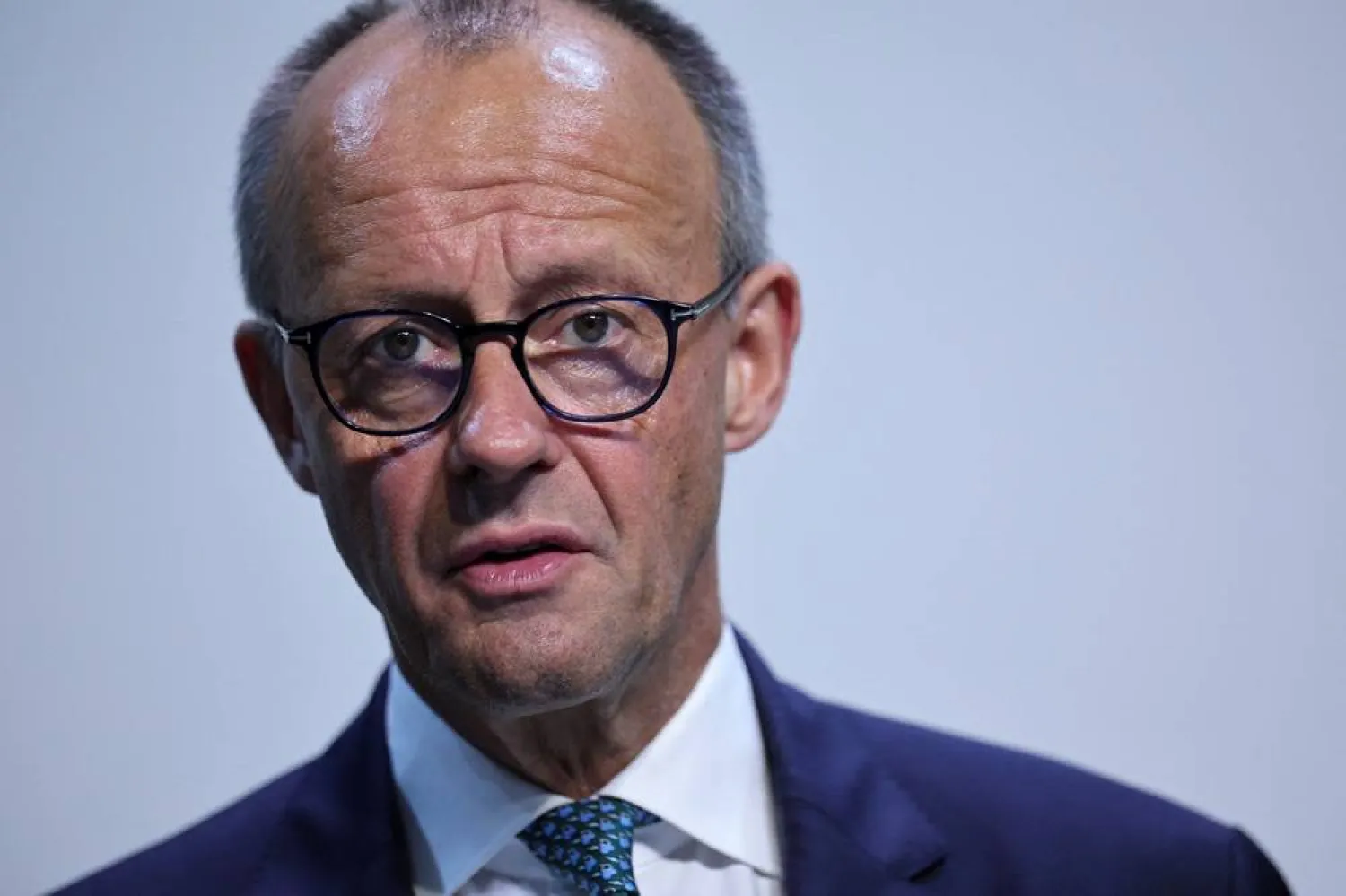
 Germany's Chancellor Friedrich Merz speaks during the press conference at the Belem Climate Summit of the UN Climate Change Conference (COP30), in Belem, Brazil, November 7, 2025. (Reuters)
Germany's Chancellor Friedrich Merz speaks during the press conference at the Belem Climate Summit of the UN Climate Change Conference (COP30), in Belem, Brazil, November 7, 2025. (Reuters)
TT

After Six Months, Germany’s Merz Faces Mounting Woes

 Germany's Chancellor Friedrich Merz speaks during the press conference at the Belem Climate Summit of the UN Climate Change Conference (COP30), in Belem, Brazil, November 7, 2025. (Reuters)
Germany's Chancellor Friedrich Merz speaks during the press conference at the Belem Climate Summit of the UN Climate Change Conference (COP30), in Belem, Brazil, November 7, 2025. (Reuters)

After just six months in power, German Chancellor Friedrich Merz's coalition is facing infighting, policy deadlock and sliding poll ratings, undermining its efforts to take on the rising far right.

It marks a difficult start for the conservative politician who ran on bold pledges of reviving the stagnant economy, overhauling the threadbare military and toughening immigration policy after years of drift under the previous government.

In German post-war politics, "there has never been such widespread dissatisfaction with a government in such a short period of time", Manfred Guellner, director of the Forsa polling institute, told AFP.

For Germans who hoped for more decisive leadership after the last government's collapse, "their expectations have been dashed", he said.

The winners of February's general election, Merz's center-right CDU/CSU bloc now find themselves neck-and-neck in the polls with the far-right Alternative for Germany (AfD), which came second in the poll and is now the largest opposition party.

Merz's junior coalition partners, the center-left Social Democrats (SPD) of ex-chancellor Olaf Scholz, have seen their popularity slide further after a terrible election performance, and now sit around 13-15 percent in polls.

"It is clear that many citizens are dissatisfied or disappointed with the government's work so far," Roderich Kiesewetter, an MP from Merz's Christian Democrats (CDU), told AFP.

The government appeared to be "focusing only on migration instead of the economy, education and security", he said.

There have been increasing tensions between the ruling parties in Berlin since Merz failed to be elected chancellor in the first round of voting in parliament in early May, a first in post-war Germany.

In July they were unable to agree on the appointment of three judges to the constitutional court, with the conservatives considering the Social Democrats' candidate too left-wing.

A group of young conservative MPs revolted over a pension reform proposal, which had already been adopted by the cabinet, arguing that it burdened future generations.

Meanwhile, an overhaul of the country's military service system, which was supposed to demonstrate Germany's leadership in NATO in the face of the Russian threat, has turned into a stalemate over whether to bring back a limited form of conscription.

Now Foreign Minister Johann Wadephul, a close confidant of Merz, is under fire from conservatives for expressing reservations about the possibility of sending back Syrian refugees living in Germany.

With their support so low after the February polls, the CDU/CSU and the SPD "are finding it more difficult to reach compromises," Aiko Wagner, a political scientist at the Free University of Berlin, told AFP. Both sides fear they "will become even weaker among their own" supporters if they do, said Wagner.

The coalition's own struggles are making it more difficult for Merz to counter the rise of the AfD, which he declared as his party's "main opponent" ahead of five regional elections scheduled for 2026.

Merz has used increasingly tough rhetoric on immigration to counter the AfD, such as a controversial statement in October about the problems of the "German urban cityscape" -- seen as criticism of the impact of migrants on cities.

But this offended many Social Democrats, as well as some moderates among his conservative bloc.

Guellner argued that Merz made "a fatal mistake" by focusing so much on migration when the struggling economy was the main concern of many voters.

The AfD meanwhile sees Merz's struggles as an opportunity.

A clear majority of Germans backed conservative or right-wing parties in the election, AfD MP Sebastian Muenzenmaier told AFP.

But Merz's coalition with the center-left appears incapable of delivering on his promises, he said.

"No one sees this government staying in power for four years," said Muenzenmaier, who predicted that the AfD would have strong showings in next years' state elections.

"Many believe that at the end of next year, after the elections, the situation will become very difficult for the government in Berlin and that it will collapse".

The prospect of another coalition crisis and early elections did not sit well with Stephanie and Bernd Nebel, two visitors to Berlin from Munich who spoke with AFP outside of the Reichstag, the seat of Germany's parliament.

The biggest problem with the coalition so far, Bernd Nebel said, was that Merz's government "made it their mission to boost the economic recovery a little -- and absolutely nothing has happened in that regard".



Turkish FM to Attend Trump’s Board of Peace Meeting in Washington, Italy as ‘Observer’ 

28 November 2025, Berlin: Turkish Foreign Minister Hakan Fidan during a joint press conference with German Foreign Minister Wadephul. (dpa)
TT

Turkish FM to Attend Trump’s Board of Peace Meeting in Washington, Italy as ‘Observer’ 

28 November 2025, Berlin: Turkish Foreign Minister Hakan Fidan during a joint press conference with German Foreign Minister Wadephul. (dpa)

‌Turkish Foreign Minister Hakan Fidan will travel to Washington in lieu of President Recep Tayyip Erdogan for the inaugural meeting of US President Donald Trump's "Board of Peace" on Thursday, the foreign ministry said on Wednesday.

A Turkish diplomatic source told Reuters ‌that Fidan, during the ‌talks, would call ‌for ⁠determined steps to ⁠resolve the Palestinian issue and emphasize that Israel must end actions to hinder the flow of aid into Gaza and stop its ceasefire violations.

Fidan ⁠will also reiterate Türkiye's ‌readiness ‌to contribute to Gaza's reconstruction and its ‌desire to help protect Palestinians ‌and ensure their security, the source said.

He will also call for urgent action against Israel's "illegal ‌settlement activities and settler violence in the West Bank", ⁠the ⁠source added.

According to a readout from Erdogan's office, the president separately told reporters on Wednesday that he hoped the Board of Peace would help achieve "the lasting stability, ceasefire, and eventually peace that Gaza has longed for", and would focus on bringing about a two-state solution.

The board, of which Trump is the chairman, was initially designed to oversee the Gaza truce and the territory's reconstruction after the war between Hamas and Israel.

Meanwhile, Italy will be present at the meeting as an "observer", Italian Foreign Minister Antonio Tajani said Wednesday.

"I will go to Washington to represent Italy as an observer to this first meeting of the Board of Peace, to be present when talks occur and decisions are made for the reconstruction of Gaza and the future of Palestine," Tajani said according to ANSA news agency.

Italy cannot be present as anything more than an observer as the country's constitutional rules do not allow it to join an organization led by a single foreign leader.

But Tajani said it was key for Rome to be "at the forefront, listening to what is being done".

Since Trump launched the Board of Peace at the World Economic Forum in Davos in January, at least 19 countries have signed its founding charter.


Energy Secretary: US to Stop Iran's Nuclear Ambitions 'One Way or the Other'

US Secretary of Energy Chris Wright speaks during a press conference after a meeting with Venezuela's acting president Delcy Rodriguez at the Miraflores Presidential Palace in Caracas on February 11, 2026. (Photo by Juan BARRETO / AFP)
TT

Energy Secretary: US to Stop Iran's Nuclear Ambitions 'One Way or the Other'

US Secretary of Energy Chris Wright speaks during a press conference after a meeting with Venezuela's acting president Delcy Rodriguez at the Miraflores Presidential Palace in Caracas on February 11, 2026. (Photo by Juan BARRETO / AFP)

The United States will deter Iran from acquiring nuclear weapons "one way or the other", US Energy Secretary Chris Wright warned on Wednesday.

"They've been very clear about what they would do with nuclear weapons. It's entirely unacceptable," Wright told reporters in Paris on the sidelines of meetings of the International Energy Agency.

"So one way or the other, we are going to end, deter Iran's march towards a nuclear weapon," Wright said.

US and Iranian officials held talks in Geneva on Tuesday aimed at averting the possibility of US military intervention to curb Tehran's nuclear program.

Iran said following the talks that they had agreed on "guiding principles" for a deal to avoid conflict.

US Vice President JD Vance, however, said Tehran had not yet acknowledged all of Washington's red lines.


Iran, Russia to Conduct Joint Drills in the Sea of Oman 

This handout photo released by Iran's Revolutionary Guards Corps (IRGC)'s official website Sepanews on February 17, 2026, shows boats maneuvering around a tanker vessel during a military exercise by members of the IRGC and navy in the Strait of Hormuz. (Sepahnews / AFP)
TT

Iran, Russia to Conduct Joint Drills in the Sea of Oman 

This handout photo released by Iran's Revolutionary Guards Corps (IRGC)'s official website Sepanews on February 17, 2026, shows boats maneuvering around a tanker vessel during a military exercise by members of the IRGC and navy in the Strait of Hormuz. (Sepahnews / AFP)

Iran and Russia will conduct naval maneuvers in the Sea of Oman on Thursday, following the latest round of talks between Tehran and Washington in Geneva, Iranian media reported.

On Monday, the Revolutionary Guards, the ideological arm of Iran's military, also launched exercises in the strategic Strait of Hormuz, a challenge to US naval forces deployed in the region.

"The joint naval exercise of Iran and Russia will take place tomorrow (Thursday) in the Sea of Oman and in the northern Indian Ocean," the ISNA agency reported, citing drill spokesman, Rear Admiral Hassan Maghsoudloo.

"The aim is to strengthen maritime security and to deepen relations between the navies of the two countries," he said, without specifying the duration of the drill.

The war games come as Iran struck an upbeat tone following the second round of Oman-mediated negotiations in Geneva on Tuesday.

Previous talks between the two foes collapsed following the unprecedented Israeli strike on Iran in June 2025, which sparked a 12-day war that the United States briefly joined.

US President Donald Trump has deployed a significant naval force in the region, which he has described as an "armada."

Iranian officials have repeatedly threatened to block the Strait of Hormuz, particularly during periods of tension with the United States, but it has never been closed.

A key passageway for global shipments of oil and liquefied natural gas, the Strait of Hormuz has been the scene of several incidents in the past and has returned to the spotlight as pressure has ratcheted amid the US-Iran talks.

Iran announced on Tuesday that it would partially close it for a few hours for "security" reasons during its own drills in the strait.