


Macron Heads to China as Europe Walks Tightrope between Rivalry and Reliance

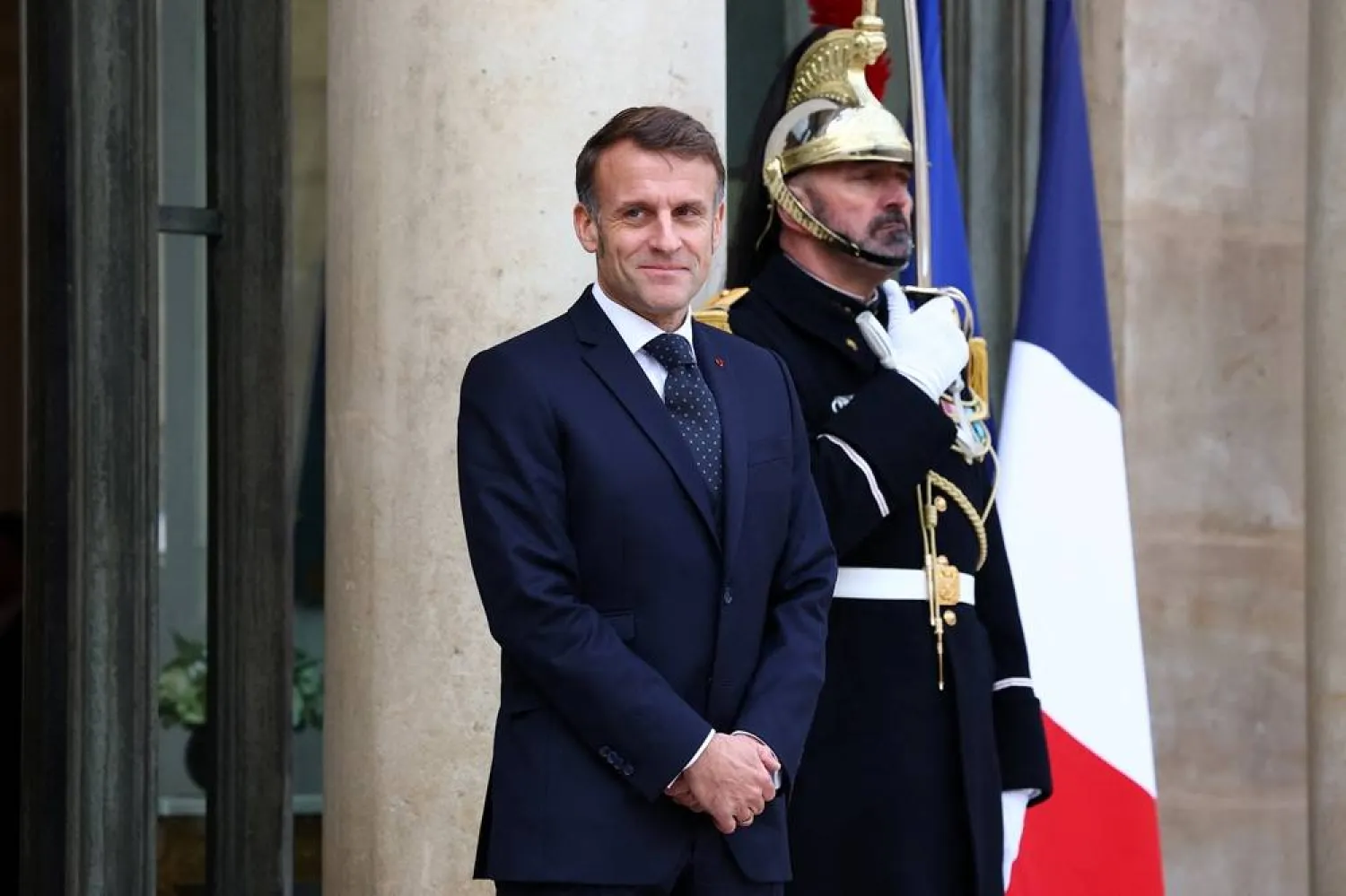
 French President Emmanuel Macron waits for the arrival of Ukrainian President Volodymyr Zelenskiy for a meeting with at the Elysee Palace in Paris, France, December 1, 2025. (Reuters)
French President Emmanuel Macron waits for the arrival of Ukrainian President Volodymyr Zelenskiy for a meeting with at the Elysee Palace in Paris, France, December 1, 2025. (Reuters)
TT

Macron Heads to China as Europe Walks Tightrope between Rivalry and Reliance

 French President Emmanuel Macron waits for the arrival of Ukrainian President Volodymyr Zelenskiy for a meeting with at the Elysee Palace in Paris, France, December 1, 2025. (Reuters)
French President Emmanuel Macron waits for the arrival of Ukrainian President Volodymyr Zelenskiy for a meeting with at the Elysee Palace in Paris, France, December 1, 2025. (Reuters)

French President Emmanuel Macron will travel to China this week for his fourth state visit, as Europe seeks to balance economic and security threats from Beijing with reliance on the world's second-largest economy during a time of global trade turmoil.

Macron in the past has sought to project a robust European front in dealing with China, while being careful not to antagonize Beijing, whose growing assertiveness is testing trade, security and diplomatic ties, analysts say.

"He must make clear to China's leadership that Europe will respond to growing economic and security threats from Beijing, while preventing an escalation of tensions that leads to a full-blown trade war and diplomatic breakdown," Noah Barkin, a China analyst with Rhodium Group, told Reuters.

"This is not an easy message to deliver," he said.

CHINESE EXPORTS HAMMERING EUROPEAN INDUSTRY

Macron, who will start his trip with a visit to Beijing's Forbidden City on Wednesday, will meet President Xi Jinping on Thursday in the capital and again on Friday during a trip to Chengdu, in southwestern Sichuan province.

His visit comes after a tense trip by European Commission President Ursula von der Leyen in July, when she said ties between the EU and China were at an "inflection point."

British Prime Minister Keir Starmer and German Chancellor Friedrich Merz will visit early next year.

Trade tensions between China and Europe have risen as cheap Chinese exports, in the steel sector in particular after being shut out of the US market, are hammering swathes of European industry. There is also anxiety in Europe at China's growing technological superiority in the electric vehicle (EV) sector and its dominance in rare earths processing, which could threaten supplies for critical European industries.

With Washington's tariffs squeezing global trade, Beijing is seizing the opportunity to present itself as a partner for business, hoping to mollify European concerns over China's backing for Russia and its state-subsidized industrial model.

Ahead of the trip, Macron's advisers said he would push for a rebalancing of trade dynamics so that China boosts domestic consumption and hoped the "gains from innovation could be shared", so that Europe gets access to Chinese technology.

To combat growing concern over China trade, the European Union is expected to unveil a new economic security doctrine that could see the bloc deploy its toolbox of trade instruments in a more aggressive way towards China.

France, whose carmakers have negligible sales in China but are under pressure to succeed in their transition to EVs at home, backed a European Commission push to raise tariffs on Chinese electric car imports.

Despite recently opening a new assembly line in China, Airbus is unlikely to clinch a long-anticipated order of up to 500 jets during Macron's visit, industry sources said. Such deals give Beijing leverage over Washington, which is pressing for fresh Boeing purchase commitments.

MACRON CANNOT AFFORD TO GO ROGUE

Macron will also be keen not to repeat the missteps of his last trip in 2023, when his remarks on Taiwan in an interview on his flight back home caused a backlash in the United States.

"Macron cannot allow himself to go rogue as in 2023," Barkin said, adding the comments, in which he seemed to refuse to pick sides between China and the US, had "painted a misleading picture about where French policy towards China really was."

French advisers said Macron would push for maintaining the status quo on Taiwan and urge China not to escalate, following recent Japanese comments on the island that triggered a diplomatic spat with Beijing.

"I expect him to be more disciplined this time," Barkin said. "There is much more at stake for France and for Europe."



Top Diplomats of China, Cambodia and Thailand Meet as Beijing Seeks to Strengthen Role in Dispute

This handout photo taken and released by Agence Kampuchea Press (AKP) on December 29, 2025 shows China's Foreign Minister Wang Yi (C), Cambodia's Deputy Prime Minister Prak Sokhonn (L), who is also the country's Foreign Minister, and Thailand's Foreign Minister Sihasak Phuangketkeow (R) linking arms during a meeting in China's Yunnan province. (Handout / Agence Kampuchea Press (AKP) / AFP)
TT

Top Diplomats of China, Cambodia and Thailand Meet as Beijing Seeks to Strengthen Role in Dispute

This handout photo taken and released by Agence Kampuchea Press (AKP) on December 29, 2025 shows China's Foreign Minister Wang Yi (C), Cambodia's Deputy Prime Minister Prak Sokhonn (L), who is also the country's Foreign Minister, and Thailand's Foreign Minister Sihasak Phuangketkeow (R) linking arms during a meeting in China's Yunnan province. (Handout / Agence Kampuchea Press (AKP) / AFP)

Foreign ministers from Cambodia and Thailand convened with their Chinese counterpart on Monday as the Beijing government, building on its expanding presence in the world diplomatic arena, sought to play a stronger mediating role in the violent border dispute between the two Southeast Asian countries.

The trilateral meeting, held in a southwestern Chinese province north of the contested border, came two days after Thailand and Cambodia signed a fresh ceasefire agreement to end weeks of fighting that killed more than 100 people and forced hundreds of thousands to be evacuated on both sides of the border.

Chinese Foreign Minister Wang Yi called for joint efforts to promote regional peace, stability and development, which is language typical for China in such situations.

“Allowing the flames of war to be reignited is absolutely not what the people of the two countries want, and not what China, as your friend, wants to see. Therefore, we should resolutely look ahead and move forward,” Wang said during the meeting Monday in Yunnan province.

It was noteworthy that the meeting was held there, nearer to the dispute and to Southeast Asia, rather than in Beijing, the Chinese capital and seat of government about 1,300 miles (2,500 kilometers) northeast.

Cambodian Foreign Minister Prak Sokhonn said he believed the latest ceasefire would last and would create an environment for both countries to work on their relations and resume the previously agreed-upon ways to settle their differences, according to a Chinese interpreter.

Thai Foreign Minister Sihasak Phuangketkeow also expressed hopes for peace with neighboring countries, the interpreter said.

The Thai Foreign Ministry later said in a statement that China volunteered to be a platform to support peace between the two countries and Thailand reiterated that adjustments of ties should be conducted “on a step-by-step basis.”

“The Thai side will consider the release of 18 soldiers after the 72 hours ceasefire observation period and requests that Cambodia facilitate the return of Thais along the border,” the ministry said.

A day after the fresh pact was signed, Sihasak and Prak Sokhonn held separate meetings with Wang on Sunday, the first day of the two-day gathering.

The meetings represented China's latest efforts to strengthen its role as an international mediator and, in particular, its influence in Asian regional crises. As China grows and becomes more of an economic and political force regionally and globally, Beijing has spent the past decade and more working in various ways to increase its voice as a third party in diplomatic matters.

Disputes continue

The two Southeast Asian countries originally reached a ceasefire in July. It was brokered by Malaysia and pushed through under pressure from US President Donald Trump, who threatened to withhold trade privileges unless Thailand and Cambodia agreed. The preliminary pact was followed by a more detailed October agreement.

But Thailand and Cambodia carried on a bitter propaganda war, with minor, cross-border violence continuing. The tensions erupted into heavy fighting in early December.

The Saturday agreement calls for Thailand, after the ceasefire has held for 72 hours, to repatriate 18 Cambodian soldiers who have been held prisoner since the earlier fighting in July. Their release has been a major demand of the Cambodian side.

The agreement also calls on both sides to adhere to international agreements against deploying land mines, a major concern of Thailand.

Cambodian Prime Minister Hun Manet on Monday issued a statement to all Cambodian combatants along the border with Thailand.

“Even though we can still fight," he said, “as a small country we still have nothing to gain from prolonging the fighting for a long time.”


US Pledges $2B for UN Humanitarian Aid as Trump Slashes Funding, Warns Agencies to 'Adapt or Die'

This photograph taken on December 20, 2025 shows Rohingya refugee men carrying bricks at the Kutupalong refugee camp in Cox's Bazar. (AFP)
TT

US Pledges $2B for UN Humanitarian Aid as Trump Slashes Funding, Warns Agencies to 'Adapt or Die'

This photograph taken on December 20, 2025 shows Rohingya refugee men carrying bricks at the Kutupalong refugee camp in Cox's Bazar. (AFP)

The United States on Monday announced a $2 billion pledge for UN humanitarian aid as President Donald Trump’s administration continues to slash US foreign assistance and warns United Nations agencies to “adapt, shrink or die” in a time of new financial realities.

The money is a small fraction of what the US has contributed in the past but reflects what the administration believes is a generous amount that will maintain the United States’ status as the world’s largest humanitarian donor.

The pledge creates an umbrella fund from which money will be doled out to individual agencies and priorities, a key part of US demands for drastic changes across the world body that have alarmed many humanitarian workers and led to severe reductions in programs and services.

The $2 billion is only a sliver of traditional US humanitarian funding for UN-backed programs, which has run as high as $17 billion annually in recent years, according to UN data. US officials say only $8-$10 billion of that has been in voluntary contributions. The United States also pays billions in annual dues related to its UN Membership.

Critics say the Western aid cutbacks have been shortsighted, driven millions toward hunger, displacement or disease, and harmed US soft power around the world.

A year of crisis in aid

The move caps a crisis year for many UN organizations like its refugee, migration and food aid agencies. The Trump administration has already cut billions in US foreign aid, prompting them to slash spending, aid projects and thousands of jobs. Other traditional Western donors have reduced outlays, too.

The announced US pledge for aid programs of the United Nations — the world’s top provider of humanitarian assistance and biggest recipient of US humanitarian aid money — takes shape in a preliminary deal with the UN Office for the Coordination of Humanitarian Affairs, or OCHA, run by Tom Fletcher, a former British diplomat and government official.

Even as the US pulls back its aid, needs have ballooned across the world: Famine has been recorded this year in parts of conflict-ridden Sudan and Gaza, and floods, drought and natural disasters that many scientists attribute to climate change have taken many lives or driven thousands from their homes.

The cuts will have major implications for UN affiliates like the International Organization for Migration, the World Food Program and refugee agency UNHCR. They have already received billions less from the US this year than under annual allocations from the previous Biden administration — or even during Trump’s first term.

Now, the idea is that Fletcher’s office — which last year set in motion a “humanitarian reset” to improve efficiency, accountability and effectiveness of money spent — will become a funnel for US and other aid money that can be then redirected to those agencies, rather than scattered US contributions to a variety of individual appeals for aid.

US seeks aid consolidation

The United States wants to see “more consolidated leadership authority” in UN aid delivery systems, said a senior State Department official, speaking on condition of anonymity to provide details before the announcement at the US diplomatic mission in Geneva.

Under the plan, Fletcher and his coordination office “are going to control the spigot” on how money is distributed to agencies, the official said.

“This humanitarian reset at the United Nations should deliver more aid with fewer tax dollars — providing more focused, results-driven assistance aligned with US foreign policy,” said US Ambassador to the United Nations Michael Waltz.

US officials say the $2 billion is just a first outlay to help fund OCHA’s annual appeal for money, announced earlier this month. Fletcher, noting the upended aid landscape, already slashed the request this year. Other traditional UN donors like Britain, France, Germany and Japan have reduced aid allocations and sought reforms this year.

“The agreement requires the UN to consolidate humanitarian functions to reduce bureaucratic overhead, unnecessary duplication, and ideological creep,” the State Department said in a statement. “Individual UN agencies will need to adapt, shrink, or die.”

“Nowhere is reform more important than the humanitarian agencies, which perform some of the UN’s most critical work,” the department added.

“Today’s agreement is a critical step in those reform efforts, balancing President Trump’s commitment to remaining the world’s most generous nation, with the imperative to bring reform to the way we fund, oversee, and integrate with UN humanitarian efforts.”

At its core, the reform project will help establish pools of funding that can be directed either to specific crises or countries in need. A total of 17 countries will be targeted initially, including Bangladesh, Congo, Haiti, Syria and Ukraine.

One of the world’s most desperate countries, Afghanistan, is not included, nor are the Palestinian territories, which officials say will be covered by money stemming from Trump’s as-yet-incomplete Gaza peace plan.

The project, months in the making, stems from Trump’s longtime view that the world body has great promise, but has failed to live up to it, and has — in his eyes — drifted too far from its original mandate to save lives while undermining American interests, promoting radical ideologies and encouraging wasteful, unaccountable spending.

Fletcher praised the deal, saying in a statement: “At a moment of immense global strain, the United States is demonstrating that it is a humanitarian superpower, offering hope to people who have lost everything.”


Bondi Beach Attack Hero Says Wanted to Protect 'Innocent People'

Police officers patrol near beachgoers on Christmas Day at Bondi Beach in Sydney on December 25, 2025. (AFP)
TT

Bondi Beach Attack Hero Says Wanted to Protect 'Innocent People'

Police officers patrol near beachgoers on Christmas Day at Bondi Beach in Sydney on December 25, 2025. (AFP)

Bondi Beach shooting hero Ahmed al-Ahmed recalled the moment he ran towards one of the attackers and wrestled the gun from him, saying in an interview published Monday with a US outlet he wanted to protect "innocent people".

Father and son Sajid and Naveed Akram are accused of targeting a Hanukkah event on Sydney's Bondi Beach on December 14, killing 15 people and wounding dozens in what authorities have described as an antisemitic terrorist attack.

Despite the tragedy, tales of heroism emerged of those who tried to stop the two gunmen during their deadly rampage.

Among them was Ahmed al-Ahmed, a fruit seller, who went viral for ducking between parked cars as the shooting unfolded and then wresting a gun from one of the assailants.

"My target was just to take the gun from him, and to stop him from killing a human being's life and not killing innocent people," he told CBS News in an interview that airs Monday.

"I know I saved lots, but I feel sorry for the lost."

Ahmed was shot several times in the shoulder after tussling with one of the gunmen and underwent several rounds of surgery.

He recalled the moment he "jumped" on the gunman's back, holding him with his right hand and said: "Drop your gun, stop doing what you're doing".

"I don't want to see people killed in front of me, I don't want to see blood, I don't want to hear his gun, I don't want to see people screaming and begging, asking for help," Ahmed told the television network.

Ahmed was at the beach getting a cup of coffee when the shooting occurred.

The father of two emigrated to Australia from Syria in 2007, his uncle Mohammed, a farmer, had told AFP in Ahmed's hometown of Al-Nayrab days after the shooting.

"His act is a source of pride for us and for Syria," Mohammed said.

The Australian government has fast-tracked and granted a number of visas for Ahmed's family, local media reported.

"Ahmed has shown the courage and values we want in Australia," Home Affairs Minister Tony Burke said in a statement.

One of the gunmen, Sajid Akram, 50, was shot and killed by police during the attack. An Indian national, he entered Australia on a visa in 1998.

His 24-year-old son Naveed, an Australian-born citizen, remains in custody on charges including terrorism and 15 murders, as well as committing a "terrorist act" and planting a bomb with intent to harm.

He has yet to enter a plea.