Araghchi: Iran Ready for Serious Nuclear Talks with Washingtonhttps://english.aawsat.com/world/5217055-araghchi-iran-ready-serious-nuclear-talks-washington
Araghchi: Iran Ready for Serious Nuclear Talks with Washington
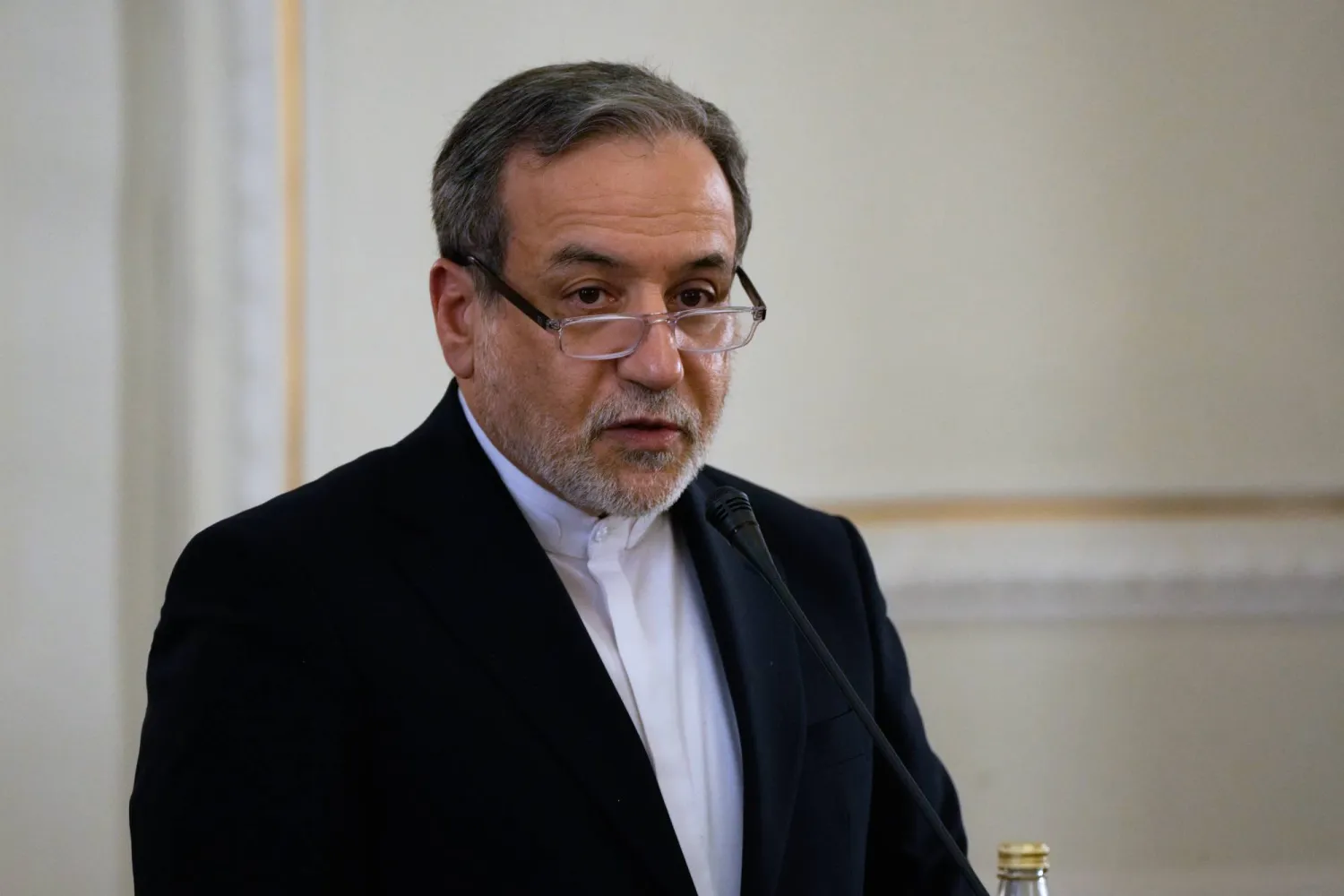
Iranian Foreign Minister Abbas Araghchi (AP)
Iranian Foreign Minister Abbas Araghchi said on Saturday Tehran is not convinced Washington was ready for real and serious negotiations.
But, the FM added, “If they change their approach and are prepared for a fair and mutually beneficial negotiation, we are prepared as well.”
In an exclusive interview with Japan’s Kyodo News, Araghchi called for Japan to share its expertise with past atomic disasters and help Iran secure facilities severely damaged by recent Israeli and US strikes.
“I have no doubt that Japan has good knowledge on how to improve the safety of nuclear facilities, and that knowledge can be shared with Iran,” he said, citing extensive work on environmental, medical and technical safety measures in the aftermath of nuclear crises.
Also, Araghchi emphasized that potential cooperation would pertain to technical safety, not to inspections, which is an IAEA mandate. “On the technical aspects of these safety challenges, cooperation with Japan can be very useful.”
The Iranian FM then noted that the Israeli strikes on Iran's nuclear sites were “perhaps the biggest violation of international law” ever committed against a safeguarded nuclear facility under the monitoring of the International Atomic Energy Agency.
Fair and Balanced Negotiations
Touching on the prospects for stalled nuclear talks, Araghchi said Iran is open to diplomacy but only under conditions that guarantee a “fair and balanced” outcome. “It depends on the United States,” he said.
The minister said Tehran remains skeptical about the outcomes of future nuclear talks, due to Washington’s withdrawal from the 2015 nuclear accord and its support for the recent Israeli attacks on Iran.
“If they change their approach and are prepared for a fair and mutually beneficial negotiation, we are prepared as well. But negotiation is different from dictation. For the time being, we are not convinced they are ready for a real, serious negotiation,” he said.
Araghchi explained that the main disagreement remains Washington's refusal to acknowledge Iran's right to peaceful nuclear technology, including uranium enrichment, under the Nuclear Non-Proliferation Treaty, of which Japan is a member.
“Tehran is prepared to accept limits on levels of enrichment and centrifuge types,” he said, adding that negotiations could proceed quickly once the US takes a reciprocal approach by allowing Iran's peaceful nuclear program and lifting sanctions.
Araghchi then said Iran faces a complex mix of safety and security threats that it has never seen before, citing structural damage and potential radiation leaks after the June strikes.
As there is “no precedent of a peaceful nuclear facility being bombarded,” the foreign chief said, “the strikes exposed a critical procedural gap within the IAEA, in terms of how to inspect such a facility.”
Earlier this year, Iran and the IAEA reached a framework of cooperation during talks in Cairo to define a workable mechanism for inspecting and stabilizing sites damaged by military action.
However, Araghchi said, the agreement was undermined when the United States and the three European parties to the 2015 nuclear deal sought to restore past UN Security Council sanctions.
A bird flies low over the water as cargo ships lie at anchor in the Strait of Hormuz off Bandar Abbas, Iran, early Saturday, Oct. 24, 2026. (ISNA via AP)
TT
TT
Iran Says Resumption of War Would Not Change Its Stances
A bird flies low over the water as cargo ships lie at anchor in the Strait of Hormuz off Bandar Abbas, Iran, early Saturday, Oct. 24, 2026. (ISNA via AP)
Iran's Foreign Minister Abbas Araghchi said on Sunday that a potential resumption of war with Israel and the United States would not change his country's positions.
The remarks come amid mounting US and Israeli threats of renewed attacks on Iran, as President Donald Trump said on Friday that Washington "may do another little Epic Fury," referring to the US-Israeli campaign on Iran that began on February 28.
"Recently, there has been talk of a new war, but I am already thinking about the post-war period. Whether there is war or not, our policies remain the same," said Araghchi during a televised event in Tehran.
"They have already done so twice and have seen the results. If they want to try again, they know they will achieve no different outcome from those of the past."
An April 8 ceasefire between Iran and the United States put an end to the most intense fighting, apart from sporadic exchanges of fire in and around the strategic Strait of Hormuz, a key route for global energy supplies.
These military flare-ups have lulled in recent weeks.
Iran has claimed control over the strait since the outbreak of the war and has regularly targeted vessels that attempt crossing without its authorization -- moves strongly opposed by Washington and countries in the region.
In response, the US has been maintaining a naval counter-blockade on Iranian ports.
In June, Iran agreed with the United States to a memorandum of understanding laying out a pathway to a permanent settlement of the conflict, only for the deal to later unravel as each side accused the other of violating it.
Tehran has since called for a return to the accord to end the conflict.
"The current war has changed everything. We must accept that new realities are taking hold. Shipping routes through the Strait of Hormuz will no longer be the same, and the management of the strait will no longer be the same," said Araghchi.
"To achieve peace and stability, our region must move towards the complete absence of foreign forces."
Soldiers Guard Center of Milan as Thousands of Protesters March in Cities Across Europehttps://english.aawsat.com/world/5333339-soldiers-guard-center-milan-thousands-protesters-march-cities-across-europe
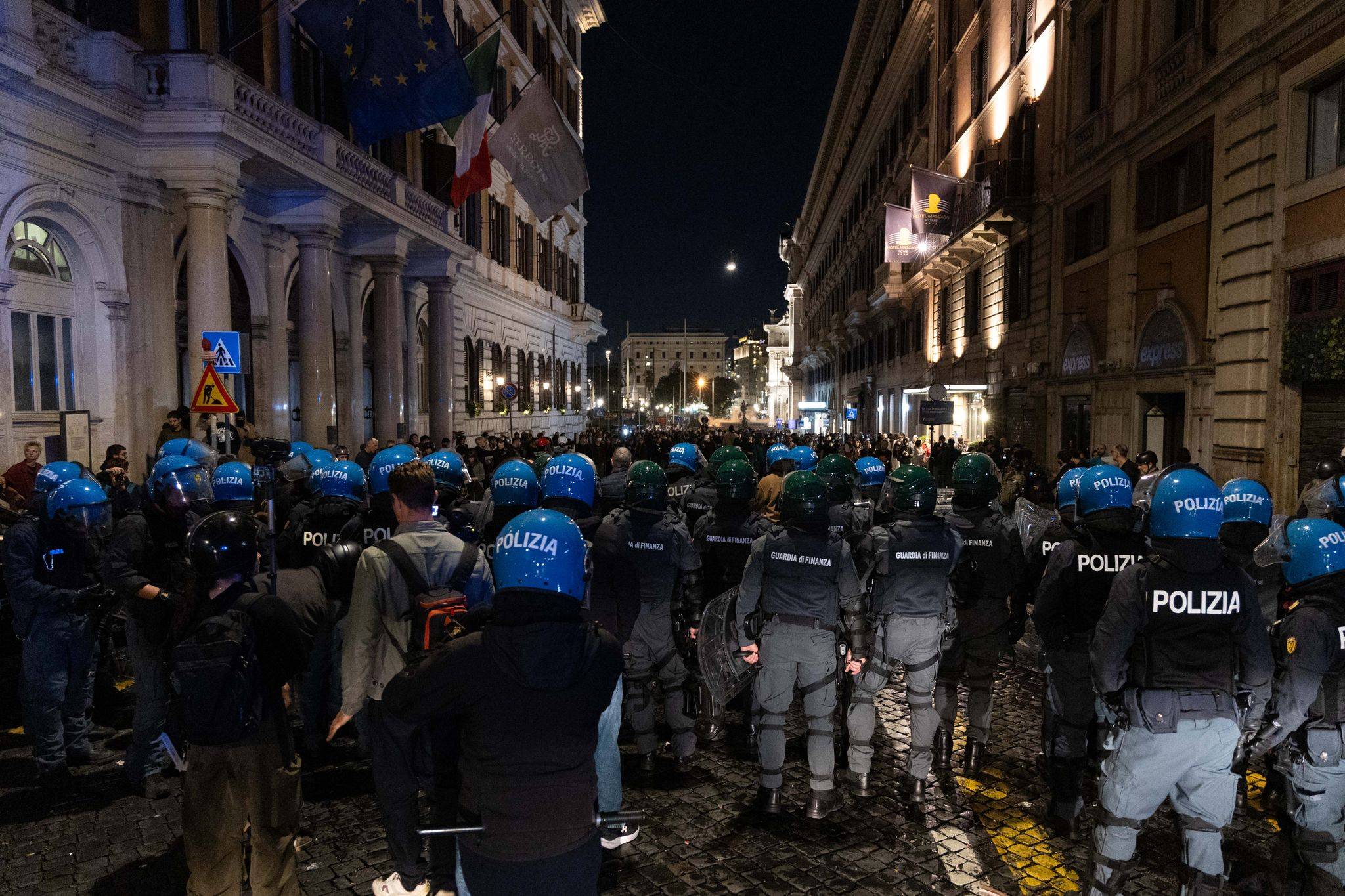
Protesters confront anti riot police during a demonstration at Lanza in Milan, Italy, 24 October 2026. (EPA)
TT
TT
Soldiers Guard Center of Milan as Thousands of Protesters March in Cities Across Europe
Protesters confront anti riot police during a demonstration at Lanza in Milan, Italy, 24 October 2026. (EPA)
Thousands of young people marched Saturday through the streets of several Italian cities, including Milan, Rome and Turin, as authorities deployed large numbers of police and soldiers in a largely successful bid to stave off a repeat of the violent clashes and looting that marred similar protests last week.
The demonstration in Milan remained peaceful, but there were brief clashes with police in both Rome and Turin.
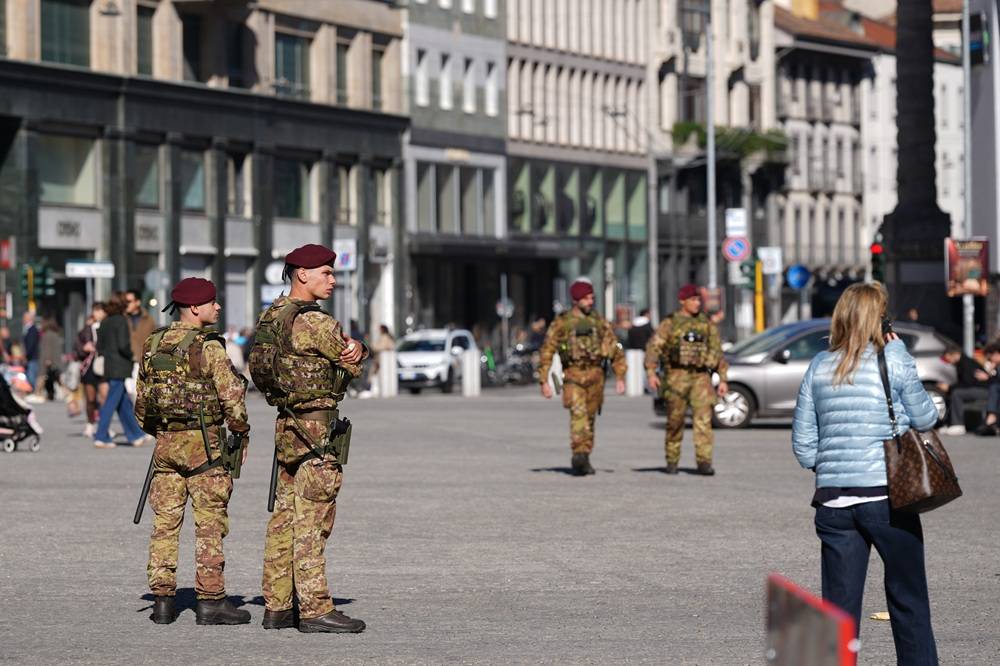
In Milan, thousands of young people marched the streets as soldiers were deployed and luxury boutiques were boarded up, but by late afternoon, most shops had opened, Italian media reported.
Premier Giorgia Meloni announced a raft of measures, including sending an additional 500 soldiers to Milan and tougher penalties for minors, who police said made up a large part of the violent protesters last week. In Milan, police detained several minors as a preventive measure, media reported.
While protests in France have claimed most international attention, large demonstrations also rocked many European cities Saturday from Milan to Rome to Madrid, Lisbon and Tirana.
The protests encompass a broad range of issues from education and corruption to anti-war movements, pensions and housing.
Italian army paratroopers patrol the streets of Milan, Saturday, Oct. 24, 2026, ahead of an expected protest against the rising cost of living and deteriorating public services during one of several protests in Italy organized by groups across the political spectrum. (AP)
Army vehicles and boarded-up luxury stores in Milan
In Milan, huge crowds of mostly young people gathered as night fell, chanting insults to Meloni and holding aloft banners such as “No to lies of the state.”
A group of protesters dumped manure outside Italy’s energy regulator and burned a symbolic, oversized electricity bill, images broadcast on local television showed.
The 500 soldiers deployed to Milan came in addition to hundreds already stationed there, supporting about 5,000 police and other security personnel. Authorities used drone surveillance, checks at railway stations, rapid-response units and online monitoring for potential calls to violence.
A mayoral hopeful, Pierfrancesco Majorino, who announced his candidacy Thursday, joined the marchers and remarked how peaceful the day was, according to Italian media. He will contest a center-left primary in early 2027. Milan's center-left Mayor Giuseppe Sala, who has held the role since 2016, is not running again.
Many stores, particularly luxury boutiques within Milan's fashion district including Omega, Tiffany and Gucci, boarded up their front windows. The Apple store also shut down and remained shut even as others reopened.
Rioters last weekend smashed their way into stores, targeting sneakers, athletic wear and sporting goods on streets that run off the city’s central Duomo square.
Security measures extended beyond the city center over concerns protesters could move into other neighborhoods.
The protesters ended their march peacefully Saturday evening outside the Milan Polytechnic, more than 3 kilometers (2 miles) from the city center.
24 October 2026, Italy, Rome: Police officers stand guard during a march organized by the October 17 Movement against the rising cost of living. (dpa)
Officials said Saturday they were investigating a 30-year-old freelance journalist said to be the “mastermind” of the newly formed Oct. 17 movement, which has been the main driver of the recent protests in Italy.
Milan police say last week's violence and looting involved about 2,000 very young protesters, many of them “naturalized, second-generation Italians,” alongside foreign nationals. Over two days, police arrested 45 people, including 34 minors.
A group of about 30 far-right activists, described as hooligans linked to Inter Milan football club, made a brief appearance chanting anti-immigrant and anti-Muslim slogans but were isolated by police.
Defense Minister Guido Crosetto said the soldiers deployed Saturday were only recently allowed to use plastic restraint ties and only in areas around train stations, not throughout the city. They are not authorized to carry pepper spray or tasers, he said.
Protesters try to force entry into Colosseum in Rome
Security was also heightened in Rome, where authorities locked down luxury shopping streets and stepped up controls around the Circus Maximus and Piazza del Popolo.
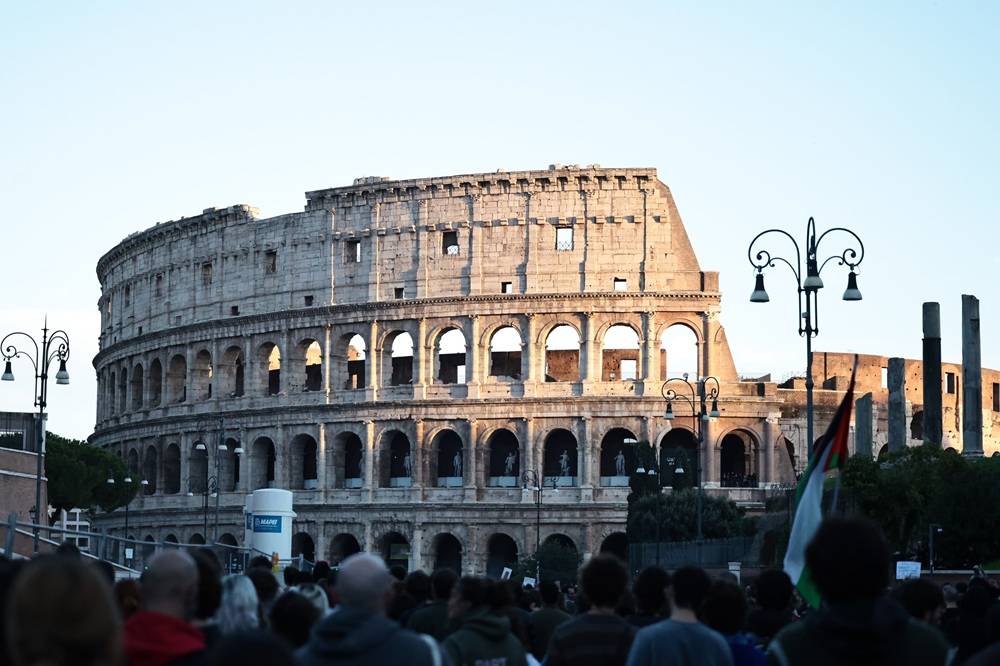
A small number of protesters tried to force their way into the Colosseum, but were ushered out by guards. Elsewhere, several hundred students demonstrated peacefully to stress they were not rioters.
“I think the images from last week were truly something terrible, especially for the young people, for the students, for the vast majority of the younger generations who want to study ... and do not accept being represented by those who use issues and needs to devastate entire cities,” said Riccardo Ponzio, national president of an Italian far-right student association.
A separate anti-war march took place in central Rome. Organizers sought to distance themselves from potential unrest, urging participants to keep their faces uncovered and hands visible.
But it was these marchers who briefly clashed with police near the Piazza della Repubblica, even as organizers were trying to hold the crowd back using batons and tear gas. In the end, the protesters pulled back when a water cannon was turned on. They retreated to a location about half a kilometer away.
Students and peace activists gather in front of the Colosseum during an anti-war rally in Rome, Italy, 24 October 2026. (EPA)
Clashes and buildings set on fire in Albania
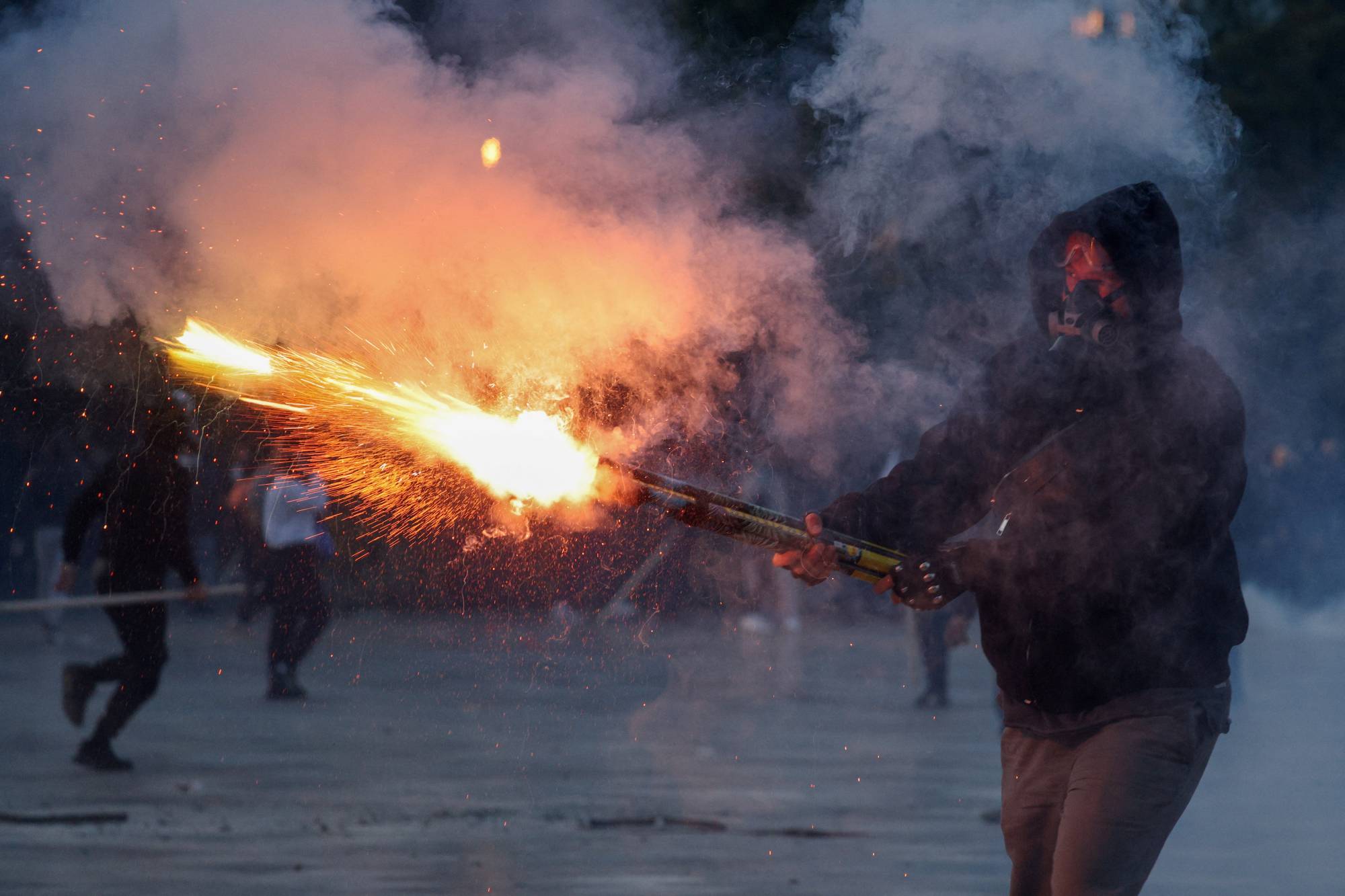
In Albania's capital Tirana, riot police used water cannons on large groups of protesters, some of whom set government buildings on fire and threw projectiles at police. Authorities said 2,500 officers patrolled the streets Saturday.
For over a week, protesters have hurled rocks, flares, firebombs and fireworks at police who have used batons and tear gas in clashes in the city center.
High school and university students are demanding lower tuition fees, greater state investment in education and protesting corruption in the education system. Some have joined a broader anti-government movement calling for the resignation of Socialist Prime Minister Edi Rama.
A separate protest organized by the opposition outside the prime minister's office turned violent earlier, with some activists lighting fires on the street.
Rama said Saturday his government was preparing a response to the students' demands and called them to a dialogue. He warned that violent protesters will face penalties.
A demonstrator sets off a pyrotechnic device during an anti-government protest by students in Tirana, Albania, October 24, 2026. (Reuters)
Pensions and housing spark Madrid and Lisbon protests
Thousands of retirees and others marched peacefully in Spain's capital Saturday to demand public pensions aren’t meddled with.
“They are threatening us with privatizing pensions. It’s just another thing they want to profit from," said Maria José Benito, 68.
The protests came ahead of next month’s snap election as Prime Minister Pedro Sánchez’s Socialist Party criticized the conservative opposition Popular Party for making overtures about privatizing public pensions.
Spain also has been roiled by protests this fall around the issue of housing, as rental and home costs have risen in recent years beyond what many Spaniards can afford.
Taking their cue from Spaniards, protesters in Lisbon demanding affordable housing marched across the city on Saturday.
They have also targeted recent measures announced by the government of Prime Minister Luis Montenegro that include easing the cap on yearly rent increases and facilitating the eviction of tenants who fail to pay rent.
Montenegro defends the measures, saying that they aim at reinforcing trust between tenants and landlords and boosting the rentals market. Protesters claim that the measures are not balanced and put tenants in a more vulnerable position.
Musk Accuses Ukraine of Violating Starlink's Terms of Servicehttps://english.aawsat.com/world/5333337-musk-accuses-ukraine-violating-starlinks-terms-service
FILE PHOTO: The silhouette of Elon Musk and Starlink logo are seen in this illustration taken June 11, 2026. REUTERS/Dado Ruvic/Illustration/File Photo
Musk Accuses Ukraine of Violating Starlink's Terms of Service
FILE PHOTO: The silhouette of Elon Musk and Starlink logo are seen in this illustration taken June 11, 2026. REUTERS/Dado Ruvic/Illustration/File Photo
Tech tycoon Elon Musk accused Ukraine on Saturday of violating Starlink's terms of service by using it for "drone strikes to kill people", after tension between Washington and Kyiv over disruptions to the SpaceX-made network crucial to the Ukrainian army's operations.
"Ukraine military violated Starlink terms of service and used it for offensive drone strikes to kill people," Musk wrote in a post on X, but added that that loophole was closed last week.
"Starlink's terms have remained consistent as a civilian system, not a means of killing. Violation of those terms will result in end of service," he wrote in another post.
He added that Starlink remained "critical to the defense of Ukraine, as it is the only system that cannot be jammed or blown up, at least for now. Were Starlink to be turned off, the Ukrainian front line would collapse immediately."
While Musk has shifted stance on Ukraine many times since Russia's invasion in 2022, he has insisted that any disruption was the responsibility of the US government, not SpaceX, AFP reported.
Kyiv relies on the civilian Starlink satellite communications system and the military-grade Starshield version as it tries to defend itself from Russian missile and drone attacks.
"Monitoring systems are recording a recovery in the speed of Starlink/Starshield. We are registering a speed of more than 400 km/h, the connection is stable," Defense Minister Yevgeniy Khmara said in a statement on Saturday.
"This result is above all important for our front, for our soldiers, for the operation of drones, for logistics and for communications," he added.
"Right now, the speed is what we need. The restoration began during the night," he said on social media.
"This is very important; it's significant for our frontline logistics, for protecting Ukraine" from rocket-powered drones, he stressed.
The satellite network has been at the center of a row between Ukraine and the United States.
Zelensky had accused Washington of helping Russia by failing to warn Kyiv of incoming missile strikes and hobbling its military response by throttling Starlink's speed.
Khmara credited Zelensky's "firm stance" on the issue, judging that it was "bearing fruit".
لم تشترك بعد
انشئ حساباً خاصاً بك لتحصل على أخبار مخصصة لك ولتتمتع بخاصية حفظ المقالات وتتلقى نشراتنا البريدية المتنوعة