UK Police Charge Two Men with Belonging to Hezbollah, Attending Terrorism Training

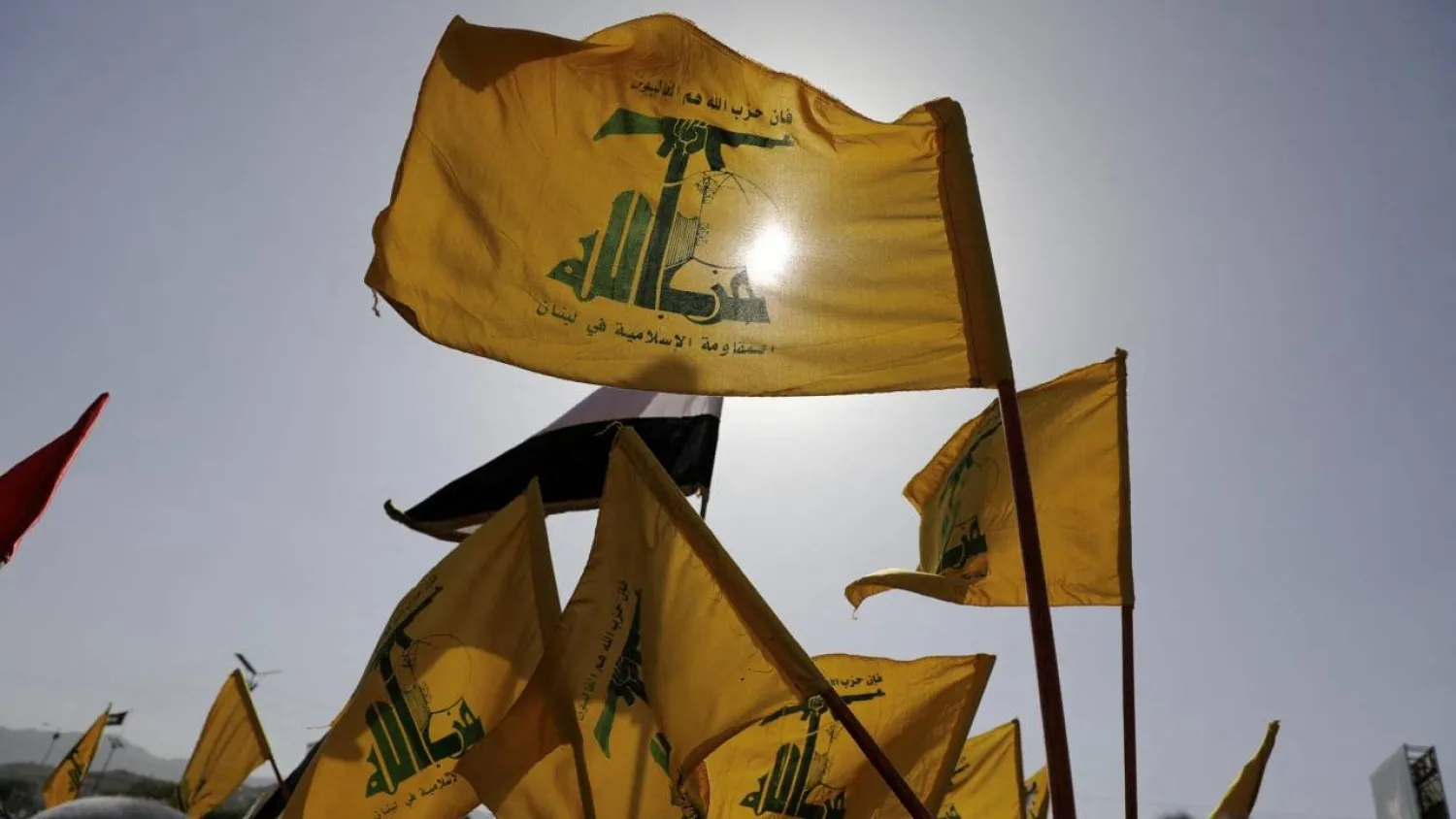
Hezbollah flags flutter as protesters, mainly Houthi supporters, rally to show support to Palestinians in the Gaza Strip and Lebanon's Hezbollah, in Sanaa, Yemen September 27, 2024. (Reuters)
TT

UK Police Charge Two Men with Belonging to Hezbollah, Attending Terrorism Training

Hezbollah flags flutter as protesters, mainly Houthi supporters, rally to show support to Palestinians in the Gaza Strip and Lebanon's Hezbollah, in Sanaa, Yemen September 27, 2024. (Reuters)

Two British-Lebanese men appeared in a London court on Tuesday, charged with belonging to the banned Iran-backed group Hezbollah and attending terrorism training camps, with one of the two accused of helping procure parts for drones.

Annis Makki, 40, is charged with attending a terrorist training camp at the Birket Jabbour airbase in Lebanon in 2021, being involved in the preparation of terrorist acts, being a member of Hezbollah, and expressing support both for Hezbollah and the banned Palestinian group Hamas.

Mohamed Hadi Kassir, 33, is also accused of belonging to Hezbollah and attending a training camp in Baffliyeh in south Lebanon in 2015 and at the Birket Jabbour airbase in 2021. He indicated not guilty pleas to the charges.

Prosecutor Kristel Pous told Westminster Magistrates' Court that Kassir was "an entrenched member of Hezbollah" and that images had been found of him "training in a Hezbollah-controlled camp and undertaking hostage training exercises in 2015".

Pous also said Makki had access to a "wide-ranging Hezbollah network" which was linked to facilitating the acquisition of parts to be used in unmanned aerial vehicles.

Judge Paul Goldspring remanded both men in custody until their next court appearance at London's Old Bailey court on January 16.

The men were arrested at their home addresses in London in April and rearrested last week when they were subsequently charged.

Commander Dominic Murphy, head of London's Counter Terrorism Policing, said in a statement before Tuesday's hearing: "I want to reassure the public that I do not assess there is an ongoing threat to the wider public as a result of the activities of these two individuals."


Iran Shadows Washington’s Moves in Lebanon as Visits, Calls Fuel Race for Influence

Ali Larijani, former senior adviser to Khamenei, with Lebanese Parliament Speaker Nabih Berri (File photo: Lebanese Parliament Media Office)
TT

Iran Shadows Washington’s Moves in Lebanon as Visits, Calls Fuel Race for Influence

Ali Larijani, former senior adviser to Khamenei, with Lebanese Parliament Speaker Nabih Berri (File photo: Lebanese Parliament Media Office)

Iran is keeping a close watch on Washington's moves in Lebanon and moving swiftly to counter them.

From dispatching senior officials to Beirut to calling Parliament Speaker Nabih Berri directly, Tehran has repeatedly sought to match or respond to US diplomatic initiatives in a contest for influence over Lebanese decision-making.

The message, according to the pattern of Iranian moves, is clear: Tehran will not let Washington dictate Lebanon's next chapter alone.

"Every time a US official visits Beirut, an Iranian official follows, even when there is nothing to discuss," a former Lebanese prime minister told Asharq Al-Awsat.

The pattern has become more pronounced in recent years, particularly since the 2024 war, the former premier said.

Ministerial sources said Iranian envoys typically follow US diplomatic moves with visits and meetings, particularly with Tehran's Lebanese allies, to gauge Washington's latest positions and learn what was discussed behind closed doors.

The contacts are also part of an exchange of political messages between Tehran and Washington, the sources told Asharq Al-Awsat.

Iran, they said, wants to show that it still holds the Lebanese card — and retains the leverage to shape political settlements.

The pattern was particularly evident in the autumn of 2024, as international efforts, led largely by Washington, intensified to halt Israel's war on Lebanon.

Iranian Foreign Minister Abbas Araghchi visited Beirut on Oct. 4. A week later, Iranian Parliament Speaker Mohammad Baqer Qalibaf arrived, saying he had diverted his trip to Switzerland to deliver a "message of support" from then-Supreme Leader Ali Khamenei.

The diplomatic maneuvering continued in November as a US ceasefire initiative gained ground.

On Nov. 14, US Ambassador Lisa Johnson handed Berri a draft of Washington's ceasefire proposal.

The following day, Ali Larijani, then an adviser to Iran's supreme leader, arrived in Beirut for talks with Berri and then-Prime Minister Najib Mikati.

He declared Iran's support for "any decision Lebanon makes to achieve a ceasefire."

Tehran's Familiar Playbook

Former Lebanese minister Boutros Harb sees little new in Tehran's approach.

Iran, he said, has long treated Lebanese groups aligned with it as subordinates, speaking and negotiating on their behalf rather than allowing Lebanon to pursue an independent negotiating position based on its national interests.

But the stakes are now higher, Harb told Asharq Al-Awsat.

Lebanon has an opportunity to capitalize on international diplomatic efforts, he said, while Iran is working to prevent the Lebanese file from being separated from its own negotiations with Washington.

Tehran wants to keep that card in hand to demonstrate that it remains an influential regional player, he added.

"Tehran treats Lebanon as an Iranian province, as though there were no state or government," Harb said.

He acknowledged that Lebanon's political landscape had changed to some extent under President Joseph Aoun and Prime Minister Nawaf Salam.

"But unfortunately, the card is still in Iran's hands, and it is exploiting it to preserve its regional role," he said.

Lebanon Tied to US-Iran Talks

By 2026, Tehran's diplomatic push had increasingly shifted from visits to telephone calls carrying political messages tied to negotiations with Washington.

The shift became particularly apparent after Iran announced that it had told mediators any ceasefire agreement with the United States and Israel must also halt Israeli attacks on Lebanon.

On April 1, Berri said Araghchi had conveyed Iran's insistence that any agreement include Lebanon.

"What applies to Tehran applies to Beirut," Berri quoted the Iranian foreign minister as saying.

The pattern resurfaced on July 9, when a US diplomatic move in Beirut coincided with a visit by an Iranian delegation led by Deputy Foreign Minister Vahid Jalalzadeh.

While US Ambassador Michel Issa met Aoun to discuss implementation of the Lebanese-Israeli framework agreement, the Iranian delegation held talks with Berri and Deputy Prime Minister Tarek Mitri.

The latest episode came on Nov. 16, following a Beirut visit by US Ambassador to the United Nations Mike Waltz.

Waltz met Lebanon's president, prime minister and parliament speaker and urged Hezbollah to voluntarily hand over its weapons to the state.

"No country can have two armies," he said.

That same day, Qalibaf called Berri, stressing Iran's "special interest" in Lebanon.

Regional calm, he said, could not return without an end to the war in Lebanon and the restoration of Lebanese sovereignty over all its territory.

Hezbollah's Weapons: Another Front

Iran's response to US moves has not been confined to ceasefire diplomacy.

The same pattern emerged in August 2025, when Lebanon's government decided to draw up a plan to bring all weapons under state control, amid US pressure to carry it out.

On Aug. 13, Ali Larijani, then secretary of Iran's Supreme National Security Council, visited Beirut and met Lebanon's president, prime minister and parliament speaker.

He opposed foreign pressure over Hezbollah's weapons, calling instead for "dialogue among the Lebanese" and warning against imposing "foreign dictates on Lebanon."

Five days later, US envoy Tom Barrack and deputy US envoy Morgan Ortagus arrived in Beirut to follow up on Washington's roadmap for placing weapons exclusively under state control and to discuss security issues.



Turkish Court Hands New Sentence and Political Ban to Jailed Istanbul Mayor, Media Says

Istanbul Mayor Ekrem Imamoglu greets his supporters as they gather in front of his office as a Turkish court sentenced Imamoglu to more than two years in prison and imposed a political ban for insulting public officials, in Istanbul, Türkiye, December 14, 2022. (Reuters)
TT

Turkish Court Hands New Sentence and Political Ban to Jailed Istanbul Mayor, Media Says

Istanbul Mayor Ekrem Imamoglu greets his supporters as they gather in front of his office as a Turkish court sentenced Imamoglu to more than two years in prison and imposed a political ban for insulting public officials, in Istanbul, Türkiye, December 14, 2022. (Reuters)

A ‌Turkish court on Wednesday sentenced jailed Istanbul mayor Ekrem Imamoglu to a further two years in prison for violating the election law and imposed a new political ban on him, local media reported.

Imamoglu was one of nine defendants sentenced to two years and one month in prison in a ‌case concerning ‌the opposition Republican People's Party's (CHP) ‌convention ⁠in November 2023, state ⁠broadcaster TRT Haber said.

CNN Turk and other media reported that the court imposed a political ban on Imamoglu, who before his arrest was seen as the main potential ⁠challenger to President Recep Tayyip Erdogan.

The defendants were ‌accused of making improper inducements to encourage ‌people to vote for Ozgur Ozel ‌when the CHP elected him as leader at the 2023 congress. They denied the allegations.

Courts previously imposed political bans ‌on Imamoglu in 2022 and 2025 and sentenced him to more ⁠than ⁠six years in prison. He is appealing against both of the earlier bans.

Imamoglu was previously convicted in several other cases and went on trial in March in a sweeping corruption trial of more than 400 defendants linked to the Istanbul municipality. He denies the corruption charges, which carry prison sentences amounting to hundreds of years.


US Tightens Iran Blockade with Curbs on Oil Transfers at Sea, Advisory Shows

Container ships are seen through haze in the Strait of Hormuz off Bandar Abbas, Iran, Saturday, Nov. 14, 2026. (Amirhosein Khorgooi/ISNA via AP)
TT

US Tightens Iran Blockade with Curbs on Oil Transfers at Sea, Advisory Shows

Container ships are seen through haze in the Strait of Hormuz off Bandar Abbas, Iran, Saturday, Nov. 14, 2026. (Amirhosein Khorgooi/ISNA via AP)

The US ‌military will treat ships that receive cargo at sea from vessels loaded in Iran as attempting to evade its blockade of Iranian ports and could take action against them, according to an advisory issued by US Central Command (CENTCOM) on Wednesday.

The US naval blockade on Iran-related oil exports was first imposed on April 13 ‌and lifted ‌in June after Washington ‌reached a ⁠draft understanding with ⁠Tehran. It was reimposed on July 14 after the agreement collapsed.

"Any ship that receives cargo via a ship-to-ship transfer with a vessel subject to the blockade and carrying cargo loaded at an Iranian ⁠port or coastline may be ‌considered to ‌be evading the blockade, even if it has not ‌entered Iranian ports or the Iranian ‌coastline," CENTCOM said in an update.

"Such ships may be stopped, boarded, diverted, captured, or directed to proceed to the Iranian port where ‌the cargo originated."

Ships that fail to comply immediately with lawful orders from ⁠blockade ⁠or boarding forces could face enforcement action, "including the use of force consistent with applicable law", the advisory added.

Iran has managed to export some liquefied petroleum gas and jet fuel since July, despite the US naval blockade, according to shipping intelligence and security sources who spoke to Reuters in October.

Iran's crude exports, however, have remained near a standstill for months, shipping sources say.