Russia Says 'Slow Progress' in Talks with US on Ukraine

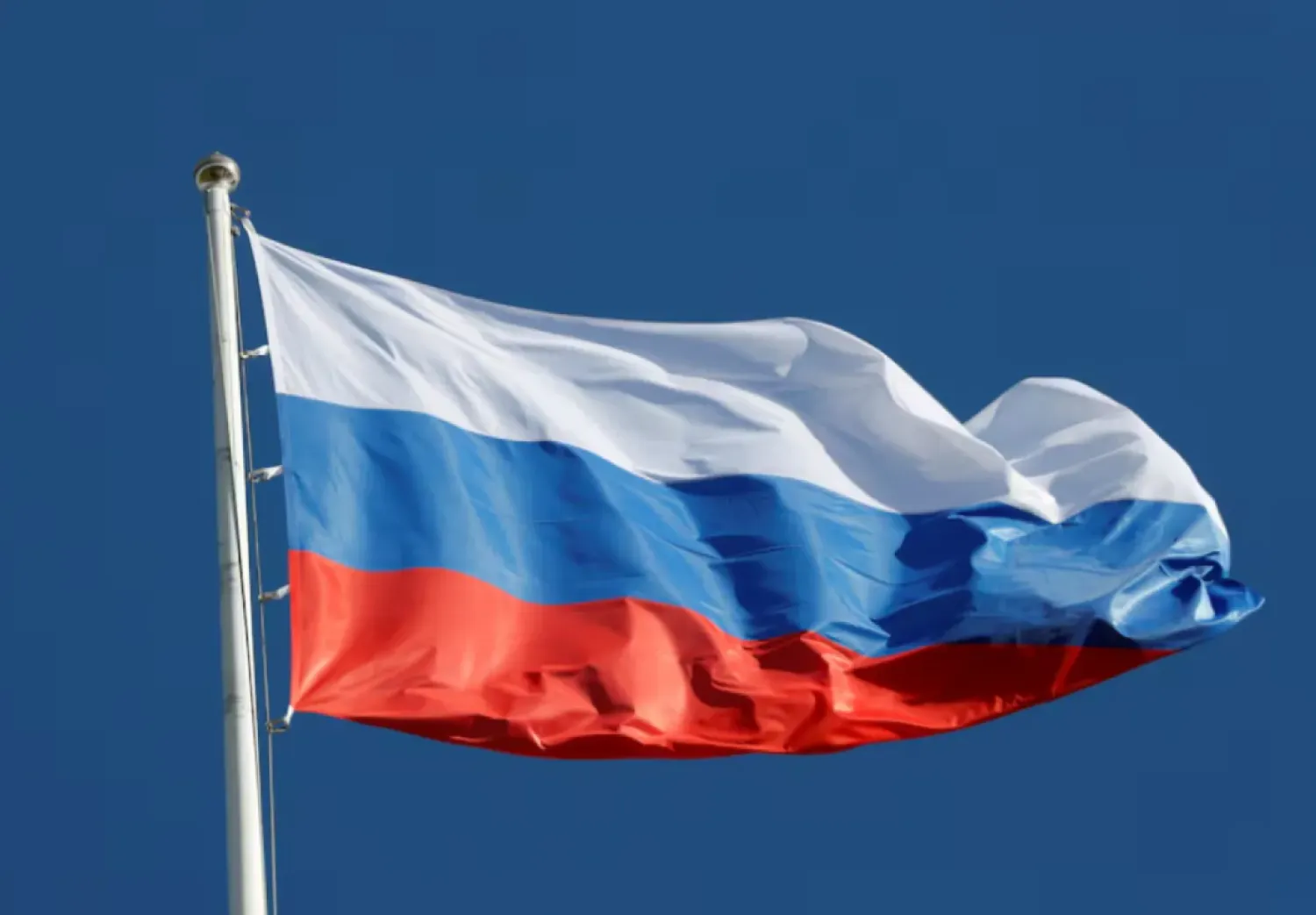
A view shows the state flag of Russia before a meeting of Russian President Vladimir Putin with French President Emmanuel Macron in St. Petersburg, Russia May 24, 2018. REUTERS/Grigory Dukor
TT

Russia Says 'Slow Progress' in Talks with US on Ukraine

A view shows the state flag of Russia before a meeting of Russian President Vladimir Putin with French President Emmanuel Macron in St. Petersburg, Russia May 24, 2018. REUTERS/Grigory Dukor

Moscow on Monday said there was "slow progress" in talks with the United States over a plan to end the war in Ukraine, following weekend talks in Miami that failed to break the deadlock, AFP reported.

"Slow progress is being observed," state media reported Russian deputy foreign minister Sergei Ryabkov as saying.

This came after both Russia and Ukraine sent negotiators to the Florida city for separate talks with US President Donald Trump's envoys Steve Witkoff and Jared Kushner.


Medical Needs Surging in Iran and Supplies Under Threat, Red Cross Warns

Smoke rises after an airstrike in central Tehran, Iran, 01 April 2026. (EPA)
TT

Medical Needs Surging in Iran and Supplies Under Threat, Red Cross Warns

Smoke rises after an airstrike in central Tehran, Iran, 01 April 2026. (EPA)

Emergency medical needs in Iran are rising exponentially, and stocks of trauma kits and other gear could run low if the war persists, the head of the International Federation of Red Cross and Red Crescent Societies delegation there said on Thursday.

More than 1,900 people have been killed since the US-Israeli airstrikes on Iran began on February 28, and more than 21,000 injured, according to the agency - the only humanitarian group working across the country. Other estimates are higher.

Maria Martinez told Reuters three of the agency's own workers had died on duty, including one during an airstrike on March 31 that hit a medical clinic in Zanjan ‌province. She did not ‌attribute blame for the killings.

'YOU CAN SENSE THE FEAR'

"Our concern ‌is ⁠really how the ⁠humanitarian needs are escalating so rapidly and (over) our ability to bring all the support into the country," Martinez said.

Hopes for a swift end to the conflict faded on Thursday after US President Donald Trump vowed to conduct more aggressive strikes.

Washington has said its Iran strikes are being carried out with precision. Israel's military has said it takes measures to mitigate harm against civilians during its operations.

Martinez said there were no shortages of emergency stocks for now, but the ⁠situation would worsen if the fighting continued, especially as the price ‌of supplies went up and their insufficient funding ran ‌low.

“The needs are exponentially increasing. Resources are not unlimited," she said.

She was concerned that people's fears of ‌bombings would stop them from venturing out to seek aid.

"The streets are completely empty ... ‌You can sense the fear, you can sense the uncertainty in people's eyes,” she said in a video interview from Tehran.

MORE INTERNATIONAL SUPPORT "IS ESSENTIAL"

The aid group says it has 100,000 responders across the country's 31 provinces as well as helicopters and rescue dogs, and provides first aid for those ‌injured by airstrikes and support for the displaced.

One IFRC rescue worker called to help clear rubble discovered his own family were among ⁠the dead buried there. Others ⁠take turns sleeping at the IFRC offices to be on standby in the case of bombings, she added.

Work was frequently disrupted and staff were transcribing documents by hand because of power and Internet cuts.

"We are in the middle of a meeting and the alarms are activated. We need to evacuate immediately and this happens three, four, six times per day," she said.

The agency had been unable to import vital supplies from its Dubai warehouse for weeks amid a logistical quagmire exacerbated by Iran's shutting down of the Strait of Hormuz in retaliation for US-Israeli strikes.

It now aims to ship them overland from Türkiye on April 7, IFRC supply chain director Cecile Terraz said, but it will take weeks.

The IFRC may have to use its 40 million Swiss Franc ($50.05 million) emergency appeal even though it is currently only 6% funded, Martinez said. "Increasing international support is essential to protect civilians and sustain this emergency response operation."



Macron Says it is Unrealistic to Open Hormuz Strait by Force

FILE PHOTO: A cargo ship in the Gulf, near the Strait of Hormuz, as seen from northern Ras al-Khaimah, near the border with Oman’s Musandam governance- REUTERS/Stringer/File Photo
TT

Macron Says it is Unrealistic to Open Hormuz Strait by Force

FILE PHOTO: A cargo ship in the Gulf, near the Strait of Hormuz, as seen from northern Ras al-Khaimah, near the border with Oman’s Musandam governance- REUTERS/Stringer/File Photo

French President Emmanuel Macron said on Thursday it would be unrealistic to launch a military operation to force open the Strait of Hormuz, after US President Donald Trump challenged US allies to work towards reopening it.

Thousands of people have been killed across the Middle East since February 28, when the US and Israel struck Iran, triggering Iranian attacks on Israel, US bases and the Gulf states, and Tehran effectively closing the waterway that carries about a fifth of global oil and liquefied natural gas supplies.

"Some people defend the idea of freeing the Strait of Hormuz by force via a military operation, a position sometimes expressed by the United States, although it has varied," Macron told reporters during a trip to South Korea.

"This was never the option we have supported because it is unrealistic," he said. "It would take forever, and would expose all those who go through the Strait to risks from the guardians of the revolution but also ballistic missiles," he said.

Macron, who has worked with European and other allies to build a coalition to guarantee free passage through Hormuz once hostilities have stopped, said this could only be done by talking to Iran.

"What we say from the beginning is that this strait must be reopened because it is strategic for energy flows, fertilisers and international trade, but that it can only be done in consultation with Iran," he said.

Asked about Trump's criticism of NATO allies and threats to pull the US out of the alliance, Macron said: "I don't want to provide a running commentary of an operation the Americans have decided on their own with Israel. They can deplore the fact they're not being helped, but that's not our operation. We want peace as soon as possible."

Macron also said that Trump's comments mocking him and his wife Brigitte were "neither elegant, nor commensurate" with the moment.


Strike Hits Bridge Near Tehran Again

Smoke rises from the site of an airstrike on Tehran (File/AFP)
TT

Strike Hits Bridge Near Tehran Again

Smoke rises from the site of an airstrike on Tehran (File/AFP)

US-Israeli strikes hit a bridge near Tehran on Thursday, which had already been hit around an hour earlier, Iranian state TV reported.

"A few minutes ago, the American-Zionist enemy once again targeted the B1 bridge in Karaj," a city west of Tehran, state TV said, adding that the first strike had caused two civilian casualties, AFP reported.

It said the later attack took place as emergency teams were deployed to the site to help victims of the first strike.