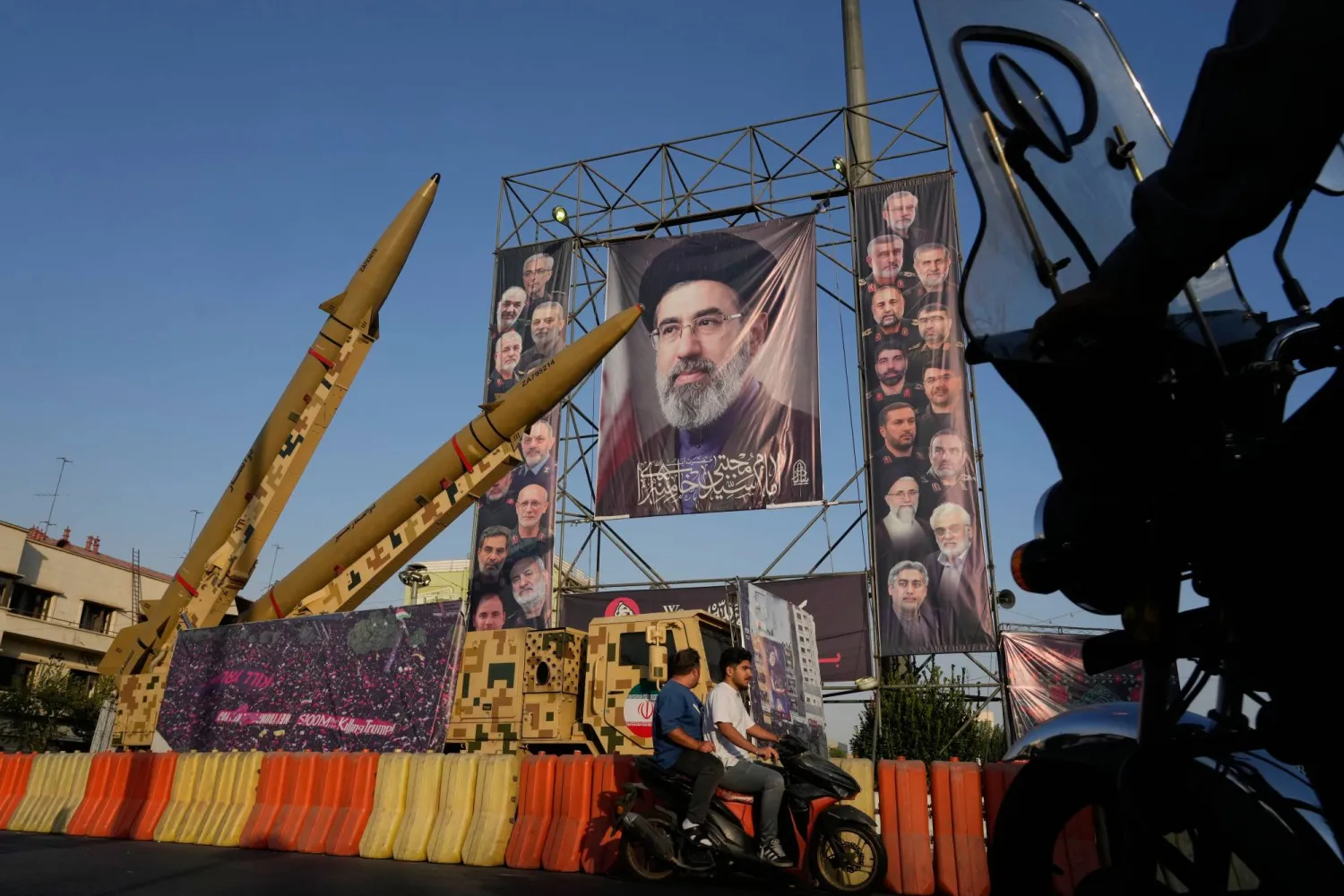
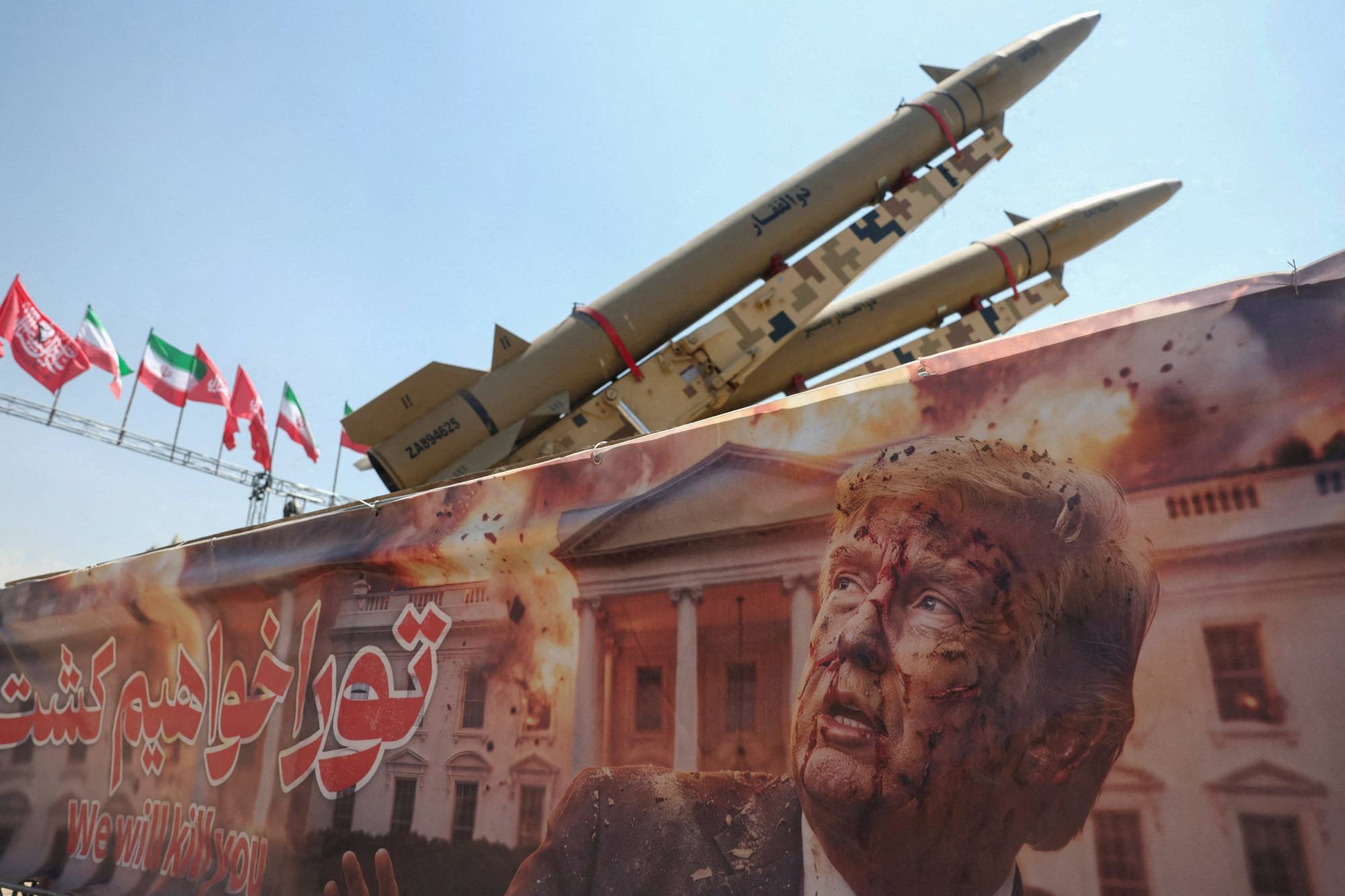
Iran is trying to hit military sites in the UK and the suspected plot to attack a US-run military air base in September is “not unique," the head of Britain's MI5 spy agency said Tuesday.
Ken McCallum, who leads the UK’s domestic security service, said Tehran is seeking to intensify its attacks in Britain beyond the traditional targets of Iranians opposed to the country's Islamic authorities.
That has included arson and sabotage attacks on Jewish sites that Britain says were carried out by Iranian proxies.
McCallum said another “major shift this year has been Iranian ambitions to come at harder targets, like military sites.”
The incident at RAF Fairford “is not unique. There have been other examples, not just in the UK but around the world,” McCallum said.
McCallum delivered a speech outlining major threats to the UK as detectives investigate a suspected terror plot against the US-run base in western England, which has been used to bomb Iran during this year’s war.
Scores of residents were evacuated from their homes near the base on Sept. 27 as armed police officers and army bomb-disposal experts swarmed the rural area. Police later said they had found a quantity of an accelerant — gasoline — in three vans at the site, but no explosives, The AP news reported.
British authorities have linked Tehran to the incident, which led the US to pull its bombers from RAF Fairford. Prime Minister Andy Burnham said Monday that the apparent plot was “almost certainly” directed by Iran’s Revolutionary Guard.
Seven men in their 20s have been arrested and released on bail under investigation.
Iran has denied involvement, although it has previously said that it considers any base used to attack its territory a legitimate target.
MI5 says AI could bring bioweapon risk In a stark speech, McCallum argued that the UK faces a “new era of national security” and is at a turning point equivalent to the 9/11 attacks a quarter century ago.
He said his agency’s work countering state threats – chiefly from Russia, Iran and China – has quadrupled in the past decade, and claimed that both Russia and Iran are expanding their hybrid warfare campaigns against the UK.
Meanwhile, technology is racing ahead, with artificial intelligence “supercharging” the cybersecurity battle between attackers and defenders, he said.
McCallum said terror plotters have used artificial intelligence for reconnaissance and attacks, including AI-enabled drones. Even more concerning, he said, is “AI’s potential to change the stakes on existing or even new bioweapons.”
He said terror groups “would dearly love” to have chemical, biological or radiological weapons, but these are hard to obtain.
“One risk is that AI could enable dangerous knowledge to get into the hands of people we would all rather didn’t have that knowledge,” he said. “A second and different risk ... is the possibility that AI could generate novel pathogens not previously seen.”
McCallum said MI5 has set up a new AI Threat Assessment Center to try to keep ahead of the risks.
“Human history has given us no experience of facing an actor which is smarter than we are. It is capable of outthinking us. This is genuinely novel, and deserves the serious attention it is getting, including in MI5,” he said.