
US-based Activist Agency Says It Has Verified 3,766 Deaths from Iran Protests

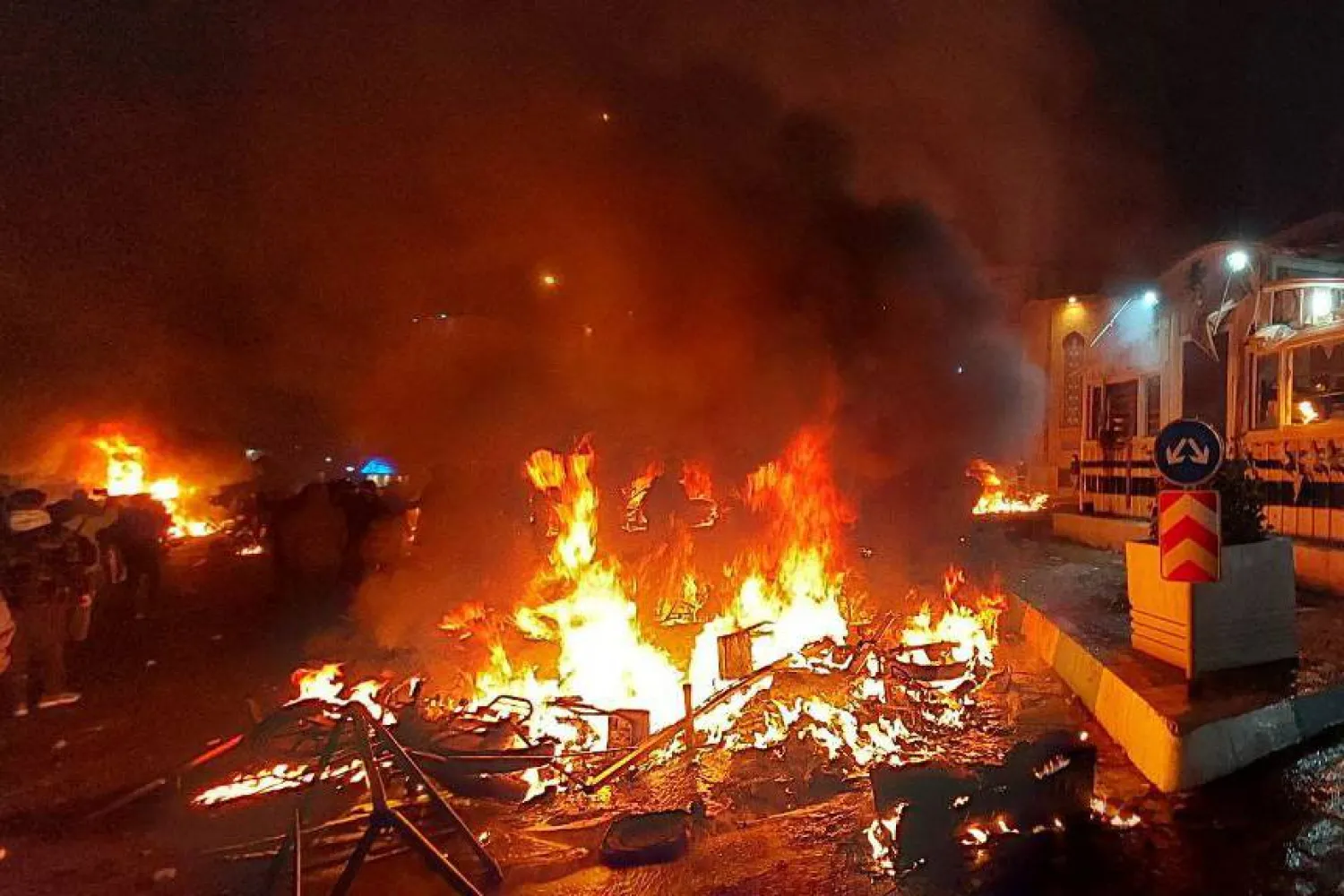
10 January 2026, Iran, Tehran: A police station is set on fire during protests in Tehran in response to worsening economic conditions. ZUMA Press Wire/dpa
TT

US-based Activist Agency Says It Has Verified 3,766 Deaths from Iran Protests

10 January 2026, Iran, Tehran: A police station is set on fire during protests in Tehran in response to worsening economic conditions. ZUMA Press Wire/dpa

A US-based activist agency said Sunday that it has verified at least 3,766 deaths during a wave of protests that swept Iran and led to a bloody crackdown and fears the number could be significantly higher. 

The Human Rights Activists News Agency posted the revised figure, increasing its previous toll of 3,308. The death toll exceeds that of any other round of protest or unrest in Iran in decades and recalls the chaos surrounding the 1979 revolution. 

The agency has been accurate throughout the years of demonstrations in Iran, relying on a network of activists inside the country that confirms all reported fatalities. The Associated Press has been unable to independently confirm the toll. 

Iranian officials have not given a clear death toll, although on Saturday, the country’s Supreme Leader Ali Khamenei said the protests had left “several thousand” people dead and blamed the United States for the deaths.  

It was the first indication from an Iranian leader of the extent of the casualties from the wave of protests that began Dec. 28 over Iran’s ailing economy. The Human Rights Activists News Agency says 24,348 protesters have been arrested in the crackdown. 

Iranian officials have repeatedly accused the United States and Israel of fomenting unrest in the country. 

Tension with the United States has been high, with US President Donald Trump repeatedly threatening Tehran with military action if his administration found the country was using deadly force against anti-government protesters. 

Iranian President Masoud Pezeshkian, in a post Sunday on X, blamed “longstanding enmity and inhumane sanctions” imposed by the US and its allies for any hardships the Iranian people might be facing. “Any aggression against the Supreme Leader of our country is tantamount to all-out war against the Iranian nation,” he wrote. 

During the protests, Trump had told demonstrators that “help is on the way” and that his administration would “act accordingly” if the killing of demonstrators continued or if Iranian authorities executed detained protesters. 

But he later struck a conciliatory tone, saying that Iranian officials had “canceled the hanging of over 800 people” and that “I greatly respect the fact that they canceled.” 

On Saturday, Khamenei branded Trump a “criminal” for supporting the rallies and blamed the US for the casualties, describing the protesters as “foot soldiers” of the United States. 

Trump, in an interview with Politico Saturday, called for an end to Khamenei’s nearly 40-year reign, calling him as “a sick man who should run his country properly and stop killing people.” 

No protests have been reported for days in Iran, where the streets have returned to an uneasy calm. Instead, some Iranians chanted anti-Khamenei slogans from the windows of their homes on Saturday night, the chants reverberating around neighborhoods in Tehran, Shiraz and Isfahan, witnesses said. 

Authorities have also blocked access to the internet since Jan. 8. On Saturday, very limited internet services functioned again briefly. Access to some online services such as Google began working again on Sunday, although users said they could access only domestic websites, and email services continued to be blocked. 


Iran President: Peace Talks Will Only Succeed Without 'Threats'

Iranian President Masoud Pezeshkian attends an expanded format meeting of the Commonwealth of Independent States (CIS) Council of Heads of State at the Avaza national tourist zone outside Turkmenbashi, Turkmenistan, 09 October 2026.  EPA/SERGEY BOBYLEV/SPUTNIK/KREMLIN POOL
Iranian President Masoud Pezeshkian attends an expanded format meeting of the Commonwealth of Independent States (CIS) Council of Heads of State at the Avaza national tourist zone outside Turkmenbashi, Turkmenistan, 09 October 2026. EPA/SERGEY BOBYLEV/SPUTNIK/KREMLIN POOL
TT

Iran President: Peace Talks Will Only Succeed Without 'Threats'

Iranian President Masoud Pezeshkian attends an expanded format meeting of the Commonwealth of Independent States (CIS) Council of Heads of State at the Avaza national tourist zone outside Turkmenbashi, Turkmenistan, 09 October 2026.  EPA/SERGEY BOBYLEV/SPUTNIK/KREMLIN POOL
Iranian President Masoud Pezeshkian attends an expanded format meeting of the Commonwealth of Independent States (CIS) Council of Heads of State at the Avaza national tourist zone outside Turkmenbashi, Turkmenistan, 09 October 2026. EPA/SERGEY BOBYLEV/SPUTNIK/KREMLIN POOL

Iranian President Masoud Pezeshkian said Friday at a regional summit in Turkmenistan that peace negotiations will only succeed without "pressure and threats,” with the months-long Middle East war locked in a stalemate.

"Dialogue holds meaning and a chance of success only when based on mutual respect and mutual commitments, and when devoid of pressure and threat," he said during his speech at the Commonwealth of Independent States (CIS) summit.

President Donald Trump ruled out Thursday attacking Iran before the US midterms on November 3, saying Washington was holding "productive discussions" with Tehran.

"I want to make it clear to everybody that, while Iran is in very bad condition, both Economically and Militarily, and while the Blockade will remain in full force and effect...we will not be attacking Iran at any time prior to the Midterm Elections," he wrote.

"We are having productive discussions with the Islamic Republic of Iran," he added.

The Atlantic magazine reported on Wednesday that the White House had asked the Pentagon to develop options to strike Iranian targets that could be used before the midterms.

The New York Times said Thursday the plans were being developed despite Trump's "ambivalence."


UN: Livestreaming US Execution Would Amount to Torture

The new Department of War logo is seen inside the Pentagon in Arlington, Virginia, US. (AFP)
TT

UN: Livestreaming US Execution Would Amount to Torture

The new Department of War logo is seen inside the Pentagon in Arlington, Virginia, US. (AFP)

A decision by US officials to livestream the execution of convicted killer Nidal Hasan would amount to torture, the UN said Friday.

US defense officials said US Army psychiatrist Hasan, who shot and killed 13 people at a military base in 2009, would face a firing squad and the execution would be broadcast live, adding that details would come later.

"The livestreaming of an execution is tantamount to a public execution and would breach the absolute prohibition of torture," the Office of the High Commissioner for Human Rights said in a message sent to AFP.

The UN body said it had made similar statements about public executions in Afghanistan and Iran, saying they "constitute a form of cruel, inhuman or degrading treatment or punishment".

Hasan's execution will be the first by the US military since 1961, and the first it has carried out by firing squad since World War II.

According to rights group Amnesty International, at least 17 public executions are known to have been carried out in 2025 -- six in Afghanistan and 11 in Iran.


Navanethem 'Navi' Pillay Wins the Nobel Peace Prize for Her Work in International Justice

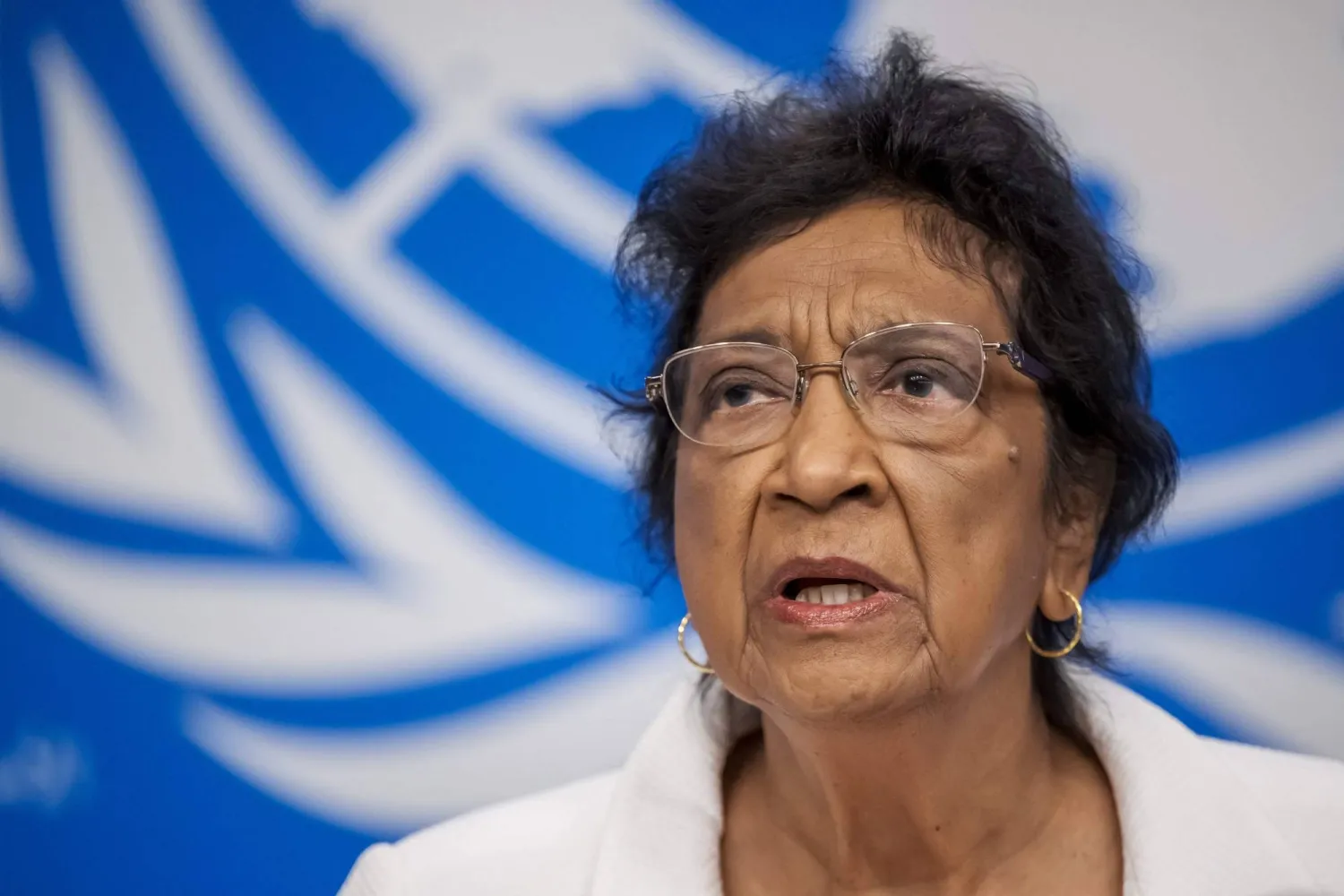
(FILES) Chair of the Independent International Commission of Inquiry on the Occupied Palestinian Territory, including East Jerusalem, and Israel, South African judge Navi Pillay, speaks during a press conference in Geneva on September 16, 2025. (Photo by Fabrice COFFRINI / AFP)
TT

Navanethem 'Navi' Pillay Wins the Nobel Peace Prize for Her Work in International Justice

(FILES) Chair of the Independent International Commission of Inquiry on the Occupied Palestinian Territory, including East Jerusalem, and Israel, South African judge Navi Pillay, speaks during a press conference in Geneva on September 16, 2025. (Photo by Fabrice COFFRINI / AFP)

Former UN human rights chief Navanethem “Navi” Pillay, a judge on the International Court of Justice, won the Nobel Peace Prize on Friday in Oslo, Norway. 

The South Africa-born Pillay, 85 years old, was recognized for her efforts to promote peace and international law, said Jørgen Watne Frydnes, Chair of the Norwegian Nobel Committee. 

Pillay’s work “is a source of hope and inspiration to all those who seek to bring about a more peaceful world,” Watne Frydnes said announcing her win. 

Watne Frydnes said the committee had not yet been able to reach Pillay to inform her she had received the peace prize, which is often considered the most prestigious honor on the planet. 

“At a time when the number of wars and conflicts is rising, and when judges and institutions of international law are under political attack, the Nobel Committee wishes to issue a reminder that the ability to resolve conflicts without force or violence is dependent on the international rule of law,” the committee wrote in a news release. 

“An international legal system in which war criminals are held to account and the victims of abuse see justice served is a precondition for a peaceful world.” 

The Norwegian Nobel Committee in Oslo received nominations for 287 candidates for this year’s prize, with just over a quarter of them organizations. Experts say the committee typically focuses on the durability of peace, the promotion of international fraternity and the quiet work of institutions that strengthen those goals. 

Last year, Venezuelan opposition leader María Corina Machado won the Nobel Peace Prize for her struggle to achieve a democratic transition in the South American nation, winning recognition as a woman “who keeps the flame of democracy burning amid a growing darkness.” 

Machado gave Trump her Nobel medal shortly after the United States ousted then-President Nicolás Maduro. But it was largely a symbolic gesture: the Nobel Committee has said the honor itself cannot be transferred. 

Nominations can be made by a select group of people and organizations, including heads of state or politicians serving at a national level, university professors, directors of foreign policy institutes, past Nobel Prize recipients and members of the Norwegian Nobel Committee itself. 

Four of this year's Nobels were announced earlier this week. The Nobel for medicine went to three scientists whose work led to a tool that uses light to help unravel how the brain works. The physics award recognized a scientist’s efforts to demystify a rare group of neutrinos. The chemistry prize recognized two scientists for untangling mysterious mirror images in molecules, a discovery that has been used to develop countless drugs. 

Canadian poet, essayist and translator Anne Carson won the literature prize Thursday for “bold and inventive” works that fuse the classical and the modern and blur the boundaries of poetry and prose. 

The Nobel Memorial Prize in Economic Sciences will be announced Monday. 

The prize money this year is 12 million Swedish kronor (about $1.2 million), whether for an individual, small group of laureates or organization. 

Peace prize marks its 125th anniversary This year marks the 125th anniversary of the peace prize, which so far has gone to 112 individuals and 28 separate institutions since its inception in 1901. The Red Cross has won three times and the U.N. refugee agency twice. 

The prize has gone unawarded on 19 occasions, most of them during the world wars. In 1948, the year Mahatma Gandhi was assassinated, no prize was awarded; he had been nominated 12 times and never won. 

In 1939, a Swedish member of parliament nominated Adolf Hitler, then withdrew the nomination, saying it was never meant seriously.