
Iran Guards Chief Says 'Finger on Trigger', Warns US against 'Miscalculations'

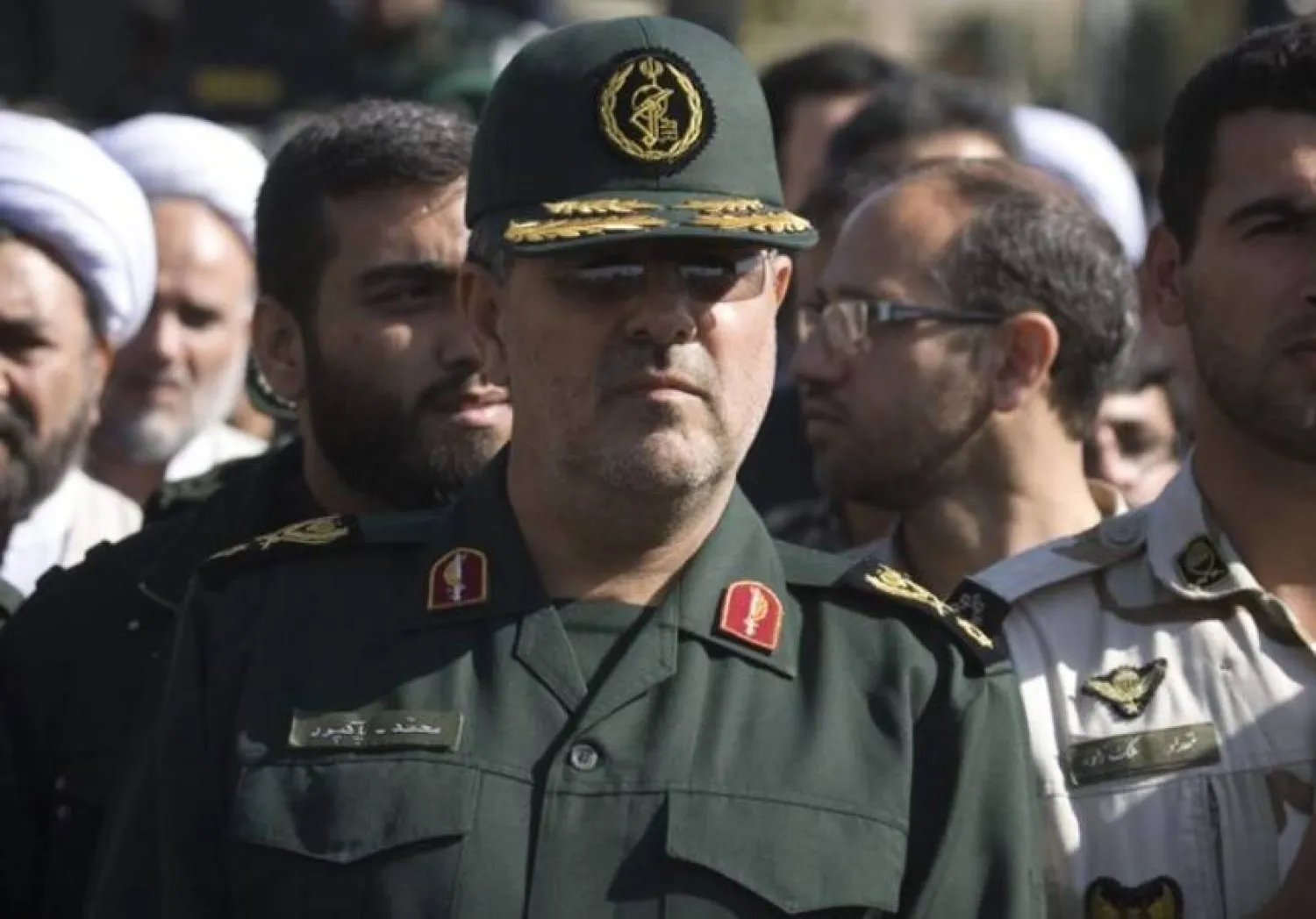
Commander of the Iranian Revolutionary Guard Mohammad Pakpour (Archive - Reuters)
TT

Iran Guards Chief Says 'Finger on Trigger', Warns US against 'Miscalculations'

Commander of the Iranian Revolutionary Guard Mohammad Pakpour (Archive - Reuters)

The commander of Iran's Revolutionary Guards on Thursday warned Israel and the US against "miscalculations" in the wake of mass protests, saying the force had its "finger on the trigger".

US President Donald Trump has repeatedly left open the option of new military action against the Iranian republic after Washington backed and joined Israel's 12-day war in June.

A fortnight of protests starting in late December shook the clerical leadership under supreme leader Ali Khamenei, but the movement has petered out in the face of a crackdown that activists say has left thousands dead.

Guards commander General Mohammad Pakpour warned Israel and the United States "to avoid any miscalculations, by learning from historical experiences and what they learned in the 12-day imposed war, so that they do not face a more painful and regrettable fate".

"The Islamic Revolutionary Guard Corps and dear Iran have their finger on the trigger, more prepared than ever, ready to carry out the orders and measures of the supreme commander-in-chief -- a leader dearer than their own lives," he said, referring to Khamenei.

His comments came in a written statement quoted by state television marking the national day in Iran to celebrate the Guards, a force whose mission is to protect the 1979 Iranian revolution from internal and external threats.

Activists accuse the Guards of playing a frontline role in the deadly crackdown on protests. The group is sanctioned as a terrorist entity by countries including Australia, Canada and the United States and campaigners have long urged similar moves from the EU and UK.

Pakpour took over as Guards commander last year after his predecessor Hossein Salami was one of several key military figures killed in an Israeli strike during the 12-day war, losses which revealed Israel's deep intelligence penetration of Iran.

Giving their first official toll from the protests, Iranian authorities on Wednesday said 3,117 people were killed.

The statement from the Iranian republic's foundation for martyrs and veterans sought to draw a distinction between "martyrs", who it said were members of security forces and innocent bystanders, and what it described as "rioters" backed by the US. 

Of its toll of 3,117, it said 2,427 people were martyrs. 

However, rights groups say the heavy toll was caused by security forces firing directly on protesters and that the actual number of those killed could be far higher and even extend to over 20,000. 

Speaking at the World Economic Forum in Davos, Israeli President Isaac Herzog said "the future for the Iranian people can only be in a regime change", adding that the Iranian “regime is in quite a fragile situation". 


Iran Warns UN Security Council against 'Provocative Action' on Hormuz

09 September 2025, Egypt, Cairo: Iranian Foreign Minister Abbas Araghchi attends a joint press conference in Cairo. (dpa)
TT

Iran Warns UN Security Council against 'Provocative Action' on Hormuz

09 September 2025, Egypt, Cairo: Iranian Foreign Minister Abbas Araghchi attends a joint press conference in Cairo. (dpa)

Iran warned the UN Security Council against any "provocative action", ahead of a scheduled vote on a draft resolution on the Strait of Hormuz that ended up being postponed.

"Any provocative action by the aggressors and their supporters, including in the UN Security Council regarding the situation in the Strait of Hormuz, will only complicate the situation," Iranian Foreign Minister Abbas Araghchi said.

Araghchi was speaking ahead of a scheduled Security Council vote on a draft resolution mandating a force to protect shipping through the Strait of Hormuz Friday.

It was later announced that the vote was postponed, with no new date scheduled.

The Strait of Hormuz, a shipping lane vital to global energy flows, has been all but shut since the United States and Israel launched strikes against Iran on February 28.

The 15-member body was set to vote on a draft resolution brought by Bahrain on authorizing the use of "defensive" force to protect shipping in Hormuz from Iranian attacks, according to the official program.

The draft resolution was backed by the US and the countries hardest hit by the virtual blockade, but member states including Russia, China and France had objected to earlier drafts.


UN Security Council Delays Vote on Authorizing Force to Protect Hormuz

With oil and gas shipments severely restricted due to the US-Israeli war against Iran, the UN Security Council is meeting to consider authorizing the use of 'defensive' force as a way to open the vital Strait of Hormuz. FADEL SENNA / AFP/File
TT

UN Security Council Delays Vote on Authorizing Force to Protect Hormuz

With oil and gas shipments severely restricted due to the US-Israeli war against Iran, the UN Security Council is meeting to consider authorizing the use of 'defensive' force as a way to open the vital Strait of Hormuz. FADEL SENNA / AFP/File

The UN Security Council has postponed a vote scheduled for Friday on authorizing the use of "defensive" force to protect shipping in the Strait of Hormuz from Iranian attacks, according to the official program.

The 15-member body was set to vote Friday morning on a draft resolution brought by Bahrain, but by Thursday night the schedule shifted.

The reason given was that the United Nations observes Good Friday as a public holiday, according to diplomatic sources -- despite this fact being known when the vote was first announced.

No new date has been given for voting on the draft.

Iran has placed a stranglehold on the key shipping lane -- threatening fuel supplies and roiling the global economy -- in retaliation for US-Israeli strikes that triggered the month-old Middle East war.

"We cannot accept economic terrorism affecting our region and the world, the whole world is being affected by the developments," Bahrain's United Nations ambassador Jamal Alrowaiei said this week.

He said the text, which has gone through several amendments and is supported by the United States, "comes at a critical juncture."

President Donald Trump on Wednesday called for countries struggling with fuel shortages to "go get your own oil" in the Strait of Hormuz, adding that US forces would not help them.

A sixth and final draft, seen by AFP, greenlights member states -- either unilaterally or as "voluntary multinational naval partnerships" -- to use "all defensive means necessary and commensurate with the circumstances."

It applies to the strait and adjacent waters to "secure transit passage and to deter attempts to close, obstruct or otherwise interfere with international navigation through the Strait of Hormuz."

The measure would last for a period of at least six months.

The draft resolution has been molded in a bid to rally several countries that have appeared skeptical, including Russia, China and France.

Revised wording no longer explicitly invokes Chapter 7 of the UN Charter, which allows the Security Council to authorize armed force to restore peace.

The latest version, which was scheduled to be voted on at 11:00 am (1500 GMT) Friday before the postponement, also emphasizes the defensive nature of any intervention -- a stipulation that seems to have alleviated French concerns.

'Tall odds'

Jerome Bonnafont, France's UN ambassador, said Thursday that "it is up to the Council to quickly devise the necessary defensive response" after members voted in March to condemn Iran's blocking of the Strait of Hormuz.

President Emmanuel Macron earlier said a military operation to free the waterway is "unrealistic."

It is not certain that Russia and China -- who both wield veto powers -- will back the draft resolution.

"Authorizing member states to use force would amount to legitimizing the unlawful and indiscriminate use of force, which would inevitably lead to further escalation of the situation and lead to serious consequences," said Chinese ambassador Fu Cong.

Russia, a long-time ally of Tehran, has denounced what it calls one-sided measures.

Considering the possible Russian and Chinese vetos, the text "faces tall odds to make it through the Security Council," Daniel Forti, an analyst at International Crisis Group, told AFP.

"It is hard to see them supporting a resolution that treats stability in the strait exclusively as a security issue, instead of one that also grapples with the need for a durable political end to the hostilities," he said.

Normally, around a fifth of the world's oil and liquefied natural gas passes through the Strait of Hormuz.

Its near-total closure is impacting global supplies of important commodities including oil, liquefied natural gas and fertilizer and leading to sharp rises in energy prices.

Security Council mandates authorizing member states to use force are relatively rare.


Man Arrested After Setting off Pyrotechnics on German Train, Injuring 12

A police officer stands on a platform at Siegburg station where a Deutsche Bahn ICE train is parked, in Siegburg, Germany, early Friday, April 3, 2026, after a man was arrested on Thursday after threatening an attack on a high-speed train. (Roberto Pfeil/dpa via AP)
TT

Man Arrested After Setting off Pyrotechnics on German Train, Injuring 12

A police officer stands on a platform at Siegburg station where a Deutsche Bahn ICE train is parked, in Siegburg, Germany, early Friday, April 3, 2026, after a man was arrested on Thursday after threatening an attack on a high-speed train. (Roberto Pfeil/dpa via AP)

A man armed with knives was arrested after setting off pyrotechnics on a high-speed train in Germany, injuring 12 people, police said Friday.

The incident occurred late Thursday on an Intercity Express train, the German equivalent of France's TGV, bound for Frankfurt in western Germany, with around 180 passengers evacuated.

The suspect was locked in a bathroom by passengers after setting off the pyrotechnics, police said in a statement, adding that the man was carrying two knives.

Police said they were investigating the suspect's motives, but German media reported he allegedly threatened to carry out an attack and said he wanted to kill people.

Public radio station Deutschlandfunk reported, citing witness statements, that the man threw pyrotechnic devices filled with plastic pellets.

At least 12 passengers were slightly injured, including one who was taken to hospital but was released after treatment, police said.

Police said they searched the train for dangerous objects, but did not find anything.