


Trump Says ‘Time Running Out’ as Iran Threatens Tough Response

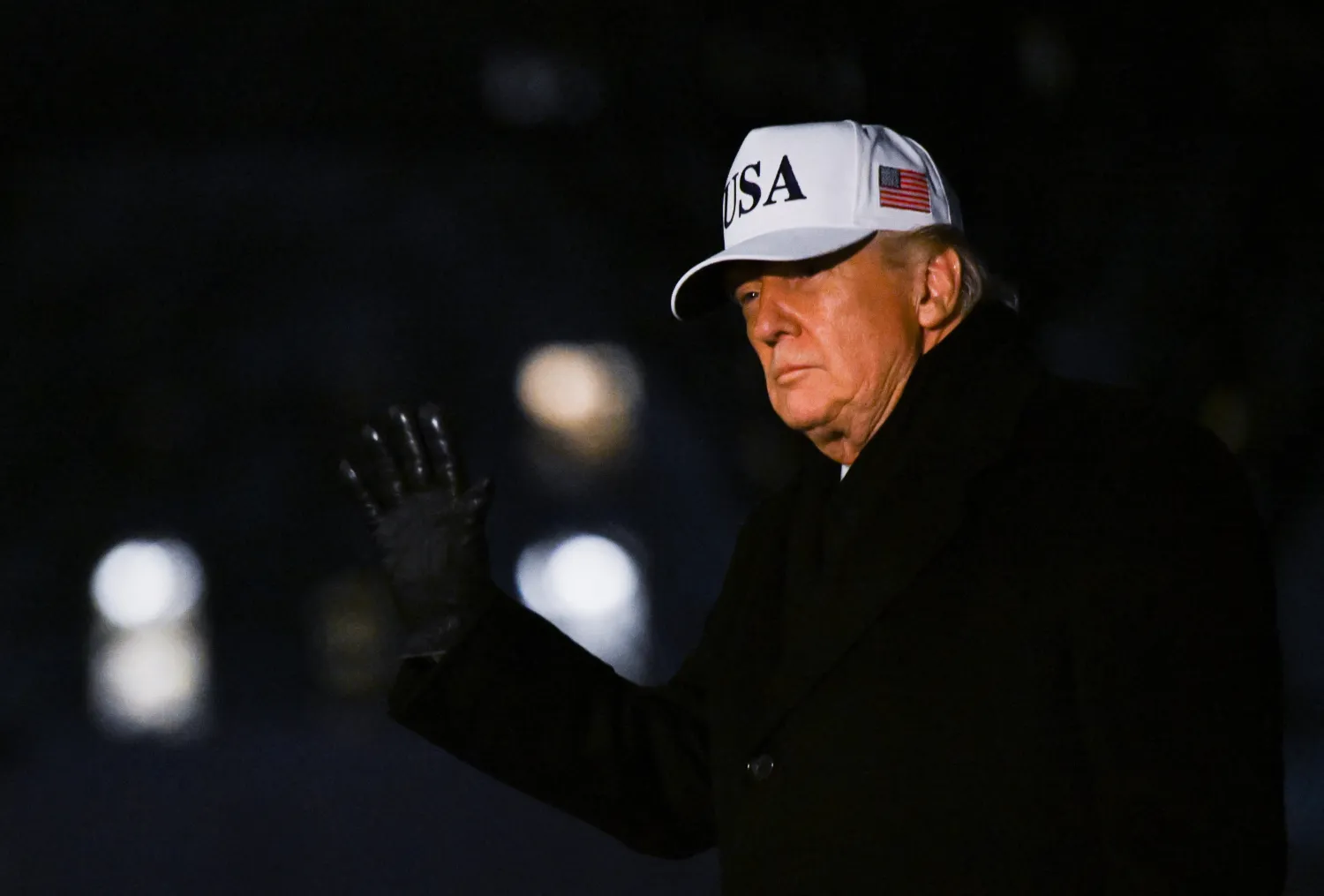
US President Donald Trump waves as he walks upon arrival on the South Lawn of the White House in Washington, US, January 27, 2026. (Reuters)
TT

Trump Says ‘Time Running Out’ as Iran Threatens Tough Response

US President Donald Trump waves as he walks upon arrival on the South Lawn of the White House in Washington, US, January 27, 2026. (Reuters)

President Donald Trump on Wednesday warned time is running out for Iran to come to the table and avoid US military action, provoking Tehran to retort that it would respond to any attack "like never before". 

Trump has not ruled out an attack after this month's deadly crackdown on protests. Last June, the US carried out a night of strikes on Iranian nuclear sites during Israel's 12-day war against the country. 

A US naval strike group that Trump described as an "armada" led by aircraft carrier the USS Abraham Lincoln is now lurking in Middle East waters. 

A rights group said that it has verified over 6,200 deaths, mostly of protesters killed by security forces, in the wave of demonstrations that rocked the clerical leadership since late December but peaked on January 8 and 9. 

Activists say that the actual toll could be many times higher, with an internet shutdown still complicating efforts to confirm information about the scale of the killings. 

In his latest post on Truth Social, Trump did not mention the protests but said Iran needed to negotiate a deal over its nuclear program, which the West believes is aimed at making an atomic bomb. 

"Hopefully Iran will quickly 'Come to the Table' and negotiate a fair and equitable deal -- NO NUCLEAR WEAPONS -- one that is good for all parties. Time is running out, it is truly of the essence!" said Trump. 

Referring to American strikes against Iranian nuclear targets during the June war which he said resulted in "major destruction of Iran", he added: "The next attack will be far worse! Don't make that happen again". 

In response Iran's mission to the United Nations posted a screenshot of Trump's threat on X and wrote: "Iran stands ready for dialogue based on mutual respect and interests -- BUT IF PUSHED, IT WILL DEFEND ITSELF AND RESPOND LIKE NEVER BEFORE!" 

Analysts say US options include strikes on military facilities or targeted hits against the leadership under Ali Khamenei, in a full-scale bid to bring down the system that has ruled Iran since the 1979 revolution that ousted the shah. 

- 'Severe damage' - 

But Foreign Minister Abbas Araghchi said before Trump's comments were published that "conducting diplomacy through military threat cannot be effective or useful". 

"If they want negotiations to take shape, they must certainly set aside threats, excessive demands and raising illogical issues," he said in televised comments. 

Araghchi said he had "no contact" with US Middle East envoy Steve Witkoff in recent days and that "Iran has not sought negotiations". 

Iranian armed forces chief of staff Habibollah Sayyari warned the US against any "miscalculation", saying that "they too would suffer damage". 

- 'New dimensions of crackdown' - 

In an updated toll, the US-based Human Rights Activists News Agency (HRANA) said it had confirmed that 6,221 people had been killed, including 5,856 protesters, 100 minors, 214 members of the security forces and 49 bystanders. 

But the group added it was still investigating another 17,091 possible fatalities. At least 42,324 people have been arrested, it said. 

HRANA warned that security forces were searching hospitals for wounded protesters, saying this highlighted "new dimensions of the continued security crackdown". 

HRANA said a trial in Malard outside Tehran on Tuesday of a man accused over the death of a police officer was the first such hearing linked to the protests. Images of the hearing were broadcast on state television in Iran. 

It was a "starting point for a broad series of trials" that would be "aimed at imposing severe penalties on protesters", HRANA said. 

Meanwhile, Iran on Wednesday executed a man arrested last year on charges of spying for Israel's Mossad spy agency, the judiciary said. Rights groups fear some protesters could also face the death penalty. 


US Says Downed Multiple Iran Drones as Both Insist Deal Closer

 Vessels are anchored in the Strait of Hormuz, as seen from Musandam, Oman, June 11, 2026. (Reuters)
Vessels are anchored in the Strait of Hormuz, as seen from Musandam, Oman, June 11, 2026. (Reuters)
TT

US Says Downed Multiple Iran Drones as Both Insist Deal Closer

 Vessels are anchored in the Strait of Hormuz, as seen from Musandam, Oman, June 11, 2026. (Reuters)
Vessels are anchored in the Strait of Hormuz, as seen from Musandam, Oman, June 11, 2026. (Reuters)

The United States said it downed multiple Iranian drones targeting commercial ships in the Strait of Hormuz early Saturday, hours after both sides said a deal to end the Middle East war was closer than ever.

The interception came after weeks of halting talks between Tehran and Washington, mediated by Pakistan, that have been marked by threats and exchanges of fire despite a fragile truce agreed in April.

US Central Command (CENTCOM), which oversees operations in the region, posted on X that Iran had "launched multiple one-way attack drones in an attempt to strike commercial ships transiting the Strait of Hormuz".

"US forces have downed all of them in recent hours as traffic flow through the strait continues unimpeded," it said.

CENTCOM added that the Strait of Hormuz -- a key maritime trade route for oil and gas from the Gulf -- "remains open for transit", despite an Iranian enforced blockade since the start of the war.

Disagreements between the two sides have persisted, with Iranian state media publishing a breakdown of what was purportedly on the table that was at odds with Washington's account.

"The Islamabad Memorandum of Understanding has never been closer," Iran's foreign minister, Abbas Araghchi, wrote in a social media post, referring to the Pakistani capital that hosted previous US-Iran talks.

Trump -- who on Friday morning accused the Iranians of negotiating in bad faith and misrepresenting the terms that had been agreed -- posted a screenshot of Araghchi's message on his own feed just hours later.

Araghchi provided some details on the agreement in an interview with state television, saying it calls for the lifting of the US naval blockade of Iran's ports and unspecified changes to the administration of the Strait of Hormuz.

He also said the only way to deal with the country's enriched uranium -- which Washington alleges is part of a nuclear weapons program -- "is to dilute it inside Iran".

- 'Not 100 percent' -

Disputing Trump's "bad faith" accusation, Iranian foreign ministry spokesman Esmaeil Baqaei said an agreement had now been reached with Washington "on most points".

Pakistani Prime Minister Shehbaz Sharif, whose country has been a key mediator since the initial talks, confirmed that "a final, agreed-upon text of the peace deal has been reached".

"Peace has never been as close as it is now," Sharif said, while acknowledging "incessant misinformation" surrounding the deal.

A senior US official also voiced optimism that the parties would be "signing this agreement over the next few days".

"If I were to give you a confidence that we were going to be signing this agreement, I maybe would have said 75 percent this morning, it's probably more like 80-85 percent now, but it's not 100 percent," the official told reporters in a call.

The Swiss foreign ministry on Friday said it had been in contact with both the United States and Iran, and had "proposed Switzerland as the venue for a possible signing, should the parties agree to it".

But Araghchi said that upon finalization, a draft deal with the United States would be signed "remotely", adding that this could happen "in the coming days".

US ally Israel has said that Trump had promised it that any agreement would see Iran stripped of its enriched nuclear material, but Tehran's official IRNA news agency said this was not even on the table.

- 'Benefits will flow' -

According to IRNA's account, after an initial agreement is signed, Iran and the United States would hold 60 more days of talks and "Iran's right to enrich uranium and the retention of enriched material... will be emphasized with a view to their inclusion in the final agreement".

Beyond this, according to IRNA, Iran would insist on managing traffic through the Strait of Hormuz, which Tehran has blockaded since the outbreak of the war, causing major disruptions to the global economy.

On Friday, Iran's Mehr news agency, quoting a source close to the country's negotiating team, said the deal would also see the release of $24 billion in frozen Iranian assets.

But those details clashed with a summary offered by a senior White House official, who told AFP Iran had agreed to dismantle its nuclear program, destroy its enriched uranium stockpile and reopen the strait -- and that Tehran would not see any of its frozen funds returned until it had honored these commitments.

US Vice President JD Vance likewise said Iran was "not receiving any cash, and no funds are being released for simply signing a deal or attending a meeting".

But, he added, if "Iran meets its obligations, then economic benefits will flow to them and to the entire region".


US, Iran Have Agreed to Wording of a Deal to End Their War, Pakistan PM Says

Vessels in the Strait of Hormuz near the beach of Bandar Abbas, Iran, June 11, 2026. Amirhosein Khorgooi/ISNA/WANA (West Asia News Agency) via Reuters
TT

US, Iran Have Agreed to Wording of a Deal to End Their War, Pakistan PM Says

Vessels in the Strait of Hormuz near the beach of Bandar Abbas, Iran, June 11, 2026. Amirhosein Khorgooi/ISNA/WANA (West Asia News Agency) via Reuters

Pakistan’s prime minister said Friday the United States and Iran have agreed to wording of an agreement aimed at ending their war in the Middle East and that mediators were working with both sides to finalize a deal.

Prime Minister Shehbaz Sharif said the US and Iran have reached a “final, agreed upon text.” He said Pakistan, which has taken the lead in mediation efforts, was working with the warring countries on next steps.

“Peace has never been this close as it is now,” Sharif said in a post on X.

The apparent breakthrough in negotiations comes after Iran exchanged fire with the US and Israel over three days this week, threatening to return the Middle East to full-scale war.

Iranian Foreign Minister Abbas Araghchi said Friday an agreement “has never been closer” in post on X. US President Donald Trump, who has said multiple times in recent weeks that the countries were on the cusp of a deal, shared Araghchi's post on his own social media.

The war launched by the US and Israel on Feb. 28 has rattled the Middle East and virtually shut down oil and natural gas shipments from the Persian Gulf. A fragile ceasefire has been in place since April 7.

Iranian official says nuclear details will follow an agreement to end the war Araghchi told Iranian state TV on Friday that both sides were working toward signing an initial agreement declaring an end to the war. He said terms dealing with Iran’s nuclear program would be finalized in the following 60 days as they negotiate a final deal.

He said the initial agreement would end the war “on all fronts, including Lebanon.” Israel has been fighting the Iranian-allied Hezbollah in Lebanon since early March. Israel is not a party to the negotiations between the US and Iran, and its leaders have said they don't plan to withdraw from Lebanon.

A senior US administration official, who briefed reporters on condition of anonymity under ground rules set by the White House, said Friday that the emerging agreement would reopen the Strait of Hormuz and begin the process of destroying or removing Tehran’s highly enriched uranium.

The official said the 60-day period after both sides sign the deal would be used to work out technical details for removing Iran’s enriched uranium. The official did not detail who the US envisions taking charge of removing the uranium, which is believed to entombed under three nuclear sites that were battered by US strikes last year.

The official said a deal was 80% to 85% done and that the US side believes “most of the people who have authority” in the Iranian government want to sign onto the deal “but not everybody.”

Three regional officials said the emerging deal is also expected to include the phased lifting of sanctions on Iran and the release of frozen Iranian assets. The officials spoke on condition of anonymity because of the sensitivity of the negotiations.

Underscoring the fragility of the negotiations, Trump on Friday lashed out at Iranian officials on social media and said: “They better get their act together, and FAST!” That was before he shared Araghchi's post declaring a deal was close.

Officials say a deal could be signed in the coming days

Iran's nuclear program has been a key point of division. The US and Israel fear it could lead to an atomic weapon — a main reason their leaders cited for going to war. Tehran has insisted its nuclear efforts are for peaceful purposes.

Also critical is Iran’s effective closure of the Strait of Hormuz, a vital shipping lane for oil and natural gas. Disruption of transit through the strait has crimped global energy supplies, driven up fuel prices and made food and other basics more expensive well beyond the region.

The US has responded since mid-April with a naval blockade of Iranian ports to choke off Iran’s own oil exports.

The regional officials said they expect a signing ceremony for the agreement in the coming days after officials in Washington and Tehran approve it.

Trump on Thursday claimed significant progress in the negotiations, just hours after he threatened to escalate attacks and seize Iran’s oil industry.

Esmail Baghaei, a spokesperson for Iran’s Foreign Ministry, said on state television that mediators were active and the text of a deal was “mostly finalized.”

There was no immediate comment Friday from Pakistan’s Foreign Ministry, which has been leading efforts to mediate a deal between the US and Iran. Foreign Ministry spokesperson Tahir Andrabi had said Thursday that Pakistan remained involved in negotiations.

Israel expects Trump to advocate for its interests

Israeli Prime Minister Benjamin Netanyahu has said Israel is not a party to the deal being negotiated. He said in a statement Friday that he and Trump were in “full agreement” that Iran must not have nuclear weapons.

Israeli Defense Minister Israel Katz said in a separate statement that Israel also expects Trump to uphold key Israeli interests, including weakening Iran's missile program and proxy network.

Katz warned that Israel could still act independently toward Iran and that the country would not pull out of the zones it is occupying in Lebanon, Syria and Gaza, nor would it withdraw from the northern refugee camps of the Israeli-occupied West Bank.

The deal was largely being brokered by Pakistan, led by its army chief Field Marshal Asim Munir, the regional officials said, with backing from Saudi Arabia, Türkiye, Egypt, and Qatar.


Pope’s Plane in Spain Delayed by Technical Glitch

Pope Leo XIV (L) and King Felipe VI disembark from the plane that was supposed to take the pontiff back to Rome after his seven-day trip to Spain, due to technical problems preventing its takeoff from Los Rodeos Airport, Tenerife Island, Canary Islands, 12 June 2026. (EPA)
TT

Pope’s Plane in Spain Delayed by Technical Glitch

Pope Leo XIV (L) and King Felipe VI disembark from the plane that was supposed to take the pontiff back to Rome after his seven-day trip to Spain, due to technical problems preventing its takeoff from Los Rodeos Airport, Tenerife Island, Canary Islands, 12 June 2026. (EPA)

Pope Leo XIV's departure from Tenerife at the end of a week-long visit to Spain was delayed Friday by a technical problem with the plane which led him to disembark, according to an AFP reporter at the scene.

Spain's King Felipe VI, who had just said goodbye to the pontiff on the runway, boarded the Iberia airline plane and both disembarked and returned to the terminal.

About 80 journalists remained on the jet, along with Vatican officials and members of the clergy.

"The departure of the papal flight has been delayed by half an hour due to a technical problem with the aircraft," the communications service for the papal trip in Spain said in a brief statement at 1545 GMT.

The pilot initially told passengers there was a technical fault but later specified a "startup failure of the engine", which he said was likely caused by wind conditions.

"Our maintenance team suggests towing the aircraft, positioning it into the wind, and attempting a new engine start," the pilot told those on board.

"We will try this. If it is successful, we can depart."

Pope Leo XIV had been due to return to Rome after a seven-day trip to Spain.

He arrived on Friday in Tenerife in Spain's Canary Islands from the nearby island of Gran Canaria, where he had been since Thursday.
