


Iran President Orders Talks with US as Trump Hopeful of Deal

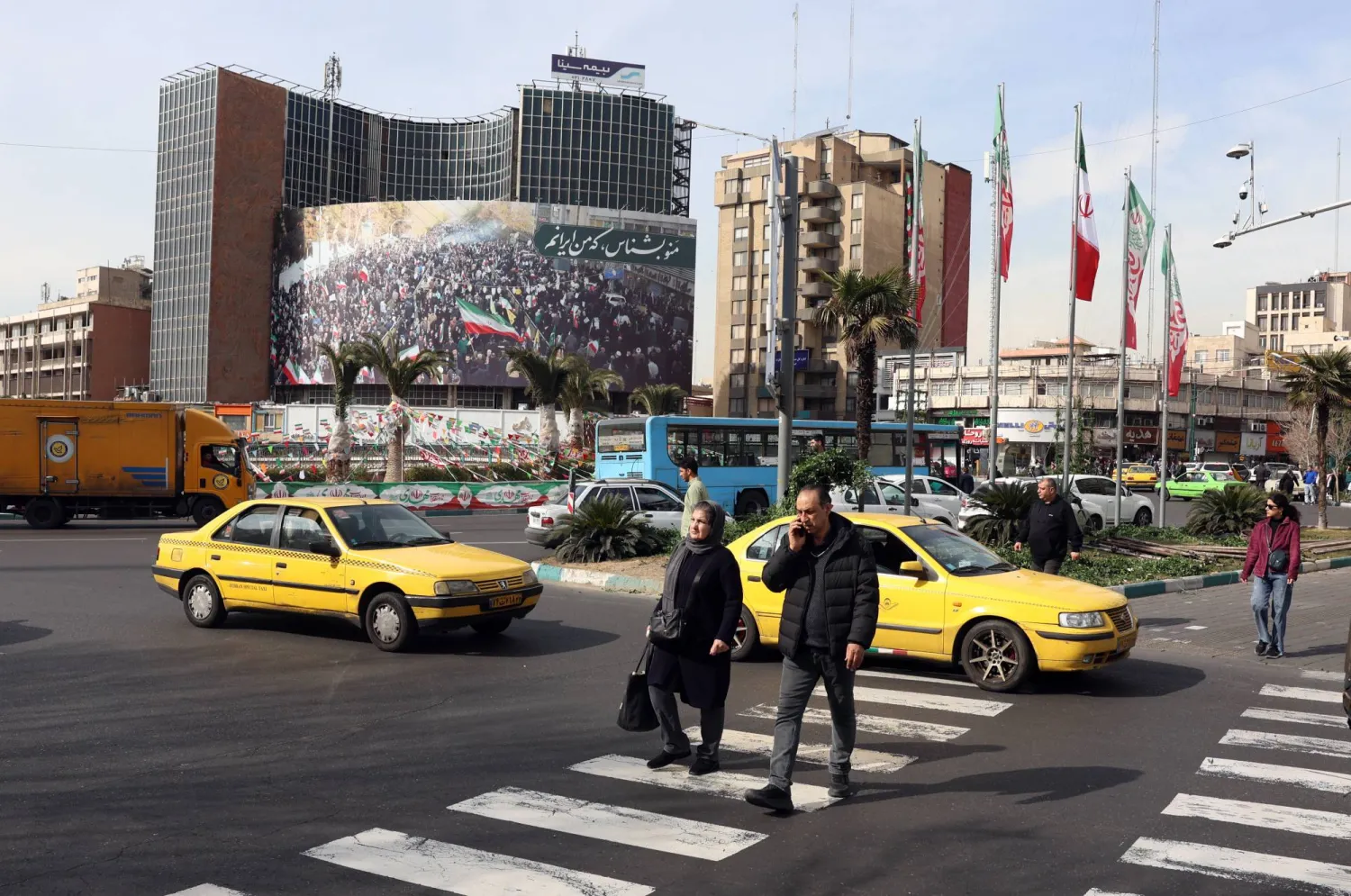
 Iranians walk in a street in Tehran, Iran, 02 February 2026. (EPA)
Iranians walk in a street in Tehran, Iran, 02 February 2026. (EPA)
TT

Iran President Orders Talks with US as Trump Hopeful of Deal

 Iranians walk in a street in Tehran, Iran, 02 February 2026. (EPA)
Iranians walk in a street in Tehran, Iran, 02 February 2026. (EPA)

Iranian President Masoud Pezeshkian has ordered the start of nuclear talks with the United States, local media said Monday, after US leader Donald Trump said he was hopeful of a deal to avert military action against the country. 

Following the Iranian authorities' deadly response to anti-government protests that peaked last month, Trump has threatened military action and ordered the dispatch of an aircraft carrier group to the Middle East. 

Trump has maintained he is hopeful of making a deal and Tehran has also insisted it wants diplomacy, while vowing an unbridled response to any aggression. 

"President Pezeshkian has ordered the opening of talks with the United States" on Iran's nuclear program, the Fars news agency reported on Monday, citing an unnamed government source. The report was also carried by the government newspaper Iran and the reformist daily Shargh. 

US news site Axios cited two unnamed sources saying Iranian Foreign Minister Abbas Araghchi was expected to meet with US envoy Steve Witkoff on Friday in Istanbul to discuss a possible deal on the nuclear file. 

Trump had warned "time is running out" for Iran to reach a deal on its nuclear program, which the West believes is aimed at making an atomic bomb, a claim Tehran has repeatedly denied. 

In an interview Sunday with CNN, Araghchi said, "President Trump said no nuclear weapons, and we fully agree. We fully agree with that. That could be a very good deal," adding that, "in return, we expect sanctions lifting". 

Iran foreign ministry spokesman Esmaeil Baqaei said earlier Monday Tehran was working on a method and framework for negotiations that would be ready in the coming days, with messages between the two sides relayed through regional players. 

- 'Police the world' - 

Türkiye has led a diplomatic push to defuse tensions, with Araghchi visiting Istanbul last week and speaking with other regional counterparts, including in Egypt and Jordan. 

Jordan's top diplomat, Ayman Safadi, on Monday assured Araghchi the kingdom would "not be a battleground in any regional conflict or a launching pad for any military action against Iran". 

Iranian authorities, including supreme leader Ali Khamenei, have warned any US attack would trigger a "regional war". 

In Tehran, pensioner Ali Hamidi told AFP he was a veteran and "not afraid of war", but that "America should mind its own business, why does it want to police the world?" 

But, the 68-year-old added, "Iranian officials are also at fault for not providing for the people. The economic troubles are back-breaking... The officials should do something tangible, not just talk." 

The protests were sparked in late December by economic strain and exploded in size and intensity over several days in early January. 

Authorities have said the protests were "riots" inflamed by its arch foes the United States and Israel, with Khamenei likening them to a "coup" attempt. 

- Ambassadors summoned - 

Tehran has acknowledged thousands of deaths during the protests, and on Sunday the presidency published the names of 2,986 people out of the 3,117 whom authorities said were killed in the unrest. 

Authorities insist most were members of the security forces and innocent bystanders, attributing the violence to "terrorist acts". 

US-based Human Rights Activists News Agency said it has confirmed 6,842 deaths, mostly protesters killed by security forces, with rights groups warning the figure is likely far higher. 

Young Iranian Selina, who would not give her full name, travelled to Iraqi Kurdistan seeking some relief from "living in fear". 

"It's not safe for us" in Iran, the 25-year-old told AFP. 

"We don't even dare to go out after 6:00 pm because soldiers are everywhere." 

The crackdown prompted the European Union to list the Iranian Revolutionary Guard Corps (IRGC) as a terrorist organization, with Iranian lawmakers retaliating on Sunday by slapping the same designation on European armies. 

The EU also issued fresh sanctions on Iranian officials, including the interior minister, a move echoed on Monday by Britain, which announced sanctions on 10 individuals over the "brutality against protesters". 

Baqaei said Monday the foreign ministry had summoned all the EU member state ambassadors in Tehran over the designation, and that other responses were to come. 

Iranian state television also announced four foreigners had been arrested in Tehran for "participation in riots", without specifying their nationalities. 

Authorities have continued to announce arrests, with rights groups estimating at least 40,000 people have been detained over the protests. 


French Ambassador to Asharq Al-Awsat: Mohammed bin Salman’s Visit Paves Way for New Phase of Strategic Partnership

Patrick Maisonnave, French Ambassador to Saudi Arabia (Asharq Al-Awsat).
TT

French Ambassador to Asharq Al-Awsat: Mohammed bin Salman’s Visit Paves Way for New Phase of Strategic Partnership

Patrick Maisonnave, French Ambassador to Saudi Arabia (Asharq Al-Awsat).

A senior French official stressed that Saudi Crown Prince Mohammed bin Salman’s visit to France on Sunday means, in short, that Riyadh and Paris are entering a new phase of a genuine strategic partnership. He said the visit will address diplomacy, security, defense, investment, energy, culture, technology, and education.

Patrick Maisonnave, the French ambassador to Saudi Arabia, told Asharq Al-Awsat that the momentum is now being further strengthened through the visit of Crown Prince and Prime Minister Mohammed bin Salman to France and the first meeting of the French-Saudi Strategic Partnership Council.

According to Maisonnave, the council is particularly important because it provides a permanent institutional framework for this political ambition, allowing both countries to set priorities, measure progress, and develop long-term cooperation across the main pillars of the relationship.

He added that as the two countries seek to keep pace with profound geopolitical, economic, and technological changes, Mohammed bin Salman’s visit demonstrates a shared determination to move from a very strong bilateral partnership to a comprehensive strategic partnership.

He continued by saying that the readiness of the two leaderships to work together is not limited to bilateral issues, but also extends to regional stability, global challenges, and the major transformations shaping their societies, as the partnership enters a new phase with this visit.

He explained that the transformation Saudi Arabia is undergoing under Vision 2030, together with France’s strengths in sectors such as energy, infrastructure, culture, innovation, artificial intelligence, education, and creative industries, is creating new areas for convergence.

He stressed that the strategic dimension of the partnership lies precisely in this development, moving from a relationship based on strong cooperation to one increasingly grounded in shared objectives, long-term planning, and joint initiatives.

A Convergence Resilient to Challenges

Maisonnave affirmed that Riyadh and Paris have a well-established partnership and mutual trust that enable them to overcome the geopolitical challenges facing the region. He noted that the bilateral convergence translates into close coordination on the region’s most prominent crises.

He added that Paris and Riyadh are working together to support a two-state solution for Israelis and Palestinians and create the necessary political conditions for lasting peace. The two countries also share an interest in Yemen’s stability and in protecting freedom of navigation and the security of strategic maritime routes.

According to Maisonnave, the two countries support efforts to end the devastating war in Sudan and preserve the country’s unity and institutions. They also support Syria’s sovereignty, unity, and recovery, as well as the establishment of a stronger Lebanese state capable of exercising its authority, while reducing external interference and the influence of non-state armed groups.

He continued by saying that France and Saudi Arabia naturally have their own interests and perspectives, but have developed the ability to engage in frank dialogue, particularly during periods of regional tension and profound international changes. This has enabled the relationship not only to endure, but also to continually reinvent itself.

Ambassador Maisonnave said the distinctive nature of the Saudi-French relationship lies in its rare combination of historical depth, political trust, and a shared ability to look to the future. Over the past century, he explained, the two countries have built a relationship based on mutual respect, continuous dialogue, and, most importantly, strategic autonomy.

He added that the relationship is no longer defined solely by its history or traditional areas of cooperation. Instead, it is increasingly focused on what the two countries can build together over the coming decades. French President Emmanuel Macron’s visit to Saudi Arabia in December 2024 was a landmark moment that gave new political momentum to bilateral relations.

He attributed the resilience of bilateral relations since their establishment in 1926 to the fact that their strength lies in a century of accumulated trust, sustained political engagement at the highest levels, and a determination to adapt the partnership to each new historical period, despite some turning points along the way.

Maisonnave added that since diplomatic relations were established in 1926, France and Saudi Arabia have steadily expanded the scope of their cooperation. The relationship has accompanied the transformation of the Kingdom itself while responding at the same time to successive regional and international challenges. After 100 years, he said, the relationship is broader and deeper than at any previous stage in its history.

He continued by saying that this continuity is particularly evident today in diplomatic cooperation. At a time when the Middle East is going through one of its most significant periods of transformation, France and Saudi Arabia share a fundamental objective: preventing instability from becoming permanent and restoring the priority of diplomacy, state sovereignty, and international law.

Of particular importance, according to Maisonnave, is that this diplomatic coordination is developing alongside an equally deep economic and societal partnership. France is accompanying the transformation taking place in Saudi Arabia under Vision 2030 in areas ranging from investment and energy to culture, tourism, technology, education, and human capital development.

In his view, this gives the relationship an unprecedented scope, noting that strategic dialogue at the highest political levels is reinforced by growing ties between the two countries’ economies, institutions, and societies.

He also noted that the centenary of the establishment of diplomatic relations represents more than a commemoration of the past. It symbolizes the transition from one chapter to another in the history of the relationship.

Maisonnave explained that the first 100 years established and laid the foundations for a relationship based on trust. He stressed that the next 100 years must build on this legacy, making France and Saudi Arabia not merely partners in a changing world, but partners in shaping the future.


Zelensky Rejects Wartime Elections, Says Would 'Split' Ukraine

(FILES) Ukraine's President Volodymyr Zelensky arrives to attend a meeting with Serbian President at the Palace of Serbia, in Belgrade on August 8, 2026. (Photo by Andrej ISAKOVIC / AFP)
TT

Zelensky Rejects Wartime Elections, Says Would 'Split' Ukraine

(FILES) Ukraine's President Volodymyr Zelensky arrives to attend a meeting with Serbian President at the Palace of Serbia, in Belgrade on August 8, 2026. (Photo by Andrej ISAKOVIC / AFP)

President Volodymyr Zelensky said in remarks made public Sunday that it would be too dangerous for Ukraine to hold an election while it fights Russia's invasion, after a call by his former defense minister to organize a vote.

"I believe that in a war like this, elections as such are a huge risk. Elections right now are a tsunami for the country that will split Ukraine," Zelensky said in the comments.

Ukraine has suspended elections under martial law, a measure still widely supported by the population as the country focuses on fighting off Russian forces.

"If we want to destroy the country, then we can move in the direction of elections during these times of war," the 48-year-old leader added.

He held a briefing with a group of journalists including AFP on Saturday, the first in months amid several political crises.

The latest upheaval saw thousands take to the streets after Zelensky fired his defense minister, Mykhailo Fedorov.

The ousted Fedorov this week made a surprise call to find a way to organize a vote - but without offering a roadmap, and prompting even some of his supporters to distance themselves from him.

Experts have cited a flurry of obstacles, including how soldiers, millions of Ukrainian refugees and people from occupied territories would vote, as well as disinformation threats from Russia.

Only 15 percent of Ukrainians believe elections should be held before the end of hostilities, according to a poll by the Kyiv Institute of Sociology.

Zelensky made numerous jab at his opponent during the briefing.

"I believe he is going himself -- or is being pushed - toward wrong things," Zelensky said of Fedorov.

The former minister had pushed for reforms but clashed with the military's command and their traditionally stiff approach.

The public initially took his side and pushed for the dismissal of commander-in-chief Oleksandr Syrsky.

Zelensky said people had the right to protest but warned against "disrespectful" attitudes to military people.

"Since when has marketing started to outweigh the people who are giving their lives?" he said.

After a political crisis that had weakened him, Zelensky was able to cast himself as a rampart against division.

"I believe that society and soldiers must not be divided," he said, "We must acknowledge that there is this risk -- that there may be movement in that direction, toward dangerous developments."


Iran President: US Memorandum is Best Path Out of Stalled War

A handout photo made available by the Iranian Presidential Office shows Iran's President Masoud Pezeshkian attending a press conference in the capital Tehran, on August 8, 2026. (Photo by Iranian Presidential Office / AFP) /
TT

Iran President: US Memorandum is Best Path Out of Stalled War

A handout photo made available by the Iranian Presidential Office shows Iran's President Masoud Pezeshkian attending a press conference in the capital Tehran, on August 8, 2026. (Photo by Iranian Presidential Office / AFP) /

Iranian President Masoud Pezeshkian defended a recent memorandum of understanding as the best way for the country to move beyond what he described as a situation of “neither war nor peace.”

In a speech published by state-run IRNA early on Sunday, he said members of Iran’s Supreme National Security Council believed the memorandum represented the best possible agreement based on what he described as dignity, wisdom and the national interest.

“There is not a single provision in this agreement that amounts to capitulation,” Pezeshkian said. “The supreme leader sets the policies, and we will follow that path.”

The deal known as the Memorandum of Understanding that US President Donald Trump signed in June set an ambitious 60-day deadline for ending the war with Iran and reaching an accord on its nuclear program.

That period ended last week, but the two sides remain far apart, with no signs of compromise on the crucial issue of reopening the Strait of Hormuz, vital to global shipping.

While stressing that Tehran did not intend to back down in the face of its adversaries, Pezeshkian also linked the agreement to Iran’s economic prospects, saying the country could not attract investment in this stalled phase.

“Capital and money are extremely sensitive to risk,” The Associated Press quoted him as saying. “We have to remove this risk from the country.”

Nearly six months into the war with the United States and Israel, the Iranian economy is suffering under sanctions and a naval blockade that is making it extremely difficult for the country to export oil, its most valuable product.

Meanwhile, the hard-line new leader of Iran’s Supreme National Security Council, Mohsen Rezaei, threatened Tehran’s neighbors against joining the new US effort to hurt Iran’s economy.

“If (Trump) wants to do something, we will retaliate in a seismic manner,” he said in an interview with the state broadcaster that aired Saturday.

Rezaei was named this month as part of senior appointments widely seen as hardening Tehran’s political and military stance. His interview with IRIB is his most extensive public statement since then.
