


Trump Says US Talks with Iran ‘Very Good,’ More Negotiations Expected

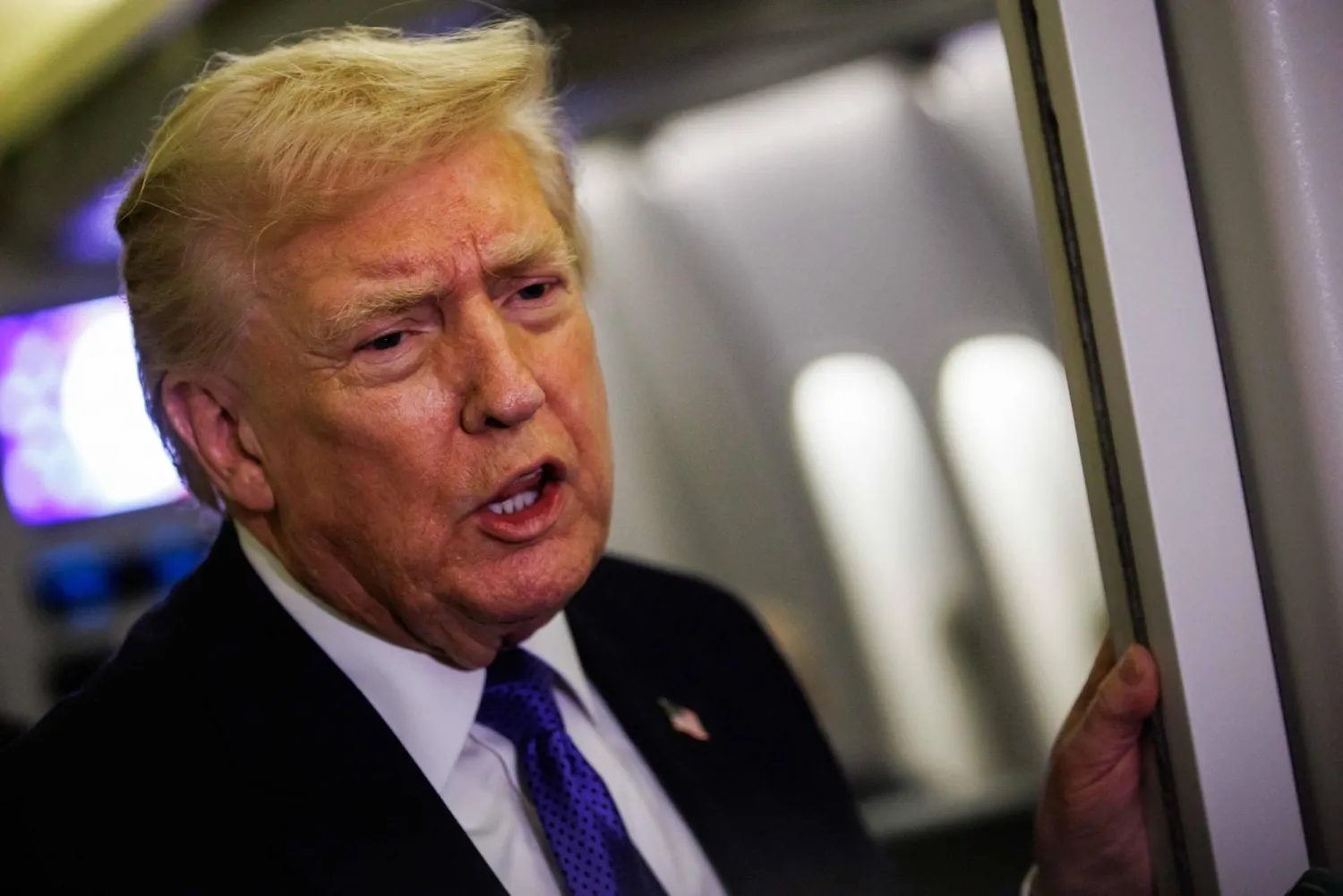
US President Donald Trump gaggles with reporters while aboard Air Force One on February 6, 2026 en route to Palm Beach, Florida. (Getty Images via AFP)
TT

Trump Says US Talks with Iran ‘Very Good,’ More Negotiations Expected

US President Donald Trump gaggles with reporters while aboard Air Force One on February 6, 2026 en route to Palm Beach, Florida. (Getty Images via AFP)

US President Donald Trump said Friday Washington held "very good talks" on Iran after the two sides held an indirect dialogue in Oman.

Iran for its part said it expected to hold more negotiations with the United States, hailing a "positive atmosphere" during a day of talks in the Gulf sultanate.

With an American naval group led by an aircraft carrier in Middle Eastern waters, US and Iranian delegations held talks in Muscat mediated by Oman without publicly meeting face-to-face.

Shortly after the talks concluded, the US announced new sanctions against shipping entities and vessels, aimed at curbing Iran's oil exports. But it was not clear if the move was linked to the talks.

The talks were the first between the two foes since the United States joined Israel's war with Iran in June with strikes on nuclear sites.

"We likewise had very good talks on Iran," Trump told reporters on board Air Force One en route to his Mar-a-Lago resort in Florida, adding, "we're going to meet again early next week."

However, as Iran warned against further threats after Washington raised the specter of new military action, Trump said: "If they don't make a deal, the consequences are very steep."

Foreign Minister Abbas Araghchi, who led Iran's delegation in Muscat, said talks "focused exclusively" on the Iranian nuclear program, which the West believes is aimed at making an atomic bomb but Tehran insists is peaceful.

The US delegation, led by Middle East envoy Steve Witkoff and Trump's influential son-in-law Jared Kushner, had also wanted Tehran's backing for militant groups, its ballistic missile program and treatment of protesters on the agenda.

"In a very positive atmosphere, our arguments were exchanged and the views of the other side were shared with us," Araghchi told Iranian state TV, adding that the two sides had "agreed to continue negotiations."

Speaking to the official IRNA news agency, Araghchi expressed hope that Washington would refrain from "threats and pressure" so that "the talks can continue."

- 'Destabilizing power' -

Admiral Brad Cooper, the commander of US Central Command, was present at the talks, according to images published by the Oman News Agency.

Multiple sessions of talks in the morning and afternoon saw both sides shuttling to and from the residence of Omani Foreign Minister Badr Albusaidi.

The foreign ministry of US ally Qatar expressed hope the talks would "lead to a comprehensive agreement that serves the interests of both parties and enhances security and stability in the region."

The White House has made clear it wants the talks to rein in Tehran's ability to make a nuclear bomb, an ambition the country has always denied.

French Foreign Minister Jean-Noel Barrot said on Friday that Iran should stop being a "destabilizing power," citing its nuclear program and support for "terrorist" groups.

Barrot also called on "groups supported by Iran" to exert "the utmost restraint" in the event of any military escalation involving Iran.

- 'Maximum pressure' -

Trump initially threatened military action against Tehran over its crackdown on protesters last month, which rights groups say killed thousands, and even told demonstrators "help is on its way."

Regional powers urged the United States not to intervene, calling on Washington and Tehran to instead return to talks.

The US-based Human Rights Activists News Agency (HRANA) said Friday it has confirmed 6,505 protesters were killed, as well as 214 members of the security forces and 61 bystanders.

Those numbers are expected to climb because the magnitude of the crackdown has masked by the blanket internet shutdown imposed by the authorities for a fortnight, rights groups say.

Almost 51,000 people are also confirmed to have been arrested amid "the growing use of forced confessions," according to HRANA.

Yet Trump's rhetoric in recent days has focused on reining in the Iranian nuclear program and the US has maneuvered a naval group led by aircraft carrier USS Abraham Lincoln into the region.

Iran has repeatedly vowed it will hit back at US bases in the region if attacked.

The new sanctions to curb Iran's oil exports come with Trump "committed to driving down the Iranian regime's illicit oil and petrochemical exports under the administration's maximum pressure campaign," State Department spokesman Tommy Pigott said in a statement.



France Working on UN Resolution to Restore Freedom of Navigation in Strait of Hormuz

Vessels at the Strait of Hormuz, as seen from Musandam, Oman, September 23, 2026. Picture taken through a window. REUTERS/Stringer
TT

France Working on UN Resolution to Restore Freedom of Navigation in Strait of Hormuz

Vessels at the Strait of Hormuz, as seen from Musandam, Oman, September 23, 2026. Picture taken through a window. REUTERS/Stringer

France is working on a draft United Nations Security Council resolution backing freedom of navigation in the Strait of Hormuz, a UN diplomat said on Friday.

The resolution would reaffirm the need to respect freedom of navigation in the strait, a flashpoint in the war in Iran, citing its importance for global shipments critical for food and energy security, the diplomat said, speaking on condition of anonymity because discussions on the measure have been private.

The proposed UN resolution would recall the need to respect the Law of the Sea and support peaceful initiatives aimed at ensuring safe passage in the strait, the UN diplomat added.

Iran’s disruption of the strait, through which a fifth of the world’s traded oil and gas transited before the war, has emerged as its main point of leverage.

The effects have been felt far beyond the Middle East and pose political problems for US President Donald Trump and his Republican Party ahead of November’s midterm congressional elections.

Paris has unsuccessfully attempted in the past to put a resolution together on the subject, but the latest move follows talks between France's President Emmanuel Macron on Monday evening and Trump on the sidelines of the UN General Assembly.

“Trump and Macron discussed the topic on the sidelines of this week’s annual UN gathering of global leaders,” the diplomat said. It also was discussed with Arab nations and Iran.

After his meeting the ⁠US president at Trump Tower in New York, Macron said: “Several options were discussed. We will be working on diplomatic solutions over the coming hours, which could make it possible, even without a comprehensive agreement, to find ways of allowing more container ships and oil tankers to transit.”


CNN Blocked from Trump Trip on Saturday

CNN Senior Reporter Betsy Klein reports from the White House, Thursday, Sept. 24, 2026, in Washington. (AP Photo/Alex Brandon)
TT

CNN Blocked from Trump Trip on Saturday

CNN Senior Reporter Betsy Klein reports from the White House, Thursday, Sept. 24, 2026, in Washington. (AP Photo/Alex Brandon)

CNN reporters have been barred from traveling with US President Donald Trump as planned on Saturday, in a new move by the White House to limit the news network's access.

The president last week sought to ban three US outlets -- CNN, MS NOW and Politico -- from the White House, accusing them of providing only negative coverage on him.

After journalists with the three outlets were blocked from entering the White House complex, a judge ordered their access to be temporarily restored, saying Trump's move was likely unconstitutional.

For Trump's trip on Saturday to Tennessee, CNN had been scheduled to be the TV network in the press "pool" traveling with him.

However, a schedule released by the White House on Friday evening did not list CNN or any of the TV networks in the TV pool rotation.

The pool is a rotating group of journalists that travel with the president and provide coverage to other outlets, due to limited space.

The White House schedule only listed a "Secondary TV" correspondent and crew: Lindell TV -- a staunchly pro-Trump outlet run by his close ally, businessman Mike Lindell.

Earlier this week, when CNN's White House access was still revoked, the top five US broadcasters made a rare joint move to halt pool coverage of the White House in solidarity.

"The public has a vital interest in receiving accurate, independent information about its government. No administration should restrict a news organization because it objects to its reporting," ABC, CBS, CNN, Fox and NBC said.

CNN declined to comment when reached Friday by AFP. The White House did not respond to a request for comment.


Iran Proposes Hormuz Plan, Trump Reportedly Refuses

A motorist rides a scooter near a giant billboard erected on the facade of a building depicting a member of Iran's Revolutionary Guards Corps (IRGC) placing his foot on a US sea drone, reportedly seized by Iran in the Strait of Hormuz, in Vanak Square in Tehran on September 24, 2026. (Photo by AFP)
TT

Iran Proposes Hormuz Plan, Trump Reportedly Refuses

A motorist rides a scooter near a giant billboard erected on the facade of a building depicting a member of Iran's Revolutionary Guards Corps (IRGC) placing his foot on a US sea drone, reportedly seized by Iran in the Strait of Hormuz, in Vanak Square in Tehran on September 24, 2026. (Photo by AFP)

Iran offered a plan to reopen the strategic Strait of Hormuz, Tehran said Friday, but within hours reports indicated that US President Donald Trump rejected the proposal.

The waterway key to the world's oil supply is central to the conflict between the United States and Iran, which is at a stalemate after nearly seven months.

But new mediation efforts at the UN's gathering of world leaders in New York this week offered some optimism of progress toward a deal.

Iran's Foreign Minister Abbas Araghchi met for talks on Tuesday with Trump's envoy Steve Witkoff, and previously set out conditions for ending the war and reopening the vital shipping channel.

"Iran has conveyed to the United States, through Qatar, a concrete seven-day plan. If the necessary conditions are met, the strait can be reopened, and normal maritime passage restored within seven days," Araghchi said at the UN, according to AFP.

"The choice now rests with the United States. Iran does not accept coercion, threats, or intimidation, and Iran will not surrender its sovereign rights under pressure.

However, with hours of his comments The Wall Street Journal reported Trump had rejected the proposal, citing US officials familiar with the matter.

The report noted that the US president was skeptical Tehran would meet his demands and added he sees a renewed bombing campaign as likely.

Trump also posted an image to his Truth Social platform of a map showing the Strait of Hormuz circled and labelled "Trump Strait."

Earlier media reports suggested the new plan calls for a cessation of all hostilities in the Middle East for seven days, including in Lebanon.

It also reportedly calls for the release of frozen Iranian assets estimated to be worth at least $12 billion, as well as the lifting of sanctions on Iranian oil and an end to the US naval blockade of Iran.

On the seventh day of the truce, Iran would reopen Hormuz.

Iranian President Masoud Pezeshkian said in an interview with broadcaster CBS that the ceasefire "process will begin from the very day they accept it."

"We had previously reached an agreement based on the MOU that was signed in Pakistan...if the United States agrees to proceed in that way, everything will return to the way it was before," he added.

Hossein Mohebi, a spokesman for the Revolutionary Guards, told AFP in an exclusive interview on Tuesday that ending hostilities in Yemen was also among Tehran's demands.

The US and Iran signed a memorandum of understanding in June that aimed to end the war, reopen the strait and launch talks on Iran's nuclear program.

But the deal broke down shortly afterward when Iran fired on commercial ships in Hormuz that it accused of deviating from its approved route through the waterway.

Iran requires ships to obtain authorization before passage, citing security and sovereignty reasons.

Ships that refuse to comply are regularly targeted, while the United States sporadically bombs Iranian coastal areas in retaliation.