


Moscow Warns of Possible US Military Operation in Iran

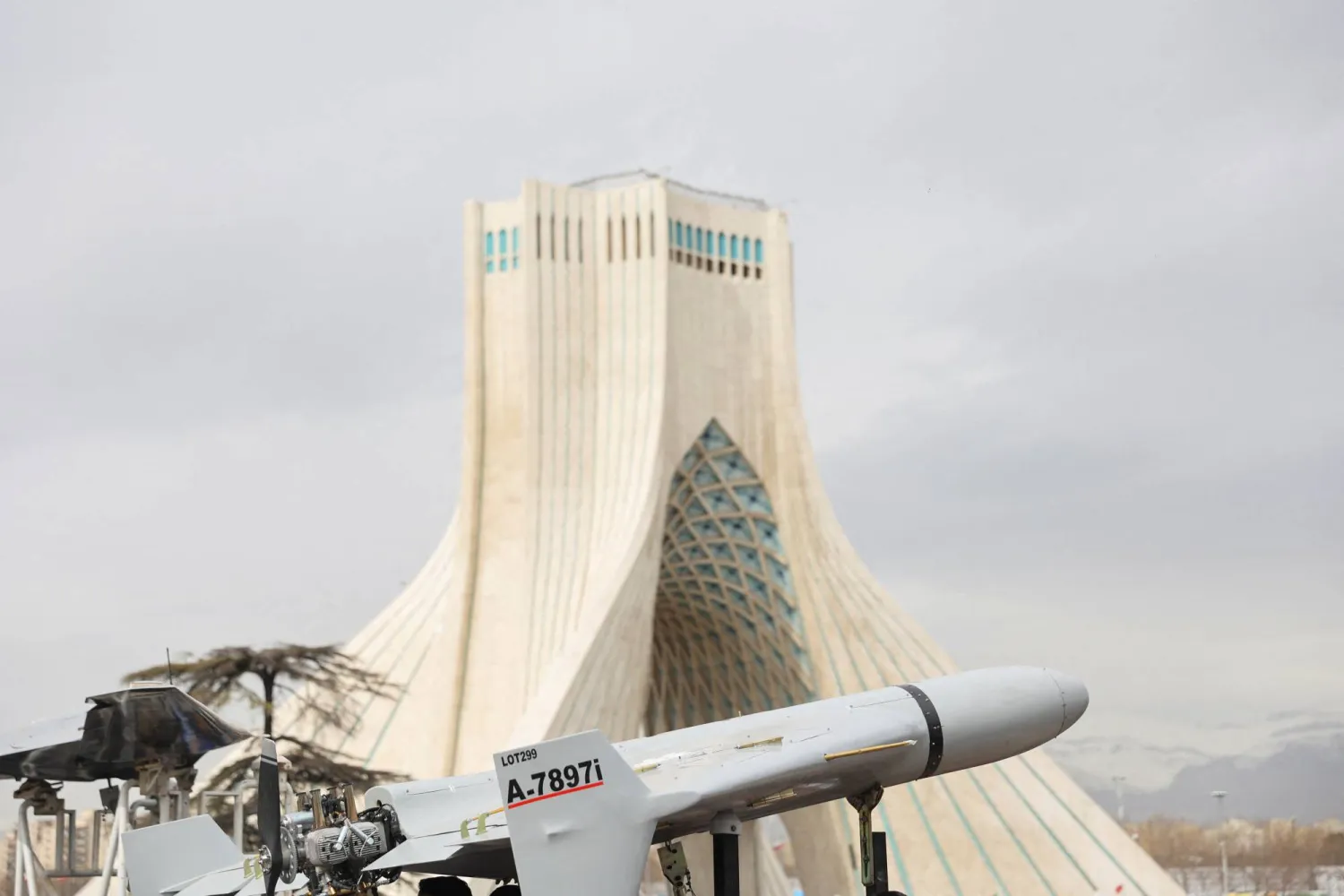
A Shahed drone on display during the 47th anniversary of the Iranian Revolution in Tehran, Iran February 11, 2026. Majid Asgaripour/WANA (West Asia News Agency) via REUTERS
TT

Moscow Warns of Possible US Military Operation in Iran

A Shahed drone on display during the 47th anniversary of the Iranian Revolution in Tehran, Iran February 11, 2026. Majid Asgaripour/WANA (West Asia News Agency) via REUTERS

Russian Deputy Foreign ‍Minister Sergei Ryabkov has warned it was still possible that the United States will carry out a new military operation in Iran.

"The situation in the Middle East, where the Americans have deployed huge numbers of attack systems, increasing pressure by the day and threatening to use force amid continued attempts to destabilize the political situation in Iran, raises some alarms. Another military operation there cannot be ruled out," Ryabkov said Thursday.

His comments came as Turkish Foreign Minister Hakan Fidan told the Financial Times that the US and Iran are showing flexibility on a nuclear deal, with Washington appearing "willing" to tolerate some nuclear enrichment.

“It is positive that the Americans appear willing to tolerate Iranian enrichment within clearly set boundaries," Fidan, who has been involved in talks with both Washington and Tehran, told the FT.

“The Iranians now recognize ‌that they ‌need to reach a deal with the ‌Americans, ⁠and the Americans ⁠understand that the Iranians have certain limits. It’s pointless to try to force them.”

Washington has until now demanded Iran relinquish its stockpile of uranium enriched to up to 60% fissile purity, a small step away from the 90% that is considered weapons grade.

Jalal Dehghani Firoozabadi, Secretary of Iran’s Strategic Council on Foreign Relations, stated in an interview with ISNA news agency that the conditions of the current negotiations are fundamentally different from previous ones because "we have experienced a 12-day war, which makes dialogue extremely difficult."

He clarified that after the first Muscat talks, when everyone expected diplomacy to prevent war, the attack by Israel and then the US led to those negotiations being dubbed a "deception operation."

He warned that if war breaks out, the Strait of Hormuz will be closed, which would harm China more than anyone.

Regarding expectations, he stated it is unrealistic to expect China and Russia to fight the US for Iran as there is no mutual defense treaty, but this does not negate the strategic assistance they provide in rebuilding Iran's deterrence and defense capabilities.

Earlier this month, a new round of indirect talks between Tehran and Washington took place in Muscat. At the end of this round, Iranian Foreign Minister Abbas Araghchi described it as a "good start."

“I hope the Americans have learned their lesson; if this issue is to be resolved, the only way is diplomacy,” said Firoozabadi.

He also hailed Oman, saying it can be trusted as a neutral mediator that does not seek to build prestige at Iran's expense.

Regarding Secretary of the Supreme National Security Council of Iran Ali Larijani’s visit to Oman and Qatar, he said it shows that Iran is serious about a diplomatic solution.



Iran's Supreme Leader Briefs Military Chief on 'New Guiding Measures'

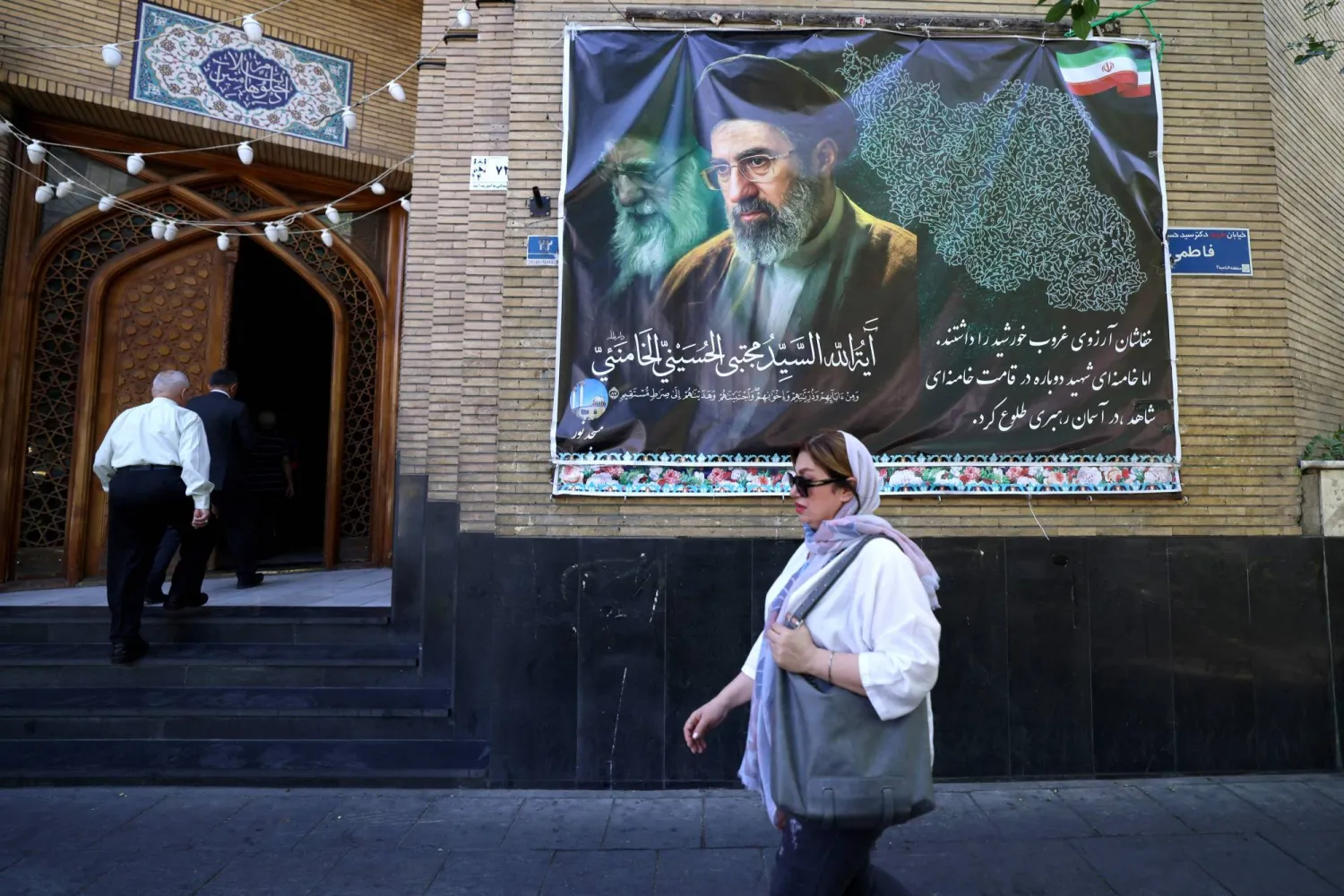
An Iranian woman walks a mosque decorated with a banner depicting Iran's current leader Mojtaba Khamenei, in the capital Tehran on May 9, 2026. (Photo by ATTA KENARE / AFP) /
TT

Iran's Supreme Leader Briefs Military Chief on 'New Guiding Measures'

An Iranian woman walks a mosque decorated with a banner depicting Iran's current leader Mojtaba Khamenei, in the capital Tehran on May 9, 2026. (Photo by ATTA KENARE / AFP) /

The head of Iran's armed forces unified command met Supreme Leader Mojtaba Khamenei and received from him "new guiding measures to pursue military operations and ‌firmly confront ‌adversaries", the ‌semi-official Fars ⁠news reported on ⁠Sunday.

The Fars report said that Ali Abdollahi, who commands the Khatam al-Anbiya Central ⁠Headquarters, had briefed ‌Khamenei ‌on the readiness of ‌the country’s armed ‌forces. It did not say when their meeting took place, Reuters said.

"The ‌armed forces are ready to confront any ⁠action ⁠by the American-Zionist (Israeli) enemies. In case of any error by the enemy, Iran's response will be swift, severe, and decisive," Abdollahi was reported as saying.


Iran Ceasefire Tested as Cargo Ship Catches Fire and Kuwait Reports Drone Attack

Vessels in the Strait of Hormuz, Musandam, Oman, May 8, 2026. REUTERS/Stringer
TT

Iran Ceasefire Tested as Cargo Ship Catches Fire and Kuwait Reports Drone Attack

Vessels in the Strait of Hormuz, Musandam, Oman, May 8, 2026. REUTERS/Stringer

The shaky ceasefire in the Iran war was tested again on Sunday when a cargo ship caught fire after being hit by an unknown projectile off Qatar’s coast, and Kuwait's military reported an attack by drones, without specifying where they came from.

The attacks were the latest threats to a month-old ceasefire, which the Trump administration says remains in effect. It has faced difficulties, with Iran restricting traffic through the Strait of Hormuz, a strategic waterway key to the global flow of oil, and the US imposing a blockade of Iranian ports.

Washington has been awaiting Iran’s response to a new proposal for a deal to end the war, reopen the strait to shipping and roll back Iran’s nuclear program.

One of the main sticking points in the negotiations is the fate of Iran’s stockpile of highly enriched uranium. The UN nuclear agency says Iran has more than 440 kilograms (970 pounds) of uranium that is enriched up to 60% purity, a short, technical step from weapons-grade levels.

In an interview with Iranian state media, a spokesman for the Iranian military said that forces were on “full readiness” to protect nuclear sites where the uranium is stored.

“We considered it possible that they might intend to steal it through infiltration operations or heliborne operations,” Brig. Gen. Akrami Nia told the IRNA news agency late Saturday. He didn’t offer further details.

The majority of Iran’s highly enriched uranium is likely still at its Isfahan nuclear complex, International Atomic Energy Agency Director-General Rafael Mariano Grossi told The Associated Press last month.

The Isfahan facility was bombarded by US-Israeli airstrikes in the 12-day war last year, and faced less intense attacks in this year’s war.

In Sunday’s naval attack, the United Kingdom Maritime Trade Operations Center said that the strike caused a small fire on the ship, which was extinguished. The attack happened 23 nautical miles (43 kilometers) northeast of Qatar’s capital, Doha, the UKMTO said.

There were no reported casualties, it said. It gave no details on the owner or origin of the ship, and there was no claim of responsibility.

But there have been several attacks against ships in the Arabian Gulf over the past week. On Friday, the US struck two Iranian oil tankers after it said that the vessels were trying to breach its blockade of Iran’s ports.

Iran’s Revolutionary Guard navy on Sunday reiterated its warning that any attack on Iranian oil tankers or commercial vessels would be met with a “heavy assault” on one of the US bases in the region and enemy ships.

In Kuwait, Defense Ministry spokesman Brig. Gen. Saud Abdulaziz Al Otaibi said that hostile drones entered Kuwait’s airspace early Sunday, and that forces responded “in accordance with established procedures.” There were no immediate reports of casualties.

US President Donald Trump has reiterated threats to resume full-scale bombing, if Iran doesn’t accept an agreement to reopen the strait and roll back its nuclear program. Iran has mostly blocked the critical waterway for global energy since joint strikes on Feb. 28 by the US and Israel launched the war, which has caused a global spike in fuel prices and rattled world markets.


Ukraine Reports Battlefield Clashes, Drone Strikes Despite Ceasefire

In this photo provided by Ukraine's 93rd Kholodnyi Yar Separate Mechanized Brigade press service, a Ukrainian soldier prepares an FPV drone to fire towards Russian positions in Druzhkivka, Donetsk region, Ukraine, Thursday, May 7, 2026. (Iryna Rybakova/Ukraine's 93rd Mechanized Brigade via AP)
TT

Ukraine Reports Battlefield Clashes, Drone Strikes Despite Ceasefire

In this photo provided by Ukraine's 93rd Kholodnyi Yar Separate Mechanized Brigade press service, a Ukrainian soldier prepares an FPV drone to fire towards Russian positions in Druzhkivka, Donetsk region, Ukraine, Thursday, May 7, 2026. (Iryna Rybakova/Ukraine's 93rd Mechanized Brigade via AP)

Ukrainian officials reported ‌on Sunday Russian drone strikes and nearly 150 battlefield clashes over the past 24 hours despite a US-brokered ceasefire between Kyiv and Moscow.

US President Donald Trump said on Friday that Russia and Ukraine had agreed to a three-day ceasefire from May 9 to May 11, as a broader peace effort to end the more than four-year-old war has stalled.

One person was killed ‌and three ‌people were wounded in Russian strikes ‌on ⁠Ukraine's southeastern Zaporizhzhia ⁠region, governor Ivan Fedorov said on Sunday morning.

In the northeastern Kharkiv region, governor Oleh Syniehubov said eight people, including two children, were wounded in drone attacks on the regional capital and nearby settlements.

Seven people including a child were ⁠wounded in the southern Kherson region ‌by Russian drone ‌and artillery strikes since early Saturday, regional governor Oleksandr Prokudin ‌said on Sunday.

A child was also wounded ‌and infrastructure damaged in Russian attacks on the southeastern Dnipropetrovsk region, said regional head Oleksandr Hanzha.

Separately, Kyiv's air force said Russia had launched 27 long-range drones ‌at Ukraine overnight - a lower number than usual - but that air defenses had ⁠downed ⁠all of them.

In its morning report, Ukraine's General Staff said 147 clashes had taken place along the front line.

Despite the reports, Ukrainian officials have not publicly commented on any violations of the US-brokered ceasefire, which was also meant to include a swap of 1,000 prisoners of war from each side.

Earlier this week, Russia and Ukraine had each announced separate ceasefires - starting on Friday and Wednesday respectively - but quickly accused one another of breaking them.