


India Seizes Three Iran-linked US-sanctioned Tankers

This photo posted on the X account of the US Department of Defense on February 15, 2026 shows what the Department of Defense says are US military forces preparing to interdict and board an oil tanker, the Veronica III, in the Indian Ocean. (Photo by Handout / US Department of Defense / AFP)
TT

India Seizes Three Iran-linked US-sanctioned Tankers

This photo posted on the X account of the US Department of Defense on February 15, 2026 shows what the Department of Defense says are US military forces preparing to interdict and board an oil tanker, the Veronica III, in the Indian Ocean. (Photo by Handout / US Department of Defense / AFP)

India has seized three US-sanctioned oil tankers linked to Iran this month and stepped up surveillance in its maritime zone to curb illicit trade, a source said on Monday, confirming a post on X by Indian authorities earlier in February that had been deleted.

India aims to prevent its waters from being used for ship-to-ship transfers that obscure the origin of oil cargoes, the source with direct knowledge of the matter told ‌Reuters.

The seizures and ‌heightened surveillance follow an improvement in US-India relations. Washington ‌earlier ⁠this month announced it ⁠will cut import tariffs on Indian goods to 18% from 50%, after New Delhi agreed to stop Russian oil imports.

The three sanctioned vessels - Stellar Ruby, Asphalt Star and Al Jafzia - frequently changed their identities to evade law enforcement by coastal states, the source said, adding that their owners were based overseas.

VESSELS SEIZED OFFSHORE MUMBAI

Iranian state media cited the National Iranian Oil Company as ⁠saying that the three tankers seized by India ‌had no connection to the company. It ‌said that neither the cargoes nor the vessels were linked to the company.

Indian authorities ‌had said in a post on X on February 6 that ‌they intercepted three vessels about 100 nautical miles west of Mumbai after detecting suspicious activity involving a tanker in India's exclusive economic zone.

The post was later deleted, but the source confirmed that the vessels had been escorted to Mumbai for ‌further investigation.

The Indian Coast Guard has since deployed about 55 ships and between 10 and 12 aircraft for round-the-clock ⁠surveillance in its ⁠maritime zones, according to the source.

The US Office of Foreign Assets Control said last year it had sanctioned three vessels, called Global Peace, Chil 1, and Glory Star 1, with IMO numbers identical to the ships lately captured by India.

Two of the three tankers are linked to Iran, with Al Jafzia having carried fuel oil from Iran to Djibouti in 2025 and Stellar Ruby flagged in Iran, according to LSEG data.

The Asphalt Star mostly operated on voyages around China, the data show.

Sanctioned oil and fuel are often sold at deep discounts due to the risks involved, with intermediaries moving cargo through complex ownership structures, false documentation and mid-sea transfers that complicate enforcement.


French, Japanese Ships Cross Strait of Hormuz in First Since War

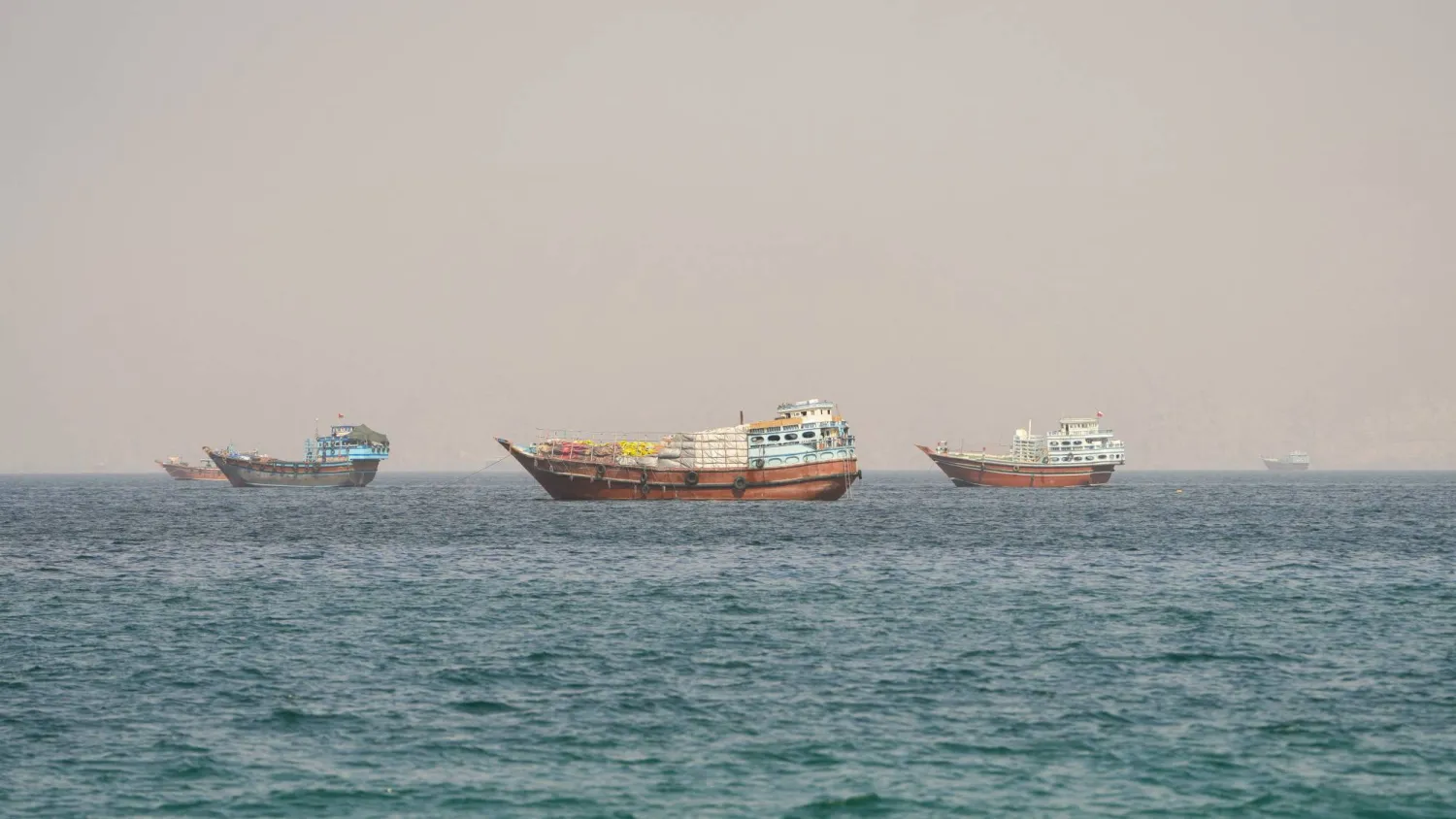
A cargo ship in the Gulf, near the Strait of Hormuz, as seen from northern Ras al-Khaimah, near the border with Oman’s Musandam governance, amid the US-Israeli conflict with Iran, in United Arab Emirates, March 11, 2026. (Reuters)
TT

French, Japanese Ships Cross Strait of Hormuz in First Since War

A cargo ship in the Gulf, near the Strait of Hormuz, as seen from northern Ras al-Khaimah, near the border with Oman’s Musandam governance, amid the US-Israeli conflict with Iran, in United Arab Emirates, March 11, 2026. (Reuters)

One French- and another Japanese-owned vessel are among a handful of vessels to have crossed the war-torn Strait of Hormuz, maritime tracking data showed Friday.

The passage, a vital maritime route for oil and liquified natural gas, has been virtually blocked by Iran since the start of the war, said AFP.

But both ships made the crossing on Thursday, according to ship tracking company Marine Traffic's website.

The Maltese-flagged Kribi belonging to the French maritime transport group CMA CGM crossed the waterway to leave the Gulf on Thursday afternoon, Marine Traffic's data showed.

By early Friday, it was off Muscat, Oman, still broadcasting the message "owner France" on its transponder system in the field usually used to give the destination.

The vessel's navigation data showed it had crossed via an Iranian-approved route through its waters, dubbed the "Tehran Toll Booth" by leading shipping journal Lloyd's List.

- Southern route -

In addition, three tankers -- including one co-owned by a Japanese company -- crossed the Strait of Hormuz on Thursday by taking an alternative, southern route.

They hugged close to the shore of Oman's Musandam Peninsula -- a first in nearly three weeks according to Lloyd's List.

Before the war, which started more than a month ago, about a fifth of global oil and liquefied natural gas (LNG) passed through the Strait.

All three ships signaled they were an "OMANI SHIP" in the message broadcast by their transponder as they crossed the strait.

The Sohar LNG, which was empty when crossing, is co-owned by Japanese shipping company Mitsui O.S.K.

That makes it the first Japanese vessel to exit the Gulf since the start of the war, according to a company statement quoted by Japanese media.

The Hong-Kong flagged New Vision, which crossed the strait on March 1 right after the war started, is expected in the French port of Le Havre on Saturday evening.

Since the conflict started however, that has dwindled to a trickle as Iran selectively attacks ships and energy facilities throughout the Gulf in retaliation for US and Israeli attacks.

A few commercial ships crossing the Strait of Hormuz recently have passed through the Iranian-approved route in the north of the waterway.

- Down to a trickle -

Just 221 commodities vessels have crossed the Strait of Hormuz since March 1, some more than once, according to Kpler data up to Friday morning.

In peacetime, the same waterway handles around 120 daily transits, according to Lloyd's List.

Of the vessels that made the crossing, 60 percent either came from Iran or were heading there.

It was not clear from the data how many had been cleared to make the crossing by Tehran.

But it did show that, among the 118 crossings by ships carrying cargo, 37 had left the Gulf carrying crude oil.

Most of those oil tankers -- 30 of them -- came from Iran or sailed under the Iranian flag. And most ships carrying Iranian oil did not specify their destination on their transponder.

Of those who did, all but one reported they were heading to China.

In the early days of the war, transponder data showed dozens of ships broadcasting messages such as "Chinese crew" or "Chinese owner" in the field usually used for their destination.

This appeared to be an attempt by the ships to avoid being targeted by Iran.


Iran Executes Two Linked to Opposition Group

Executions in Iran have surged in recent years - AFP
TT

Iran Executes Two Linked to Opposition Group

Executions in Iran have surged in recent years - AFP

Iran on Saturday executed two men it said were convicted of links to an opposition group, the People's Mojahedin Organization of ‌Iran, and ‌of carrying out armed ‌attacks, ⁠domestic media reported.

The ⁠executions were the latest in recent days of individuals with PMOI links.

The PMOI confirmed ⁠Saturday's executions, saying ‌in ‌a statement that Iran was "trying ‌to hide its ‌weakness by executing political prisoners, especially PMOI members and supporters." Four PMOI ‌members were executed earlier this week, ⁠it ⁠said.

The group said the two men executed on Saturday were arrested in January 2024 and had their death sentences upheld in December 2025.


Earthquake Kills 8 Members of Same Family near Afghan Capital

Previous earthquake in Afghanistan (Archive-Reuters)
TT

Earthquake Kills 8 Members of Same Family near Afghan Capital

Previous earthquake in Afghanistan (Archive-Reuters)

An earthquake that struck Afghanistan overnight killed eight members of the same family in Kabul province, the health ministry said on Saturday.

The 5.8-magnitude quake struck at 8.42 pm (1612 GMT) on Friday at a depth of 186 kilometers (115 miles) at the epicenter in northeastern Badakhshan province, according to the US Geological Survey (USGS).

Shaking was felt in multiple parts of the country, including the capital Kabul, according to AFP journalists.

"In the Gosfand Dara area of Kabul Province, eight members of a family died as a result of the earthquake," Health Ministry spokesman Sharafat Zaman said in a message to media.

He added that a child aged around two years old was the only survivor from the household and the country's disaster management agency said the boy had been injured in the tremor.

Afghanistan is frequently jolted by earthquakes, particularly along the Hindu Kush mountain range near where the Eurasian and Indian tectonic plates meet.

In August, a shallow magnitude 6 earthquake wiped out mountainside villages and killed more than 2,200 people in eastern Afghanistan, making it the deadliest tremor in the country's recent history.