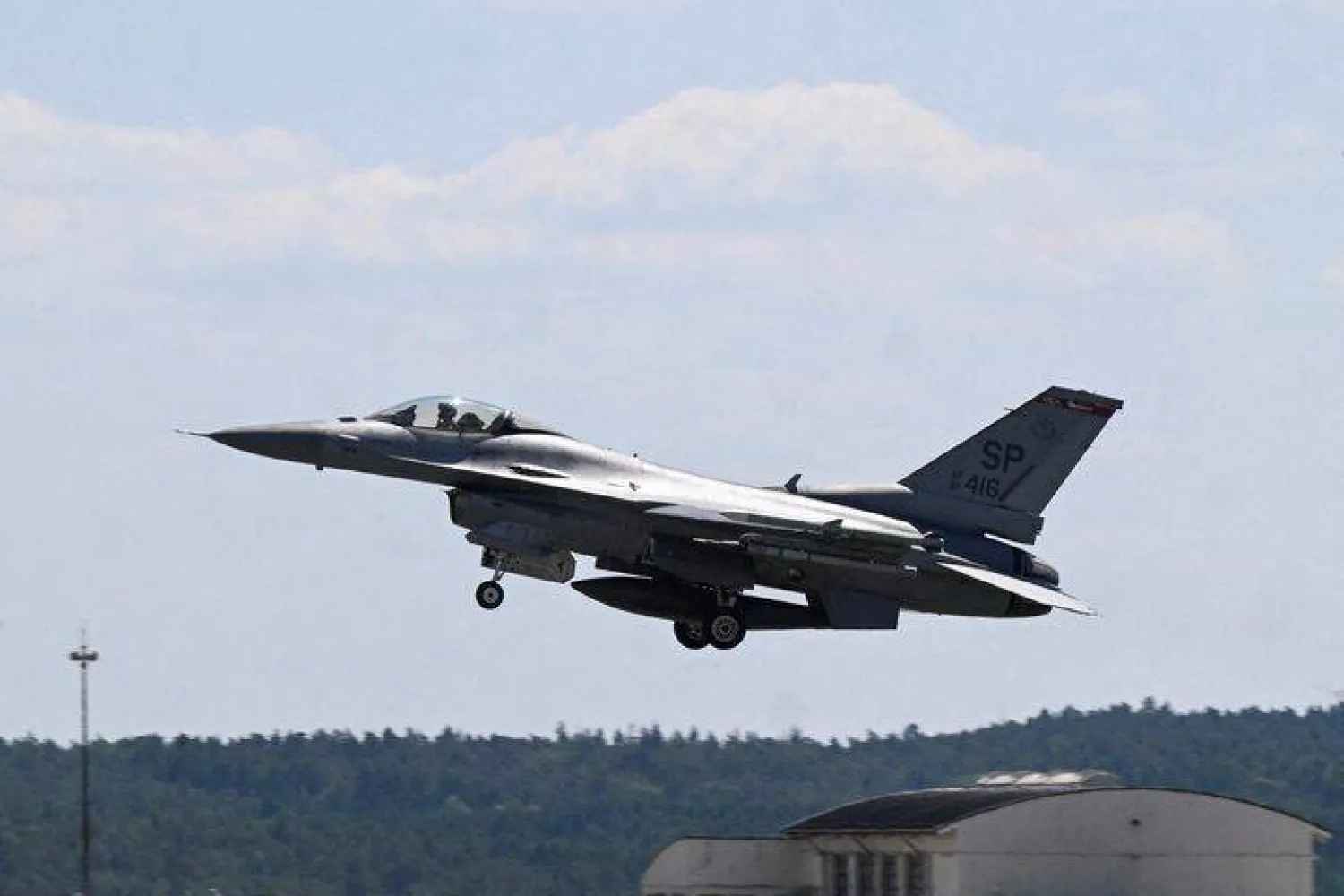
NORAD Intercepts 5 Russian Aircraft near Alaska, Though Military Says There Was No Threat

An F-16 fighter jet takes off (file photo - Reuters)
TT

NORAD Intercepts 5 Russian Aircraft near Alaska, Though Military Says There Was No Threat

An F-16 fighter jet takes off (file photo - Reuters)

Military jets were launched to intercept five Russian aircraft that were flying in international airspace off Alaska’s western coast, but military officials said Friday the Russian aircraft were not seen as provocative.

The North American Aerospace Defense Command said it detected and tracked two Russian Tu-95s, two Su-35s and one A-50 operating near the Bering Strait on Thursday, The Associated Press said.

In response, NORAD launched two F-16s, two F-35s, one E-3 and four KC-135 refueling tankers to intercept, identify and escort the Russian aircraft until they departed the area, according to a release from the command.

“The Russian military aircraft remained in international airspace and did not enter American or Canadian sovereign airspace,” according to the NORAD statement. It also noted this kind of activity “occurs regularly and is not seen as a threat.”

The Russian aircraft were operating in an area near the Bering Strait, a narrow body of water about 50 miles (80 kilometers) wide separating the Pacific and Arctic oceans, called the Alaskan Air Defense Identification Zone.

Such zones begin where sovereign airspace ends. While it’s international airspace, all aircraft are required to identify themselves when entering zones in the interest of national security, NORAD said.

The command used satellites, ground and airborne radars and aircraft to detect and track aircraft

NORAD is headquartered at Peterson Space Force Base, Colorado, but has its Alaska operations based at Joint Base Elmendorf-Richardson in Anchorage.


Türkiye Says Israel Using Security as Pretext to Acquire 'More Land'

Turkish Foreign Minister Hakan Fidan speaks during the opening ceremony of Antalya Diplomacy Forum in Antalya, Türkiye, April 17, 2026. REUTERS/Umit Bektas
TT

Türkiye Says Israel Using Security as Pretext to Acquire 'More Land'

Turkish Foreign Minister Hakan Fidan speaks during the opening ceremony of Antalya Diplomacy Forum in Antalya, Türkiye, April 17, 2026. REUTERS/Umit Bektas

Türkiye's top diplomat on Saturday accused Israel of creating an international "illusion" and using security concerns as a pretext to seize "more land," in the latest flare-up in escalating tensions between the two regional powers.

Israel and Türkiye have been trading near-daily diplomatic barbs over a range of regional conflicts, from Israel's war in Gaza to rising tensions linked to Iran.

"Israel is not after its own security. Israel is after more land," Turkish Foreign Minister Hakan Fidan said at the Antalya Diplomacy Forum in the Mediterranean resort city.

"Security is being used by the Netanyahu government as an excuse to occupy more land," he added, referring to Israeli Prime Minister Benjamin Netanyahu.

Speaking in English at a panel discussion, Fidan said Israel had created an "illusion" internationally by portraying itself as acting purely in its own defense.

"It has become very clear, especially in recent years, that it is more than that," he said.

From Palestinian lands including Gaza, the West Bank and East Jerusalem, and now extending towards Lebanon and Syria, Israel was pursuing "an onward occupation and expansionism in the region," Fidan said, according to AFP.

"I think this has to stop."

"Israel has to know that the only way to live peacefully in the region is to let other countries enjoy their own security, territorial integrity and freedom, and not to use power against them," he added.

Türkiye and Israel have frequently been at odds, including over Israel's military campaign in Gaza and differences over Syria's future.


Iran Command Says Has Closed Hormuz Again over US Blockade

A satellite image shows the ship movement at the Strait of Hormuz on April 2, 2026, in Space. EUROPEAN UNION/COPERNICUS SENTINEL-2/Handout via REUTERS
TT

Iran Command Says Has Closed Hormuz Again over US Blockade

A satellite image shows the ship movement at the Strait of Hormuz on April 2, 2026, in Space. EUROPEAN UNION/COPERNICUS SENTINEL-2/Handout via REUTERS

Iran's central military command announced on Saturday it would resume "strict management" of the Strait of Hormuz, reversing a decision to unblock the strategic channel as part of negotiations with Washington.

In a statement shared on state television, the headquarters said Washington had broken a promise by continuing its naval blockade of ships sailing to and from Iran's ports.

Until the United States restores freedom of movement for all vessels visiting Iran, "the situation in the Strait of Hormuz will remain strictly controlled," the statement said.

The announcement came after US President Donald Trump said the blockade of the Strait will remain and attacks will resume if no agreement is reached with Iran.


Australia, Japan Sign Contracts to Start $7 Billion Warship Deal

Australia's Deputy Prime Minister and Minister for Defense Richard Marles (R) listens to Japan's Minister of Defense Koizumi Shinjiro (L) during a Defense Ministers' Meeting at the Commonwealth Parliament Offices in Melbourne on April 18, 2026. (Photo by William WEST / AFP)
TT

Australia, Japan Sign Contracts to Start $7 Billion Warship Deal

Australia's Deputy Prime Minister and Minister for Defense Richard Marles (R) listens to Japan's Minister of Defense Koizumi Shinjiro (L) during a Defense Ministers' Meeting at the Commonwealth Parliament Offices in Melbourne on April 18, 2026. (Photo by William WEST / AFP)

Australia and Japan signed contracts on Saturday launching their landmark A$10 billion ($7 billion) deal to supply Australia with warships, Tokyo's most consequential military sale since ending a military export ban in 2014.

Defense Ministers Richard Marles and Shinjiro Koizumi signed a memorandum "reaffirming the Australian and Japanese governments' shared commitment to the successful delivery" of the warships, Marles said in a statement.

The deal struck in ⁠August anchors Japan's ⁠push away from its postwar pacifism to forge security ties beyond its alliance with the US to counter China.

Mitsubishi Heavy Industries is to supply the Royal Australian Navy with three upgraded Mogami-class ⁠multi-role frigates built in Japan from 2029. Eight more frigates will be built in Australia.

Japan's Defense Ministry posted on X that Koizumi and Marles welcomed the "conclusion of contracts for General Purpose Frigates, and confirmed to further strengthen bilateral defense ties" in the signing in Melbourne.

Contracts were signed for the first three frigates, to be built ⁠in ⁠Japan, before there is a "transition to an onshore build" at the Henderson shipyard near Perth in Western Australia, Reuters quoted Marles as saying.

Australia plans to deploy the ships - designed to hunt submarines, strike surface ships and provide air defense - to defend critical maritime trade routes and its northern approaches in the Indian and Pacific Oceans, where China's military footprint is expanding.